
Intro
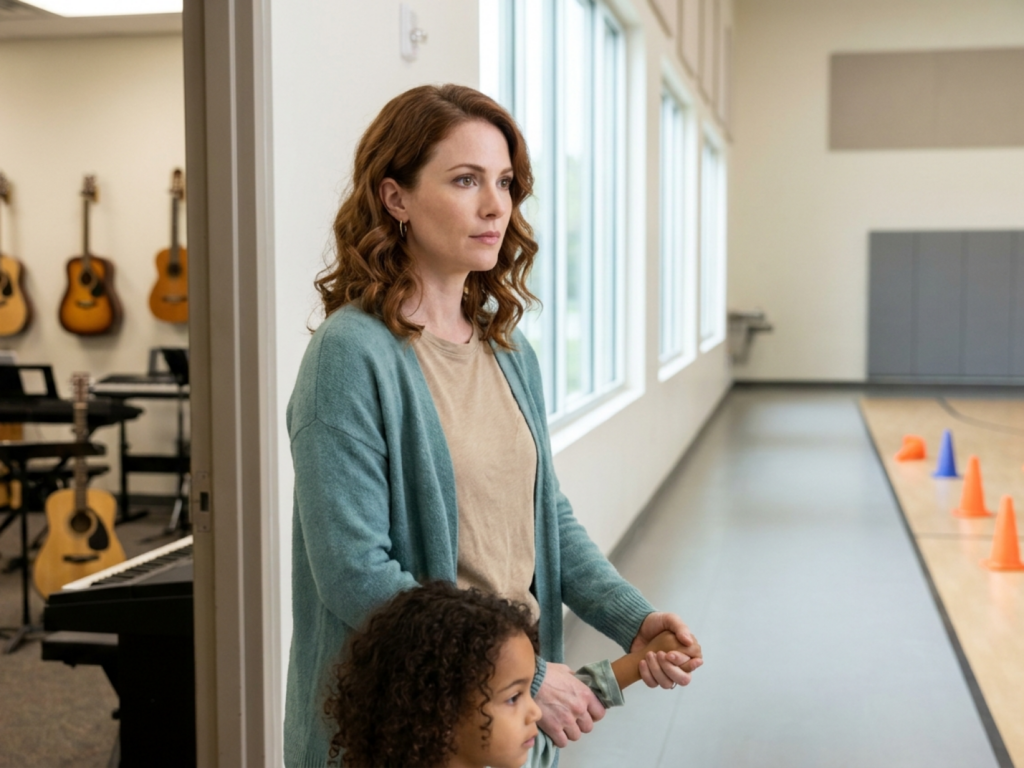
Many families ask whether sports or arts are the better choice for a child. In practice, the real question is often more specific: which structured activity best matches the child’s interests, developmental profile, energy level, and schedule?
Sports and arts can both support growth when they are well organized, age-appropriate, and emotionally safe. They can also be demanding. A thoughtful comparison looks beyond trophies or performances and asks how the activity affects motor skills, stress, confidence, social connection, and day-to-day family life.
Highlights
Sports and arts are both structured environments, so both can strengthen routine, persistence, and social learning.
Organized sports may be especially helpful for gross motor skills, with some evidence favoring martial arts and aquatic training.
Structured performing arts can support psychological engagement, stress regulation, and socioemotional functioning.
The best activity is usually the one the child can enjoy consistently without overload, pain, or loss of recovery time.
Shared structure, different strengths
Sports and arts may look very different on the surface, but they share several important features. Both usually involve a coach or teacher, repeated practice, feedback, clear goals, and a predictable schedule. Those ingredients can be valuable for children because they reduce uncertainty and give the child a way to master a skill over time.
The differences matter too. Sports tend to emphasize whole-body movement, reaction time, endurance, balance, and cooperation under physical pressure. Arts can emphasize sequencing, timing, memory, expressive language, listening, fine motor control, and emotional communication. A child who struggles in one domain may still thrive in the other.
It helps to think less in terms of one activity being universally superior and more in terms of fit. The most developmentally useful activity is often the one that offers enough challenge to build skill without turning every session into a stress response.
What organized sports may contribute
Organized sports can be especially helpful for gross motor development, which includes larger movements such as running, jumping, kicking, throwing, and changing direction. A systematic review of organized sports-based interventions in children with autism spectrum disorder found improvements in motor outcomes, although the overall quality of evidence was still limited. In that review, martial arts and aquatic training showed the most consistent benefits.
Beyond motor skill, sports can support self-efficacy, peer interaction, and tolerance of structured challenge. Team settings may also help children practice turn-taking, shared rules, and communication under time pressure. For some children, that social rehearsal is a major benefit; for others, the same setting can feel overwhelming unless the environment is very supportive and predictable.
There are also broader educational associations. Research summarized by the Université de Montréal suggests that organized physical activity in childhood and adolescence is associated with staying in school and earning a high-school diploma or equivalent. That does not prove cause and effect, but it does suggest that well-supported sports participation can fit into a healthy developmental pathway. The basics in sports safety for children explained matter here too, because physical benefits are only helpful when the child can participate safely and recover well.
What structured arts and performing activities may contribute
Structured performing arts activities, such as music lessons, choir, dance, and drama, can offer a different kind of growth. A study of children in early to middle childhood linked participation in structured performing arts with psychological engagement, stress, and socioemotional functioning. That finding fits with what many families observe: some children become more settled, focused, and expressive when the activity gives them a creative outlet and a clear pattern of practice.
Arts can also be physically demanding in subtle ways. Dance and theatre require posture, coordination, timing, breath control, and body awareness. Music practice can strengthen auditory processing, attention, and sequencing. Even quieter arts activities may support sustained attention and frustration tolerance, because mastery usually comes from repetition rather than instant success.
For some families, creative hobbies for children are not a lesser option than sports. They are simply a different route to confidence and belonging. A child who does not enjoy fast-paced competition may still flourish in an orchestra, a drama group, or a dance class where progress is visible and effort is valued.
How to match the activity to the child
Children differ in temperament, sensory profile, motivation, and developmental strengths. A child who seeks movement may love soccer, climbing, or martial arts. A child who prefers rhythm, narrative, or fine detail may feel more at home in music, art, or drama. Neither choice says anything fixed about intelligence or potential; it simply reflects where the child can invest energy more naturally.
Neurodevelopmental differences also matter. Some children with coordination difficulties or motor planning challenges may need a slower entry point, smaller groups, or activities with more predictable routines. Others may do better in arts because the social demands feel less immediate than those of a competitive team. At the same time, some children who find typical team sports difficult may thrive in highly structured movement programs such as swimming or martial arts, where rules are clear and repetition is built in.
Families can think of the decision as a trial of fit rather than a lifetime commitment. A few weeks of observation can reveal whether the child is energized, neutral, or increasingly distressed. That information is often more useful than any general rule about which category is best.
When the schedule is too full
One of the biggest risks is not the activity itself, but too many activities at once. A balanced child schedule leaves room for sleep, unstructured play, meals, homework, and recovery. Without that space, even enjoyable activities can become draining.
A visual weekly schedule for children can make overload easier to see. If every afternoon and weekend slot is filled, the child may have too little time to decompress, especially after school. Signs of extracurricular activity overload can include irritability, refusal, sleep disruption, more frequent aches, loss of enthusiasm, or a drop in school engagement.
This is where family judgment matters. A child does not need to quit an activity at the first hard week. But if the same pattern keeps repeating, the problem may be the overall load rather than the child’s attitude. Reducing the number of commitments can sometimes improve both performance and mood.
Choosing well and revisiting the decision
The best choice is usually the one that is safe, affordable, accessible, and genuinely tolerable for the child. It can help to ask a few practical questions: Does the child look forward to the activity? Can they recover afterward? Do they interact with peers or adults in a way that feels secure? Is the coach or teacher responsive to different learning styles?
If a child has pain, repeated injuries, significant anxiety, or developmental concerns, it is sensible to speak with a pediatrician or another qualified professional such as a physiotherapist, occupational therapist, or psychologist. That conversation can help separate ordinary adjustment from a mismatch that deserves a different plan.
Most importantly, sports and arts do not have to compete. Many children do best when they have one primary structured activity and enough room for free play or a second lighter interest. The goal is not to build the busiest child, but the most supported one.
When to pause and get advice
- Persistent pain, limping, repeated injuries, or unusual fatigue should not be ignored.
- Sleep problems, school refusal, or ongoing irritability after activities may signal overload.
- Strong sensory distress, shutdowns, or panic in the activity setting deserve attention.
- A child who loses all enjoyment or becomes fearful of practice may need a different structure.
- If growth, eating, mood, or overall functioning seem affected, consult a healthcare professional.
Tools & Assistance
- Pediatrician or family doctor for an overall developmental and medical review
- Occupational therapist or physiotherapist for motor planning, coordination, and activity fit
- Coach, music teacher, drama teacher, or instructor who accepts gradual skill-building
- Visual weekly planner to map practice, homework, rest, and free play
FAQ
Are sports better than arts for child development?
Not universally. Sports may offer more gross motor and fitness benefits, while arts may offer strong emotional, social, and creative benefits. The best fit depends on the child.
Can a child do both sports and arts?
Yes, if the total load is realistic. The main concern is preserving sleep, recovery time, and enjoyment.
What if my child is not naturally athletic?
That does not mean sports are impossible. Some children do better in structured options like swimming or martial arts, while others may prefer arts or a mix of both.
How do I know if an activity is too much?
Watch for fatigue, irritability, sleep disruption, pain, dread, or falling school engagement. If these persist, ask a qualified professional for guidance.
Sources
- Wiley / Developmental Medicine & Child Neurology — Organized sports-based interventions and motor outcomes in children with autism spectrum disorder: a systematic review and meta-analysis
- Johns Hopkins University Press — Participation in Structured Performing Arts Activities in Early to Middle Childhood: Psychological Engagement, Stress, and Links With Socioemotional Functioning
- Université de Montréal — Organized sports can lead to academic success
Disclaimer
This article is for educational purposes only and does not replace individualized advice from a child’s pediatrician, therapist, or other qualified healthcare professional.















Please log in to leave a comment.