
Intro
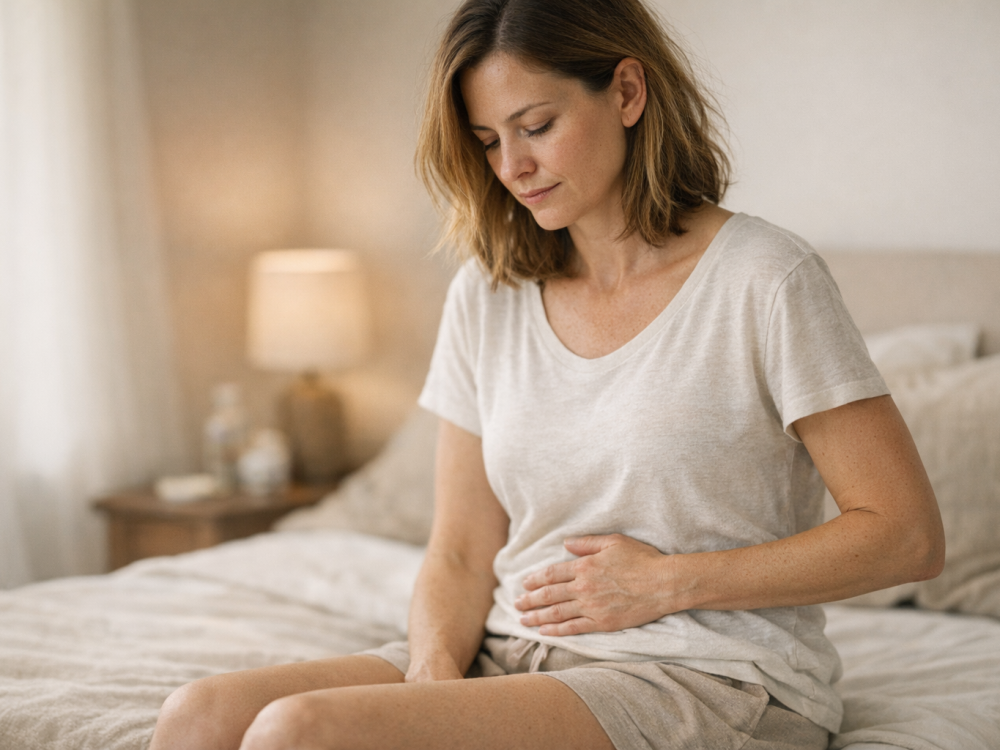
Ovulation pain, often called mittelschmerz from the German for “middle pain,” is pelvic or lower abdominal discomfort that occurs around the time an ovary releases an egg. For many people, it is a brief, benign midcycle sensation: a dull ache, a sharp twinge, or one-sided cramping that appears roughly two weeks before the next period. For others, it can be more noticeable, emotionally unsettling, or hard to distinguish from other pelvic symptoms.
Because ovulation is a short internal event influenced by hormones, ovarian anatomy, inflammation, and individual pain sensitivity, symptoms can vary widely from cycle to cycle. Understanding the typical patterns can help you interpret your body’s signals more confidently, while still recognizing when pain deserves medical evaluation.
Highlights
Ovulation pain is usually benign and midcycle, but not every pelvic pain near ovulation is caused by ovulation.
The pain is often one-sided because ovulation occurs from one ovary in a given cycle, but the side and intensity can change.
Associated symptoms may include cervical mucus changes, light spotting, breast tenderness, bloating, nausea, or low back discomfort.
Severe, persistent, worsening, or unusual pain should be assessed by a healthcare professional to exclude conditions such as ovarian cysts, infection, endometriosis, or ectopic pregnancy.
What ovulation pain is
pain is lower abdominal or pelvic pain that occurs around , typically about 14 days before the next menstrual period in a 28-day cycle. In people with longer, shorter, or irregular cycles, the timing may be different because does not always occur on “day 14.” The more useful clue is that the pain appears in the middle part of the cycle, before menstruation begins.
Classically, mittelschmerz is felt on one side of the lower abdomen or pelvis. This one-sided quality reflects the fact that one ovary usually releases a mature egg during a cycle. The discomfort may last only a few minutes, several hours, or occasionally a day or more. It may switch sides from one cycle to another, remain on the same side for several cycles, or feel more central if the discomfort is referred or difficult to localize.
For many people, ovulation pain is mild and does not interfere with daily life. Others experience enough discomfort to pause activities, use heat, or track symptoms carefully. Pain intensity alone does not prove the cause, so a new pattern or severe pain should not be dismissed simply because it occurs midcycle.
Why ovulation can hurt: the main mechanisms
Several physiologic events around may contribute to pain. The most commonly discussed mechanism is follicular rupture. Before , a dominant ovarian follicle enlarges and fills with fluid as the egg matures. When the follicle ruptures to release the egg, fluid and sometimes a small amount of blood may escape into the pelvic cavity. This can irritate the peritoneum, the sensitive lining of the abdominal and pelvic cavity, causing localized pain.
Another possible contributor is ovarian surface stretching. As the follicle grows, it may create tension within the ovary or its outer capsule, producing pressure, aching, or a pulling sensation. Local inflammatory mediators released during ovulation may also sensitize nearby tissues and nerves.
Hormonal changes around ovulation may amplify the experience. Estrogen rises before ovulation and surges to trigger egg release. After ovulation, progesterone begins to increase. These shifts can affect fluid balance, bowel motility, breast tissue, , mood, and pain perception. This is why ovulation pain may appear alongside other physical symptoms rather than as an isolated sensation.
Types of ovulation pain people describe
Ovulation pain is not one single sensation. People describe it in several ways, and more than one type can occur in the same cycle.
- Sharp twinge: a sudden, brief, stabbing or pinching feeling on one side of the pelvis.
- Dull ache: a low-grade soreness or heaviness lasts for hours and may feel similar to mild menstrual cramps.
- Cramping: rhythmic or wave-like discomfort that can be confused with premenstrual cramps if cycle is unclear.
- Pressure or fullness: a bloated, swollen, or “heavy” pelvic sensation, sometimes more noticeable when walking, exercising, or having sex.
- Referred discomfort: pain that seems to radiate to the lower back, hip, groin, or upper thigh.
Most typical mittelschmerz is mild to moderate and self-limited. However, sudden severe pelvic pain, pain with fainting or shoulder-tip pain, or pain with fever or vomiting should be treated as potentially more serious until evaluated.
Other physical symptoms around ovulation
can be accompanied by several body changes. Some are caused by the hormonal environment of the ; others may occur because pelvic tissues are temporarily irritated.
- changes: typically makes clearer, wetter, stretchier, and more before . Many people describe it as resembling raw egg white.
- Light spotting: A small amount of midcycle spotting can occur around , possibly related to hormonal fluctuation or follicular rupture. Heavy bleeding is not typical and should be discussed with a clinician.
- Bloating: Hormonal shifts and fluid retention may create abdominal fullness or mild swelling.
- Breast or nipple tenderness: Sensitivity can appear around or become more noticeable after as rises.
- Nausea or digestive changes: Some people report mild nausea, gas, constipation, or looser stools, though significant gastrointestinal symptoms warrant caution.
- Increased libido or heightened body awareness: Sexual desire may increase near the for some people, while others notice mood or energy changes.
If you are trying to conceive, these signs can be useful context, but they are not definitive proof that occurred. Tracking patterns over several cycles is often more informative than interpreting a single symptom in isolation.
Why ovulation symptoms vary from cycle to cycle
Variation is one of the most normal features of symptoms. The ovary that releases the egg may differ, and the anatomy around each ovary is not perfectly symmetrical. One side may be closer to sensitive tissues, adhesions, bowel loops, or areas affected by prior inflammation, which can change how pain is perceived.
Follicle size and the amount of fluid or blood released at rupture may also differ. A larger follicle or more peritoneal irritation may feel more intense. Pain perception is influenced by sleep, stress, inflammation, recent illness, exercise, pelvic floor tension, gastrointestinal activity, and central nervous system sensitivity. A stressful month can make an otherwise familiar twinge feel sharper or more intrusive.
Cycle also varies. Even people with generally regular periods can ovulate earlier or later than expected. This can make pain seem “off schedule.” For those with , polycystic ovary syndrome, postpartum cycles, perimenopause, or recent discontinuation of hormonal contraception, may be less predictable, and symptoms may be harder to interpret.
It is also possible for pain to occur near the expected window but have another cause. Endometriosis, functional ovarian cysts, pelvic inflammatory disease, sexually transmitted infections, urinary tract problems, bowel conditions, adhesions, and early pregnancy complications can all mimic or overlap with midcycle pelvic pain.
Ovulation pain, fertility, and timing sex
pain can sometimes help identify the , but it is an imperfect timing tool. The includes the days before because sperm can survive in the reproductive tract for several days under favorable conditions. Pain may occur before, during, or shortly after follicular rupture, so waiting for pain before having may miss some of the most days.
For people trying to conceive, pain is best interpreted alongside other indicators, such as , cervical mucus, predictor kits, or basal body temperature patterns. If pain is severe enough to prevent , causes should be discussed with a healthcare professional rather than assuming it is a normal fertility sign.
People avoiding pregnancy should also avoid relying on pain alone. Symptoms are variable, and can shift earlier or later. If pregnancy prevention is important, use a reliable contraceptive method and seek professional guidance if cycles are irregular or symptoms are confusing.
When midcycle pain may not be mittelschmerz
Typical pain is usually brief, mild to moderate, and not associated with systemic illness. Pain that falls outside this pattern deserves more caution. For example, an ovarian cyst can cause one-sided pain and may worsen if it ruptures or twists the ovary, a condition called ovarian torsion. Endometriosis can cause cyclical pelvic pain that may intensify around ovulation or menstruation. Pelvic inflammatory disease and sexually transmitted infections can cause pelvic pain with abnormal discharge, fever, or pain during sex.
An ectopic pregnancy, in which a pregnancy implants outside the uterus, can also cause pelvic or abdominal pain and may be life-threatening. This is especially important if there is a possibility of pregnancy, a missed or unusual period, abnormal bleeding, dizziness, fainting, or shoulder pain.
Because symptoms overlap, clinicians may consider medical history, pregnancy testing, pelvic examination, STI testing, urinalysis, blood tests, or ultrasound depending on the situation. The goal is not to alarm you, but to make sure persistent or atypical pain is evaluated appropriately.
Self-care and symptom tracking
For mild, familiar pain, supportive measures may help. Many people find relief with rest, a warm compress or heating pad, hydration, gentle movement, or reducing intense exercise for a day. Over-the-counter pain medicines are sometimes used, but they may not be suitable for everyone, especially people with gastrointestinal disease, kidney disease, bleeding disorders, medication interactions, allergies, or those who may be pregnant. A pharmacist or clinician can help you choose safely.
Tracking symptoms can be particularly useful. Record the date, cycle day, side of pain, duration, severity, bleeding, , sexual activity, medications, and any associated symptoms such as fever, nausea, urinary discomfort, or abnormal discharge. Over time, this log can help distinguish a stable personal pattern from a new or concerning change.
If pain is frequent, intense, or disruptive, consult a healthcare professional. Some people benefit from evaluation for underlying conditions. In selected cases, clinicians may discuss hormonal contraception to suppress ovulation, but that decision depends on personal health history, fertility goals, contraindications, and preferences.
Seek medical advice promptly if you notice
- Sudden, severe, or worsening pelvic or abdominal pain.
- Pain with fever, chills, vomiting, fainting, dizziness, or shoulder-tip pain.
- Positive pregnancy test, missed period, or abnormal bleeding with pelvic pain.
- Heavy bleeding, foul-smelling discharge, or pain during sex.
- Pain that lasts more than a day or two, repeatedly disrupts activities, or feels different from your usual pattern.
Tools & Assistance
- Cycle and symptom diary noting pain side, timing, intensity, bleeding, and cervical mucus.
- Pregnancy test if a period is late, unusual, or pregnancy is possible.
- Appointment with a gynecologist, primary care clinician, or sexual health clinic for recurrent or atypical pain.
- Urgent care or emergency services for severe pain, fainting, suspected ectopic pregnancy, or signs of infection.
- Pharmacist consultation before using over-the-counter pain relief if you have medical conditions, medication interactions, or possible pregnancy.
FAQ
Is ovulation pain a sign that I am fertile?
It may occur near the fertile window, but it does not confirm ovulation with certainty. Cervical mucus, cycle timing, ovulation tests, and temperature patterns can provide additional context.
Can ovulation pain switch sides?
Yes. Pain may change sides because either ovary can release an egg in a given cycle. It may also feel different depending on anatomy, follicle size, inflammation, and pain sensitivity.
How long should ovulation pain last?
Typical mittelschmerz may last minutes to hours, and sometimes up to a day or more. Pain that is prolonged, severe, worsening, or unusual should be assessed by a healthcare professional.
Can ovulation cause spotting?
Light midcycle spotting can occur around ovulation. Heavy bleeding, persistent bleeding, bleeding with pain, or bleeding when pregnancy is possible should be discussed with a clinician.
Can ovulation pain be confused with appendicitis or an ovarian cyst?
Yes. Several conditions can mimic ovulation pain, including ovarian cysts, appendicitis, infections, endometriosis, urinary problems, and ectopic pregnancy. New, severe, or atypical pain needs medical evaluation.
Sources
- NCBI Bookshelf — Mittelschmerz
- NHS — Ovulation pain
- Cleveland Clinic — Ovulation Pain (Mittelschmerz): Causes & Treatment
Disclaimer
This article is for informational purposes only and does not replace professional medical advice, diagnosis, or treatment. Seek care from a qualified healthcare professional for pelvic pain, pregnancy concerns, or symptoms that are severe, persistent, or unusual.
















Please log in to leave a comment.