
Intro
When a child says, “My best friend picked someone else,” the feeling can be surprisingly intense. A friendship shift may look small from the outside, but for a child it can feel like rejection, loss, and uncertainty all at once. That reaction is common and understandable: children are still learning how to interpret social change, manage disappointment, and protect self-esteem when relationships shift.
Parents and caregivers do not need to fix the friendship immediately. Often the most helpful first step is to listen calmly, validate the child’s experience, and help them make sense of what happened. From there, you can support emotional regulation, strengthen other relationships, and watch for signs that the situation is becoming a broader pattern of peer rejection.
Highlights
A best-friend shift can feel like social rejection, even when the other child did not mean to be hurtful.
Children usually benefit first from validation and calm listening, not from quick problem-solving or minimizing.
Friendship exclusion can affect mood, self-esteem, and school engagement, especially if it happens repeatedly.
Adults can help children expand their peer relationships and practice specific social skills without blaming them.
If distress becomes persistent or interferes with daily life, a pediatrician, school clinician, or mental health professional should be involved.
When a friendship shift feels like rejection
Children often experience close friendships as highly exclusive. A best friend may be the person they sit with, play with, or confide in every day, so when that friend starts choosing someone else, the child may hear an unspoken message: “I am not wanted.” Developmentally, this is not just about playtime. It touches belonging, identity, and social status.
Research on peer rejection shows that children do not simply react to the event itself; they react to what they think the event means. If a child interprets a friendship shift as proof that something is wrong with them, the emotional impact can be stronger and last longer. That is why adults should avoid quick reassurances like “It is no big deal.” For a child, it is a big deal.
It also helps to remember that not every friendship shift is a deliberate exclusion. Some children drift toward new activities, different personalities, or wider groups as their social world grows. Still, even ordinary changes can hurt, and a child may need time and support to adjust. The goal is not to prove that the child is overreacting. The goal is to help them understand the change without turning it into a story of personal failure.
Why the hurt can be intense
Friendship pain can look outsized because it activates several layers of stress at once. Children may feel sadness, jealousy, embarrassment, anger, or shame. They may also worry about what others see, whether they are being talked about, or whether they will be alone at recess or lunch. These are social-cognitive concerns, meaning the child is trying to interpret relationships, not just events.
In middle childhood, children often become more sensitive to peer approval and comparison. A favorite friend choosing someone else can therefore feel like a threat to emotional safety in friendships. It may also challenge a child’s sense of competence: “If my best friend does not want me, maybe I am boring, awkward, or unlikeable.” That kind of self-talk can quickly become internalized.
Repeated exclusion can matter even more than a single disappointment. When the same child is left out over and over, or when there are signs of persistent social isolation, the emotional toll may deepen. Some children become quieter, clingier, irritable, or avoidant. Others show body-based stress signs such as headaches, stomachaches, or trouble sleeping. These reactions do not automatically signal a disorder, but they do signal that the child needs support.
How to respond in the first conversation
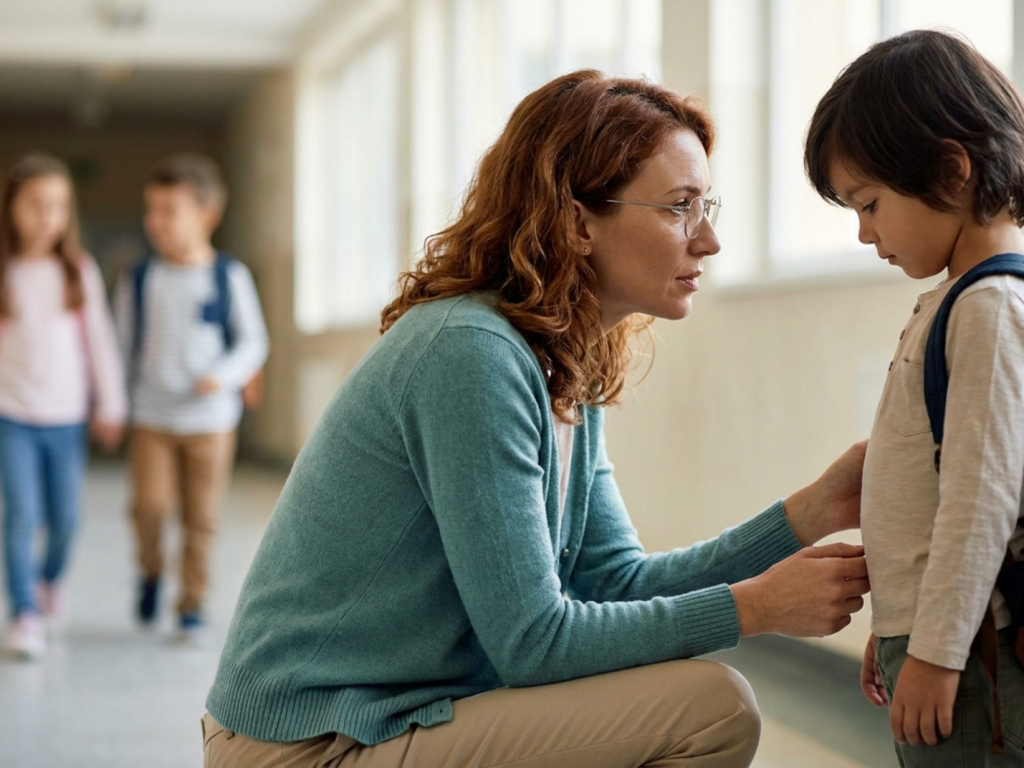
The first conversation often sets the emotional tone. Start by letting the child tell the story in their own words. Use simple reflective statements such as, “That sounds really painful,” or, “You were expecting to be included, and that did not happen.” This kind of emotional validation helps the child feel understood before any advice is offered.
Try not to interrogate the child for every detail or rush into blame. If you react with outrage toward the other child, your child may feel temporarily defended but less able to think flexibly about the situation. Calm curiosity works better than alarm. You might ask: “What did you notice?” “How did you feel?” and “What do you think you want to do next?”
After listening, help the child separate facts from interpretations. For example, “Your friend spent time with someone else today” is a fact. “My friend does not care about me anymore” is an interpretation. This distinction supports emotional regulation and reduces catastrophic thinking. If the child is ready, you can brainstorm next steps together, such as inviting the friend to play later, spending time with another peer, or taking a short break from the situation before deciding what to say.
Useful responses in the moment include:
- “I can see why that hurt.”
- “You do not have to solve it right this second.”
- “Let’s think about what feels kind and safe for you.”
- “It makes sense to feel left out.”
Helping children build coping skills at home
Home is a good place to strengthen coping because children can practice emotions without the pressure of peers watching. One important skill is naming the feeling accurately. A child who says “I am mad” may also be sad, embarrassed, or afraid. Putting words to the full emotion can reduce distress and support regulation. Some children respond well to drawing, writing, or pretend play when direct conversation feels too hard.
It can also help to keep daily routines steady. Predictable meals, sleep, and homework times do not solve friendship pain, but they reduce the overall stress load. When children are emotionally overloaded, small disappointments can feel much larger. Stability gives the nervous system fewer reasons to stay on alert.
Encourage a wider social network rather than making the excluded friend the only social focus. That might mean arranging playdates, joining clubs, or helping the child connect with classmates through shared interests. The purpose is not to replace one child with another; it is to reduce dependence on a single relationship for all belonging.
Children also benefit from social competence coaching, which is a practical way of rehearsing skills such as joining play, handling silence, reading cues, or inviting someone in a specific way. Coaching should be gentle and specific, not corrective in a shaming tone. For example, instead of “You need to be more social,” try, “Let’s practice how you might ask to join a game.” Over time, these small rehearsals can improve confidence.
Working with school staff when exclusion repeats
If the pattern is happening at school, the child’s teacher, counselor, or school psychologist may have useful observations. Teachers can sometimes notice teacher observations of peer interactions that children do not fully describe at home, such as repeated exclusion during group work, lunch, or recess. Their perspective can clarify whether this is a temporary friendship shift or part of a broader social pattern.
School-based support is especially important when the child appears isolated, targeted, or persistently left out. Adults can help create structured peer experiences, pair children in cooperative tasks, and monitor high-risk settings such as the playground or cafeteria. In some cases, a teacher can quietly support conflict repair after friendship problems without forcing the children to “just be friends” again.
If the child is eager, school staff can also help identify a more stable peer connection. The aim is not to pressure the child into instant social success. Rather, it is to create conditions in which healthy childhood friendships can grow through repeated, low-pressure contact. That may look like shared interests, predictable routines, and clear adult supervision.
When school concerns continue, it is reasonable to ask for a meeting and describe the pattern factually: who is involved, how often it happens, what the child reports, and how it affects daily functioning. Clear information helps staff decide whether the child needs classroom adjustments, lunch support, or a more formal school response.
When the reaction seems bigger than the event
Sometimes the child’s distress is not limited to the friendship itself. You may notice ongoing sadness, frequent tears, irritability, sleep changes, appetite changes, school refusal, or loss of interest in activities that used to matter. If the child is increasingly withdrawn or is saying that no one likes them, the emotional impact may be broader than a single friendship issue. In that situation, think about persistent sadness in children as a sign to seek more support, not as a label.
Professional input is also worth seeking if the child has a history of anxiety, trauma, learning difficulties, or long-standing peer problems, because those factors can intensify vulnerability to rejection. A pediatrician, child mental health clinician, or school-based professional can help assess how much the issue is affecting functioning and whether additional support is needed.
As a parent or caregiver, your role is to stay connected, keep listening, and notice changes over time. The child does not need to pretend the hurt is small. They need help tolerating the hurt, understanding the social meaning of what happened, and remembering that one friendship change does not define their worth or their future relationships.
Seek extra support sooner if you notice:
- The child is persistently sad, withdrawn, or tearful for more than a brief period.
- School refusal, appetite change, sleep problems, or major concentration problems appear.
- The child says they are worthless, unwanted, or that nobody likes them.
- There is repeated exclusion, teasing, or a pattern of peer rejection rather than one event.
- The child talks about self-harm, hopelessness, or not wanting to be here.
Tools & Assistance
- Pediatrician or family doctor for a check-in about mood, sleep, appetite, and functioning
- School counselor, psychologist, or teacher meeting to review peer patterns at school
- Child therapist for emotional regulation and coping skills if distress persists
- Structured playdates, clubs, or other supervised peer activities to widen social contact
FAQ
Should I tell my child to ignore it and find new friends?
Not at first. Children usually need validation before advice. Once they feel understood, it becomes easier to think about other friendships and next steps.
What if my child wants me to confront the other child’s parent?
Pause before acting. In many situations, it is better to gather facts and consider whether school staff can help first, especially if the problem is happening in a school setting.
How do I know whether this is normal friendship change or a bigger problem?
Many friendships shift as children grow. Concern rises when exclusion is repeated, when the child becomes socially isolated, or when mood and daily functioning start to change.
Can a child recover from peer rejection?
Yes. With support, children often regain confidence, build new friendships, and learn coping skills that make later social experiences easier.
Sources
- HealthyChildren.org (American Academy of Pediatrics) — Problems With Peers: How to Help Your Child Navigate Social Conflict
- Israel Ministry of Education — Coping with Peer Rejection among Pupils
- Penn State ScholarSphere — Peer Rejection: Developmental Processes and Intervention Strategies
Disclaimer
This article is for educational purposes only and is not a substitute for individualized medical or mental health advice. If a child has persistent distress, major behavior changes, or any safety concern, consult a qualified professional promptly.
















Please log in to leave a comment.