
Intro
Helping a child learn at home is less about recreating school and more about creating a steady, responsive environment where curiosity can grow. Children learn through repetition, conversation, play, reading, problem-solving, and the emotional safety of a caregiver who stays engaged without adding pressure.
Research on the home learning environment shows that age-appropriate books, enriched routines, and active adult involvement are associated with stronger language, cognitive, and academic outcomes in early childhood. That does not mean every home must look perfect. It means small, consistent habits can make a meaningful difference.
Highlights
A calm, predictable home learning environment supports attention, language, and memory more than high-intensity tutoring alone.
Short daily interactions often matter more than long sessions, especially for younger children or tired families.
Reading aloud, talking about daily routines, and using play all strengthen learning in natural ways.
Support should feel encouraging rather than corrective; stress can reduce a child’s willingness to try.
If concerns persist, it is appropriate to ask a pediatrician, teacher, or specialist for guidance.
Start with a learning-friendly home environment
The most effective home learning environment is usually simple, stable, and repeatable. A child does not need a dedicated classroom. A small table, good lighting, a few materials, and a predictable time of day can be enough. The goal is to reduce distraction and make it easier for the brain to settle into a task.
Research suggests that homes with age-appropriate books, language-rich conversation, and caregiver engagement are associated with better early cognitive and academic outcomes. That can mean reading materials within reach, labels or pictures that support routines, and adults who notice what the child is doing rather than hovering or over-correcting.
It also helps to think about the emotional climate. A child learns more easily when they feel safe asking questions and making mistakes. Try to keep your tone calm, your expectations clear, and your praise specific. For example, naming effort, persistence, or a good strategy is often more useful than vague praise.
Small environmental changes can matter:
- Keep the work area tidy and stocked with pencils, paper, books, and a timer.
- Reduce background noise during focused tasks.
- Place learning materials where the child can see and reach them.
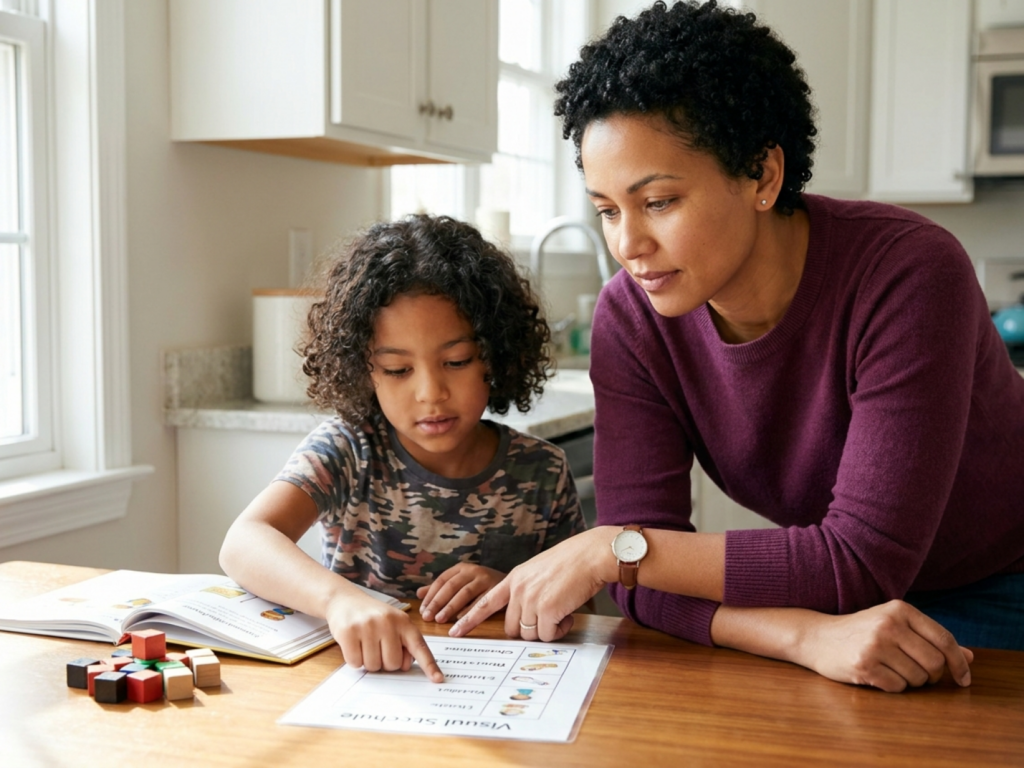
- Use visual cues such as a picture schedule or a checklist for the day.
Use routines to protect attention and reduce friction
Children usually do better when learning happens at a predictable time. Routine helps the brain prepare for effort, just as sleep and meals prepare the body. A consistent after-school or morning study block can reduce negotiation and make it easier to begin.
For many families, the best routine is brief. Ten to twenty minutes of focused work, followed by a short break, may be more effective than a long session that ends in fatigue. This is especially true for younger children, children with developing executive function, or children who become overwhelmed easily.
A simple routine can look like this:
- Check the plan for the day.
- Choose one task to start.
- Work for a short, defined period.
- Take a movement or snack break.
- Review what was completed and stop on time.
If homework stress in children is becoming a regular pattern, look first at the structure, not the child’s character. The task may be too long, the instructions may be unclear, or the child may need more support to transition from play to work. A calmer entry point often leads to better cooperation.
Build learning into daily conversation, reading, and play
Learning at home does not have to look formal to be effective. Conversation is one of the strongest tools you already have. Talking through cooking, shopping, cleaning, or travel gives children repeated exposure to vocabulary, sequencing, categorization, and problem-solving. You can ask open questions such as, What do you think will happen next, or How are these two things alike?
Reading aloud remains one of the most powerful home practices. It supports phonological awareness, comprehension, background knowledge, and attention span. Choose age-appropriate books, and let children retell the story, predict the ending, or point out unfamiliar words. Older children can read part of the text aloud while you listen without interrupting every mistake.
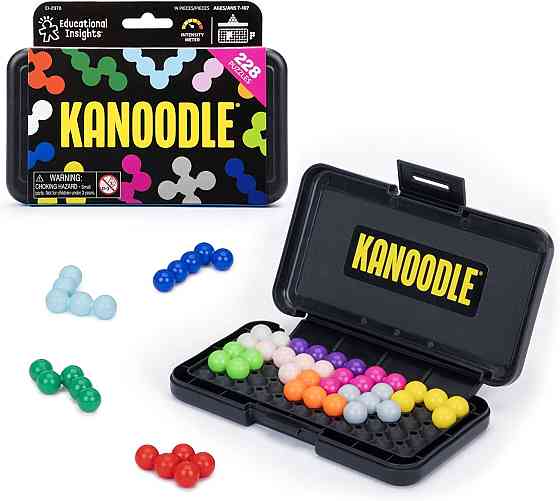
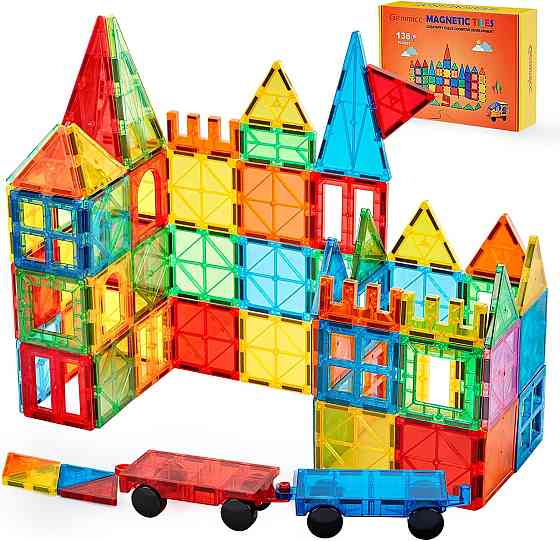
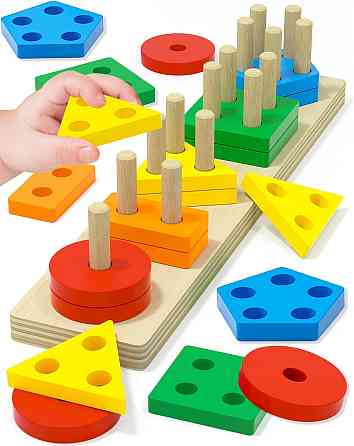
Play also has real educational value. Blocks, board games, drawing, pretend play, puzzles, and sorting tasks all build cognitive flexibility and working memory. You can strengthen numeracy by counting objects during everyday activities, and you can support language by narrating actions: first we wash the fruit, then we cut it, then we share it.
These activities work best when the adult stays present and responsive. The point is not to turn every moment into a lesson. It is to notice that children learn through repeated, meaningful interactions.
Support focus, motivation, and executive function
Some children know the material but still struggle to start, stay organized, or finish tasks. That pattern often reflects executive function demands rather than lack of intelligence or effort. Executive function includes working memory, cognitive flexibility, inhibition, planning, and self-monitoring. These skills develop gradually and are vulnerable to fatigue, stress, and overstimulation.
You can lower the cognitive load by making tasks smaller and more concrete. Instead of saying, Do your reading, try, Read one page and tell me the main idea. Instead of saying, Clean your room, try, Put the books on the shelf and the clothes in the basket. Clear instructions reduce ambiguity and help the child experience success sooner.
Motivation usually improves when children have some choice. Let them choose the order of tasks, the pencil they use, or whether they begin with a written or oral activity. Choice supports autonomy, and autonomy often reduces resistance. Praise should focus on what the child did, not on fixed traits. For example, You stuck with that puzzle even when it was hard is more useful than You are so smart.
When attention drifts, try a reset rather than a lecture. A brief stretch, a sip of water, or a two-minute movement break can help the nervous system re-engage.
Notice when learning struggles may need extra support
Every child has uneven days, but persistent learning problems deserve attention. If a child continues to fall behind in reading, writing, math, attention, memory, or language despite regular support, it may be time to ask for help. The phrase learning difficulties in children covers a wide range of concerns, from slower skill acquisition to more specific issues with processing or organization.
Start by observing patterns. Does the child avoid one type of task repeatedly? Do they become unusually frustrated, tired, or worried during schoolwork? Are there concerns about speech, hearing, vision, sleep, or emotional distress that could be affecting learning? These details can help a clinician or educator understand what is going on.
Support may come from several places: the pediatrician, the classroom teacher, a school psychologist, a speech-language pathologist, or an educational specialist. Families sometimes worry that asking for help means overreacting, but early guidance can prevent small problems from becoming entrenched. It can also clarify whether the child simply needs a better routine or whether more formal learning support is appropriate.
If there is a sudden change after illness, injury, or concussion, seek medical advice promptly. A new learning problem is not something to ignore.
Make progress measurable, realistic, and encouraging
Children often do best when adults measure progress in small, visible steps. Instead of expecting a perfect outcome, notice whether the child is reading a little longer, starting more quickly, or needing fewer reminders. These are meaningful gains. They show developing independence and help the child feel that effort matters.
It can help to keep a simple log for one or two weeks. Record the time of day, the task, the child’s mood, and what seemed to help. Patterns often emerge. A child may concentrate better after a snack, may struggle when rushed, or may do better with oral instructions before written ones. This information is practical and can be shared with a teacher or clinician if needed.
Try to balance structure with warmth. Many children learn more when they experience consistency without shame. If an activity ends in frustration, pause and return later rather than pushing until everyone is upset. Protecting the relationship is part of protecting learning.
Most importantly, remember that helping a child learn at home is a long game. Families do not need to solve everything at once. A few reliable habits, repeated with patience, can build confidence, skill, and trust over time.
When to get extra help
- A sudden decline in reading, writing, language, attention, or behavior should be reviewed.
- Persistent schoolwork avoidance, distress, or fatigue may signal that the routine needs adjustment or professional input.
- If hearing, vision, sleep, mood, or a recent concussion may be affecting learning, contact a healthcare professional.
- Do not wait for a child to become deeply discouraged before asking for school or medical support.
Tools & Assistance
- A small set of age-appropriate books kept where the child can reach them
- A visual schedule or checklist for daily routines
- A timer for short work periods and planned breaks
- Free literacy, math, and STEM materials from public education resources
- A simple notebook to track attention, mood, and task difficulty
FAQ
How much time should a child spend learning at home each day?
There is no single ideal amount. Short, consistent sessions are often more useful than long, exhausting ones, especially for younger children.
What if my child resists every learning activity?
First check whether the task is too hard, too long, or too unclear. Children often respond better to smaller steps, predictable routines, and more choice.
Is reading aloud still useful for older children?
Yes. Reading aloud can support comprehension, vocabulary, and shared discussion even after a child can read independently.
When should I ask for professional help?
Seek help if difficulties are persistent, severe, associated with distress, or linked to speech, hearing, vision, sleep, mood, or a recent injury.
Sources
- PubMed Central — Home-learning environment and cognitive and academic outcomes in early childhood: evidence from a large cohort study
- Taylor & Francis Online — The home learning environment and its role in shaping children’s educational development
- U.S. Department of Education — Resources for Learning at Home
Disclaimer
This article is for general educational purposes and does not replace advice from a pediatrician, teacher, psychologist, or other qualified professional. If you are worried about a child’s learning, development, mood, or safety, seek individualized guidance.















Please log in to leave a comment.