
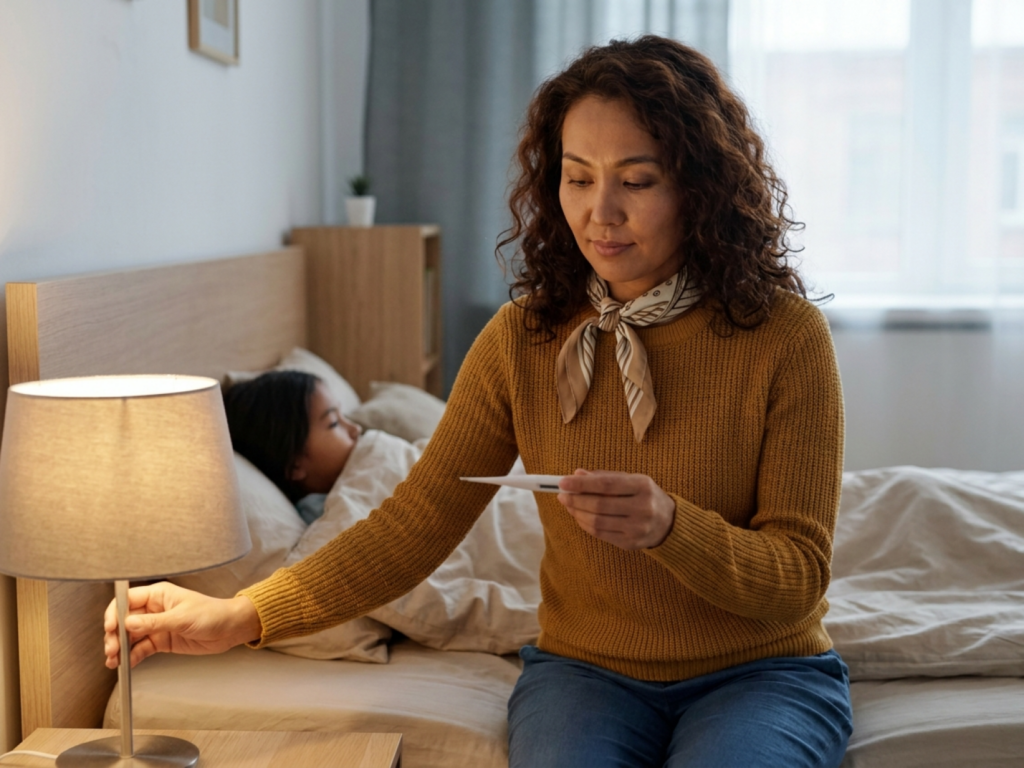
Intro
Many parents focus on bedtime routines, yet the bedroom itself can strongly shape how well a child sleeps. Light, noise, and temperature are not small details; they are biologic signals that tell the brain whether it is safe to settle into sleep or stay alert. When these cues are mismatched, a child may take longer to fall asleep, wake more often, or sleep less deeply.
This article explains how the sleep environment affects sleep quality in children, why the effects are strongest at bedtime and overnight, and how to make practical changes without turning sleep into a battle. The goal is not perfection. It is to create a room that supports the child’s natural sleep drive and makes nights easier for the whole family.
Highlights
Light, noise, and room temperature act on the child’s brain and body, not just on comfort.
Evening light exposure can delay sleepiness by affecting circadian rhythm and melatonin release.
Intermittent noise tends to disrupt sleep more than steady, predictable sound.
A room that is too warm or too cold can fragment sleep and increase night waking.
Small environmental changes often help, but persistent sleep problems still deserve medical review.
Why the sleep environment matters for children
Sleep is regulated by two major systems: the sleep drive, which builds across the day, and the circadian rhythm, which organizes sleepiness and alertness over 24 hours. Environmental cues can either support these systems or push against them. For children, this matters especially because their sleep architecture is still developing, and many are more sensitive than adults to small disruptions.
Light, sound, and temperature influence sleep through different mechanisms. Light reaches the retina and signals the brain about time of day. Noise can trigger brief arousals even when a child does not fully wake up. Temperature affects thermoregulation, which is closely tied to sleep onset and sleep continuity. In practice, this means that a bedroom that is too bright, too noisy, or too warm may cause trouble even when bedtime is consistent.
It also helps to remember that a child’s bedroom is part of a larger sleep pattern. A child sleep diary can show whether poor sleep happens on noisy nights, after late screen use, or during seasonal temperature changes. That kind of pattern can be more informative than a single bad night.
Light and the body clock
Light is the strongest environmental cue for circadian timing. Bright light in the evening, especially blue-enriched light from screens or overhead LEDs, can suppress melatonin and delay the feeling of sleepiness. In children, that delay can be subtle at first, then show up as long sleep onset latency, bedtime resistance, or a later body clock over time.
A good goal is not total darkness from sunset onward, but low light in the hour or two before bed. Soft, warm-toned lamps are usually easier on the sleep system than bright ceiling lights. For children who need a nightlight for safety or reassurance, a dim and indirect option is often less disruptive than a bright room light. Blackout curtains can also help when outside light from streetlamps, early sun, or passing cars enters the room.
Screen light deserves special attention because it combines brightness, close viewing distance, and mental stimulation. Not every child reacts the same way, but consistent screen boundaries before bed can make the bedroom feel more like a sleep cue than an alertness cue. If a child has trouble settling, it is worth checking the lighting in the whole evening sequence, not only the moment the lights go out.
Noise, arousals, and night waking
Noise can fragment sleep even when it does not fully wake the child. Reviews of sleep environments suggest that sound levels should ideally stay below about 35 to 45 dB, though the exact threshold depends on the child and on whether the noise is steady or sudden. A steady background sound is often easier for the brain to ignore than intermittent noise such as door slams, traffic bursts, coughing, barking, or hallway voices.
That difference matters because arousal is not all-or-nothing. A child may roll over, move into lighter sleep, or wake briefly and settle again without calling out. Over a night, those small arousals can reduce sleep quality and make mornings feel harder. Families sometimes notice that the child seems “sleeping” but is still restless, sweaty, or waking several times. In some homes, the problem is not volume alone but unpredictability.
Simple changes can help: close the bedroom door, seal obvious gaps, move noisy devices away from the bed, or use soft furnishings that reduce echo. If a family uses a sound machine, the volume should stay low rather than masking the room with loud noise. The aim is to lower the total sensory load, not replace one type of disturbance with another.
Temperature, comfort, and overheating
Thermal comfort is a major part of sleep quality because the body naturally cools as sleep begins. When a room is too warm, this cooling process can become less efficient, which may delay sleep onset and increase awakenings. When a room is too cold, the child may spend more energy maintaining warmth and may also sleep more lightly. Reviews of optimal sleep environments commonly place the bedroom around 20 to 24 °C, while also emphasizing that comfort depends on clothing, bedding, humidity, and age.
Children often cannot describe thermal discomfort clearly, so adults may need to look for indirect clues. A child who kicks off blankets repeatedly, wakes sweaty, or feels flushed may be too warm. A child who curls tightly, complains of being cold, or keeps waking soon after sleep onset may need more warmth or a different bedding layer. Because younger children may not judge temperature reliably, a quick check of the neck or upper back can be more useful than hands or feet, which are naturally cooler.
Breathable sleepwear, layered bedding, and a stable room temperature are usually more effective than a heavy blanket alone. Seasonal changes matter too. A bedroom that feels fine in the afternoon may become too warm once doors are closed and lights are on, or too cool in the early morning. The best target is a stable, comfortable thermal environment rather than a fixed number without context.
Putting the three factors together at bedtime
The most helpful approach is usually a small, consistent sleep-environment plan. A predictable bedtime routine can make the room’s cues easier for the brain to learn: dim light signals winding down, quiet signals safety, and comfortable temperature supports settling. This is especially useful when the child is already tired, because a tired child may be less resilient to sensory disruption.
Because child sleep needs by age differ, the same setup will not fit every household. A preschooler who wants a nightlight may need a different plan from a teenager who uses a reading lamp. Likewise, a child with asthma, allergic rhinitis, eczema, or sensory sensitivity may respond differently to heat, bedding, or background sound. The key is to observe patterns rather than assume one universal answer.
A practical bedroom audit can be done in a few minutes:
- Check whether the room is dark enough for sleep but still safe for the child’s age and needs.
- Look for intermittent noise from outside, electronics, siblings, or HVAC systems.
- Notice whether the room feels warm, stale, or drafty after lights-out.
- Track whether changes in light, sound, or temperature line up with night waking or later sleep onset.
If the environment seems optimized but sleep is still poor, think beyond the room. Persistent insomnia-like symptoms, habitual snoring, gasping, daytime sleepiness, pain, anxiety, reflux, or movement symptoms need medical review. The bedroom matters, but it is only one part of the child’s sleep picture.
When to seek medical advice
- A child who snores loudly, gasps, or seems to struggle to breathe during sleep should be assessed by a clinician.
- Persistent night waking, morning headaches, daytime sleepiness, or school behavior changes deserve medical review.
- Do not ignore a bedroom that is consistently too hot or too cold, especially in very young children.
- If poor sleep comes with fever, pain, cough, wheeze, or other illness signs, contact a healthcare professional.
- Environmental changes help many children, but they do not replace evaluation for sleep-disordered breathing or other medical causes.
Tools & Assistance
- Blackout curtains or room-darkening shades
- A simple room thermometer
- A low-range decibel meter app
- A child sleep diary
- Pediatrician or pediatric sleep specialist
FAQ
How dark should a child's room be?
As dark as is comfortable and safe for the child. If a nightlight is needed, keep it dim and indirect.
What noise level is best for sleep?
Reviews often suggest keeping bedroom noise below about 35 to 45 dB when possible, with special attention to sudden intermittent noise.
Is 20 to 24 °C right for every child?
It is a common target range, but comfort also depends on age, bedding, humidity, clothing, and individual sensitivity.
Can room conditions cause night waking?
They can contribute. Light, noise, and temperature may fragment sleep, but persistent night waking should also be discussed with a clinician.
Sources
- PubMed — A Review of Environmental Parameters Necessary for an Optimal Sleep Environment
- Military Medicine — A Review of Environmental Barriers to Obtaining Adequate Sleep in Military Settings
- PubMed Central — Development and Initial Validation of the Assessment of Sleep Environments and Environmental Factors Instrument
Disclaimer
This article is for educational purposes only and is not a substitute for advice from a pediatrician or sleep specialist. If a child has persistent sleep problems or breathing concerns, seek professional medical evaluation.














Please log in to leave a comment.