

Intro
Child development is shaped by a wide set of influences that begin before birth and continue through infancy, childhood, and the school years. Biology matters, but so do nutrition, caregiving, safety, stimulation, and the wider social environment.
For a medically literate reader, it is useful to think of development as the product of interacting systems: physical growth, brain maturation, language exposure, emotional security, and day-to-day opportunities to learn. No single factor fully determines outcome, and many risks are modifiable when identified early with professional support.
Highlights
Development reflects the interaction of biology, caregiving, nutrition, and environment rather than one isolated cause.
Early life factors such as gestational age, birth weight, and prenatal health can shape later outcomes.
Responsive caregiving, play, and language-rich interaction support motor, cognitive, and social-emotional growth.
Safety, clean water, sanitation, and access to health care are basic developmental supports, not extras.
Persistent delays or loss of skills should prompt developmental surveillance in children by a qualified clinician.
Biological and prenatal influences
Development begins long before a child reaches school age. Gestational age, fetal growth, birth weight, and perinatal complications can all influence neurodevelopmental trajectory. In the scientific literature, these early biological conditions are associated with later differences in motor, language, cognitive, and behavioral outcomes, although they do not determine a child’s future on their own.
Pregnancy health also matters. Maternal illness, poor nutrition, infection, substance exposure, and inadequate prenatal care can affect fetal growth and organ development. Birth mode is sometimes discussed in research, but it is only one variable among many and is rarely a standalone explanation. The key point is that the developing brain and body are sensitive to the intrauterine environment, especially during rapid periods of growth.
Genetic factors contribute as well. Some children inherit vulnerabilities that affect growth, attention, language, or sensory processing. Those inherited influences often interact with environment, so the same biological starting point may lead to very different outcomes depending on postnatal care, stress exposure, and opportunity. That is why a careful developmental history is more useful than a single label or test result.
Nutrition, growth, and physical health
Adequate nutrition is one of the most consistent supports for healthy growth and development. Breastfeeding, when possible and desired, can be beneficial, and so can appropriate complementary feeding once an infant is ready. After infancy, children need enough energy, protein, iron, iodine, zinc, and other micronutrients to support rapid tissue growth and brain development. Chronic undernutrition can slow growth and weaken attention, stamina, and learning, while excess weight gain may also affect health and daily functioning.
Physical health problems can interfere with development in subtler ways. Recurrent ear infections may affect hearing and speech acquisition. Vision problems can limit exploration and learning. Sleep disruption can worsen behavior, emotional regulation, and concentration. Chronic disease, pain, or fatigue may reduce a child’s ability to participate in play and school routines. For that reason, developmental concerns should not be viewed only through a behavioral lens.
Immunization, routine health care, and prompt treatment of illness also matter. They reduce preventable disease burden and protect the energy a child needs to explore and learn. Clean water, sanitation, and a stable feeding environment are part of health care in the broader sense, because they reduce infection and support normal growth. If families are worried about intake, weight gain, or feeding difficulty in infancy, professional assessment is preferable to trial-and-error restrictions.
Caregiving, attachment, and emotional security
Responsive caregiving is a central driver of early development. Children learn through repeated interaction with adults who notice cues, respond consistently, and help them regulate distress. This is the basis of serve-and-return interactions: the child signals, the caregiver responds, and over time the exchange builds attention, language, and trust. In infancy and toddlerhood, these interactions are especially important for emotional regulation, secure attachment, and early communication.
Caregiving does not have to be perfect to be effective. What matters most is reliability, warmth, and the ability to repair mismatch after a difficult moment. When a caregiver talks, sings, labels objects, and follows the child’s focus, language and social development are reinforced at the same time. When caregivers are overwhelmed by depression, anxiety, violence, or extreme stress, children may receive less attuned input and more unpredictable responses, which can affect self-soothing and behavior.
Stress biology is relevant here. Chronic, unbuffered stress can influence the hypothalamic-pituitary-adrenal axis and may affect sleep, immunity, and learning readiness. A stable adult relationship can buffer that stress. This is one reason family support, parental mental health care, and practical assistance are part of child development care, not separate from it.
Play, language, and the learning environment
Children develop through experience-dependent learning, meaning the brain changes in response to repeated input. Play is one of the most efficient forms of that input. Block play, pretend play, drawing, movement games, and simple turn-taking all support motor coordination, problem-solving, and social understanding. For young children, play is not a luxury added after learning; it is one of the main ways learning happens.
Language exposure is equally important. Children who hear rich, responsive speech tend to develop stronger vocabulary and narrative skills over time. This does not require elaborate lessons. Frequent naming, reading aloud, waiting for the child to respond, and expanding on the child’s words are all effective. In early childhood settings, the quality of communication often matters more than the quantity of worksheets or formal instruction.
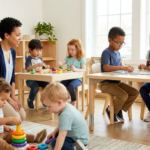
School climate and child development are closely linked. Predictable routines, respectful teacher-student relationships and emotional regulation support, and classrooms that feel safe and inclusive can improve engagement and persistence. Conversely, frequent conflict, bullying, or sensory overload can reduce a child’s capacity to concentrate and participate. The best educational environments recognize that cognitive growth, behavior, and emotional security are connected.
Safety, housing, and social determinants
Development also depends on the conditions in which a child lives. WHO emphasizes safety, security, learning opportunities, clean water, sanitation, breastfeeding support, immunization, and safe play environments as core elements of healthy growth and development. These are not optional extras. They determine whether a child can explore, recover from illness, and practice emerging skills without constant threat or disruption.
Broader social determinants matter as well. Poverty, food insecurity, unstable housing, exposure to violence, and caregiver work strain can all limit the time, resources, and emotional bandwidth available for child-rearing. In research, parental education is often associated with child developmental outcomes, likely because it reflects multiple influences, including health literacy, access to resources, communication style, and the ability to navigate services. The relationship is real, but it is not destiny. Many families create excellent developmental environments under difficult conditions.
Environmental toxins can be especially harmful because children are more vulnerable during rapid brain growth. Lead exposure, tobacco smoke, and other pollutants can affect cognition and behavior. Good housing, clean indoor air, and preventive public health measures can lower those risks. When professionals assess developmental concerns, they should think broadly about the child’s surroundings, not only the child’s abilities.
Monitoring milestones and acting early
Because development is variable, clinicians use developmental surveillance in children to track progress over time rather than relying on a single visit. Surveillance looks at milestone attainment, caregiver concerns, behavior, language, motor skills, social interaction, and daily functioning. Structured developmental screening may add another layer of detection when concerns are subtle or when a child has recognized risk factors.
Early referral matters because the brain remains plastic, especially in the first years of life. When delays are identified early, families can access speech-language therapy, occupational therapy, hearing evaluation, vision testing, nutrition support, or early intervention services as appropriate. The goal is not to assign blame or force a diagnosis. It is to match the child’s needs with practical help as soon as possible.
Regression deserves particular attention. If a child loses language, social interest, motor ability, or self-care skills that were already present, that is more concerning than slow progress alone. Families should bring such changes to a pediatrician or specialist promptly. Many children with delays do well once underlying causes are recognized and supports are in place, but waiting tends to reduce options rather than improve them.
When to seek medical review
- Loss of previously acquired skills needs prompt evaluation.
- Poor feeding, faltering growth, or persistent vomiting should not be ignored.
- Ongoing language delay, poor eye contact, or limited social response warrants assessment.
- Hearing or vision concerns can mimic developmental delay and should be checked.
- Severe sleep problems, unexplained pain, or major behavior change may signal an underlying condition.
Tools & Assistance
- Routine pediatric well-child visits
- Developmental screening in primary care
- Early intervention services
- Speech-language pathology or occupational therapy referral
- Public health or family support programs
FAQ
Is one factor usually responsible for delayed development?
Usually no. Development is typically influenced by several factors at once, including biology, nutrition, caregiving, safety, and access to learning.
Can a supportive home environment offset early risk?
It can reduce risk and improve outcomes substantially, especially when children receive responsive caregiving, good nutrition, and early support.
Should parents wait and see if a delay improves on its own?
Not if there is concern about regression, loss of skills, or a clear delay in language, motor, or social milestones. Early assessment is better.
Do school and childcare settings really matter for development?
Yes. Safe routines, responsive adults, and predictable relationships support learning, behavior, and emotional regulation.
Sources
- World Health Organization — Healthy growth and development
- PubMed — Early child development and its determinants
- UNICEF — Care for Child Development
Disclaimer
This article is for general educational purposes and does not replace individualized medical advice, diagnosis, or treatment. If you are concerned about a child’s growth, behavior, or milestones, speak with a pediatrician or qualified health professional.














Please log in to leave a comment.