
Intro
Taking a baby through an airport security checkpoint can feel stressful, particularly when you are balancing feeding, diapers, medical equipment, luggage, and an unsettled infant. The process is usually manageable when you know what screening staff may ask you to do and organize essential items so they can be presented efficiently.
Security procedures vary by country, airport, and the equipment being screened. The guidance below focuses on practical preparation for family travelers, while recognizing that airport security officers have final authority at the checkpoint. Plan extra time, communicate clearly, and ask for assistance when you need it.
Highlights
A baby generally cannot remain in a stroller or car seat while that equipment passes through screening.
Infants may usually be carried through the walk-through metal detector, including in some carriers or slings, subject to local procedures.
Breast milk, formula, baby food, and medically necessary liquids should be declared and presented separately for inspection.
Keeping your baby emotionally regulated is as important as organizing documents and luggage; feed, comfort, and pause when practical.
Parents and guardians should remain with their children throughout the screening process.
Plan the checkpoint before leaving home
Begin with the assumption that security will require several separate tasks: removing the baby from a stroller or car seat, placing equipment on the conveyor or in a designated inspection area, unpacking selected liquids, and moving through the screening point while maintaining physical contact or close supervision. Reviewing the airport and airline instructions in advance can reduce cognitive load on the day of travel.
Build a time buffer into your itinerary. A baby may need to feed, be changed, or soothed precisely when you are trying to remove shoes, fold a stroller, or retrieve documents. Arriving early also gives you time to ask about a family or accessible screening lane. These lanes may provide more space and a slower pace, although availability differs by airport.
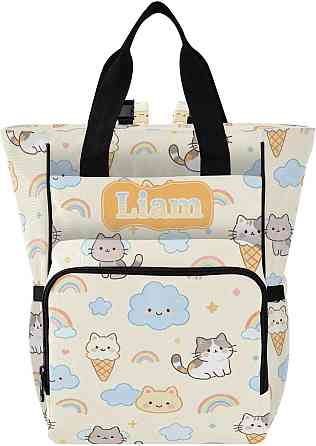
Pack the diaper bag according to function rather than simply filling every pocket. Keep feeding supplies, diapers, wipes, a change of clothing, and any prescribed medicines easy to reach. Place liquids together in a way that allows you to remove them without unpacking the entire bag. A written feeding and medication log can be useful for longer journeys, especially when several caregivers are sharing responsibilities.
Before entering the queue, check that your phone, passport or travel documents, boarding information, and essential medication are accessible. Ask another adult to hold the baby if one is traveling with you, but do not hand the baby to an unknown person. If you are traveling alone, tell the security officer that you need a moment to secure your baby before handling luggage.
Understand what happens to strollers and car seats
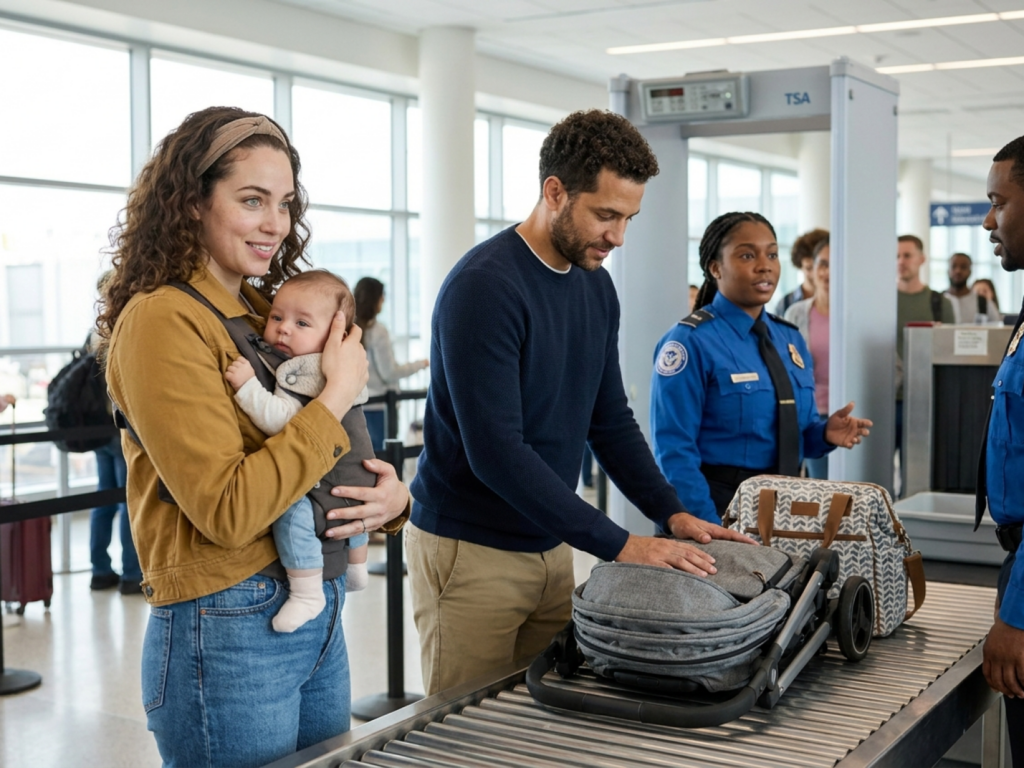
Strollers, infant carriers, and car seats are commonly inspected separately from the child. Security staff may ask you to remove the baby and place the equipment on the screening belt, send it through an imaging system, or present it for physical inspection. The exact method depends on the checkpoint layout and the size of the equipment.
Practice the sequence at home if your stroller has multiple components. Know how to release the car seat from its base, fold the stroller, and remove a detachable bassinet or accessory. Avoid attaching loose toys, blankets, or bags to the equipment immediately before screening because these items may need to be removed and can be misplaced.
Use the stroller for transport through the airport when permitted, but anticipate that you may need to carry the baby for the screening step. If your infant is in a sling or soft carrier, the officer may allow you to proceed while wearing it, or may ask for additional screening. The Transportation Security Administration notes that infants may be carried in a sling or carrier, while children and equipment remain subject to checkpoint procedures.
For a car seat that will be used on the aircraft, keep the manufacturer’s approval information available if your airline requires it. Airport security screening and airline cabin-use rules are separate issues. A car seat may pass through security but still require airline review before it can be used in the passenger cabin. Safe infant restraint in transit should therefore be confirmed with the airline before departure.
Carry and screen your baby safely
Security staff generally ask an adult to carry an infant through the walk-through metal detector. Hold the baby securely with one arm supporting the head and neck when developmentally necessary, and keep the child close to your torso. If the baby can walk reliably, the officer may ask the child to walk through the detector independently. Children are not separated from their parents or guardians during routine screening.
Try to avoid rushing while handling the baby. Place the diaper bag and personal items on the conveyor only after you have a stable hold or a safe place to set the baby down. Never put an infant on a conveyor belt, examination table without supervision, or an unattended stroller. If you need both hands to manage equipment, say so clearly and request assistance or a brief pause.
A handheld detector, pat-down, or additional inspection may be used if an alarm occurs or if the officer cannot complete screening through the standard process. Explain calmly if the baby has a medical device, orthopedic equipment, feeding tube, monitoring equipment, or another relevant condition. Ask the officer to explain the next step before changing the baby’s position.
Children age 12 and under may generally keep shoes and light jackets on under TSA procedures, but local rules may differ. Do not assume that a familiar airport process applies internationally. Follow the current instructions of the authority operating the checkpoint, and ask for clarification if an instruction is difficult to perform while holding your infant.
Manage breast milk, formula, food, and drinks
Breast milk, formula, baby food, and water for an infant may receive different treatment from ordinary liquids, but they must still be declared for inspection. Keep these supplies together and tell the officer before they enter the screening equipment. The officer may inspect containers using visual examination, additional testing, or other procedures permitted by local regulations.
Use containers that close securely and label expressed milk or prepared formula clearly for your own organization. If you are carrying expressed milk, consider bringing an insulated bag and cooling materials suitable for the journey. Security rules do not replace safe handling requirements: prepared formula and expressed milk remain perishable, and temperature control matters after screening as well as before it.
Do not conceal liquids or food in the diaper bag. Concealment can delay screening and create avoidable concern. Remove bottles, pouches, breast pumps, ice packs, and feeding accessories when requested. In Canada, CATSA specifically advises families to present baby food and drinks for inspection, and procedures can include examination of the containers or their contents.
If your baby relies on a specialized formula, thickened feed, or a medically necessary liquid, carry enough for expected delays and ask the treating clinician about transport requirements when the product is clinically essential. Avoid transferring formula into unmarked containers if doing so could make identification difficult. Security personnel determine whether an item can proceed, while a healthcare professional should advise on the baby’s feeding needs.
Keep medications and medical equipment organized
Place prescription medicines, medically necessary liquids, and feeding-related equipment where they can be identified quickly. Keep medicines in original labeled packaging when practical, and carry documentation or a medication list for complex regimens. Do not place essential medication in checked baggage if it may be needed during the journey.
Security staff may need to inspect medication containers, pumps, monitors, nebulizers, or other equipment separately. Tell the officer what an item is and whether it must remain sterile, powered, refrigerated, or connected to the infant. If a device cannot safely go through a particular screening system, request an alternative procedure and follow the officer’s instructions.
Do not use the checkpoint as a place to change a prescribed dose or improvise a feeding plan. If travel is likely to disrupt medication timing, feeding volume, or fluid intake, ask the baby’s healthcare professional for individualized advice before the trip. The clinician can also explain which symptoms during travel warrant urgent assessment.
For practical organization, keep a small accessible pouch for medicines and a separate pouch for routine diapering supplies. This reduces the chance that a needed item will be left on the inspection table. Count critical items before leaving the checkpoint, including bottles, pump parts, medication, identification, and the baby’s comfort object.
Reduce distress and protect hygiene
Checkpoint noise, bright lighting, unfamiliar handling, hunger, and interrupted sleep can increase infant crying. Crying does not mean you are failing, and you do not need to silence the baby before requesting help. Use familiar, low-stimulation measures such as holding, gentle vocal reassurance, a pacifier if normally used, or feeding when a safe opportunity is available.
Dress the baby in simple layers that are easy to adjust after screening. Keep a spare outfit accessible because spills, spit-up, or a diaper leak can occur while your belongings are being examined. Use hand sanitizer after touching shared surfaces, but keep sanitizer away from the baby’s eyes and mouth. Wash hands before preparing a feed whenever facilities allow.
Make a short reset routine for after the checkpoint: move to a clear area, secure the baby in the stroller or carrier, replace clothing, check the diaper, and then reorganize the bag. If you are traveling with another adult, assign one person to the baby and one to the belongings. If you are alone, prioritize a secure hold and essential items first; cosmetic re-packing can wait.
Parents with sensory, mobility, or postpartum recovery needs should request accommodation early. Accessibility personnel or checkpoint supervisors may be able to provide additional time or a more suitable screening arrangement. Asking for assistance is appropriate when lifting a car seat, standing for a prolonged period, or managing a medically fragile infant would be unsafe.
Handle unexpected delays or additional screening
Additional screening is not necessarily an indication that anything is wrong. It may result from an alarm, the shape of an item, a random selection, or the need to clarify a liquid or device. Stay with your baby, listen for the specific instruction, and ask concise questions if you are unsure what must be removed or where the baby should be placed.
If a baby becomes intensely distressed, tell the officer that you need to pause to provide care. You may be able to step aside while the officer retains the relevant items for inspection. Avoid leaving the checkpoint area with an uncleared bag or equipment unless staff direct you to do so. Keep your boarding pass and identification secure while the process continues.
Before travel, identify what you would do if a flight is delayed: where you can feed, how you will replenish diapers, how long cooling materials remain effective, and which supplies are truly essential. A broader travel health contingency plan can be especially important for premature infants, babies with chronic disease, or infants who depend on specialized equipment.
Seek medical advice before travel if the baby has recently been acutely unwell, has significant respiratory difficulty, requires continuous medical support, or has individualized feeding and hydration restrictions. At the airport, seek urgent clinical help for a baby who develops breathing difficulty, cyanosis, seizure activity, marked lethargy, persistent vomiting, or another emergency warning sign. Security staff can help contact airport medical services.
Safety reminders
- Never place a baby on a conveyor belt or leave the infant unattended while handling luggage.
- Do not conceal breast milk, formula, baby food, medicines, or medical equipment from screening staff.
- Do not change medication doses or feeding composition because of travel without professional advice.
- Keep the baby physically with a parent or guardian during all routine screening steps.
- Ask for assistance if lifting equipment or managing the baby creates a fall, strain, or handling risk.
- Seek urgent medical care for breathing difficulty, cyanosis, seizure activity, or unusual unresponsiveness.
Tools & Assistance
- A checkpoint-ready diaper bag with liquids and medicines grouped for inspection
- A compact changing kit and one complete spare outfit
- Original medication packaging plus a current medication list
- An insulated feeding bag with appropriate cooling materials
- The airport’s family or accessibility assistance service
FAQ
Can I carry my baby through airport security?
Usually, yes. An adult commonly carries an infant through the walk-through metal detector, although local procedures may require additional screening. Follow the officer’s instructions and keep the baby close and supported.
Does my baby have to come out of the stroller?
Typically, yes. Strollers, infant carriers, and car seats are generally screened separately from the child. Ask for help if removing the baby or folding the equipment is difficult.
Can I take breast milk or formula through security?
Baby liquids and food may be permitted under special procedures, but they must be declared and presented for inspection. Requirements vary by country and airport, so check the current authority guidance before departure.
What if my baby is wearing a medical device?
Tell the security officer before screening begins and describe the device briefly. The officer can explain the available screening method; consult the baby’s healthcare professional about travel planning and equipment requirements.
What should I do if my baby starts crying during screening?
Stay calm, maintain a secure hold, and tell the officer that you need a moment to comfort or feed the baby. Request a pause or assistance rather than rushing while handling the infant or equipment.
Sources
- Transportation Security Administration — TSA tips on traveling with small children through a security checkpoint
- Transportation Security Administration — Traveling with Children
- Canadian Air Transport Security Authority — Families
Disclaimer
This article provides general travel and security information and does not replace advice from a qualified healthcare professional or instructions from the relevant airport security authority. Seek individualized medical advice for feeding, medication, medical devices, or travel involving a medically complex infant.














Please log in to leave a comment.