
Intro
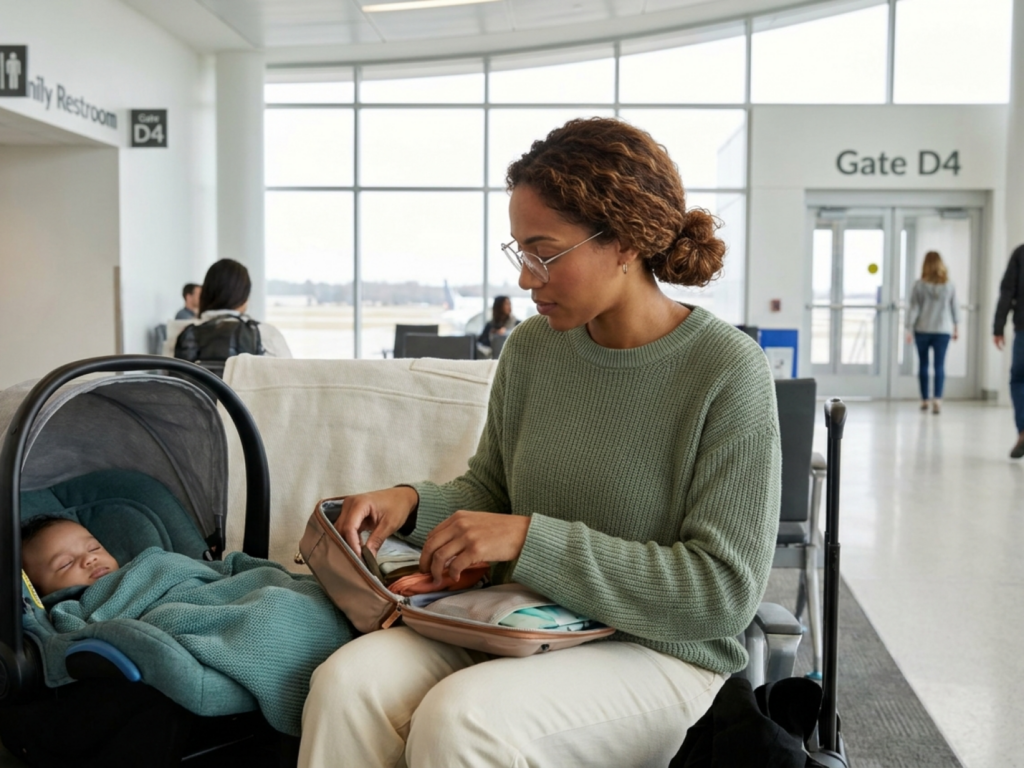
Traveling through an airport with a baby can feel like a complex clinical logistics exercise: feeding, sleep, hygiene, mobility, security screening, and time pressure all compete for attention. A realistic plan can reduce stress, but flexibility matters because infants do not follow airport schedules.
Prioritize safety and your baby's medical needs over convenience. Review airline policies, allow extra time, and speak with your pediatrician before travel if your baby was premature, has cardiopulmonary disease, recently had surgery, or has another condition that could affect air travel.
Highlights
Build extra time into every airport stage, including check-in, security, boarding, and transfers.
Use an airline-approved child restraint system whenever your baby has a purchased seat, and follow both airline and manufacturer instructions.
Pack feeding supplies, diapers, clothing, and essential medicines in your cabin baggage, with more than the minimum needed for the planned journey.
Feeding or offering a pacifier during ascent and descent may help some babies equalize middle-ear pressure.
Ask healthcare professionals about travel timing when your baby has medical complexity, prematurity, or signs of acute illness.
Start with medical and airline preparation
Before booking or departing, consider your baby’s age, birth history, current health, vaccination status, feeding method, and tolerance of routine disruption. Most healthy infants can travel by air, but the safest timing is individualized. Premature infants may have different respiratory or developmental considerations, and babies with chronic lung disease, congenital heart disease, significant anemia, immune compromise, or recent illness may need specific clearance. Contact your pediatrician or another qualified healthcare professional when there is uncertainty.
Ask the clinician whether your baby’s condition creates a risk from reduced cabin oxygen pressure, prolonged sitting, infection exposure, or difficulty accessing care in transit. Do not use air travel as an opportunity to trial a new medication or sedating product. Medicines should be discussed with a clinician, kept in original labeled packaging, and carried in the cabin rather than checked baggage.
Confirm the airline’s rules for infant age, lap travel, purchased seats, bassinets, car seats, strollers, gate checking, and family boarding. Policies differ, and an item accepted at one airport may require different handling on a connecting itinerary. Keep identification, travel documents, insurance information, medical records, and a written list of medications accessible. If traveling internationally, check destination-specific immunization and infection-prevention advice with a travel-medicine professional.
Pack for the airport, not just the flight
Pack your cabin bag around the possibility of delays, missed connections, spills, and lost checked luggage. A useful approach is to divide supplies into small, reachable groups rather than placing everything at the bottom of one large bag. Include more diapers, wipes, feeding supplies, and spare clothing than the scheduled travel time appears to require. Airports can involve long waits, and extra supplies are particularly important when a baby has a predictable feeding or elimination pattern.
- Feeding supplies: breast milk, formula, bottles, nipples, burp cloths, and any equipment needed for preparation or cleaning.
- Diapering supplies: diapers, wipes, changing pads, barrier cream if routinely used, disposable bags, and a complete change of clothes for the baby.
- Comfort items: a familiar blanket or small toy, pacifier if used, and a lightweight layer for variable temperatures.
- Health essentials: prescribed medicines, a thermometer if normally part of your care plan, and relevant medical documentation.
- Caregiver supplies: water and food for adults, chargers, identification, and a compact bag for soiled clothing.
Breast milk and formula may be subject to special security procedures, but caregivers should not assume they must discard medically or nutritionally necessary liquids. Check current airport-security guidance for every country on the itinerary and tell the security officer what you are carrying. Ready-to-feed formula can simplify preparation, while powdered formula requires safe water and clean equipment. Avoid relying on an airport shop to stock the exact formula, bottle, or specialized feeding product your baby needs.
Make check-in and security more predictable
Arrive early enough to handle document checks, baggage drop, feeding, diapering, and unexpected queues without rushing. Online check-in can reduce one step, but families may still need an airport counter for infant tickets, document verification, special equipment, or seat changes. Choose seats and services in advance where possible, then reconfirm them at the airport.
At security, explain that you are traveling with an infant and identify breast milk, formula, baby food, pumps, and medical supplies before screening begins. Procedures vary by airport. You may be asked to remove the baby from a carrier, send equipment through the scanner, or undergo additional inspection. Follow the officer’s instructions while keeping the baby physically secure. Never place a baby on a conveyor belt or unattended screening surface.
A stroller or baby carrier can preserve your arms and reduce the need to carry both an infant and luggage. A carrier may be useful in queues, but it might need to be removed during screening. A stroller can help with mobility and rest, yet it may need to be folded or gate checked. Label equipment with your name and contact details, and ask staff exactly where it will be returned at the destination or connection. Keep critical feeding and medical supplies with you even when larger equipment is checked.
Once airside, locate family facilities, accessible toilets, changing tables, water refill points, and the departure gate. An airport customer-service desk can help with directions, missed connections, and accessibility needs. Treat the gate as a staging area: complete a diaper change, offer a feed when appropriate, refill water, and organize the next essential items before boarding begins.
Use boarding time strategically
Family boarding can be helpful, but boarding first also means spending longer in the aircraft cabin. Ask whether early boarding provides enough benefit for your family. One caregiver may board early with the car seat and cabin bags while another stays in the terminal with the baby until the cabin is ready, if airline procedures permit. This can reduce the time your baby spends confined before departure.
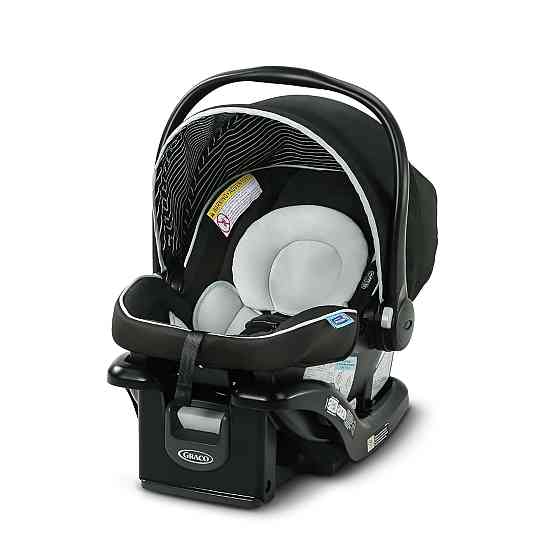
If the baby has a purchased seat, use an FAA-approved or otherwise airline-approved child restraint system appropriate for the aircraft and your baby’s size. Read the airline’s requirements before travel because not every car seat or restraint is accepted in every aircraft seat. Install it according to the manufacturer’s instructions and have the crew verify placement if needed. A properly secured restraint is more protective during turbulence than holding an infant in the arms.
For lap-travel arrangements, understand the airline’s rules and limitations. Holding a baby does not provide the same protection as an approved restraint during severe turbulence or an emergency. Keep the baby’s airway unobstructed and never cover the face with a blanket. Do not place the baby in an overhead compartment, on a tray table, or in an unapproved sleeping device. Follow crew directions during taxi, takeoff, landing, and periods of turbulence.
Before leaving the gate, identify the closest changing facility and plan how you will manage a feed or diaper change during the flight. A calm, organized handoff between caregivers is often more useful than trying to carry every item at once.
Support feeding, ear comfort, and hydration
Cabin pressure changes during ascent and descent can contribute to discomfort from middle-ear pressure, particularly while the aircraft is climbing or descending. Breastfeeding, bottle-feeding, or offering a pacifier during these periods may encourage swallowing and help some babies equalize pressure. The goal is comfort, not forcing a feed. If the baby is asleep and comfortable, waking them solely to feed may be unnecessary; ask your clinician if there is a specific medical reason to use a different plan.
Continue the baby’s usual feeding pattern as closely as practical. Watch for cues rather than using a rigid schedule, and protect milk or formula from contamination. Wash hands before preparation and feeding, use clean equipment, and follow safe storage guidance. Do not dilute formula or substitute unapproved liquids to stretch supplies. Water needs vary by age and feeding method; infants should not be given extra water unless advised by a healthcare professional.
Airplane cabins are dry, and travel can make it harder to notice ordinary feeding cues. Monitor wet diapers and behavior in the context of your baby’s normal pattern. Excessive sleepiness, markedly reduced intake, repeated vomiting, or substantially fewer wet diapers warrants medical advice. During a long journey, plan where safe feeding and hand hygiene will occur rather than waiting until the baby is distressed.
Congestion can make pressure equalization more difficult, but over-the-counter decongestants, antihistamines, and other products are not automatically safe for infants. Do not administer them for travel comfort without individualized advice from a pediatric clinician.
Handle sleep, crying, and caregiver fatigue
Sleep disruption is normal during airport and air travel. Aim for a safe, familiar routine rather than perfect nap timing. Use a clean, age-appropriate sleep surface when one is available, and keep the baby’s face and airway clear. Do not improvise sleep arrangements with loose pillows, thick blankets, seat trays, or unapproved travel accessories. If the baby sleeps in a car seat outside the vehicle or aircraft seat, move them to a firm, flat, safe sleep surface as soon as reasonably possible.
Crying is communication, not evidence that you have failed. Check the basics in a consistent order: hunger, wet or soiled diaper, temperature, pain, fatigue, and overstimulation. A quieter gate area, skin-to-skin contact when appropriate, gentle movement, feeding, or a pacifier may help. Ear pressure is one possible contributor, but crying can have many causes and should not be attributed automatically to the flight.
Share responsibilities between caregivers whenever possible. One adult can manage documents and bags while the other focuses on the baby. If traveling alone, ask airline or airport staff for practical assistance, but keep the baby and essential belongings within your control. Avoid lifting heavy luggage while holding the baby, and use changing tables rather than an aircraft seat or terminal chair for diapering. Rest, hydration, and food for caregivers improve judgment and reduce preventable handling errors.
Plan for delays, illness, and connections
Delays are easier to manage when the plan includes a reserve. Keep a small active kit outside the main cabin bag with one feed, diapers, wipes, a spare outfit, and a comfort item. On a connection, verify the next gate before walking across the terminal and allow time for another security check if required. Do not assume checked equipment will be immediately available during a connection.
Assess your baby before departure and during the journey. Fever, breathing difficulty, persistent vomiting, diarrhea, unusual lethargy, poor responsiveness, a bluish or gray color, or signs of dehydration need prompt medical attention. A baby who is difficult to wake, struggling to breathe, or showing a serious change in color requires emergency assistance rather than routine airport advice. Alert airport or airline personnel immediately and contact local emergency services as appropriate.
When a baby develops symptoms before travel, contact a healthcare professional about whether to proceed. Airlines may also have rules for passengers who appear acutely ill. Carrying a medical summary can help another clinician understand birth history, diagnoses, medicines, allergies, feeding requirements, and baseline behavior. At the destination, know how to reach local urgent care, emergency services, and the baby’s usual clinician.
After arrival, prioritize feeding, diapering, safe sleep, and recovery before adding activities. A flexible itinerary allows you to respond to the baby’s physiologic needs without turning every delay into a crisis.
When to seek medical help
- Seek urgent assistance for breathing difficulty, blue or gray coloration, unresponsiveness, seizure activity, or severe allergic reaction.
- Contact a healthcare professional for markedly reduced feeding, repeated vomiting, persistent diarrhea, unusual lethargy, or substantially fewer wet diapers.
- Ask a pediatric clinician before flying with significant cardiopulmonary disease, recent surgery, serious anemia, immune compromise, or unresolved acute illness.
- Do not give infants sedatives, decongestants, antihistamines, or other travel medicines without individualized medical advice.
- Never leave a baby unattended on a changing table, in a stroller near escalators, or with luggage and equipment outside your control.
Tools & Assistance
- Airline website or customer-service desk for infant fares, seating, restraint, stroller, bassinet, and boarding rules
- Airport security authority for current procedures involving breast milk, formula, baby food, pumps, and medical liquids
- Pediatrician or travel-medicine clinician for timing, prematurity, chronic conditions, immunizations, and destination risks
- Departure and connection airport maps for family rooms, changing facilities, accessible toilets, water points, and medical services
- A written cabin-bag checklist covering feeding, diapering, medicines, documents, clothing, and delay supplies
FAQ
Should I buy a separate seat for my baby?
A separate seat used with an approved child restraint generally offers a more secure option than lap travel, especially during turbulence. Compare the airline's rules, the restraint's approval, and advice from your pediatric clinician.
Can I bring breast milk or formula through airport security?
Many security systems provide exceptions or additional screening for breast milk, formula, and baby food, but procedures vary by country and airport. Check current official guidance and declare these items before screening.
How can I help with ear pressure during the flight?
Offering breastfeeding, a bottle, or a pacifier during ascent and descent may encourage swallowing and relieve discomfort for some babies. Do not use medication for ear pressure without medical advice.
Is a stroller useful at the airport?
A stroller can reduce carrying and provide a familiar place for the baby, but it may need to be folded at security or gate checked. Confirm handling rules and keep essential supplies in your cabin bag.
What should I do if my baby cries throughout the flight?
Check feeding, diapering, temperature, fatigue, overstimulation, and possible discomfort. Use calm soothing measures, ask the crew for practical help, and seek medical advice if crying is accompanied by concerning symptoms.
Sources
- HealthyChildren.org / American Academy of Pediatrics — Flying With Baby: Parent FAQs & Tips for Safer, Easier Air Travel
- Mayo Clinic Press — Air travel with an infant
- Pathways.org — 10 Airport Survival Tips for Parents Flying with Babies or Toddlers
Disclaimer
This article provides general educational information and is not a diagnosis or a substitute for individualized medical advice. Consult your pediatrician or another qualified healthcare professional about your baby's readiness for air travel and any concerning symptoms.













Please log in to leave a comment.