
Intro
Babies change rapidly, and the furniture that supports them must change with them. A well-chosen convertible crib, adjustable changing station, or adaptable storage system can reduce repeated purchases while helping a nursery remain functional through infancy, toddlerhood, and early childhood.
Longevity, however, should never take priority over current safety requirements. Furniture that grows with your baby must be used according to its instructions, conversion limits, and developmental-stage guidance. The safest choice is one that remains stable, structurally sound, and appropriate for the child’s present abilities.
Highlights
Convertible cribs may transition through several stages, but each configuration has its own safety requirements and hardware.
A durable design is valuable only when it remains stable, repairable, and compatible with current safety guidance.
Sleep furniture should be evaluated separately from storage, seating, and changing equipment because infant sleep carries specific risk considerations.
Your child’s developmental abilities, rather than age alone, should guide transitions such as lowering a mattress or moving to a toddler bed.
What “grows with your baby” really means
Furniture marketed as growing with a baby is generally designed to serve more than one developmental stage. The best-known example is the convertible crib. Depending on the model, it may begin as a standard crib, later become a toddler bed, then a daybed, and sometimes a full-size bed. Some products require separate conversion rails or other components, while others include the necessary parts at purchase.
These stages are not interchangeable, and a conversion should never be improvised. A crib configuration is intended for an infant who needs a fully enclosed sleep space. A toddler-bed configuration typically allows the child to climb in and out, which changes the risk profile and the supervision required. A daybed or full-size bed may be appropriate only when the child no longer needs an infant sleep environment and when the product’s instructions permit that use.
“Growing” can also describe furniture with adjustable functions rather than multiple bed forms. Examples include changing tables that convert into dressers, desks that adjust in height, high chairs that become toddler seats, and storage units with removable changing toppers. These products can reduce waste and maintain continuity in a small room, but their usefulness depends on safe construction and whether the family will realistically use the later configuration.
Before buying, read the complete conversion pathway. Identify which parts are included, which are sold separately, whether the manufacturer provides replacement hardware, and whether the product can be assembled in the intended room. A lower purchase price may not remain economical if essential conversion kits are difficult to obtain.
Choosing a convertible crib for the first stage
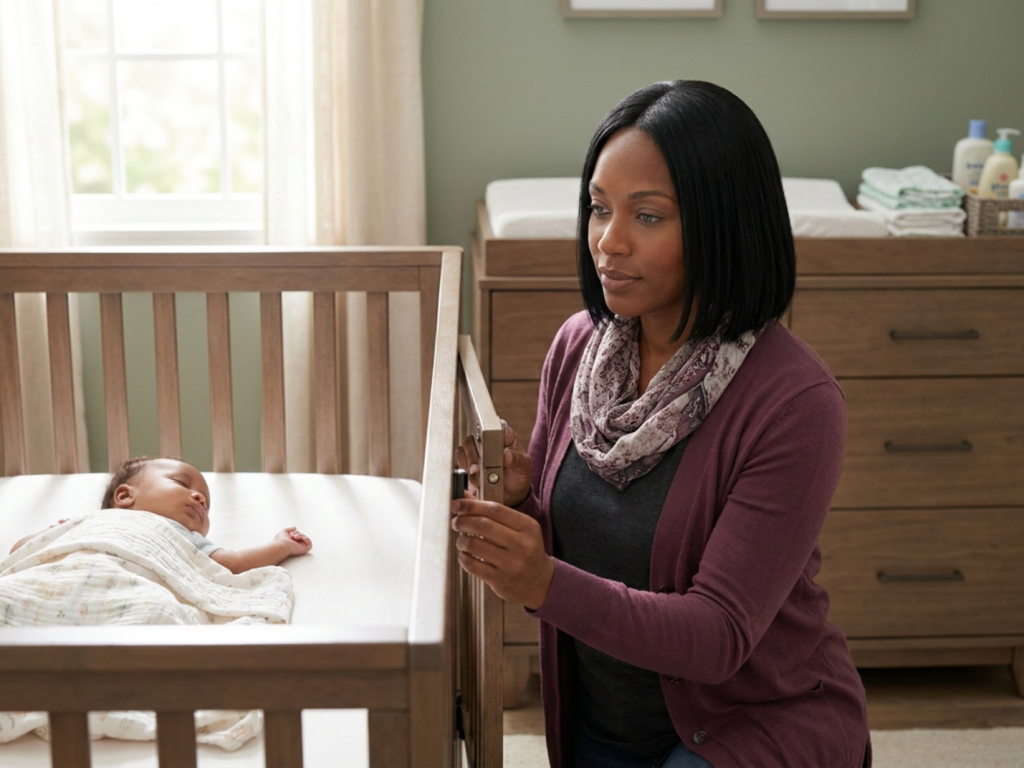
During infancy, the crib is the most safety-critical item in the nursery. Look for a firm, flat sleep surface and a mattress that fits snugly within the frame. The mattress should not leave gaps large enough for a baby’s body or limbs to become trapped. A snugly fitting crib mattress is a basic but essential part of safe crib use, regardless of how attractive or adaptable the frame may be.
Inspect the overall structure before focusing on finishes or decorative details. The frame should feel rigid rather than flexible, with evenly aligned components and hardware that tightens securely. Slats, corner posts, support brackets, and mattress-support positions should be intact and free of cracks, splinters, sharp projections, or missing parts. Avoid modifying the crib with homemade rails, drilled holes, non-approved mattresses, or accessories that alter the enclosed sleep space.
Adjustable mattress heights are useful because they can reduce caregiver strain during the early months and then allow the mattress to be lowered as the baby develops greater mobility. The lower position becomes particularly important once a baby can sit, pull up, or otherwise attempt to climb. Transition timing should follow the manufacturer’s instructions and the child’s abilities. A healthcare professional can also help address questions when a child has specific motor, neuromuscular, or medical considerations.
Product evaluation should include usability, not only longevity. Consumer testing and review resources can help parents compare assembly, stability, finish quality, conversion requirements, and everyday convenience. A crib that technically offers four stages but is difficult to convert or has poorly organized instructions may be less practical than a simpler model with clear documentation.
Safety across changing developmental abilities
Development changes the way a child interacts with furniture. A newborn generally needs a protected sleep space, while an older infant may roll, sit, pull to stand, and reach beyond the crib rails. These abilities can emerge at different times, so chronological age is only one part of the decision-making process. Observe what your baby can do and review the product’s limits before changing the setup.
For infant sleep, follow current safe-sleep guidance: use the crib’s approved mattress with a fitted sheet and keep the sleep space free of pillows, loose blankets, bumpers, stuffed toys, and other soft objects. A bare infant sleep space reduces opportunities for suffocation, entrapment, and airway obstruction. Furniture that converts later does not make an unsafe infant setup acceptable during the crib stage.
Once a child begins attempting to climb out, the family may need to lower the mattress or consider a manufacturer-approved transition. The change should be planned before an urgent overnight escape occurs. Check that every fastener is present and tight after adjustment, and verify that the toddler-bed configuration has no openings where the child could become trapped. Do not add portable bed rails or barriers unless they are specifically approved for that product and developmental stage.
The rest of the room must evolve as mobility increases. Secure tall dressers, bookcases, and changing units to the wall as directed. Furniture tip-over prevention is essential because toddlers pull, climb, and reach in ways infants cannot. Keep cords, monitor cables, and window-covering cords out of reach, and reassess the location of lamps, storage baskets, and small objects after every major developmental change.
Changing stations, dressers, and storage that adapt
A changing table that later becomes a dresser can be an efficient use of space, but the changing function is temporary and requires active supervision. Never leave a baby unattended on an elevated surface, even for a few seconds. Keep one hand on the child when reaching for supplies, and place diapers, wipes, clothing, and skin-care products within easy reach before beginning.
Choose a changing surface with a stable base, an approved changing pad, and the restraint system specified by the manufacturer. A safety strap can reduce movement but cannot prevent every fall and should not replace hands-on supervision. Check the pad’s fit and inspect the surface regularly for warping, loose fasteners, or separation from the dresser.
After the changing stage ends, remove or store the changing topper exactly as instructed. Confirm that the underlying dresser is stable in its new configuration and that drawers cannot be pulled out in a way that creates a climbing hazard. Use drawer stops where provided, anchor the unit to the wall, and place heavier items in lower drawers to improve stability.
Adaptable storage is also useful when it supports predictable organization. Open shelves can hold frequently used supplies early on and books or clothing later, but any shelf within a child’s reach should be securely anchored. Avoid storing medications, cleaning agents, cosmetics, batteries, or small objects in accessible drawers. As children become mobile, the nursery should undergo a broader developmental home safety scan rather than relying on the furniture’s original purpose.
Inspecting condition, hardware, and conversion kits
Long-term use makes routine inspection more important. At least periodically, examine joints, bolts, screws, mattress supports, wheels, hinges, drawer slides, and anchoring hardware. Tighten components according to the instructions, but do not overtighten to the point of damaging the material. If a structural part is cracked, bent, unstable, or missing, stop using the affected configuration until the manufacturer provides an approved replacement or repair pathway.
Keep the assembly manual, model number, purchase information, and conversion instructions in a reliable place. This information is valuable when a family moves, inherits a used component, or needs replacement hardware. Do not assume that parts from a similar-looking product are compatible. A conversion rail or mattress support designed for another model may create dangerous gaps or instability.
Used furniture requires particular caution. Ask whether it has been recalled, modified, exposed to moisture, or involved in a move that could weaken joints. Examine painted and finished surfaces for peeling, chipping, or sharp edges. If the product’s history, instructions, or required parts cannot be verified, its apparent savings may not justify the uncertainty. Current safety standards and the manufacturer’s documentation should guide continued use.
Cleaning also affects durability. Use only products recommended for the finish, keep moisture away from joints and mattress supports, and allow surfaces to dry fully. Avoid adding adhesive padding, decorative fabric, or aftermarket accessories inside the crib. Each added item can change the surface, create entrapment points, or interfere with inspection.
Planning purchases around real family needs
A multi-stage product is not automatically the most sustainable or economical choice. Consider the room’s dimensions, the likely length of use, the cost of conversion kits, and whether the later bed size will fit your home. A full-size conversion may be useful for one family but impractical for another. Measure doorways, stairwells, and the intended final location before purchasing a large frame.
Think about caregiving as well as the child’s future. An adjustable mattress height may reduce repetitive bending during early care. A dresser at a comfortable working height may help prevent caregiver back strain. Conversely, a very heavy or complex unit may be difficult to move safely during cleaning, relocation, or emergency access.
Prioritize function over decorative styling. Neutral finishes and replaceable components can extend usability, but a product should still match the family’s routines. Review weight limits, height limits, minimum and maximum ages, and every warning in the manual. When several caregivers use the nursery, make sure everyone understands which configuration is currently installed and where the instructions are kept.
Transitions can feel emotionally significant. Moving from a crib to a toddler bed may represent growing independence, but there is no need to rush solely because a conversion is available. Discuss timing with the child’s healthcare professional when there are concerns about sleep, mobility, injury risk, or a condition that affects motor control. The goal is a stable, developmentally appropriate environment that supports both safety and family life.
Safety warnings
- Never use a crib with missing, broken, altered, or improvised parts.
- Keep the infant sleep space bare except for the approved mattress and fitted sheet.
- Lower the crib mattress when the baby begins to sit, pull up, or climb, following the manual.
- Anchor dressers, changing units, bookcases, and other tall furniture to the wall.
- Do not leave a baby unattended on a changing table, even when a restraint strap is fastened.
- Seek professional guidance for questions involving unusual motor development, neuromuscular conditions, or injury risk.
Tools & Assistance
- Manufacturer assembly manual and conversion instructions
- Model number and product recall lookup
- Tape measure for room, doorway, and mattress dimensions
- Routine hardware and stability inspection checklist
- Pediatrician or other qualified healthcare professional for developmental safety questions
FAQ
Are convertible cribs safer than standard cribs?
Neither category is automatically safer. Safety depends on compliant construction, correct assembly, an approved mattress, intact hardware, and use according to the instructions. A standard crib may be the better practical choice if the conversion stages are unlikely to be used.
When should the crib mattress be lowered?
Lower it before the child can pull up or climb, using the timing and positions specified by the manufacturer. Because developmental milestones vary, observe your baby’s abilities rather than relying on age alone.
Can a changing table be used as a dresser later?
Many changing tables are designed for that purpose, but the changing topper must be removed or repositioned exactly as instructed. The dresser should still be anchored, stable, and used with active supervision around a mobile child.
Is a used convertible crib acceptable?
It may be acceptable only when its model, safety history, instructions, hardware, mattress compatibility, and condition can be verified. Do not use it if it has been recalled, modified, damaged, or assembled with uncertain parts.
What if my child keeps climbing out of the toddler bed?
Review the bed’s assembly and room hazards, maintain close supervision, and discuss persistent safety or sleep concerns with a pediatric healthcare professional. Avoid improvised barriers or restraints that are not approved for the product.
Sources
- Graco Baby — Nursery Gear & Baby Furniture
- Consumer Reports — 11 Best Convertible Cribs, Lab-Tested and Reviewed
- Nemours KidsHealth — Choosing Safe Baby Products: Cribs
Disclaimer
This article provides general educational information and is not medical advice, diagnosis, or a substitute for guidance from a qualified healthcare professional or the product manufacturer. Consult your child’s healthcare professional with individual developmental or safety concerns.
















Please log in to leave a comment.