

Intro
Choosing between a travel stroller and a full-size stroller can feel surprisingly personal. The right option depends on how you move through daily life, where your baby is developmentally, how much you carry, and whether you prioritize compact transport or a smoother, more supportive everyday setup.
Both stroller types can be useful, but they are designed around different compromises. A full-size stroller generally emphasizes comfort, storage, ride quality, and long-term versatility. A travel stroller generally emphasizes low weight, compact folding, and maneuverability in airports, vehicles, public transit, and tight indoor spaces.
Highlights
Full-size strollers commonly provide more cushioning, storage, adjustability, and stability for everyday use.
Travel strollers are smaller and lighter, making them practical for flights, public transportation, stairs, and limited storage.
Neither category is automatically suitable for a newborn; recline, head and trunk support, bassinet compatibility, and infant car-seat compatibility must be checked.
The most practical choice may be one stroller used consistently, or two strollers serving different environments.
A stroller should be evaluated as a mobility and positioning device, not only as a convenience product.
What distinguishes a travel stroller from a full-size stroller?
A full-size stroller is typically designed as an all-purpose mobility platform. Its larger frame can accommodate a more spacious seat, a deeper recline, a larger canopy, a substantial under-seat basket, and more adjustable components. Many models are intended for use from infancy through the toddler years, provided that the manufacturer’s age, weight, height, and positioning requirements are followed. Some accept a bassinet or rear-facing infant car seat, which can make them part of an early-infant travel system.
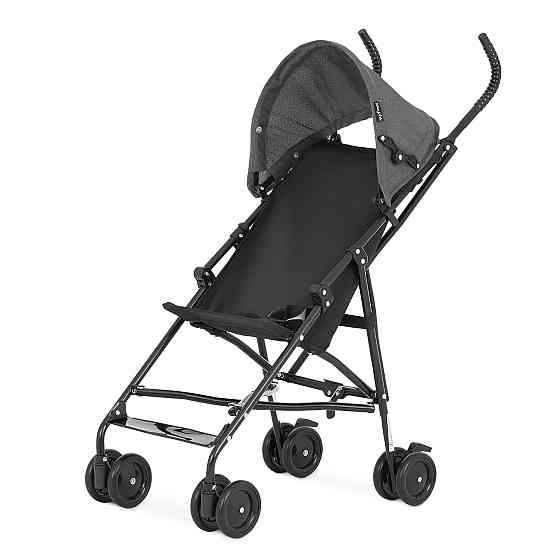
A travel stroller is built around portability. Compared with a full-size model, it is usually lighter, narrower, and easier to fold into a compact shape for a car trunk, aircraft cabin policy, hotel room, or small apartment. Some models can be carried using a shoulder strap or handle, while others are designed to stand when folded. These benefits often involve tradeoffs: a smaller basket, less padding, smaller wheels, fewer adjustment options, and a seat that may feel less spacious as a child grows.
The categories are not perfectly standardized. Some lightweight full-size strollers approach the portability of travel models, and some premium travel strollers offer surprisingly capable wheels and reclines. The practical question is therefore not simply which label appears on the product page. Ask what the stroller needs to do repeatedly, how it fits your child, and what you must lift or carry.
Comfort and positioning from infancy through toddlerhood
Comfort includes more than padding. It involves pelvic and trunk support, head positioning, leg support, canopy coverage, ventilation, temperature regulation, and the ability to change position without waking or destabilizing the child. Full-size strollers often have roomier seats and more substantial suspension, which may be helpful during longer walks or naps under supervision. Their larger canopies and baskets can also reduce the need to attach extra accessories that alter weight distribution.
For a newborn, confirm that the stroller offers an age-appropriate configuration. A conventional upright seat may not provide adequate airway positioning or trunk support for a young infant, even if it reclines. Depending on the model, the manufacturer may approve a bassinet, a fully or near-fully reclined infant carriage, or a compatible rear-facing infant car seat. Read the specific instructions rather than relying on the general category of stroller.
Travel strollers vary substantially in infant suitability. Some are intended only for babies who can sit with adequate postural control, while others include newborn inserts or accept an infant car seat. Inserts should be used only when approved by the manufacturer; improvised padding can change alignment or obstruct the airway. A premature infant, a baby with hypotonia, neuromuscular disease, respiratory vulnerability, or other medical complexity may need individualized positioning advice from a pediatric clinician or physical therapist.
Neither stroller should be treated as a routine sleep environment. If a baby falls asleep while being transported, maintain direct supervision and follow the product’s safety guidance. For planned sleep, use a firm, flat, approved sleep surface. The stroller harness should be adjusted according to the manual and used whenever the child is seated, including during brief trips.
Portability, folding, and everyday logistics
Travel strollers are most valuable when carrying and storing the stroller is itself a recurring problem. They can be easier to lift into a vehicle, carry up stairs, take onto public transportation, or move through an airport. A compact fold may also help when a stroller must fit in a narrow entryway or share a small trunk with luggage. Before flying, check the airline’s current size and gate-check rules; a stroller that folds compactly is not automatically approved for cabin storage.
Full-size strollers take up more space, but that footprint can make daily routines easier. A larger basket may hold diapers, feeding supplies, outer layers, and groceries without placing heavy bags on the handlebar. Many parents find that avoiding repeated lifting matters as much as the stroller’s listed weight, particularly during postpartum recovery or when managing back, pelvic-floor, shoulder, or wrist discomfort.
Examine the complete folding sequence in person or through the manufacturer’s instructions. Consider whether it can be folded while holding a baby, whether the frame locks reliably, whether the folded chassis remains clean on the ground, and whether the process creates pinch points. A stroller that is technically compact but difficult to fold under pressure may not be practical for a rushed station transfer or boarding queue.
Think about the folded dimensions, not just the stroller’s weight. Measure the vehicle opening, closet, elevator, and storage area. If you use public transportation, also consider how quickly you can secure the child, fold the stroller, and keep essential items accessible without leaving loose objects on the platform or aisle.
Ride quality, steering, and terrain
Wheel diameter, wheel material, suspension, frame rigidity, and wheelbase all influence how a stroller feels to push. Full-size models commonly provide a more planted ride over uneven sidewalks, thresholds, gravel paths, and small pavement changes. Their longer wheelbase and larger wheels can make curb transitions easier, although a large frame may be less convenient in crowded shops or narrow corridors.
Travel strollers usually excel on smooth indoor floors, maintained sidewalks, airports, and other predictable surfaces. Smaller wheels can be more sensitive to cracks, cobblestones, grass, and steep curb cuts. This does not make a travel stroller unsafe by definition, but it may require slower handling and more attention to wheel placement. Avoid hanging heavy bags from the handlebar because a changed center of gravity can increase tip-over risk.
Test steering with one hand, turning radius, brake engagement, and stability when the basket is loaded as directed. A stroller that tracks straight and turns predictably may reduce caregiver strain. Handle height also matters: a poorly matched handlebar can encourage shoulder elevation, wrist extension, or a flexed back during long walks. If more than one caregiver will use the stroller, adjustable handles can be useful.
For either type, engage the parking brake before loading or unloading the child. Do not assume that a stroller’s compactness compensates for poor stability. Check that the frame locks, wheels remain aligned, the harness is intact, and the child cannot reach moving parts or unsecured objects.
Storage, accessories, and real-world usability
Full-size strollers generally offer more integrated storage and accessory compatibility. A larger basket can support daily errands, while an adjustable seat, bumper bar, canopy, rain cover, or bassinet may reduce the need for separate equipment. However, every accessory adds weight or changes the balance of the system. Use only manufacturer-approved components and observe their stated weight limits.
Travel strollers often have a smaller basket and fewer places for supplies. That can be manageable when the stroller is used for short outings, but it may become frustrating during a full day of travel. A compact stroller can also have less room for a child wearing a winter layer, and some designs provide limited foot support or recline range. Compare the seat width, backrest height, leg-rest dimensions, and maximum child size with the period you expect to use it.
Sun protection and ventilation deserve specific attention. A deep canopy can protect from direct sunlight, but draping a blanket over the stroller can restrict airflow and increase heat exposure. In warm conditions, look for breathable panels and monitor the child regularly. Babies cannot reliably communicate overheating, and infants regulate temperature less effectively than older children.
Maintenance is another practical distinction. Travel strollers may encounter airport floors, vehicle storage areas, and frequent folding, while full-size strollers may accumulate food, mud, and sand from daily use. Check whether the fabric is removable, whether wheels can be cleaned, and whether replacement parts are available. A stroller that is easy to maintain is more likely to remain functional and safe over time.
Which option fits different family routines?
A full-size stroller may fit best when the stroller is your primary daily transport. It can be advantageous for long neighborhood walks, mixed terrain, frequent errands, regular naps while supervised, or families who want one system from early infancy through toddlerhood. It may also suit caregivers who value a high pushing position, generous storage, and a stable ride more than a small folded footprint.
A travel stroller may fit best when portability drives most decisions. It can be useful for frequent air travel, public transit, rideshares, stairs, compact vehicles, small homes, or trips where the stroller is used intermittently. Its lighter frame may reduce lifting demands, but confirm that the person who will carry it can manage the folded weight safely while also handling luggage or a child.
Some families use both. The full-size stroller stays configured for walks and errands, while the travel stroller is reserved for flights, visits, or situations where space is limited. This can be worthwhile when the two environments are genuinely different, but it also means two products require inspection, cleaning, storage, and maintenance.
To decide, write down a typical week rather than imagining an ideal trip. Record the surfaces you use, the number of stairs, car-trunk capacity, public-transit transfers, walking duration, storage needs, and the child’s current and projected size. Then compare each model’s approved age range, weight limit, recline, harness, brake, folded dimensions, and warranty. A short hands-on test with the intended child and caregiver often reveals more than specifications alone.
A practical buying checklist
Start with the child’s current developmental needs and the stroller’s intended configuration. Verify whether the seat is approved for a newborn or only for an older infant who can sit with support. Inspect the recline, head support, harness routing, leg support, and compatibility with any bassinet or infant car seat you plan to use.
Next, assess caregiver demands. Lift the folded stroller using the technique and hand position you would use at home. Push it over a threshold, turn it in a narrow space, apply the brake, and fold it without rushing. If you have pain, weakness, balance limitations, or are recovering from delivery, ask a healthcare professional about activity restrictions and consider whether another adult will regularly assist.
Finally, evaluate long-term value. A lower purchase price may not be economical if the stroller is quickly outgrown or lacks replacement parts. Conversely, a feature-rich full-size model may be unnecessary if it spends most of its life folded in a small car. The best match is the one that supports safe positioning, predictable handling, and realistic daily use.
- Confirm approved age, weight, and height limits.
- Check newborn compatibility and airway-supportive positioning.
- Test folding, frame locking, brakes, steering, and basket stability.
- Measure folded dimensions against your vehicle and storage spaces.
- Review accessory, cleaning, warranty, and replacement-part policies.
Safety reminders
- Do not place a newborn in an upright stroller seat unless the manufacturer specifically approves that configuration.
- Use the five-point harness and parking brake according to the stroller instructions.
- Do not hang heavy bags from the handlebar or overload the storage basket.
- Do not cover the stroller with a blanket in a way that restricts ventilation.
- Supervise a sleeping child and move the child to an approved sleep surface for planned sleep.
- Seek professional advice for medically complex infants or concerns about positioning, breathing, tone, or feeding.
Tools & Assistance
- Measure your car trunk, doorway, elevator, and storage area
- Test-fold the stroller at a retailer with the child’s usual supplies
- Review the current manufacturer manual and recall notices
- Ask a pediatric clinician or pediatric physical therapist about infant positioning when needed
- Check airline and public-transit stroller policies before travel
FAQ
Can a travel stroller be used from birth?
Some can, but only in a manufacturer-approved newborn configuration such as a compatible bassinet, approved near-flat recline, or rear-facing infant car seat. Many require the child to have stronger postural control, so check the exact manual.
Is a full-size stroller safer than a travel stroller?
Neither category is automatically safer. Safety depends on appropriate age and positioning, structural integrity, harness use, braking, stability, supervision, and following the manufacturer’s limits.
Do travel strollers handle rough sidewalks well?
Some manage moderate uneven surfaces, but smaller wheels commonly perform best on smooth floors and maintained sidewalks. Test the exact model on the terrain you use regularly.
Should I buy both types of stroller?
A two-stroller setup can be practical when daily walks require comfort and storage while travel requires a compact fold. It is less useful if one well-matched stroller already meets your routine.
How do I compare stroller comfort?
Look beyond padding. Assess recline, head and trunk support, harness fit, leg support, canopy, ventilation, seat dimensions, and whether the child remains well positioned during movement.
Sources
- Wirecutter (The New York Times) — The 4 Best Full-Size Strollers of 2026
- Wirecutter (The New York Times) — The 3 Best Travel Strollers of 2026
- BabyGearLab — The Best Travel Strollers
Disclaimer
This article provides general educational information and is not medical advice, diagnosis, or treatment. Consult your pediatric clinician or another qualified healthcare professional for individualized guidance, especially for newborns or infants with medical needs.














Please log in to leave a comment.