
Intro
Night waking during teething can feel especially hard because it often arrives when a baby’s sleep has only just begun to feel more predictable. A baby may seem uncomfortable, need extra soothing, chew intensely, drool more, or wake crying shortly after settling, leaving caregivers unsure whether the tooth is the cause or whether something else is going on.
Teething can contribute to short-lived discomfort around tooth eruption, but it should not be assumed to explain every difficult night. A careful, calm approach helps you comfort your baby while also watching for signs of illness, hunger, developmental change, or sleep pattern shifts that may need a different response.
Highlights
Teething may be associated with temporary sleep disruption, but the effect is usually limited and should be interpreted alongside the baby’s overall condition.
A consistent bedtime routine and low-stimulation responses overnight can help prevent a brief teething phase from becoming a longer sleep pattern problem.
Gum discomfort can be soothed with safe, simple comfort measures; medication questions should be directed to a pediatric clinician.
Fever, breathing difficulty, poor feeding, dehydration, persistent crying, or symptoms that seem out of proportion to teething should prompt medical advice.
Why teething can wake a baby at night
Teething is the process in which a primary tooth moves through the gum tissue and erupts into the mouth. Around eruption, some babies have localized gum tenderness during teething, increased chewing, drooling, mild irritability, or short periods of unsettled sleep. At night, there are fewer distractions than during the day, so mild oral discomfort may feel more noticeable. A baby who can usually resettle between sleep cycles may cry out because the gum sensation is unfamiliar or because they want reassurance.
It is helpful, however, to keep the physiology in perspective. Tooth eruption is a normal developmental process, not an illness. The discomfort is usually intermittent rather than constant, and it tends to cluster around the days close to eruption. A baby may have one difficult night, a few unsettled nights, or no obvious sleep change at all. The same baby may react differently to different teeth.
Night waking during teething can also become confusing because many developmental events overlap in the first year: growth spurts, changing feeding needs, separation awareness, motor milestones, illness exposure, and maturation of sleep cycles. For that reason, teething is best treated as one possible contributor, not the automatic explanation for every wake-up.
What the evidence suggests about teething and sleep
Parents have long reported teething-related sleep disruption, but research has been mixed because teething symptoms are often recorded retrospectively and can be influenced by expectation. A longitudinal study using repeated observation over time is more useful because it can compare sleep around the actual timing of tooth eruption rather than relying only on memory.
The available research supports a cautious interpretation: teething can be associated with measurable changes in infant sleep for some babies, but the changes are generally modest and time-limited. This matters clinically because severe or prolonged night waking should not be dismissed as “just teething” without considering other causes. If a baby is waking hourly for many nights, feeding poorly, seeming lethargic, or crying in a way that feels unusual, the pattern deserves closer attention.
A practical evidence-based view is to ask three questions. First, are there local signs such as swollen gums in babies, increased biting, or a tooth visible just below the gum? Second, is the baby otherwise well during the day, with normal breathing, hydration, alertness, and feeding? Third, is the sleep change short-lived and improving? When all three are true, teething is a plausible contributor. When they are not, a broader assessment is safer.
How to tell teething from illness or other causes
Teething symptoms versus illness can be difficult to sort out at 2 a.m., especially when everyone is tired. Mild fussiness, drooling, chewing, and localized gum tenderness fit with teething. A slight temperature elevation may occur in some babies, but a true fever, marked lethargy, persistent vomiting, significant diarrhea, rash with systemic symptoms, ear drainage, breathing difficulty, or signs of dehydration should not be attributed to teething without medical guidance.
Other common explanations for night waking include hunger, changes in overnight feeding needs, a wet or soiled diaper, being too hot or too cold, reflux-like discomfort, eczema itch, nasal congestion, ear pain, separation distress, or waking between infant sleep cycles. Babies also vary widely in how much help they need to resettle. A baby who falls asleep only while being fed, rocked, or held may understandably look for the same support at each normal arousal.
Look for the pattern rather than one isolated symptom. Teething-related waking often occurs in an otherwise well baby and improves with brief comfort, gum pressure, or time. Illness-related waking may come with daytime misery, reduced intake, fewer wet diapers, fever, respiratory symptoms, or a cry that feels different from the baby’s usual protest or tiredness. If your parental concern remains high, that is enough reason to seek advice.
Comfort measures that are generally considered safe
Safe teething comfort measures are simple and physical rather than complicated. Many babies like firm counter-pressure on the gums. A clean finger gently rubbed over the sore area, a chilled teething ring, or a cool damp washcloth can provide temporary relief. The object should be age-appropriate, intact, and large enough not to pose a choking risk. It should be chilled in the refrigerator, not frozen hard, because very cold objects can irritate delicate gum tissue.
During the day, extra opportunities to chew can reduce frustration before bedtime. Offer supervised chewing on safe teething items, keep drool from irritating the skin around the mouth and chin, and continue normal feeds as tolerated. Some babies feed more for comfort; others briefly feed less because sucking changes gum pressure. If feeding changes are significant, prolonged, or associated with fewer wet diapers, contact a healthcare professional.
Avoid teething necklaces, bracelets, or anklets because of strangulation and choking hazards. Be cautious with topical numbing products and over-the-counter preparations unless specifically recommended by a clinician; some ingredients are not appropriate for infants. If you are considering pain medicine, ask your pediatrician or pharmacist about whether it is suitable for your baby’s age, weight, medical history, and current symptoms. The goal is comfort, not sedation.
Responding at night without losing the sleep routine
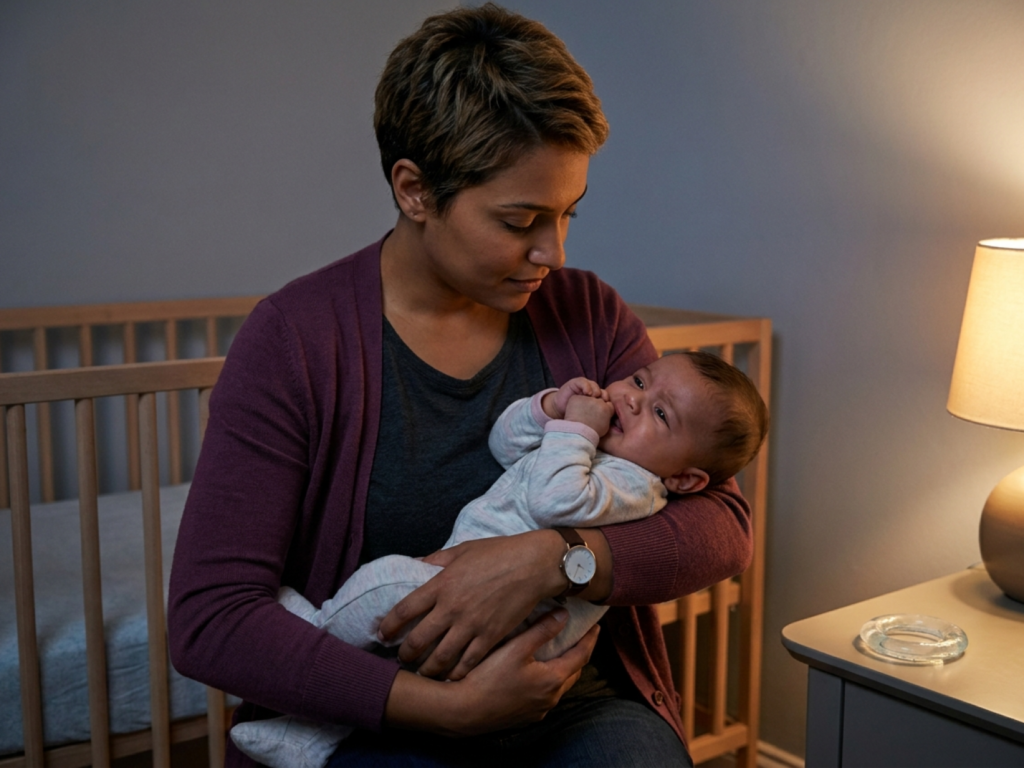
When a baby wakes and teething seems likely, start with a brief check: breathing, temperature, diaper, feeding cues, and general alertness. If there are no concerning signs, keep the room dim, your voice quiet, and the interaction calm. Low-stimulation nighttime settling helps the baby understand that it is still sleep time, even if they need comfort.
Try to preserve the sequence your baby already knows. If the usual bedtime routine is feed, cuddle, song, and crib, keep that structure rather than adding many new steps during every wake-up. Offer comfort, use a safe teething measure if appropriate, then return the baby to the sleep space when calm enough. The NHS guidance on infant sleep emphasizes simple, consistent routines and returning babies to bed after feeds or necessary changes; that approach is also useful during a teething phase.
There is no need to be rigid when a baby is genuinely uncomfortable. Extra cuddling during a hard night is responsive caregiving. The balance is to avoid turning every brief stir into a long, bright, highly interactive event. If you add a temporary comfort step, such as a short gum rub before resettling, keep it consistent and easy to taper once the tooth has erupted and the baby is comfortable again.
When breastfeeding, bottles, and teething overlap
Night waking during teething often affects feeding because sucking, biting, and gum pressure all meet in the mouth. A breastfed baby may latch, pull off, clamp, or nurse mainly for comfort. A bottle-fed baby may chew on the nipple, take smaller volumes, or become frustrated when tired. These patterns can be temporary, but they are still stressful when caregivers are trying to keep the baby hydrated and settled.
For breastfeeding during teething, it may help to offer a chilled teething ring before nursing so the gums are less tender. If biting occurs, calmly break the latch and pause briefly; repeated pain, nipple trauma, or a sudden change in latch may warrant support from a lactation consultant. For bottle feeding, check that the nipple flow is still appropriate and that the baby is not working harder than usual because of congestion or fatigue.
Whether breast or bottle fed, monitor intake in a practical way: wet diapers, alertness, tears when crying, and the baby’s usual feeding pattern. Short-lived variation is common. Persistent refusal, signs of dehydration, or a baby who seems too sleepy or distressed to feed should be discussed with a healthcare professional promptly.
Protecting caregiver sleep and decision-making
Repeated night waking is not only a baby issue; it affects caregiver judgment, mood, and safety. When sleep deprivation builds, it becomes harder to distinguish teething discomfort from illness, harder to stay patient, and easier to fall asleep in unsafe places while holding the baby. Plan for difficult nights before exhaustion peaks.
If more than one adult is available, divide the night into shifts or assign one person to the early waking and the other to the early morning. If you are alone, make the nighttime setup simple: safe sleep space ready, clean teething item available, water for you, and a low light that does not fully wake everyone. Avoid sofas or armchairs for feeding or soothing if you feel you may fall asleep; move to the safest available arrangement and place the baby back in their sleep space when you can.
It is also reasonable to keep a brief note of symptoms and sleep for a few days. Record tooth eruption signs, feeding, wet diapers, temperature if measured, and wake frequency. This can show whether the pattern is improving and gives your pediatric clinician clearer information if you need advice. Data does not remove the fatigue, but it can reduce the spiral of guessing.
Seek medical advice urgently if
- Your baby has breathing difficulty, blue color around the lips, unusual limpness, or reduced responsiveness.
- There is a true fever in a young infant, or fever with a baby who looks unwell.
- Feeding is poor, wet diapers are reduced, or you suspect dehydration.
- Crying is persistent, high-pitched, inconsolable, or very different from usual.
- Symptoms last longer than expected for teething or include vomiting, significant diarrhea, rash, ear drainage, or severe cough.
Tools & Assistance
- Keep a simple sleep, feeding, temperature, and wet diaper log for several days.
- Use a safe chilled teething ring or cool damp washcloth under supervision before bedtime.
- Maintain a calm bedtime routine and low-stimulation nighttime settling.
- Contact your pediatrician, health visitor, pharmacist, or local urgent care service when symptoms are concerning.
- Ask a lactation consultant for latch support if teething causes biting, breast refusal, or nipple injury.
FAQ
Can teething really make my baby wake more at night?
Yes, it can for some babies, especially near tooth eruption, but the effect is usually temporary. Prolonged or severe waking should be assessed in the context of feeding, hydration, fever, breathing, and daytime behavior.
How many nights does teething sleep disruption usually last?
Many babies have only a few unsettled nights around eruption, though patterns vary. If sleep disruption is persistent, worsening, or paired with concerning symptoms, seek professional advice.
Should I change the bedtime routine during teething?
Usually it is best to keep the familiar routine while adding brief comfort as needed. A predictable, low-stimulation response helps a baby resettle without turning a short discomfort phase into a new waking pattern.
Is fever from teething normal?
Teething may be associated with mild temperature changes, but a true fever or a baby who appears unwell should not be assumed to be teething. Ask a healthcare professional for guidance, especially in young infants.
Are teething gels safe for babies?
Do not use numbing gels or medicated teething products unless a qualified clinician or pharmacist says they are appropriate for your baby. Some ingredients are unsafe for infants.
Sources
- Elsevier / Journal of Pediatrics — Does Teething Disrupt Infant Sleep? A Longitudinal Auto-...
- Taking Cara Babies — Teething and baby sleep
- NHS — Helping your baby to sleep
Disclaimer
This article is for general information only and does not replace medical advice. Consult a qualified healthcare professional for concerns about your baby’s symptoms, sleep, feeding, fever, or pain relief.















Please log in to leave a comment.