
Intro
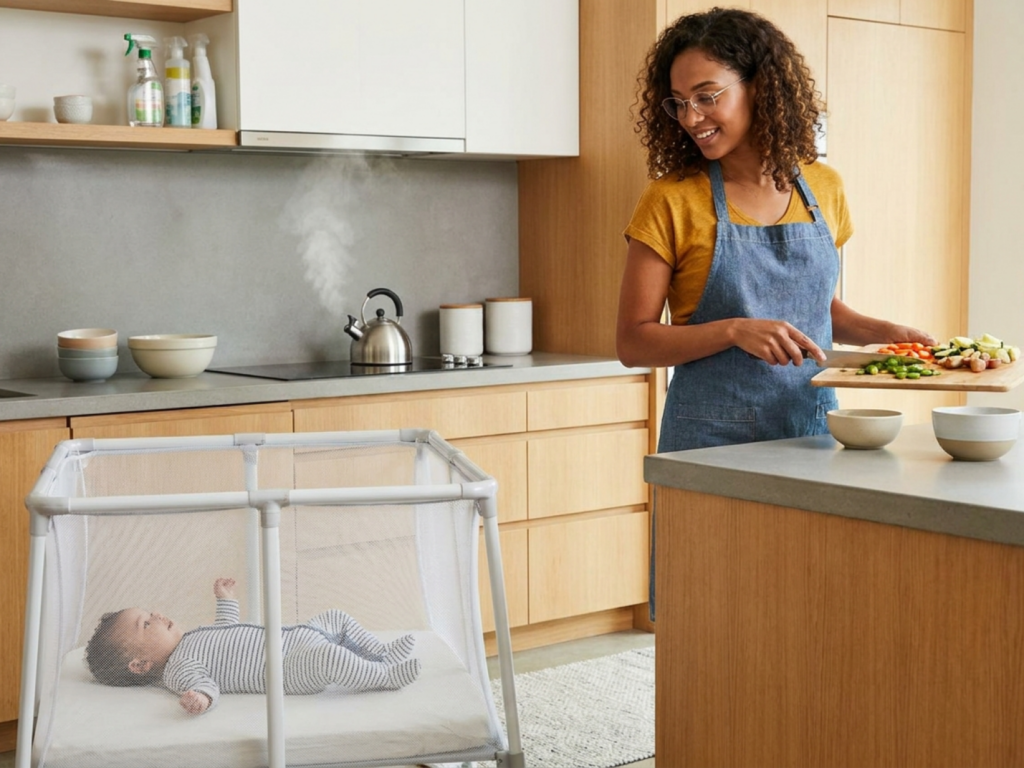
Household tasks still need to happen after a baby arrives, but ordinary chores can create brief, easily missed hazards. The safest location depends on your baby's age, mobility, alertness, and the task you are doing. A newborn who is not yet rolling has different needs from an infant who can pivot, crawl, pull up, or reach.
In general, choose a firm, stable, age-appropriate space where you can maintain visual and auditory contact and respond quickly. The goal is not to supervise every second perfectly; it is to make the environment safer before beginning the task and to avoid placing your baby near heat, water, chemicals, cords, small objects, or elevated surfaces.
Highlights
A crib, bassinet, or properly used play yard is usually the most protective location when you need both hands for a chore.
Infant seats belong on the floor and within active supervision, never on a table, countertop, bed, sofa, or other raised surface.
Keep your baby close enough to see and hear, but do not carry the baby while handling hot food, beverages, boiling water, or heated appliances.
A safe location must change as soon as your baby begins rolling, scooting, crawling, pulling up, or reaching.
Start With the Safest Available Space
When a chore requires your full attention or both hands, place your baby in an approved crib, bassinet, or play yard that is appropriate for the baby’s age and current motor skills. For sleep, use a firm, flat, unobstructed surface with the baby positioned on the back, following current safe-sleep guidance. Do not use a crib as a storage area for blankets, pillows, stuffed animals, bumper pads, or other soft items.
For short periods while the baby is awake, a clear crib or play yard can provide a predictable boundary while you fold laundry, prepare supplies, or tidy a nearby room. Keep the space away from windows, blind cords, heaters, fireplaces, electrical cords, and furniture that could be pulled or pushed into it. Check that the product is intact, assembled according to its instructions, and free of gaps or damaged hardware.
Place the safe space where you can observe it without relying only on a monitor. Furniture arrangement matters: a direct line of sight and an unobstructed route allow you to respond promptly if the baby cries, changes position, or reaches an unsafe object.
Floor-Level Options for Awake Time
A firm, uncluttered floor area can be suitable for supervised awake time when your baby is alert and the surrounding space has been made safe. A clean play mat may help define the area, but it should not contain loose pillows, thick quilts, plastic bags, cords, small parts, or objects that can cover the face. Use only toys that are appropriate for the baby’s developmental stage and inspect them for detachable pieces.
Floor-level placement reduces the consequences of a roll or unexpected movement, but it does not remove the need for supervision. A young infant can move toward a cord or soft object, and a more mobile infant may reach furniture, electrical outlets, pet bowls, or household products. Reassess the area whenever your baby gains a new skill. A space that was adequate last week may no longer be secure once the baby can roll, pivot, crawl, or pull up.
Keep pets separated unless an attentive adult is directly supervising the interaction. Do not leave a baby alone with a pet, even if the animal is familiar and has previously behaved gently. During tasks that involve water, heat, or chemicals, use a contained safe space farther from the work area rather than placing the baby on the floor beside the hazard.
Using Infant Seats, Swings, and Carriers
Infant seats, bouncers, and swings may be useful for brief, supervised awake periods when used exactly as directed. Secure the harness, place the device on the floor, and remain close enough to intervene. Never put an infant seat on a countertop, table, bed, sofa, changing table, appliance, or other elevated surface. Falls can occur when a baby shifts position or when an adult bumps the device.
These products are not substitutes for a safe sleep space. If your baby falls asleep in an infant seat, swing, or other sitting device, move the baby to a firm, flat sleep surface as soon as reasonably possible. Avoid using a product that has been recalled, modified, damaged, or assembled incorrectly. Do not add aftermarket positioners, padding, blankets, or restraints that are not supplied or approved by the manufacturer.
Wearable carriers can keep a baby nearby during some light tasks, but they are not appropriate for cooking, frying, carrying hot liquids, using sharp tools, or handling cleaning chemicals. Make sure the baby’s airway remains visible and unobstructed, the chin is not pressed to the chest, and the carrier supports the baby according to the manufacturer’s instructions. Stop the task if you cannot monitor breathing and positioning continuously.
Safe Placement During Cooking and Meal Preparation
Cooking combines several hazards: hot liquids, steam, sharp utensils, open flames, electrical appliances, and surfaces that may be unstable. Place your baby in a crib, play yard, or supervised floor-level area outside the kitchen work zone before turning on the stove or handling hot food. A baby should never be held while you carry a hot beverage, remove a pan from an oven, drain boiling water, or operate a blender.
Keep pot handles turned away from the edge, use rear burners when possible, and place hot foods and drinks well beyond reaching distance. A baby who cannot crawl may still grab a tablecloth, appliance cord, or nearby handle. Do not rely on a high chair as a containment device while you cook unless your baby is developmentally ready for it, correctly restrained, and continuously supervised; a high chair is not a safe place to leave a baby unattended.
When eating or preparing food at floor level, remember that crumbs and small pieces can become choking hazards. Keep knives, utensils, magnets, batteries, and food items that are unsafe for the baby’s age out of reach. For a broader review of hot liquid scald prevention, consider the household risk guidance linked elsewhere in this site.
Cleaning, Laundry, and Household Chemicals
Cleaning tasks often require products that can injure a baby through ingestion, eye exposure, skin contact, or inhalation. Before starting, place the baby in a safe area away from the room being cleaned. Keep detergents, disinfectants, sprays, pods, bleach, solvents, and other products in their original containers with labels intact, secured where a child cannot access them. Do not leave a bucket, mop water, open toilet, or filled bathtub unattended.
Ventilate the area as appropriate for the product, follow the label, and keep the baby away until surfaces are dry and residues have been managed according to instructions. Never transfer chemicals to cups, food containers, or unlabelled bottles. Avoid spraying near a baby, and do not assume that a product is harmless because it is marketed as natural or plant-based.
Do laundry with the baby in a separate safe zone rather than beside an open washer or dryer. Close appliance doors and detergent compartments when not in use, and keep cords and laundry bags out of reach. Detailed information about safe storage of household chemicals and household cleaning product exposure can help you plan this part of the routine.
Bathroom Tasks and Water Hazards
Water requires direct, continuous supervision. There is no safe level of independence for an infant in a bathtub, sink, bucket, toilet, pet-water container, or other body of water. If you need to answer the door, retrieve a towel, or attend to another child, take the baby with you or end the water activity and place the baby in a safe location.
For personal care tasks such as showering, a crib, bassinet, or play yard outside the bathroom may be safer than bringing the baby into a wet room. If you must bring the baby nearby, keep the baby away from the tub, toilet, cords, hot water, toiletries, razors, and small objects. Never place a baby carrier or infant seat on a bathroom counter or beside a bathtub where splashes, steam, or a fall could create danger.
Bathing supplies should be gathered before beginning, because maintaining a hand on the baby is essential during changes and transfers. A changing station should have every needed item within reach, but the baby should remain under a caregiver’s hand at all times on an elevated surface. For a diaper change during a chore, it is safer to pause the chore than to walk away even briefly.
Creating a Repeatable Safe Zone
A designated safe zone can reduce hurried decisions when you need to complete a task. Choose a location that is visible from the areas where you commonly work, and keep it free of cords, small objects, plastic wrapping, unsecured furniture, and soft bedding. Store frequently used baby supplies nearby but outside the baby’s reach, especially creams, medications, wipes, and products with detachable caps.
Use a short pre-task check: Is the baby awake or asleep? Can the baby roll, crawl, or pull up? What hazards will the task introduce? Can I see and hear the baby continuously? Could the baby reach the work surface, a cord, a pet, or a chemical? If the answer to the last question is yes, move the baby or change the task setup before starting.
Caregivers should communicate clearly when handing off supervision. Say who is watching the baby and for what period, rather than assuming another adult is responsible. If you are alone and the baby is crying, place the baby on the back in an empty crib and take a brief pause nearby while you regroup. A safe pause is preferable to carrying a baby while distracted or continuing a hazardous task under pressure.
Reassess as Your Baby Develops
Infant safety is dynamic because motor development changes access and balance quickly. Rolling creates a fall risk from beds, sofas, and changing tables. Crawling expands access to cords, outlets, pet supplies, floor debris, and low cabinets. Pulling to stand introduces hazards from table edges, hot appliances, drawers, and unstable furniture. Update the safe zone before each new skill becomes reliable, not after an incident.
Use gates and barriers that are suitable for the space and installed according to their instructions. Anchor furniture that could tip, keep window-covering cords inaccessible, and secure objects that could be pulled down. Do not use a baby walker as a solution for supervised household tasks; wheeled mobility can provide access to stairs, hot surfaces, and other hazards more quickly than an adult can react.
Ask a pediatrician, public health nurse, or certified child-passenger and home-safety professional about products or situations that remain unclear. Product names and recommendations change, and individualized advice may be needed for a premature infant, a baby with a medical condition, or a child using specialized equipment.
Situations That Need Immediate Attention
- Never leave a baby unattended near a bathtub, bucket, toilet, pool, or any other water source.
- Never place an infant seat, carrier, or bouncer on an elevated surface.
- Do not carry a baby while handling hot food, beverages, boiling water, sharp utensils, or active cooking appliances.
- Keep medications, cleaning products, detergent pods, batteries, magnets, and small objects inaccessible.
- Do not leave a baby sleeping in a swing, bouncer, car seat, or other sitting device.
- If a baby may have ingested a chemical, medication, battery, or other hazardous item, contact emergency services or your regional poison centre promptly.
Tools & Assistance
- Crib, bassinet, or approved play yard with a firm, clear surface
- Floor-level play mat and age-appropriate toys
- Manufacturer instructions and recall information for infant products
- Locked storage for medications and household chemicals
- Pediatrician, public health nurse, or local home-safety service
FAQ
Can I put my baby in a bouncer while I do chores?
A bouncer may be used for a brief, supervised awake period on the floor with the harness secured. It is not a safe sleep space and should not be placed on furniture or used while you are handling heat, chemicals, or sharp tools.
Where should I put my newborn while I shower?
A clear crib, bassinet, or properly used play yard outside the bathroom is generally safer than an elevated seat or a soft surface. Keep the baby within hearing range, and never leave the baby near water.
Is a changing table safe if I only step away for a moment?
No. Falls can happen quickly. Keep one hand on the baby and all supplies within reach, or place the baby in a safe crib before retrieving anything.
Can my baby stay in the kitchen while I cook?
Only if the baby is in a clearly separated, supervised safe area away from heat, steam, sharp objects, cords, and reaching distance from counters. Do not hold the baby while cooking or carrying hot items.
When should I change the safe setup?
Reassess whenever your baby begins rolling, scooting, crawling, pulling up, reaching, or climbing. Developmental changes can make a previously safe location hazardous.
Sources
- Nationwide Children's Hospital — Home Safety for Infants and Toddlers
- Caring for Kids / Canadian Paediatric Society — Keep your young child safe around the house
- Head Start — A Developmental Guide for Home Visitors – Young Infants
Disclaimer
This article provides general educational information and is not a substitute for medical advice, emergency guidance, or individualized recommendations from a qualified healthcare professional. Contact emergency services or a poison centre for urgent concerns.













Please log in to leave a comment.