
Intro
Public spaces are part of family life, and for babies they can be unavoidable: clinics, shops, transport, waiting rooms, parks, and restrooms all create repeated contact with shared surfaces. The goal is not to avoid the world, but to reduce the chance of transmitting infectious agents through hands, skin, feeding items, and contaminated surfaces.
A practical hygiene routine can be calm and manageable. The most effective habits are often simple: clean hands at the right times, limit unnecessary contact with high-touch surfaces, keep feeding and diaper care organized, and leave crowded or poorly ventilated spaces when needed. When a baby has a medical concern, contact a healthcare professional rather than trying to self-diagnose.
Highlights
Hand hygiene is the center of prevention in public settings because babies touch faces, mouths, and shared surfaces frequently.
Soap and running water are the preferred method for cleaning hands, especially after toilet use, diaper changes, or visibly dirty contact.
In public places, preparation matters: carry the basics, reduce improvisation, and make cleaning easier before a problem starts.
Crowding and poor ventilation raise risk, so space, airflow, and timing are part of hygiene, not just comfort.
For babies, hygiene also includes feeding items, changing surfaces, stroller handles, and anything that moves from hand to mouth.
Why hygiene matters in public places
Babies have immature immune defenses and a strong tendency to mouth objects, suck fingers, and rub their eyes. That combination makes everyday public contact more important than it may seem. A shared door handle, shopping cart handle, elevator button, restaurant table, or changing station can become a transmission point if hands are not cleaned afterward.
Public hygiene is not only about visible dirt. Many infections spread through contact and then transfer to the nose, mouth, or eyes. That is why the most useful routine is simple and repeated: clean hands before close baby care, after contact with shared surfaces, after diaper changes, after wiping a nose, and before feeding. In community settings, hygiene should be easy to do, not dependent on perfect conditions.
When possible, choose spaces that are not packed, allow some airflow, and provide access to soap, water, or a hand-cleaning option. These small environmental choices can lower exposure without forcing families to stay home unnecessarily.
Clean hands at the right moments
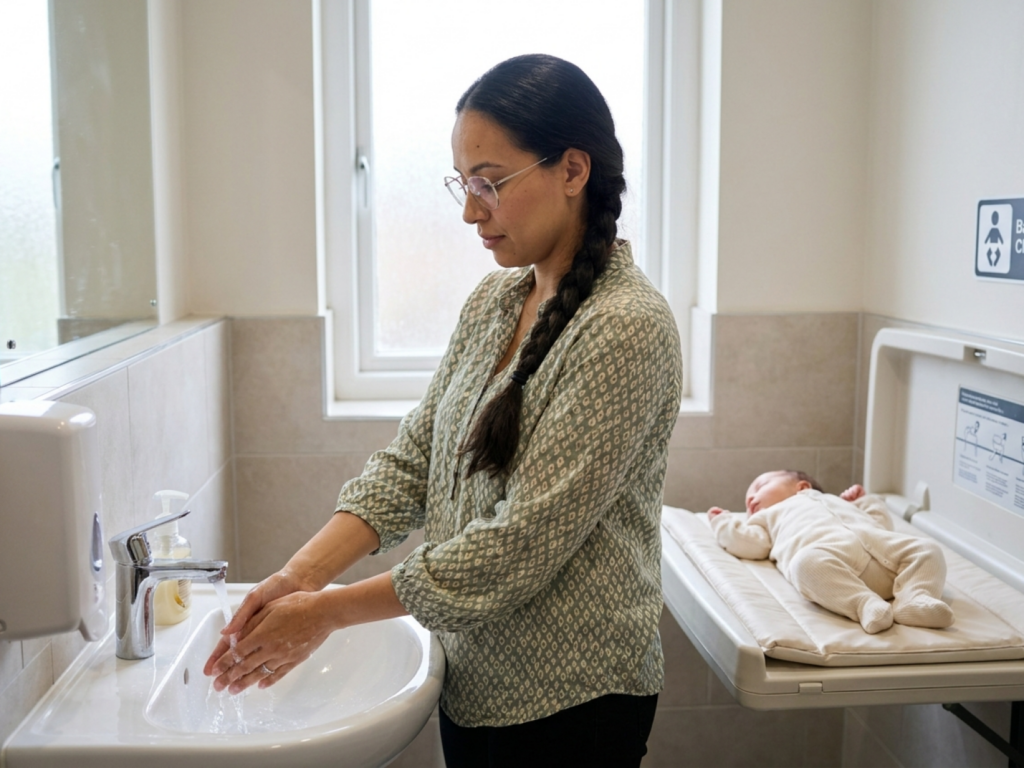
Hand hygiene is the core habit. The CDC recommends washing with soap and running water for at least 20 seconds, then drying hands well. That timing matters because brief rinsing is not enough to remove many organisms or the oils that keep them on skin.
For caregivers of babies, the highest-yield moments are predictable:
- Before picking up or feeding the baby.
- After using the restroom or helping a child use it.
- After changing a diaper.
- After touching high-contact surfaces such as railings, carts, counters, or public doors.
- After coughing, sneezing, or wiping a nose.
If soap and water are not available, use a hand-cleaning method you can keep with you and return to soap and water as soon as possible, especially if hands are visibly dirty. Good hand hygiene is most useful when it is routine, not occasional.
Babies cannot clean their own hands reliably, so caregiver hands do most of the protective work. A clean caregiver hand is often the difference between a safe routine and repeated exposure to shared germs.
Use public restrooms and changing areas carefully
Public restrooms are useful but high-contact environments. Before using a changing table or any shared surface, look for obvious contamination. If the surface is wet, visibly dirty, or poorly maintained, it is reasonable to choose another option or clean your own barrier surface first.
Bring a changing pad, extra wipes, sealed diaper bags, and a spare outfit. That reduces the need to place baby items directly on shared surfaces. If you must use a public changing station, keep your setup compact, avoid setting bottles or pacifiers on the table, and clean your hands immediately after the change.
For diaper care, the principles in diaper hygiene basics still apply even outside the home: limit spread from the diaper area, contain waste promptly, and keep hands clean before touching the baby again. Do not place clean items where raw diaper waste or toilet contact may contaminate them.
When possible, avoid changing a diaper in spaces where there is no handwashing access at all. If that cannot be avoided, use a temporary hygiene plan and wash thoroughly at the first available sink.
Protect feeding items and mouth-contact objects
Anything that goes into a baby’s mouth deserves extra attention in public settings. Pacifiers, bottle nipples, spoons, teethers, and cups can pick up contamination from tables, seats, bags, and hands. The safest pattern is to keep feeding items covered, handle them with clean hands, and avoid setting them down on shared surfaces.
If you are carrying formula, expressed milk, or prepared bottles, organize them before leaving home so you do not need to improvise in a restroom or car park. The broader principles of feeding equipment hygiene still matter: separate clean and dirty items, keep utensils and bottle parts protected, and discard anything that may have been contaminated.
For older babies eating solids, wipe hands before and after meals when a sink is not available. A small hand towel or disposable cloth can help, but it does not replace proper handwashing when you can get to a sink.
Shared high chairs in restaurants can be part of public hygiene risk too. A quick wipe of the tray and straps with a clean barrier or disposable cover can reduce direct contact with residue from previous users.
Think about surfaces, ventilation, and crowding
Germ spread is not only a surface issue. Crowded and poorly ventilated spaces can increase the chance of close-range exposure, especially when people are coughing, sneezing, or staying in the same air for a long time. When possible, choose times and places that are less crowded and better ventilated.
In practical terms, this can mean visiting stores during quieter hours, stepping outside when a waiting room becomes packed, or choosing an outdoor errand instead of an indoor one. Public hygiene works best when the environment supports it. The WHO guidance on community settings emphasizes making hygiene easier in shared spaces, because convenient facilities improve adherence.
Touch points still matter. Stroller handles, seat belts, shopping cart grips, phone screens, and elevator buttons can all collect contamination. Clean your hands after touching them, and clean the baby’s hands if the baby has been handling shared items and is then likely to mouth them.
Short outings are often easier to manage than long ones. If a baby becomes unsettled, needs a diaper change, or starts rubbing the eyes and face after heavy surface contact, it is reasonable to leave and reset rather than pushing through the outing.
Know when extra caution is sensible
Some situations deserve more caution than the average public outing. If the baby is premature, medically fragile, recovering from illness, or has a condition that affects immunity, ask the child’s clinician for individualized guidance. Public hygiene advice should be adapted to the baby’s medical context.
Extra caution is also sensible when someone nearby is clearly unwell, when an area is visibly unsanitary, or when you cannot clean hands before handling the baby. In those moments, the safest choice may be to delay the activity, change location, or use another route.
Caregivers should also watch for practical warning signs in the baby: reduced feeding, fever, vomiting, diarrhea, unusual sleepiness, fewer wet diapers, or trouble breathing. These are not situations for guesswork. Contact a healthcare professional for advice, especially if symptoms are significant or persistent.
Public hygiene is most effective when it is calm and realistic. The aim is not perfection; it is to lower avoidable exposure while keeping family life workable.
Build a routine you can actually repeat
The best hygiene plan is the one you can use on a tired day. Keep a small bag packed with diapers, wipes, a changing pad, a spare outfit, tissues, and hand-cleaning supplies. Store the baby’s most frequently used items together so they are easy to reach without touching unnecessary surfaces.
Before leaving home, do a quick check: hands cleaned, feeding supplies protected, diaper kit ready, and a plan for where you can wash up if needed. During the outing, pause for hand hygiene after the most obvious contact points. After returning home, wash hands again, clean reusable items, and separate dirty laundry or waste promptly.
Routine protects both baby and caregiver. It reduces decision fatigue and makes hygiene feel like part of normal care rather than an emergency response.
When to be careful
- Do not rely on quick wiping alone when hands are visibly dirty.
- Avoid using shared changing surfaces that are wet, soiled, or poorly maintained.
- Be cautious in crowded or poorly ventilated indoor spaces.
- Contact a clinician if the baby has fever, breathing problems, dehydration signs, or persistent vomiting or diarrhea.
- Ask for individualized advice if the baby is premature, medically fragile, or has an immune condition.
Tools & Assistance
- Soap and running water at a public sink
- Alcohol-based hand-cleaning product when a sink is not available
- Portable changing pad and sealable diaper bags
- Pediatrician, family doctor, or local child health clinic
- Pharmacy or baby-care store for wipes, tissues, and spare supplies
FAQ
How long should hands be washed in public places?
Wash with soap and running water for at least 20 seconds, then dry well. Short rinses are less reliable.
Is hand cleaning still needed if I only touched a shopping cart or door handle?
Yes. Shared surfaces can transfer germs to hands, and babies often put their hands in their mouths soon afterward.
What should I do if a changing station looks dirty?
Use a barrier such as a clean changing pad if possible, or choose another option. Clean your hands after the change.
Do I need to clean my baby’s hands too?
If the baby touched shared surfaces or toys and may put hands in the mouth, clean the baby’s hands when practical.
When should I call a healthcare professional?
Call if the baby has fever, poor feeding, breathing difficulty, dehydration signs, or symptoms that are severe, persistent, or worrying.
Sources
- World Health Organization — Advice for the public: Coronavirus disease (COVID-19)
- Centers for Disease Control and Prevention — About Handwashing | Clean Hands
- World Health Organization — Guidelines on hand hygiene in community settings
Disclaimer
This article is for general information only and does not replace advice from a pediatrician or other qualified healthcare professional.













Please log in to leave a comment.