
Intro
Hygiene during a baby's first year is less about sterilizing every surface and more about consistent, gentle routines that protect the skin, reduce exposure to infectious organisms, and support comfort. Newborn skin is developing, the umbilical cord requires careful observation, and a baby's mobility and feeding patterns change rapidly over the year.
Caregivers do not need to achieve perfection. Hand hygiene, safe bathing, prompt diaper care, clean feeding equipment, and sensible household practices provide a strong foundation. When a baby's skin, cord, eyes, mouth, or general condition seems unusual, consult a pediatrician, midwife, health visitor, or other qualified healthcare professional rather than relying on hygiene measures alone.
Highlights
Wash hands before handling a newborn, after diaper changes, and before preparing feeds.
Use gentle cleansing and avoid excessive bathing, scrubbing, fragrances, and harsh antiseptics.
Keep the umbilical area clean and dry, and seek clinical advice if redness, swelling, discharge, or fever develops.
Clean the diaper area promptly and dry skin folds carefully to reduce maceration and irritation.
Hygiene routines should adapt as the baby begins mouthing objects, eating solids, crawling, and exploring.
Hygiene priorities from birth to three months
In the newborn period, the most important hygiene habit is handwashing. Wash hands with soap and water before touching the baby, preparing or handling feeds, caring for the umbilical cord, or applying any product to the skin. Wash again after diaper changes, using the toilet, blowing your nose, caring for pets, or handling potentially contaminated items. Alcohol-based hand sanitizer may be useful when soap and water are unavailable, but visibly dirty hands require washing.
The World Health Organization advises delaying the first bath for at least 24 hours when possible. Early bathing can contribute to heat loss and may interfere with uninterrupted skin-to-skin contact and early feeding. Until a full bath is appropriate, gently wipe away visible milk, stool, or other material and dry the baby thoroughly, especially in skin folds. A newborn does not need a daily full-body bath; frequent washing can remove protective lipids and increase dryness.
Keep the baby’s environment clean without attempting to make it sterile. Routine household cleaning is generally sufficient. Avoid smoke exposure, and ask anyone who is ill to postpone close contact or follow medical guidance. Visitors should wash their hands and avoid kissing the baby’s face or hands, particularly during respiratory or gastrointestinal infections.
Bathing, cleansing, and skin protection
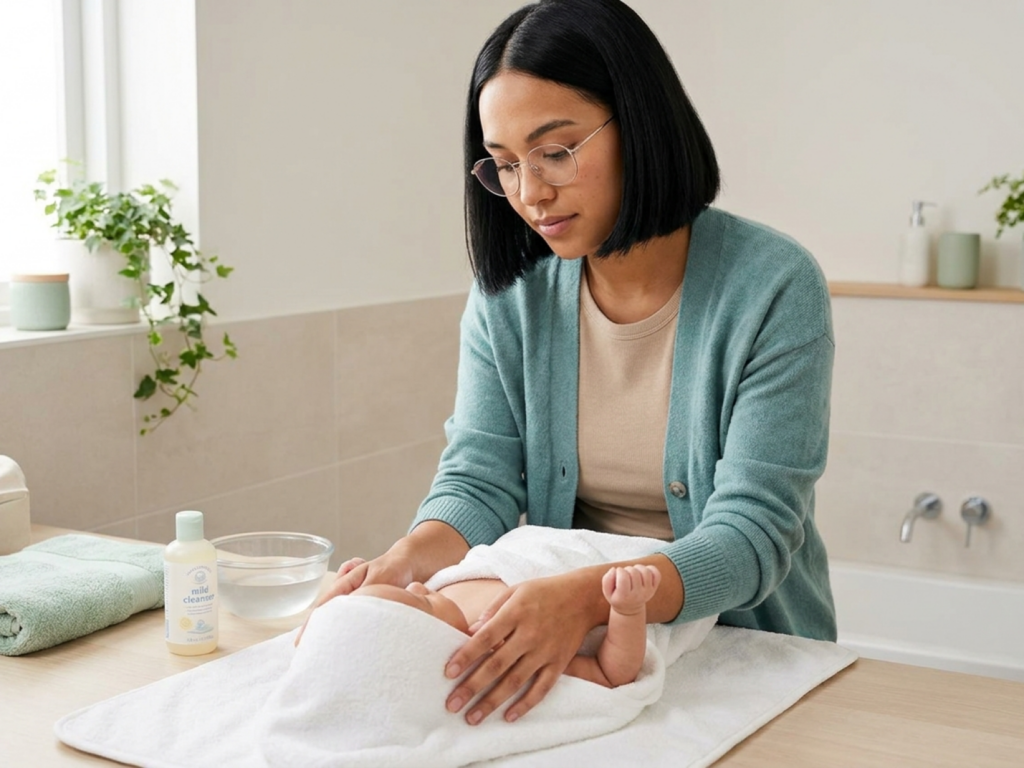
Bathing should be calm, brief, and fully supervised. Prepare the room, towel, clean diaper, clothing, and supplies before placing the baby in water. Test the water with a reliable method and keep it comfortably warm rather than hot. Never leave a baby alone in a bath, even for a few seconds and even if the baby is in a bath seat. Hold the baby securely, keep the head and airway above water, and maintain direct supervision throughout.
Use plain water for many routine washes, particularly during the early weeks. If a cleanser is needed, choose a mild, fragrance-free product formulated for infants and use a small amount on areas that need it. Evidence reviewed in the medical literature emphasizes that cleansing products should minimize irritation and avoid substantially altering the skin’s physiologic pH. Do not scrub, use abrasive cloths, or routinely apply antiseptics, essential oils, talc, or strongly perfumed products unless a healthcare professional specifically recommends them.
After bathing, pat rather than rub. Dry the neck, axillae, groin, behind the knees, and other folds carefully because retained moisture can promote irritation and maceration. Apply a simple emollient only if the skin is dry and the product is tolerated. A focused routine based on gentle water exposure, limited cleanser, and protection from friction is usually preferable to a large collection of products. For broader guidance, the principles in Baby skin care basics first year can help organize a low-irritant approach.
Umbilical cord, eyes, ears, and nails
Until the umbilical stump separates and the area heals, keep it clean and dry. Fold the diaper below the stump when practical so urine does not soil it, and allow air circulation. If the area becomes dirty, clean it gently with clean water according to local clinical guidance, then pat it dry. Do not pull on the stump, cover it with a dressing without professional advice, or apply household substances, powders, alcohol, or herbal preparations unless instructed by the baby’s healthcare team.
Some dried blood or a small amount of clear or slightly blood-tinged moisture can occur as the stump separates, but persistent bleeding, foul-smelling discharge, spreading redness, warmth, swelling, or tenderness needs prompt clinical assessment. Fever, poor feeding, marked sleepiness, or a baby who appears acutely unwell warrants urgent medical advice because infection in a young infant can progress quickly.
For the eyes, use clean water and a separate clean part of a soft cloth for each eye, wiping from the inner corner outward. Do not share cloths between siblings. Avoid cotton swabs inside the ears or nose; earwax usually has a protective role, and inserting objects can injure the canal or push wax deeper. Keep fingernails short by filing or trimming them carefully while the baby is settled. Mittens should not replace routine nail care and should be used only in ways that do not create a safety risk.
Diaper hygiene and skin-fold care
Diaper changes are frequent opportunities to protect the skin barrier. Change a wet or soiled diaper promptly, and clean stool from front to back, particularly for babies with vulvas. Use lukewarm water and a soft cloth or appropriately formulated fragrance-free wipes. Avoid vigorous rubbing. If the skin is prone to irritation, allow brief air exposure when feasible and apply a thin protective barrier product recommended for infants. Do not use powders that can become airborne and be inhaled.
Clean the folds around the groin and buttocks without forcing the tissue apart or scrubbing normal protective secretions. For babies with a penis, wash the outside gently and do not forcibly retract the foreskin. For babies with a vulva, gentle external cleaning is sufficient; internal cleansing is unnecessary. Ask a clinician about any persistent discharge, swelling, bleeding, or difficulty urinating.
Redness that does not improve with ordinary diaper care, rapidly worsening inflammation, blisters, erosions, pus, fever, or significant pain should be assessed by a healthcare professional. Diaper-area findings can have different causes, and repeated changes in products may worsen irritation. A broader diaper area skin protection routine can be coordinated with advice about emollients or barrier preparations when needed.
Hands, mouth, feeding equipment, and teeth
As babies begin bringing their hands and objects to their mouths, hand hygiene becomes more visible but remains simple. Wash the baby’s hands with water and a mild cleanser when visibly dirty, after contact with animals, and before meals. Avoid trying to keep every toy or household surface continuously disinfected. Clean items according to their material and intended use, and keep small objects, batteries, magnets, and choking hazards out of reach.
For bottle-fed infants, follow the equipment manufacturer’s cleaning instructions and local public-health recommendations. Wash bottles, nipples, breast-pump components, and utensils promptly after use, using clean hands and a dedicated brush or basin where appropriate. Allow items to air-dry fully rather than drying them with a used kitchen towel. Sterilization may be advised for some infants or circumstances; ask the baby’s healthcare professional what is appropriate for the local setting and the child’s medical needs.
Before teeth erupt, gently wipe the gums with a clean, damp cloth if desired. Once the first tooth appears, begin brushing with a soft infant toothbrush and an age-appropriate amount of fluoride toothpaste according to local dental guidance. Do not share spoons, toothbrushes, or pacifiers by putting them in an adult’s mouth, since this can transfer microorganisms. As complementary feeding begins, readiness should be assessed separately from hygiene; developmental readiness for solids includes postural and oral-motor considerations that a clinician can discuss.
Hygiene as mobility and exposure increase
Between three and six months, many babies drool, mouth toys, and spend more time on floors. Wash toys that become visibly soiled, are shared, or have been in a pet’s area. Follow cleaning instructions for soft toys and avoid products that leave irritating residues. Clean high-touch surfaces such as changing mats, high-chair components, and feeding areas regularly, especially after stool contamination. Keep cleaning agents locked away and never mix them.
When a baby begins rolling, sitting, crawling, and pulling up, hygiene and safety overlap. Use a clean, stable changing surface and keep one hand on the baby during diaper changes on elevated furniture. A bathroom should be treated as a high-risk area because of water, medicines, cosmetics, and electrical devices. The guidance in Baby safety basics first year is relevant when hygiene tasks occur in kitchens, bathrooms, or around feeding equipment.
Pet contact requires supervision and handwashing, but pets do not need to be excluded from normal family life. Prevent access to litter, feces, animal food, and water bowls. Wash hands after gardening or outdoor play. Continue to protect the baby from tobacco smoke and from close contact with people who have contagious symptoms. Hygiene should reduce predictable exposure while allowing ordinary, developmentally useful exploration.
Building a sustainable caregiver routine
Repeated care is easier when supplies are organized at the point of use: soap, clean cloths, diapers, a lined waste container, and a change of clothing. A short routine is usually more sustainable than an elaborate schedule. Caregivers can divide tasks, keep a written note of products that irritate the baby’s skin, and ask another adult to supervise the baby when a task requires both hands.
Hygiene does not require bathing after every spit-up, sterilizing ordinary household surfaces, or using multiple topical products. Over-cleaning can dry the skin, increase friction, and create stress without providing additional benefit. Focus on visible soil, diaper exposure, feeding equipment, hands, and areas where moisture collects. The wider framework of Daily baby care first year can help place hygiene alongside feeding, sleep, comfort, and routine health visits.
At well-child appointments, discuss bathing frequency, cord healing, diaper rash, dental care, feeding equipment, eczema-like dryness, and any local recommendations about water safety or sterilization. The baby’s age, prematurity, immune status, skin condition, feeding method, and household circumstances may change the appropriate advice. Professional guidance is especially important for premature infants or babies with complex medical needs.
When to seek medical advice
- Fever or a baby who appears acutely unwell, especially during the newborn period.
- Spreading redness, warmth, swelling, pus, foul-smelling discharge, or persistent bleeding at the cord.
- Severe, rapidly worsening, blistered, ulcerated, or painful diaper-area inflammation.
- Eye discharge with marked redness or swelling, or difficulty opening the eye.
- Poor feeding, unusual lethargy, breathing difficulty, or substantially fewer wet diapers.
Tools & Assistance
- A handwashing station stocked with liquid soap and clean towels
- A dedicated soft cloth, infant nail file, and mild fragrance-free cleanser
- A safe bath setup with a towel and supplies prepared before bathing
- A washable changing mat and promptly emptied diaper-disposal container
- A written list of questions for well-child and dental appointments
FAQ
Does a baby need a bath every day?
Usually not. Many babies do well with a few full baths per week plus prompt cleaning of the face, folds, hands, and diaper area. Individual skin conditions and local clinical advice may change this.
Can I use baby wipes at every diaper change?
Appropriately formulated, fragrance-free wipes can be used, but lukewarm water and a soft cloth are also suitable. Stop a product if it causes irritation and seek advice for persistent inflammation.
Should the umbilical cord stump be covered?
Generally, keeping it clean and dry and allowing air circulation is preferred. Keep the diaper below it when possible, and follow specific instructions from the baby's healthcare professional.
When should toothbrushing begin?
Begin when the first tooth erupts, using a soft infant toothbrush and fluoride toothpaste in the amount recommended by local dental or pediatric guidance.
How clean should the home be for a crawling baby?
Aim for routine cleaning of visibly soiled and high-touch areas, safe storage of chemicals and hazards, and handwashing after contamination. A sterile home environment is neither practical nor necessary.
Sources
- World Health Organization — Caring for a newborn
- PubMed — Bathing and cleansing in newborns from day 1 to first year
- NHS — Washing and bathing your baby
Disclaimer
This article provides general educational information and does not diagnose, treat, or replace advice from a qualified healthcare professional. Seek prompt medical care for urgent or concerning changes in your baby.
















Please log in to leave a comment.