
Intro
If you are caring for a newborn or young baby, it is completely understandable to wonder whether you are washing their hair too little, too much, or just right. Baby hair care can feel surprisingly high-stakes because the scalp is delicate, the hair is often fine, and many babies dislike water near the face.
Highlights
Most newborns do not need daily baths, and their hair usually does not need daily washing either.
A practical starting point for many babies is washing the hair about 1 to 3 times per week, then adjusting based on spit-up, sweat, cradle cap, skin sensitivity, and cultural routines.
Use warm not hot water, gentle handling, and a small amount of mild baby shampoo when shampoo is needed.
Daily washing may be appropriate for a short time if a clinician recommends it for cradle cap, but persistent inflammation or oozing should be assessed.
The short answer: most babies do not need daily hair washing
For many newborns and young infants, washing the hair 1 to 3 times per week is enough. Some babies with very little hair may need even less frequent shampooing, while babies who sweat heavily, have frequent spit-up in the hairline, or get milk residue on the scalp may need an extra rinse or wash. The goal is not to keep the scalp sterile; it is to keep the baby comfortable while protecting a still-maturing skin barrier.
Major pediatric guidance on bathing supports this gentler approach. Newborns do not need to be bathed every day, and hair should be washed only when needed. The same principle applies even when caregivers enjoy a nightly bath routine: you can separate soothing bedtime bathing from shampooing. A warm water wipe-down or bath without shampoo may be enough on many days.
Think of baby hair washing as responsive care rather than a rigid schedule. If the scalp looks comfortable, there is no odor, and there is no visible residue, it is reasonable to skip shampoo. If the hair has formula, breast milk, food, sweat, or sunscreen in it, washing may be helpful. This flexible approach often reduces stress for caregivers and discomfort for babies.
Why babies need a gentler schedule than adults
Infant skin differs from adult skin in clinically meaningful ways. The stratum corneum, the outer protective layer, is adapting after birth; transepidermal water loss and irritant sensitivity can be higher in early life. The scalp also has sebaceous glands and a microbiome that are still stabilizing. Frequent shampooing, especially with fragranced or harsh products, can remove surface lipids and worsen dryness, flaking, or irritant dermatitis.
Hair density matters too. A newborn with sparse, fine hair may not accumulate much oil or debris. Another baby with thick hair, skin folds near the neck, or frequent regurgitation may need more practical cleaning. Neither situation means a caregiver is doing something wrong. Babies vary widely, and routines should fit the baby in front of you.
Overwashing baby risks include scalp dryness, redness, increased flaking, and more crying during care because the experience becomes uncomfortable. Overwashing can also make caregivers feel trapped in a cycle: the scalp looks dry, so more washing seems necessary, but more washing may aggravate the dryness. If the scalp is irritated, reducing shampoo frequency and choosing a bland, fragrance-free product may help, but persistent or worsening irritation should be discussed with a pediatric clinician.
A practical frequency guide by age and situation
In the first weeks of life, hair washing can be minimal. Many families wash the scalp once or twice weekly, or simply wipe the head with a damp washcloth if there is no visible soil. Until the umbilical stump has healed, sponge baths are commonly used, and the scalp can be cleaned gently as part of that routine.
From about 1 to 6 months, 1 to 3 hair washes per week remains a reasonable pattern for many babies. If your baby has reflux, sweats during sleep, or has milk collecting around the ears and hairline, you might rinse or wash more often. If your baby has dry skin, eczema-prone skin, or becomes distressed with baths, you may wash less often and focus on gentle spot-cleaning.
After solids begin, hair washing needs may change. Purees, yogurt, oils, and self-feeding experiments can end up on the scalp. In that stage, cleaning is often driven by mess rather than age. Even then, not every messy meal requires shampoo; sometimes a water rinse or damp cloth is enough.
A simple adjustment framework can help:
- If the scalp looks healthy and the hair smells neutral, keep the current routine.
- If there is visible residue, wash or rinse that day.
- If the scalp is dry or red, consider fewer shampoo days and gentler products.
- If there are thick scales, oozing, swelling, or significant discomfort, ask a healthcare professional for guidance.
Cradle cap and when the routine may temporarily change
Cradle cap is the common term for infantile seborrheic dermatitis, a frequent scalp condition in babies. It often appears as greasy, yellowish or white scales on the scalp and may look more dramatic than it feels to the baby. It is usually not caused by poor hygiene, and caregivers should not feel blamed when it appears.
Cradle cap is one situation where the usual “not too often” hair-washing advice may be modified. During treatment, healthcare guidance may include washing the baby’s hair daily with a mild baby shampoo to help loosen scales. Once the scales improve or clear, washing two or three times a week may help prevent buildup. This is different from routine daily shampooing for a baby with a healthy scalp; it is a targeted approach for a specific scalp problem.
Gentle technique matters. Do not scrape aggressively, pick at adherent scales, or use medicated products unless a clinician recommends them. A soft brush after the bath may help loosen scales carefully, but the scalp should not become raw or painful. If the rash spreads beyond the scalp, becomes very red, cracks, bleeds, drains fluid, or seems itchy or painful, it is wise to seek medical assessment. Other conditions, including eczema, psoriasis, impetigo, or fungal infection, can sometimes mimic or complicate simple cradle cap.
How to wash baby hair without irritating the scalp
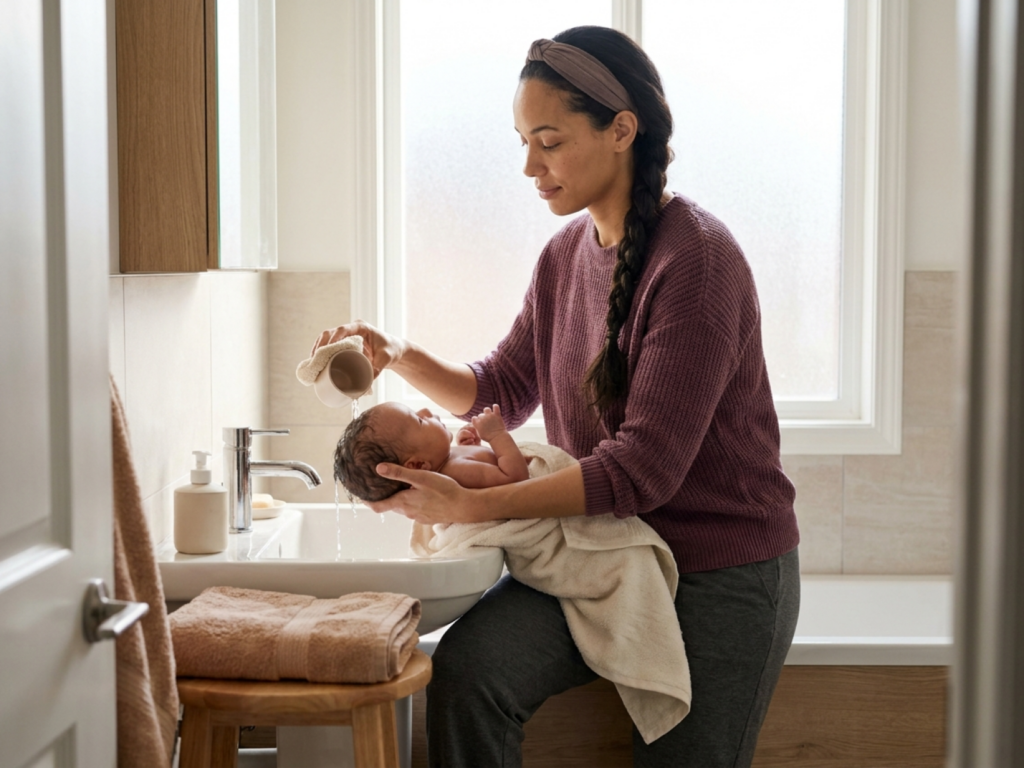
When it is time to wash, prepare everything before the baby is undressed: towel, clean diaper, clothing, washcloth, and shampoo if needed. Babies lose heat quickly, so keep the room comfortably warm and use warm not hot water. Always support the head and neck, and never leave a baby unattended in or near water, even briefly.
For gentle scalp cleansing, wet the hair with your hand, a soft washcloth, or a small cup. Use only a small amount of mild baby shampoo, and massage with the pads of your fingers rather than your nails. Rinse carefully so shampoo does not run into the eyes. If your baby has very little hair, a damp washcloth may be sufficient most of the time.
After washing, pat the scalp dry rather than rubbing. Avoid tight hats on a damp scalp unless needed for warmth, because trapped moisture may contribute to irritation. In general, infants do not need conditioners, oils, gels, fragrances, or styling products. If you use any emollient on the scalp because a clinician suggested it, use it sparingly and watch for redness, clogged-looking bumps, or worsening scale.
Safety is part of hair care. Keep one hand on the baby during bathing, test water temperature before contact, and avoid pouring water forcefully over the face. A calm, low-stimulation routine often works better than trying to complete a full bath quickly while the baby is upset.
Signs you may be washing too often or not often enough
Your baby’s scalp can usually tell you whether the routine is working. Possible signs of too-frequent washing include dryness, roughness, fine flaking, redness, or a baby who seems increasingly distressed when the scalp is touched. A shampoo that is tolerated by one infant may irritate another, particularly if it contains fragrance or botanical additives.
Signs that more cleaning may be useful include persistent milk odor, visible spit-up or food residue, sweat accumulation after hot weather, or sticky hair from topical products. These are hygiene cues, not medical diagnoses. Adjust gently: add a rinse, use shampoo only on soiled areas, or wash one extra time that week.
Some scalp findings deserve extra caution. Thick adherent scale, pustules, circular patches of hair loss, broken hairs, significant swelling, warmth, bleeding, or drainage should not be managed by simply increasing shampoo frequency. These findings may require clinical evaluation, especially in very young infants or babies with fever, poor feeding, or marked discomfort.
Hair shedding can also worry caregivers. Many babies lose some newborn hair in the first months, often from normal hair-cycle changes or friction. A low-manipulation routine is usually best: gentle washing, minimal brushing, and avoiding tight hairstyles. If hair loss is patchy, inflamed, or associated with scaling or broken hairs, bring it up at a well-child visit.
Building a routine that fits your family
A good routine is one you can repeat safely without making bath time a battle. For some families, that means shampoo on two predictable days each week. For others, it means washing only when the hair is visibly dirty. Either can be appropriate if the baby’s scalp remains comfortable.
Caregivers may also have cultural, sensory, or practical preferences around bathing. Those preferences matter. The medical goal is not to impose one perfect schedule but to avoid extremes: neglecting residue that irritates the skin, or washing so often that the skin barrier becomes dry and reactive. Hair care first year baby routines often evolve month by month as feeding, sleep, mobility, and weather change.
If your baby has eczema, prematurity-related skin fragility, a history of neonatal intensive care, immune concerns, or a dermatologist-recommended regimen, ask your child’s clinician whether standard advice should be modified. Babies with medical complexity may need individualized bathing and product guidance.
When in doubt, choose the least irritating effective option: fewer products, lukewarm water, short contact time, and careful rinsing. You are not failing your baby if you do not shampoo daily. In most cases, gentle consistency and close observation are more protective than frequent washing.
When to seek medical advice
- Call a healthcare professional if the scalp has oozing, bleeding, swelling, warmth, or rapidly worsening redness.
- Seek prompt advice for fever, poor feeding, lethargy, or significant pain with any scalp rash.
- Do not use medicated dandruff shampoos, essential oils, or steroid products on a baby unless a clinician recommends them.
- Ask for assessment if scaling is severe, spreading beyond the scalp, or not improving with gentle care.
- Use extra caution with premature infants or babies with known skin, immune, or medical conditions.
Tools & Assistance
- Pediatrician or family doctor visit for persistent scalp concerns
- Well-child visit discussion about bathing frequency and skin sensitivity
- Fragrance-free mild baby shampoo used sparingly
- Soft baby washcloth and soft-bristled baby brush
- Bath thermometer or careful elbow/wrist water temperature check
FAQ
Should I wash my newborn’s hair every day?
Usually no. Most newborns do not need daily bathing or daily hair washing. Washing the hair only when needed, often 1 to 3 times weekly, is enough for many babies.
Can I rinse baby hair with water without shampoo?
Yes. A water rinse or damp washcloth can be enough when there is mild sweat or residue but no significant oiliness or odor.
Does cradle cap mean I am not washing enough?
No. Cradle cap is common and is not a sign of poor hygiene. Some treatment plans include temporary daily washing, but persistent or severe cases should be discussed with a clinician.
What shampoo is best for baby hair?
Choose a mild baby shampoo, ideally fragrance-free if your baby has sensitive or eczema-prone skin. Avoid adult shampoos and medicated products unless advised by a healthcare professional.
What if my baby cries during hair washing?
Try shorter baths, a warmer room, less water near the face, and shampooing less often. If crying seems related to pain, rash, or scalp tenderness, seek medical advice.
Sources
- Mayo Clinic — Baby bath basics: A parent's guide
- NHS — Washing and bathing your baby
- Mayo Clinic — Cradle cap - Diagnosis and treatment
Disclaimer
This article is for general educational purposes only and does not replace professional medical advice, diagnosis, or treatment. Consult your baby’s healthcare professional for concerns about scalp rash, infection, skin disease, or individualized care.















Please log in to leave a comment.