
Intro
Baby skin is thinner, less mature, and more reactive than adult skin, so small exposures that would barely register on older skin can trigger redness, dryness, or chafing. Prevention is usually about reducing friction, moisture, and chemical exposure while preserving the skin barrier, rather than trying to cleanse aggressively.
That means gentle diaper changes, cautious product selection, and a routine that is simple enough to repeat consistently. The same principles help with common patterns such as diaper area irritation, facial wetness from saliva or milk, and irritation in skin folds.
Highlights
The most effective prevention is usually low-friction care: keep skin clean, dry, and protected without over-washing it.
Moisture, stool, urine, saliva, heat, and tight clothing all increase the chance of irritation in infants.
Plain water and soft cloth cleansing are often enough for newborn skin, especially in the early weeks.
Barrier protection and frequent diaper changes matter more than using multiple products.
Persistent or worsening redness should be reviewed by a pediatric clinician, because not every rash is simple irritation.
Why baby skin irritates so easily
Infant skin has a less robust barrier than adult skin, which makes transepidermal water loss easier and leaves the surface more vulnerable to friction and chemical irritation. In practical terms, that means a damp diaper, a rough wipe, a scented wash, or even repeated rubbing from clothing can be enough to cause redness.
Common irritants include urine, stool enzymes, saliva, sweat, detergent residue, and heat trapped under layers of fabric. In the diaper area, the combination of occlusion and moisture is especially important. The goal is not to disinfect the skin or strip away all natural oils. It is to protect the barrier so it can recover between exposures. That is the logic behind skin barrier care for babies: fewer irritants, less rubbing, and less prolonged wetness.
Clean gently, not aggressively
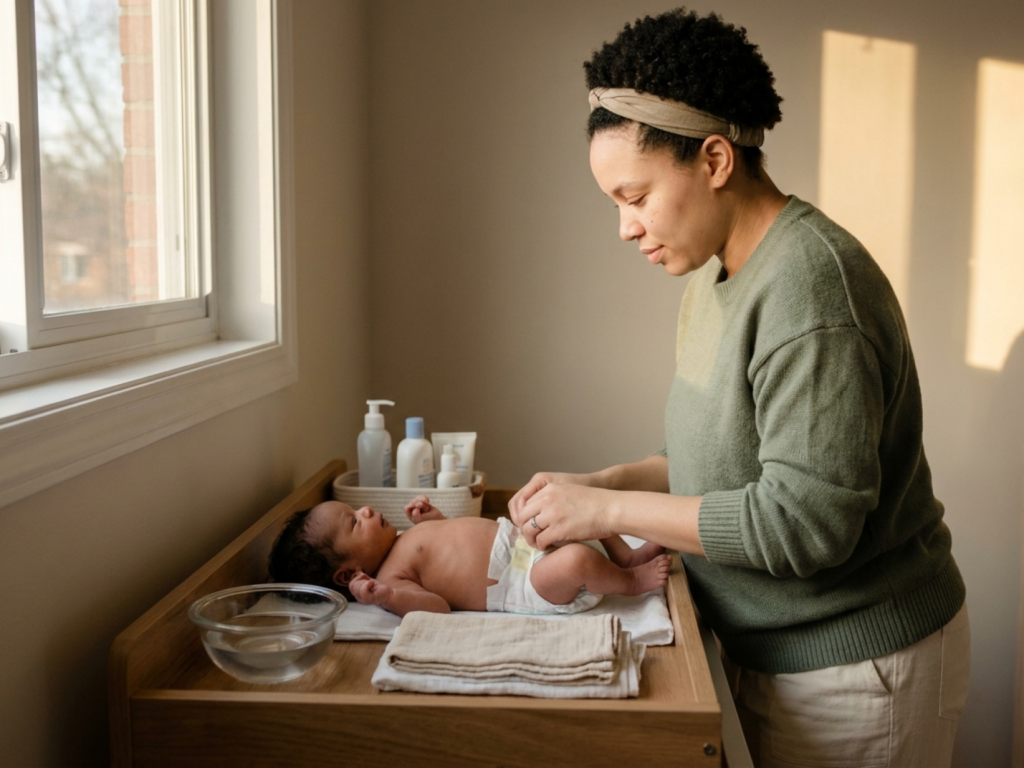
For day-to-day cleansing, use the mildest method that gets the job done. Mayo Clinic and MedlinePlus both recommend frequent diaper changes, warm water, soft cloths, and patting dry rather than scrubbing. For newborns, plain water is often enough for many routine cleanups, especially when the skin is not visibly soiled.
If you use wipes, choose fragrance-free products and avoid rubbing back and forth over sensitive areas. In skin folds, where milk, sweat, and lint can collect, clean skin folds safely by lifting the fold gently, wiping once or twice, and drying carefully. The surface should be clean, but not polished. Overcleansing can worsen irritation just as surely as missing dirt can.
Bathing should also stay restrained. Short, lukewarm baths are usually less irritating than long hot ones, and a small amount of mild fragrance-free cleanser is generally preferable to heavily scented or foaming products. If the skin becomes red after bathing, the cleansing routine may be too strong or too frequent.
Control moisture and friction in the diaper area
Most preventable irritation in infancy is driven by wetness plus friction. Change diapers promptly after stool and often enough after urine so the skin is not sitting in moisture for long periods. A properly sized diaper fit matters because a diaper that is too tight increases rubbing, while one that is too loose leaks and keeps skin damp. Good fit should be secure without leaving deep marks on the waist or thighs.
When the skin is red or the baby has had several wet diapers in a row, give the area some air when practical. Air drying the diaper area can reduce maceration and help the barrier recover. Even a few minutes at a time can help if done safely and consistently. Barrier creams are often used to shield irritated skin from urine and stool; if your clinician has already recommended a zinc oxide barrier cream, apply it as directed and reapply after changes as needed.
For families dealing with recurring diaper area irritation, the routine matters more than any single product. A gentle diaper-area cleansing approach, fast changes, and careful drying usually prevent more trouble than aggressive wiping or overapplying products.
Choose products, fabrics, and laundry care with restraint
Products that smell pleasant to adults are often the ones most likely to irritate infant skin. Fragrance, dyes, and a long ingredient list increase the chance of contact dermatitis in a vulnerable baby. A fragrance-free baby skincare routine is usually safer than a complex one. That applies to cleansers, wipes, moisturizers, and laundry detergent.
Clothing matters too. Soft, breathable fabrics such as cotton usually create less heat and friction than rough or synthetic materials. Avoid overdressing, especially in warm rooms or warm weather, because sweat trapped against the skin can trigger rash. Tight seams, scratchy tags, and rough elastic can all create localized rubbing.
Laundry residue is a common but underappreciated irritant. Use fragrance-free laundry products when possible, and consider an extra rinse cycle if residue seems to be contributing to redness. If you introduce a new product and notice that the skin becomes more inflamed, stop it and return to simpler care. A plain routine is often better tolerated than a highly marketed one.
Prevent irritation around the face, neck, and skin folds
Not all baby irritation happens in the diaper area. Drool, milk, and food can collect around the mouth, chin, neck, armpits, and thigh creases, especially in babies with deeper folds or frequent spit-up. These areas stay moist and can become irritated quickly if they are not dried gently after feeds, baths, or heavy drooling.
When cleaning the face, use a soft cloth and avoid repeated rubbing over the same spot. This is where gentle face cleansing for babies becomes more important than frequency. You are usually trying to remove residue, not scrub the skin. If you use any cleanser at all, keep it mild and fragrance-free, and stop if the skin looks drier or more reactive afterward.
Skin folds deserve the same restraint. Clean enough to remove moisture and debris, then dry completely before redressing the baby. Small habits here help prevent rash, chafing, and secondary irritation from trapped humidity.
Know when home prevention is not enough
Prevention can lower the chance of irritation, but it cannot explain every rash. Some cases are eczema, some are candidal overgrowth, some reflect infection, and some are a reaction to a product or fabric. If redness is severe, spreading, blistering, weeping, cracked, or accompanied by fever, pain, poor feeding, or marked fussiness, the child should be assessed by a healthcare professional.
Seek advice sooner if the rash does not improve after a few days of gentler care, if the diaper area looks sharply inflamed, or if the baby seems uncomfortable with every change. Recurrent rashes also deserve attention, because repeated episodes may point to an underlying skin sensitivity or barrier problem that needs a more specific plan. In those cases, it is better to review the routine with a pediatric clinician than to keep adding more products.
The practical aim is simple: protect the skin barrier, reduce irritants, and get help when the pattern stops looking like ordinary irritation.
When to get medical advice
- The rash is spreading, blistering, bleeding, or forming open cracks.
- The baby has fever, poor feeding, unusual sleepiness, or seems unwell.
- Redness is not improving after a few days of gentle home care.
- There is swelling, pus, a foul smell, or pain with touching the area.
- Rashes keep coming back despite a simple routine.
Tools & Assistance
- Pediatrician or family doctor visit for persistent rash assessment
- Fragrance-free wipes or plain water with a soft cloth
- Barrier ointment or cream recommended by a clinician
- Fragrance-free laundry detergent and an extra rinse cycle
FAQ
Is plain water enough to clean a newborn?
Often, yes for routine cleaning. Plain water and a soft cloth are frequently enough for newborn skin, especially when the area is not heavily soiled.
Should I use wipes on every diaper change?
Not necessarily. If wipes are used, choose fragrance-free ones and avoid rubbing. Some families prefer water and cloth when the skin is very sensitive.
Do barrier creams prevent irritation?
They can help by separating skin from urine and stool. Use them as part of a broader routine that also includes frequent changes and gentle cleaning.
When should I call a clinician?
Call if the rash is severe, persistent, worsening, or associated with fever, blisters, drainage, or poor feeding.
Sources
- Mayo Clinic — Diaper rash - Symptoms & causes
- MedlinePlus — Diaper rash: MedlinePlus Medical Encyclopedia
- Northern Lincolnshire and Goole NHS Foundation Trust — Skincare for newborn babies
Disclaimer
This article is for general information only and does not replace advice from a pediatric clinician. Seek medical care for severe, persistent, or worsening skin irritation.















Please log in to leave a comment.