
Intro
Baby skin can be soft, dry, flaky, red, or easily irritated, and product shelves in the United States offer far more choices than most families need. For a healthy newborn, the most useful approach is usually a short, low-fragrance or fragrance-free routine that protects the skin barrier and avoids unnecessary exposure to botanical extracts, essential oils, harsh cleansers, and multiple active ingredients.
This guide explains which product categories may be useful, how to evaluate labels, and when professional advice is appropriate. Newborn maturity, prematurity, eczema risk, climate, bathing practices, and diapering routines all influence tolerance, so product selection should remain individualized.
Highlights
Plain lukewarm water is often sufficient for early newborn cleansing, especially during the first weeks.
A bland emollient or petrolatum-based product can help reduce water loss when dryness is present, but more product is not necessarily better.
Fragrance-free detergent, gentle cleansing, and frequent diaper changes support the skin barrier and may reduce irritation.
Persistent, spreading, painful, blistering, or oozing skin changes warrant advice from a pediatric clinician.
Start with a minimal newborn routine
Healthy newborn skin generally does not require a large collection of specialized products. The stratum corneum, the outermost layer of the epidermis, is still developing after birth. It can lose water readily and may respond poorly to repeated cleansing, fragrance, and excessive rubbing. A minimal routine helps preserve the acid mantle and reduce avoidable irritation.
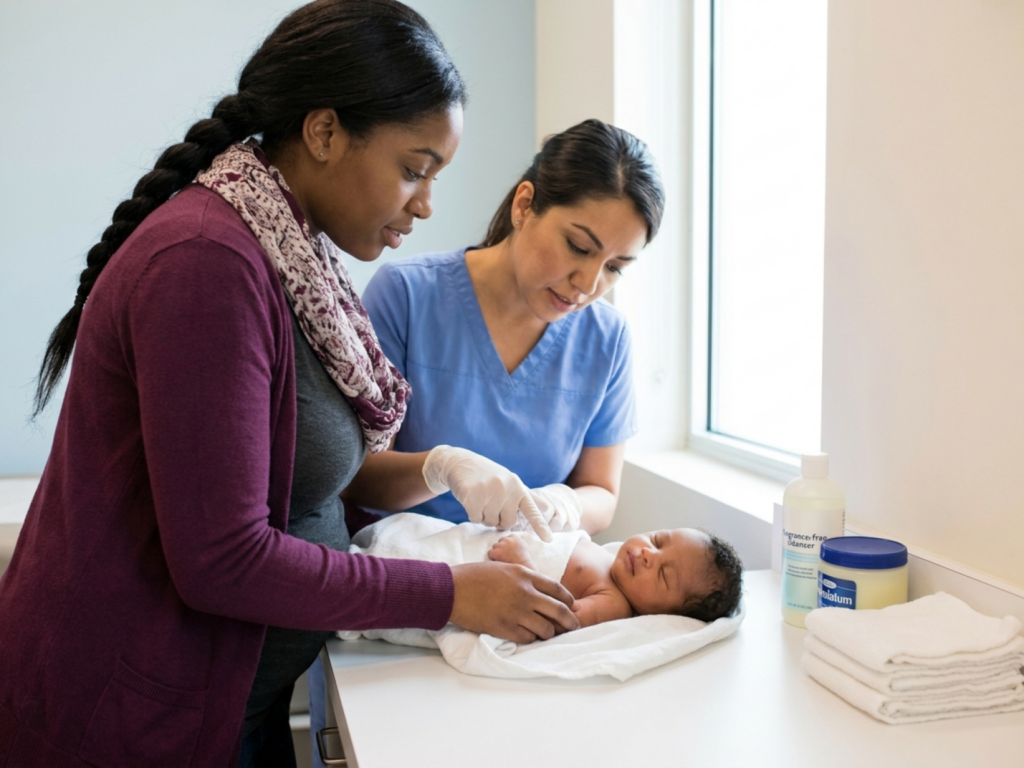
During the early weeks, plain lukewarm water is often an appropriate choice for cleaning the body. Use a soft washcloth or your clean hands, and avoid vigorous scrubbing. Pay attention to skin folds, the neck, behind the ears, and the diaper area, where milk, sweat, stool, or urine can collect. Clean gently, then pat rather than rub the skin dry.
Bathing frequency varies, but daily full baths are not usually necessary for a newborn. Frequent bathing can increase transepidermal water loss and contribute to dryness, particularly in homes with dry indoor heat or cold weather. A short bath in comfortably warm water is preferable to a hot bath. Never leave a baby unattended in or near water, even briefly.
In the first weeks, avoid introducing several new products at once. If a product is needed later, add one product at a time and observe the skin for irritation. This makes it easier to identify a trigger and prevents a routine from becoming unnecessarily complicated.
Choose cleansers and moisturizers carefully
When water alone no longer meets the family’s needs, choose a mild, fragrance-free cleanser labeled for sensitive skin. A cleanser should be used sparingly and rinsed thoroughly. Terms such as hypoallergenic, natural, organic, or dermatologist tested are not standardized guarantees of safety or tolerability in every infant. The ingredient list and the baby’s response matter more than marketing language.
Look for products without added fragrance, parfum, essential oils, or strong botanical blends. Fragrance compounds can cause irritant or allergic contact dermatitis, and essential oils are not automatically gentle because they are plant-derived. Avoid adult exfoliating products, antibacterial washes, deodorizing products, retinoids, salicylic acid, benzoyl peroxide, and other active treatments unless a healthcare professional specifically directs their use.
Moisturizers are useful when skin appears dry, rough, or mildly flaky. An ointment, such as plain petrolatum, is generally more occlusive than a cream or lotion and can reduce evaporation from the skin surface. Creams contain more water and may feel easier to spread, while lotions are thinner and often require more preservatives. For very sensitive skin, a short ingredient list is often practical.
Apply a thin layer to slightly damp skin after bathing if needed. Avoid applying products to open, infected, or markedly inflamed areas without clinical guidance. If the baby develops new redness, swelling, hives, worsening itch, or a persistent rash after a product is introduced, stop using it and contact the child’s clinician for advice.
Protect the diaper area
The diaper area is exposed to moisture, friction, urine, stool, cleansing, and occlusion. These factors can disrupt the skin barrier and contribute to irritant diaper dermatitis. The most useful products in this setting are usually simple barrier preparations rather than heavily fragranced creams or multiple medicated ingredients.
Petrolatum-based ointments create a water-repellent layer that limits contact between irritated skin and moisture. Zinc oxide products provide another form of barrier protection and may be especially useful when redness follows repeated stool or diarrhea. Apply a visible but even layer to clean, dry skin; a very thick layer may not be necessary unless advised by a clinician.
Change diapers regularly and cleanse with lukewarm water or a gentle, fragrance-free wipe when water is not practical. For newborns with very sensitive skin, plain water and a soft cloth may be better tolerated than frequent wipes. Avoid scrubbing to remove every trace of barrier ointment. If needed, loosen residue gently with a small amount of plain petrolatum and a soft cloth.
Allowing brief air exposure can be useful when practical, but it should never compromise warmth, supervision, or household hygiene. Choose diapers that fit without excessive friction and avoid talcum powder or loose powders, which can be inhaled. Cornstarch-containing powders may also worsen some yeast-related environments and are not necessary for routine care.
A rash that is rapidly spreading, intensely painful, associated with fever, blistering, pus, bleeding, or ulceration needs prompt medical assessment. A rash that persists despite careful barrier care may require a clinician to determine whether another treatment or diagnosis is involved.
Consider wipes, laundry products, and clothing
Products that remain in contact with skin can matter as much as products applied directly to it. For laundry, select a fragrance-free, dye-free detergent and use the amount recommended on the package. Excess detergent may leave residue, while fabric softeners and scent boosters can add irritants without providing a skin benefit. An extra rinse may help if a baby has recurrent irritation and the washing machine permits it.
Soft, breathable clothing is generally preferable to rough or tightly fitting fabrics. Wash new clothing before use, remove scratchy tags when possible, and avoid overdressing. Heat and sweating can aggravate some rashes. A baby’s skin does not need to smell perfumed to be clean, and scented lotions, dryer sheets, and room fragrances can increase the total fragrance exposure in the environment.
Wipes are convenient, particularly during travel or overnight changes, but not every formulation is equally well tolerated. Choose alcohol-free, fragrance-free wipes with a short ingredient list. If wiping consistently causes redness, switch temporarily to water and a soft cloth and discuss ongoing symptoms with a pediatric professional.
For the scalp, a mild fragrance-free baby shampoo may be used when needed, taking care to keep it out of the eyes. Routine shampooing is not required for every bath. Avoid picking at scales or applying adult dandruff treatments without medical advice.
Use sun protection appropriately
Sun protection for infants begins with shade, clothing, and careful timing. Keep young babies out of direct sunlight when possible, use a canopy or umbrella that allows adequate airflow, and dress them in lightweight clothing that covers the arms and legs without overheating. Never cover a stroller with a loose blanket in a way that restricts ventilation or permits dangerous heat buildup.
For babies younger than 6 months, ask the child’s healthcare professional about sunscreen use, particularly when shade and protective clothing cannot adequately cover a small exposed area. The American context includes products labeled for infants, but age guidance and local clinical advice remain important. For older infants, a broad-spectrum, water-resistant sunscreen may be considered on exposed skin according to label directions and pediatric guidance.
Mineral sunscreen ingredients such as zinc oxide or titanium dioxide are often considered practical options for sensitive skin because they sit on the surface and reflect or scatter ultraviolet radiation. Regardless of the active ingredient, apply a small amount to a limited area first if the child has a history of skin sensitivity, and stop if irritation develops. Sunscreen does not replace shade, clothing, or avoidance of peak sun exposure.
Read labels and know when to seek help
In the United States, product packaging can make a gentle routine appear complicated. Focus on function: a cleanser for washing, an emollient for dryness, a barrier ointment for the diaper area, and detergent that does not add unnecessary fragrance. Avoid purchasing products solely because they contain a long list of vitamins, plant extracts, or specialty ingredients. More ingredients create more opportunities for irritation or sensitization without necessarily improving care.
Patch testing a small area can provide limited information but cannot guarantee that a product will be tolerated elsewhere or after repeated exposure. Do not apply a new product over a large area when the skin is already inflamed. Keep all products out of the baby’s eyes and mouth, follow age restrictions, and store containers securely. Avoid products packaged in ways that could be mistaken for food or medicine.
Contact a pediatrician, family physician, nurse practitioner, or dermatologist when dryness is severe, recurrent, or associated with fissures; when a rash interferes with feeding or sleep; or when there is suspected allergy, infection, or eczema. Seek urgent care for breathing difficulty, facial swelling, widespread hives, unusual sleepiness, fever in a young infant, rapidly spreading redness, skin peeling, blisters, or signs of dehydration. A healthcare professional can assess the skin directly and recommend treatment appropriate to the baby’s age and medical history.
A fragrance-free newborn skincare routine can be both effective and uncomplicated. The goal is not perfect-looking skin after every bath; it is maintaining comfort, minimizing barrier disruption, and responding promptly when the skin’s appearance or the baby’s overall condition changes.
When to get medical advice
- Seek urgent help for breathing difficulty, facial swelling, or widespread hives after product exposure.
- Contact a clinician promptly for fever, rapidly spreading redness, warmth, pus, blisters, skin peeling, or severe pain.
- Ask for medical guidance when a rash persists despite gentle cleansing and barrier care.
- Do not use prescription-strength, steroid, antifungal, antibacterial, or adult active products on an infant without professional direction.
- Avoid talcum powder and any product that may be inhaled or easily ingested.
Tools & Assistance
- A short ingredient checklist for fragrance, essential oils, dyes, and active medications
- A clean, soft washcloth and a small supply of plain petrolatum
- Fragrance-free, dye-free laundry detergent
- A pediatrician, family physician, nurse practitioner, or pediatric dermatologist
- A poison control contact saved for accidental ingestion or exposure
FAQ
Does a newborn need baby lotion every day?
Not necessarily. If the skin is comfortable and intact, daily lotion may add little benefit. Use a bland fragrance-free emollient or petrolatum when dryness is present, and ask a clinician about persistent or severe dryness.
Is petroleum jelly safe for baby skin?
Plain petrolatum is commonly used as an occlusive barrier for dry skin and the diaper area. Apply it externally, keep it away from the eyes and airway, and choose a product intended for skin use.
Are baby wipes safe for newborns?
Many babies tolerate fragrance-free, alcohol-free wipes, but newborn skin may be sensitive to frequent wiping. During the early weeks, plain water and a soft cloth may be preferable, especially if wipes cause redness.
Should I use scented baby products?
Fragrance is not required for cleansing or moisturizing and may irritate or sensitize skin. Fragrance-free products with relatively short ingredient lists are generally a more cautious choice for sensitive infants.
When should a baby's rash be checked?
Arrange medical advice for a persistent, worsening, painful, oozing, blistering, or recurrent rash. Seek urgent care for fever in a young infant, facial swelling, breathing problems, widespread hives, or rapidly spreading redness.
Sources
- Northumberland, Tyne and Wear NHS Foundation Trust — Skincare for newborn babies
- MedlinePlus — Infant and Newborn Care
- WebMD — What Baby Skin Care Products Does Your Newborn Need?
Disclaimer
This article is for general educational information and does not diagnose, treat, or replace advice from a qualified healthcare professional. Contact your baby's clinician for individualized guidance, especially for newborn rashes, fever, infection concerns, or allergic reactions.















Please log in to leave a comment.