
Intro
Bathing a baby is a practical caregiving task, but it also asks a lot of the adult doing it: steady hands, attention to temperature, and an organized setup. The goal is not a perfect routine. The goal is a safe, calm wash that protects the baby's airway, skin, and body heat while keeping the process efficient for you.
This guide gives a step-by-step approach for sponge baths and tub baths, with emphasis on safe handling, water temperature, and the details that matter most in the first months of life. If your baby was born early, has a medical condition, or has specific skin or cord-care instructions, follow your clinician's guidance first.
Highlights
A safe bath starts before the water runs: gather supplies, warm the room, and keep everything within reach.
For very young babies, a sponge bath may be more appropriate until the umbilical area or circumcision has healed, depending on clinical advice.
The most important safety rule is constant supervision; a baby should never be left alone in the bath, not even for a moment.
Water should be warm, not hot. Check the temperature with your elbow or a bath thermometer before placing the baby in the water.
After the bath, drying skin folds carefully and dressing the baby promptly helps reduce heat loss and skin irritation.
Prepare before you start
It is also worth setting expectations. A short bath is usually enough. Many babies do not need daily full-body bathing; in some families, a few baths per week is adequate, with face, hands, and diaper area cleaned as needed. If the baby becomes cold, upset, or fatigued quickly, it is reasonable to stop and finish later. The best routine is the one that is safe, brief, and repeatable.
Choose sponge bath or tub bath
For a newborn, the first bath is often a newborn sponge bath safety issue rather than a tub-bath issue. A sponge bath means cleaning the baby with a damp washcloth while the baby lies on a secure surface. This is commonly used until the umbilical stump has separated and the area is healed, or until a clinician says tub bathing is fine. The same approach may be used after a circumcision or when a baby needs extra protection from prolonged water exposure.
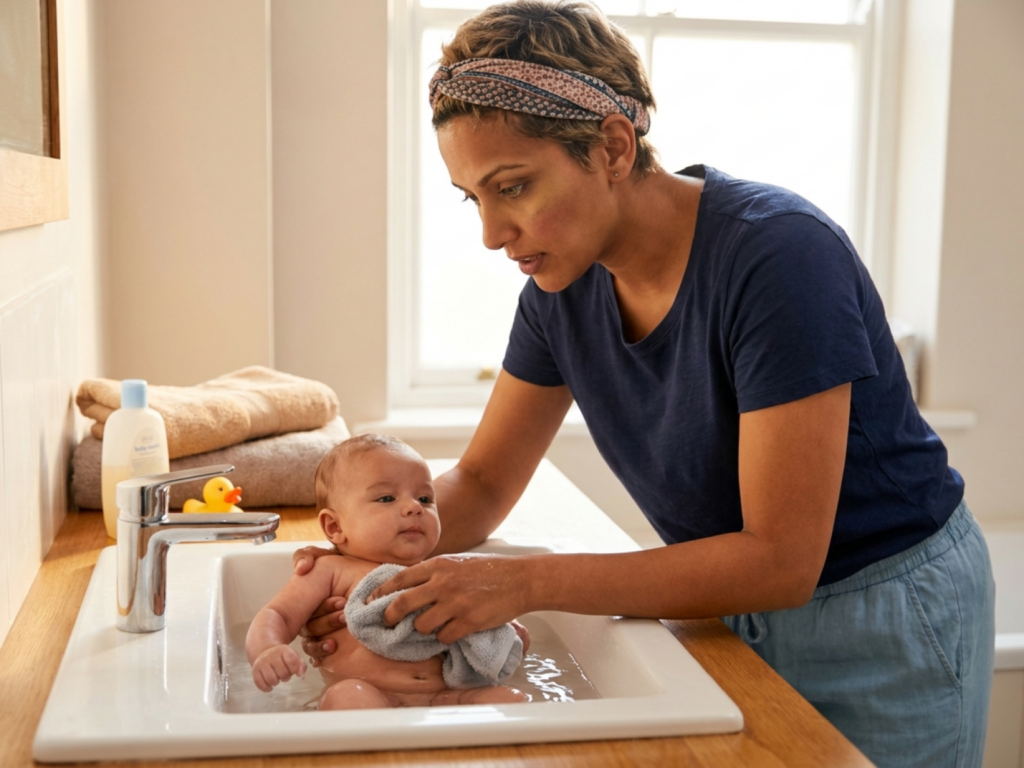
Once tub bathing is appropriate, keep the water shallow. You only need enough to wash the baby comfortably while leaving the head and face well above the waterline. Many caregivers find it easiest to keep the baby’s bottom supported in the water while the chest and shoulders are held by one hand and the neck and head are always supported. That steadiness matters more than speed.
If you are uncertain which approach fits your baby, ask your pediatrician or midwife. There is no prize for switching to a tub too soon. The safer method is the one matched to your baby’s age, cord status, skin condition, and any procedures or medical concerns.
Wash the baby step by step
Once everything is ready and the water feels safe, undress the baby and wrap them in a towel until the moment you begin. This reduces heat loss. If you are doing a tub bath, lower the baby in slowly with firm support under the head, neck, and shoulders. Move with purpose, because hesitation can make the baby colder and more unsettled.
- Support the baby’s head and neck with one hand and lower the body into the water with the other.
- Wet a washcloth and clean the face first, using plain water unless a clinician has suggested otherwise.
- Wash the scalp and hair if needed, then rinse gently so no soap remains on the skin.
- Clean the chest, arms, hands, back, and legs.
- Wash the diaper area last, especially if you want to avoid moving bacteria from that area to the rest of the body.
Many caregivers like to work from the cleanest area to the dirtiest area. That sequence is practical and reduces recontamination. Keep the baby calm with a steady voice and efficient movements. If the baby fusses but is otherwise warm and safe, brief crying alone does not necessarily mean the bath is harmful; however, if the baby seems chilled, breathless, limp, or unusually distressed, stop immediately.
This is also where one hand on the baby becomes the core rule. Even if the baby seems settled, a wet infant can slip quickly. Stable support is not an optional habit. It is the safety feature that makes the bath possible.
Clean the face, scalp, and skin folds carefully
The face needs only gentle cleaning. Use plain water and a soft cloth, especially around the eyes and mouth. Do not scrub. For the scalp, a small amount of mild baby cleanser may be enough if the baby’s hair needs washing, but many baths do not require shampoo. If the baby has cradle cap or another scalp issue, ask a clinician before trying to remove scales aggressively. A separate scalp issue can change what is appropriate.
Skin folds deserve special attention because milk, sweat, and moisture can collect there. Dry the neck, behind the ears, the armpits, the groin, and the creases behind the knees carefully. This step matters because retained moisture can irritate the skin and cause breakdown. The phrase drying newborn skin folds is not just a cosmetic detail; it is part of skin protection.
Keep soap use modest. Many babies have sensitive skin, and a small amount of fragrance-free cleanser is usually enough. Rinse well so residue does not remain on the skin. If your baby has eczema, very dry skin, or frequent irritation, your clinician may suggest a specific bathing and moisturizing routine. Do not assume more soap means cleaner skin. In baby care, less friction is often better.
If your baby still has an umbilical stump, keep that area dry and follow the care instructions you were given. If the stump looks red, foul-smelling, or is draining, pause the bath plan and contact a health professional.
Dry, dress, and watch for problems
When the wash is done, lift the baby out with full support and wrap them in a dry towel immediately. Pat the skin dry instead of rubbing. Pay special attention to the neck, armpits, groin, and diaper area because those folds can trap moisture. This is one of the reasons why bath time should stay short and organized. A wet baby loses heat fast.
After drying, put on a diaper and clothes promptly. If your clinician has recommended a moisturizer for dry skin, apply it after the bath while the skin is still slightly damp. Do not use fragranced products unless your child’s clinician has said they are acceptable. For most families, a simple, predictable routine is enough: bath, pat dry, dress, and settle the baby in a comfortable environment.
Watch for signs that the bath was too much for the baby. Persistent shivering, marked redness, breathing changes, or unusual sleepiness are reasons to stop future baths until you have asked a professional for guidance. The baby bath safety standard is not to push through discomfort. It is to keep the baby warm, supported, and calm.
As a general rule, the bath should end with the baby looking comfortable rather than exhausted. If every bath turns into a struggle, revisit the setup, water temperature, room warmth, and timing of the bath. Small adjustments often make a large difference.
When to ask for medical advice
Bathing is usually routine care, but there are times when a professional should guide the plan. Ask for advice if your baby was premature, has a skin condition such as eczema that is worsening, has a healing surgical site, has an umbilical problem, or has a circumcision with instructions that conflict with ordinary bathing. These situations can change the timing, water exposure, and cleansing products that are appropriate.
You should also seek advice if the baby has fever, is unusually sleepy or irritable, has signs of dehydration, or develops a rash that is spreading or painful. Bathing is not the right place to troubleshoot an illness. If something seems off, pause the bath routine and call your pediatrician, midwife, or another qualified clinician.
For families who feel uneasy about the process, a nurse line or well-baby visit can be useful. Demonstration often helps more than reading. Seeing how someone supports the head, checks temperature, and lifts the baby from the water can make the routine feel much more manageable.
Safety warnings
- Never leave a baby unattended in the bath, even for a moment.
- Check water temperature before every bath; it should be warm, not hot.
- Keep one hand on the baby at all times while the baby is in water.
- Stop the bath if the baby becomes cold, floppy, or unusually distressed.
- Do not bathe over a healing wound, umbilical concern, or post-procedure site without clinical guidance.
Tools & Assistance
- Pediatrician or family doctor
- Nurse advice line or well-baby clinic
- Bath thermometer or elbow test
- Soft washcloths and hooded towel
- Non-slip bath mat
FAQ
How often should I bathe my baby?
Many babies do not need a full bath every day. A few times per week is often enough, with targeted cleaning of the face, hands, and diaper area as needed. Follow your clinician's advice if your baby has skin or medical concerns.
Can I use soap every time?
Usually only a small amount of mild, fragrance-free cleanser is needed, and some baths can be done with water alone. Too much soap can dry or irritate sensitive skin.
What is the safest water temperature?
The water should feel warm, not hot. Many caregivers check with an elbow or a thermometer before placing the baby in the bath.
Is a sponge bath still useful?
Yes. A sponge bath is often the better choice for very young babies or when the umbilical area or another healing site should stay dry.
Sources
- Mayo Clinic — Baby bath basics: A parent's guide
- NHS — Bathing your baby
- MedlinePlus — Bathing an infant
Disclaimer
This article is for educational purposes only and does not replace advice from your pediatrician or another qualified health professional. Seek prompt medical care for fever, injury, dehydration, breathing problems, or any concern that makes bathing unsafe.















Please log in to leave a comment.