
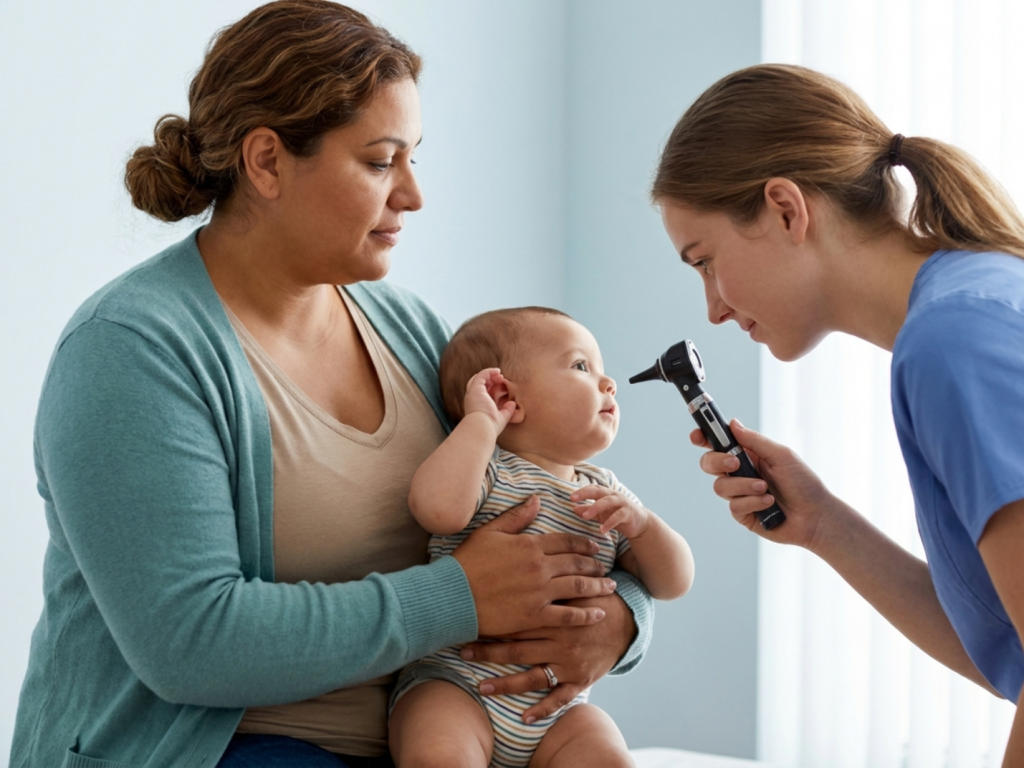
Intro
Seeing your baby tug, rub, or scratch at an ear can be unsettling, especially because ear infections are common in early childhood. The reassuring part is that ear pulling is often a normal developmental behavior, a self-soothing habit, or a response to minor irritation rather than a sign of serious illness.
Still, context matters. A baby who happily explores both ears is different from a baby with fever, escalating crying, poor sleep, feeding difficulty, or drainage from the ear. This article explains the common reasons babies pull their ears, how to think through the possibilities, and when to contact a healthcare professional.
Highlights
Ear pulling is often normal in babies, especially when they are discovering body parts or soothing themselves.
Teething can make some babies rub or pull near the ear because discomfort from the gums may be felt around the jaw and ear area.
Ear pulling alone does not prove an ear infection; fever, worsening crying, sleep disruption, or illness symptoms make it more concerning.
Avoid putting cotton swabs or objects into the ear canal, and ask a clinician if you suspect wax blockage, infection, or injury.
Medical review is especially important if there is ear drainage, significant pain, persistent inconsolable crying, or symptoms in a very young infant.
Normal discovery and self-soothing
One of the most common reasons babies pull their ears is also one of the least alarming: they have found them. Infants gradually learn that their hands can reach different body parts, and the ear is easy to grasp. Pulling, rubbing, folding, or patting the ear may simply be sensory exploration. The cartilage is flexible, the skin is sensitive, and the movement creates interesting feedback.
Some babies also use ear pulling as a self-soothing behavior. You may notice it when your baby is tired, overstimulated, nursing, taking a bottle, settling for sleep, or riding through a fussy period. In that setting, the behavior can function like thumb-sucking, hair twirling, or rubbing a blanket. It is repetitive, comforting, and not necessarily tied to pain.
Clues that ear pulling is probably benign include a baby who is otherwise feeding normally, sleeping close to their usual pattern, has no fever, and can be distracted or comforted. The behavior may happen on both sides or switch sides over time. It may also come and go with developmental phases, especially as hand control improves.
A supportive approach is to observe without panic. If the ear looks normal, your baby is generally well, and there are no other symptoms, ear pulling can be watched. You can gently redirect the hand, offer a teething toy if age-appropriate, or use usual calming routines. The key is to evaluate the whole pattern: behavior, mood, temperature, sleep, feeding, and recent illness.
Teething and referred discomfort
Teething is another common reason caregivers notice more ear rubbing or ear pulling. The gums, jaw, and ear region share nearby sensory pathways, so discomfort in the mouth can be perceived around the side of the face. A baby may not be able to localize the sensation and may tug at the ear, cheek, or hairline while the real source is gum pressure.
Ear rubbing is often considered alongside other teething signs. These may include increased drooling, a desire to chew or gnaw, flushed cheeks, irritability, and disrupted sleep. Some babies seem mostly cheerful but chew constantly; others become clingier or harder to settle. Teething can be uncomfortable, but it should not be used to explain every fever, severe symptom, or prolonged deterioration.
The distinction matters because teething and ear infection can overlap in age and behavior. A baby with mild ear pulling, drooling, and chewing who remains playful and feeds reasonably well may fit a teething pattern. A baby with fever, marked distress, worsening night waking, or symptoms after a cold deserves more caution. Ear pulling is a clue, not a diagnosis.
Comfort measures should stay gentle and age-appropriate. Cold teething rings, extra cuddling, and maintaining feeding routines may help some babies. If you are considering medicines, gels, or supplements, ask a healthcare professional or pharmacist, especially for young infants or babies with medical conditions. The goal is comfort without assuming the cause is harmless when the broader picture suggests otherwise.
Wax, skin irritation, and external ear triggers
Sometimes the problem is not inside the middle ear but around the outer ear or ear canal. Earwax can feel bothersome when it builds up or dries near the opening. Mild irritation can also happen from soap, shampoo, bath water, sweat, drool collecting behind the ear, eczema-prone skin, or friction from hats and bedding. Babies cannot explain itching or fullness, so they may rub, scratch, or pull.
Look at the visible parts of the ear and the skin behind it. Redness, flaking, crusting, a rash, an unpleasant odor, or tenderness when the outer ear is touched may point toward local irritation. Visible baby earwax near the opening can be normal, but deep wax, suspected blockage, or repeated discomfort should be discussed with a clinician.
Safe care focuses on the outside only. Safe outer-ear cleaning means wiping the visible ear and behind the ear with a soft damp cloth, then drying gently. Baby ear canal safety is important: avoid inserting cotton swabs, fingernails, hairpins, ear candles, or other objects into the canal. These can push wax deeper, irritate the skin, or injure the eardrum.
If discharge appears from the ear, if the ear smells infected, or if the baby seems to have pain when the ear is touched, seek medical advice. Ear drainage warning signs are especially important because drainage may indicate infection, injury, or another condition that needs direct assessment rather than home guessing.
Colds, middle-ear fluid, and infection
Ear pulling becomes more medically concerning when it appears during or after an upper respiratory infection. Colds can lead to swelling and fluid behind the eardrum. When the middle ear fills with fluid, pressure changes may cause pain, fullness, reduced hearing, or irritability. Bacteria or viruses can then be involved in a middle-ear infection.
In babies, ear infection symptoms can be nonspecific. Instead of saying, “my ear hurts,” a baby may cry more, sleep poorly, feed less, develop fever, or seem unusually difficult to comfort. Some babies tug at the affected ear, but others do not. Conversely, many babies pull ears for reasons unrelated to infection. This is why clinicians look at the full illness pattern and examine the ear with an otoscope.
Warning signs include fever, increased crying, clear pain behavior, recent cold symptoms with worsening fussiness, poor feeding, vomiting, drainage from the ear, or symptoms that persist rather than improve. A baby who is younger, medically fragile, or acting unusually lethargic should be assessed promptly. Caregivers should also seek advice if they are unsure, because visual examination is often needed to distinguish wax, fluid, irritation, and infection.
It is also important not to assume that antibiotics are always needed or never needed. Management depends on age, severity, examination findings, and clinical judgment. A healthcare professional can determine whether observation, pain control guidance, follow-up, or antimicrobial treatment is appropriate. Ear pulling can start the conversation, but it should not be the only data point.
How to interpret the pattern
A practical way to think about ear pulling is to separate isolated behavior from illness behavior. Isolated ear pulling means the baby is otherwise acting like themselves: feeding, interacting, sleeping within a familiar range, and calming with normal routines. Illness behavior means the ear pulling appears with fever, escalating distress, poor intake, disrupted sleep, or signs of respiratory infection.
Timing can help. Ear pulling during tired moments may be self-soothing. Ear pulling with drooling and chewing may fit teething. Ear pulling after a bath may suggest moisture or skin irritation. Ear pulling after several days of nasal congestion may raise concern for middle-ear fluid or infection. Ear pulling with persistent inconsolable crying should be taken seriously, even if the ear itself looks normal from the outside.
Side matters less than many caregivers expect. A baby may pull one ear because one hand is more active, because the position is easier, or because one side is irritated. But consistent pulling on one side with pain, fever, or poor sleep deserves closer attention. Both ears being pulled does not rule out discomfort either, especially if congestion or teething is present.
Caregiver observation is valuable. Note temperature, feeding, sleep, recent cold symptoms, teething signs, ear drainage, rash, and whether touching the outer ear seems painful. These details help a pediatrician decide how urgently the baby needs to be seen and what conditions to consider.
What caregivers can do safely
If your baby is well-appearing and ear pulling is mild, start with simple observation and comfort. Check whether the behavior clusters around sleep, feeding, teething, or overstimulation. Keep nails trimmed to reduce scratching. Gently clean and dry behind the ears after bathing or feeding. Offer appropriate comfort, such as holding, rocking, feeding if hungry, or a safe teething item if teething seems likely.
Avoid probing the ear canal. The eardrum and ear canal skin are delicate, and babies move unpredictably. If wax is visible at the outer opening, wipe only what comes away easily. If you think wax is blocking hearing or causing distress, ask for pediatrician earwax guidance rather than trying to remove it deeply at home.
Contact a healthcare professional when ear pulling comes with fever, worsening crying, poor feeding, sleep disruption, recent cold symptoms that are getting worse, ear drainage, or suspected pain. Also seek care if your baby is very young, has immune or craniofacial risk factors, or if your intuition says something is off. Parental concern is clinically relevant because you know your baby’s baseline.
It may also help to track related behaviors. Babies communicate through movement, crying, facial expression, feeding changes, and early vocalizations long before they can explain pain. If you are trying to understand whether distress is from the ear, teeth, tiredness, or another cause, the broader communication pattern matters. Articles such as Why babies cry explained and Why babies turn toward voices can support that bigger developmental picture, but medical symptoms should still be assessed by a clinician when concerning.
When to seek medical care
- Fever with ear pulling, especially after a cold or with worsening fussiness.
- Ear drainage, blood, foul odor, swelling, or obvious tenderness around the ear.
- Persistent inconsolable crying, unusual lethargy, poor feeding, or signs of dehydration.
- Symptoms in a very young infant or a baby with underlying medical risk factors.
- Concern for an object in the ear, injury, or sudden change in hearing or responsiveness.
Tools & Assistance
- Take your baby’s temperature and note timing of ear pulling.
- Check the outer ear and skin behind the ear for redness, rash, wax, or drainage.
- Use safe outer-ear cleaning with a soft damp cloth only.
- Call your pediatrician or local nurse advice line if symptoms are concerning.
- Seek urgent care for severe pain, drainage, lethargy, or persistent inconsolable crying.
FAQ
Does ear pulling always mean my baby has an ear infection?
No. Many babies pull their ears because of normal discovery, habit, self-soothing, teething, wax, or irritation. Infection is more concerning when ear pulling occurs with fever, worsening crying, poor sleep, feeding changes, or recent cold symptoms.
Can teething make a baby pull their ears?
Yes. Some babies rub or pull near the ear while teething, often along with drooling, chewing, flushed cheeks, or irritability. Teething should not be assumed if symptoms are severe or illness signs are present.
Should I clean inside my baby’s ear if they keep pulling it?
No. Clean only the visible outer ear and behind the ear with a soft damp cloth. Do not insert cotton swabs or objects into the ear canal; ask a healthcare professional if wax blockage or infection is suspected.
When should I call the pediatrician?
Call if ear pulling is accompanied by fever, increased crying, poor feeding, disrupted sleep, ear drainage, recent cold symptoms that worsen, or if your baby seems unusually unwell.
Sources
- Seattle Children’s Hospital — Ear pulling in babies and young children
- NHS — Baby teething symptoms
- Mayo Clinic Health System — Common ear infection questions
Disclaimer
This article is for informational purposes only and does not replace medical evaluation, diagnosis, or treatment. Contact a qualified healthcare professional for concerns about your baby’s symptoms.















Please log in to leave a comment.