
Intro
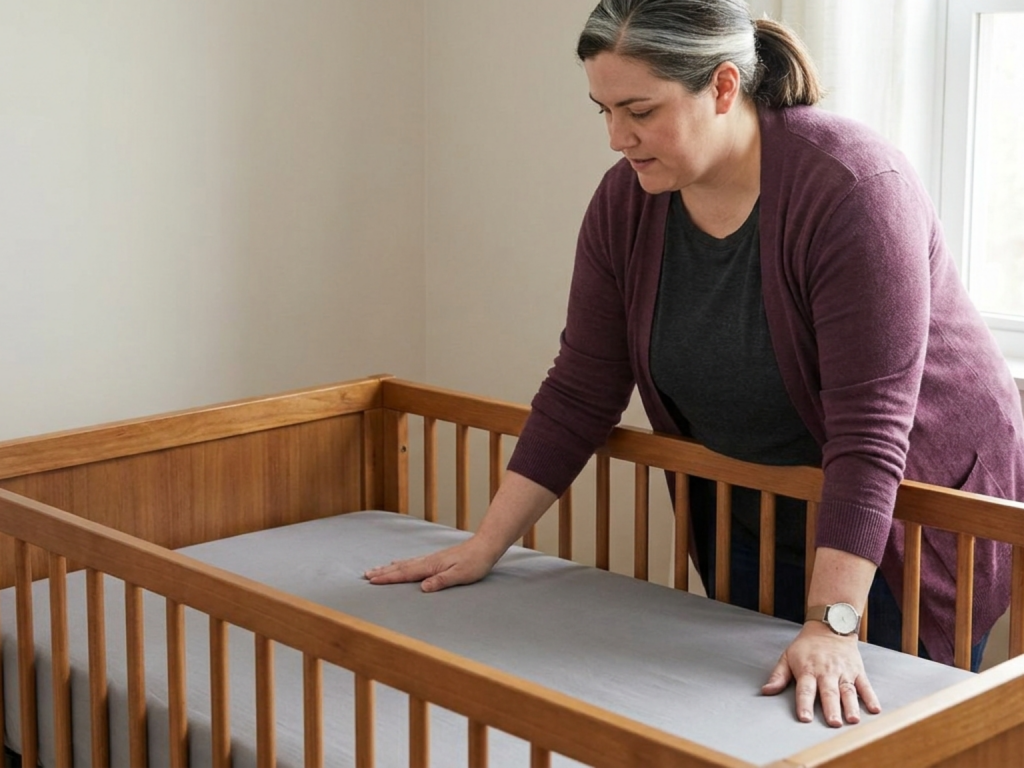
Preparing a crib can feel surprisingly difficult because many products are marketed as ways to make an infant sleep more comfortably. The safest approach is simpler: a baby’s crib should be a dedicated sleep space with a firm, flat mattress covered by a tightly fitted sheet, and nothing else.
This guidance can feel emotionally counterintuitive. Adults often associate blankets, pillows, and soft toys with warmth and comfort, but infants have limited motor control and may not be able to move away from an item that obstructs breathing. A bare sleep space reduces risks such as suffocation, entrapment, overheating, and accidental positional asphyxia. Recommendations may need individual interpretation for premature infants or babies with specific medical conditions, so discuss personal circumstances with a pediatric healthcare professional.
Highlights
The crib should contain only a firm, flat mattress and a snugly fitted sheet.
Place the baby on their back for every sleep, including naps, on a separate infant sleep surface.
Keep blankets, pillows, stuffed animals, bumpers, positioners, wedges, and other soft or loose items out of the crib.
A non-weighted wearable blanket may be used for warmth if it fits properly and allows free movement of the hips and legs.
Inspect the crib, mattress, and sheet regularly for damage, gaps, loose parts, or product recalls.
The essential contents of a safe crib
For routine infant sleep, the essential contents are limited to three compatible components: a safety-compliant crib or bassinet, a firm and flat mattress designed for that product, and one fitted sheet made for the mattress. The mattress should not sag, fold, or create an incline. Its dimensions must match the crib exactly so that no dangerous space forms between the mattress edge and the crib sides.
The fitted sheet should remain securely attached at every corner. Avoid layering sheets, mattress toppers, pads, quilts, or waterproof coverings that are not specifically designed to fit tightly and maintain a firm surface. If a waterproof layer is needed, select one that is thin, smooth, and intended for the exact mattress dimensions, then place the fitted sheet over it. Check the setup after laundering because stretched elastic or shrinkage can affect fit.
The crib itself should meet current safety requirements and have no missing, cracked, bent, or improvised parts. Slats, hardware, and support components should be intact and firmly secured. Product instructions matter because a mattress or sheet that fits one model may not fit another. The safest sleep space is functional rather than decorative: there should be no loose objects for the baby to pull over the face or place in the mouth.
Why soft and loose items do not belong in the crib
Loose blankets, pillows, quilts, comforters, stuffed toys, and crib bumpers can cover an infant’s nose and mouth or restrict airflow. Young babies may lack the strength, coordination, and reliable head control needed to remove an obstruction. A soft item can also create an unstable surface that allows the face to become pressed into the material. These risks can occur even when a caregiver intends to use only a light blanket or a small toy.
Crib bumpers are particularly concerning because they can contribute to suffocation, entrapment, and strangulation. Mesh or breathable-looking materials do not eliminate these hazards. Similarly, pillow-like liners and padded products advertised for comfort or protection should not be treated as necessary crib equipment. The American Academy of Pediatrics recommends keeping these products out of the infant sleep area.
Sleep positioners, wedges, anti-roll devices, loungers, nests, and inclined products also do not belong in a routine crib setup unless a healthcare professional has given specific, product-appropriate advice in an unusual clinical circumstance. Inclined surfaces can allow an infant’s head to fall forward, narrowing the airway. A baby who falls asleep in an unsuitable product should be moved to a firm, flat, separate sleep surface as soon as practical, while taking care to support the infant during the transfer.
Warmth without loose bedding
Many caregivers worry that a bare crib will leave a baby cold. In most circumstances, warmth can be provided through clothing rather than loose bedding. A properly fitted, non-weighted sleep sack or wearable blanket covers the torso and legs while leaving the head and face uncovered. It should fit according to the manufacturer’s guidance around the neck and arm openings, with enough room for normal hip and leg movement.
Avoid weighted sleep sacks, swaddles, and blankets unless a pediatric clinician has specifically advised their use and explained how to use them safely. Weighted products can apply pressure to the chest or make it harder for a baby to change position. Swaddling, when used, requires particular attention to fit, hip mobility, and developmental stage. Swaddling should stop when the baby shows signs of attempting to roll, because an infant who can roll may become trapped on the stomach and unable to use their arms to reposition.
Overheating is also undesirable. Dress the baby in clothing appropriate for the room rather than adding hats, multiple thick layers, or heavy sleepwear. The infant’s chest or back of the neck can be checked for excessive warmth, sweating, or flushed skin, but these observations do not replace clinical advice. There is no universal number of layers for every baby or home; premature infants, babies with illness, and infants in unusual environmental conditions may need individualized guidance.
Positioning and the area around the crib
Place the baby on their back for every sleep, including naps, unless a healthcare professional has provided a specific alternative for a documented medical reason. Side and stomach sleeping are less stable because an infant can roll into a position that obstructs breathing. Once a baby can roll in both directions independently, caregivers should still begin each sleep by placing the baby on the back, but they generally do not need to repeatedly reposition the infant if the baby changes position independently on a clear, firm surface. Ask the baby’s clinician for advice about the circumstances of an individual child.
The crib should be positioned away from windows, blinds, curtain cords, heaters, lamps, and furniture that could be pulled or climbed onto later. A window cord strangulation hazard can remain present even when a baby is not yet mobile, because infants develop quickly and may gain new reach or rolling ability unexpectedly. Keep monitors, charging cables, decorative fabrics, and other cords outside the crib and beyond the baby’s reach.
Room-sharing without bed-sharing is commonly recommended during early infancy. Keeping the crib or bassinet in the caregiver’s room makes observation and feeding easier while preserving a separate sleep surface. Avoid using an adult bed, sofa, recliner, or cushioned chair as the baby’s regular sleep location. These surfaces contain gaps, soft materials, and entrapment hazards that are not controlled in the same way as a compliant crib.
Choosing and checking the crib and mattress
When buying a crib, verify that it is intended for infant sleep and follows applicable safety requirements in the country where it will be used. Follow the assembly instructions precisely and use only the supplied or approved hardware. Do not modify the crib, add homemade padding, replace parts with improvised components, or use a drop-side crib with a mechanism that does not meet current safety standards. A product that looks attractive or sturdy may still have hidden structural or regulatory problems.
Secondhand equipment deserves careful inspection. Confirm the exact model, locate the manufacturer’s instructions, and check for recalls through the relevant consumer safety authority. Do not use a crib if the model cannot be identified, if instructions are unavailable for safe assembly, or if there are broken slats, missing screws, damaged support brackets, peeling finishes, or unstable joints. Examine the mattress for tears, compression, mold, odor, or loss of firmness.
Test the fitted sheet by pressing around the edges and corners. It should not lift easily or leave folds that could bunch beneath the baby. The mattress should sit level and remain firmly supported. Never place an adult mattress, sofa cushion, nursing pillow, or improvised pad inside a crib. Portable cribs and play yards should be used only with the manufacturer’s approved mattress and fitted sheet; additional mattresses can create hazardous gaps or overly soft surfaces.
Common questions about crib contents
It is normal for caregivers to want a few familiar objects nearby, especially when a baby is unsettled. However, comfort should come from responsive caregiving, feeding when appropriate, holding, soothing, and a predictable routine rather than from adding objects to the sleep space. The crib should remain clear while the baby is sleeping.
A pacifier may be offered at sleep times if the baby accepts it, but it should not be attached to clothing, a clip, ribbon, cord, or stuffed animal during sleep. Do not force a pacifier into a sleeping baby’s mouth or reinsert it repeatedly. Breastfeeding, formula feeding, and pacifier decisions can involve individual factors; discuss questions with a pediatric or maternity healthcare professional.
After a feeding, place the baby back in the crib on their back once the caregiver is ready to sleep. If the caregiver feels at risk of falling asleep while holding the baby, moving to a prepared adult sleep area and returning the baby to the crib as soon as awake is safer than remaining on a sofa or chair. Families can also ask their clinician for practical strategies when night waking, reflux concerns, or caregiver exhaustion make safe sleep difficult.
Keep these hazards out
- Do not place pillows, loose blankets, quilts, stuffed toys, or crib bumpers in the crib.
- Do not use inclined sleepers, positioners, wedges, loungers, or nests as routine sleep surfaces.
- Do not add a second mattress, topper, or padding to a portable crib or play yard.
- Do not leave cords, monitors, pacifier clips, or other tethered items within reach.
- Move a sleeping baby from a sofa, recliner, car seat, or other unsuitable surface to a firm, flat sleep space.
- Seek urgent medical help for a baby who is unresponsive, struggling to breathe, or has a color change.
Tools & Assistance
- Use a crib and mattress inspection checklist before the baby’s first sleep.
- Check the manufacturer’s instructions and the current product recall database.
- Ask a pediatric healthcare professional to review sleep clothing, swaddling, or special medical circumstances.
- Keep a room thermometer available if temperature concerns make it difficult to choose appropriate clothing.
- Arrange the crib near the caregiver’s bed while keeping the baby on a separate sleep surface.
FAQ
Can my baby sleep with a small blanket?
Loose blankets are not recommended in an infant’s crib because they can cover the face or restrict breathing. Use appropriately fitted clothing or a non-weighted wearable blanket for warmth instead, following product guidance.
Can I put a stuffed animal in the crib for comfort?
Keep stuffed animals and other toys out of the crib during sleep. Comfort can come from caregiver interaction and a consistent routine; the sleep surface should remain clear.
Does a crib need a mattress pad?
A mattress pad is not necessary. If waterproof protection is needed, use only a thin product that fits the mattress exactly and remains covered by a tightly fitted sheet without making the surface soft or uneven.
Is a sleep positioner helpful for preventing rolling?
Sleep positioners and anti-roll devices are not recommended for routine infant sleep because they can create suffocation or entrapment hazards. Place the baby on the back on a firm, flat, clear surface.
What should I do if my baby falls asleep in a car seat?
A car seat is designed for travel rather than routine sleep. When practical and safe, move the sleeping baby to a firm, flat, separate infant sleep surface, and avoid placing the car seat inside the crib.
Sources
- American Academy of Pediatrics — Safe Sleep
- U.S. Consumer Product Safety Commission — Safe Sleep – Cribs and Infant Products
- Johns Hopkins Medicine — Infant Safe Sleep
Disclaimer
This article provides general educational information and does not replace individualized medical advice, diagnosis, or treatment. Consult your baby’s pediatric healthcare professional for guidance specific to your infant, particularly if the baby was premature or has a medical condition.













Please log in to leave a comment.