
Intro
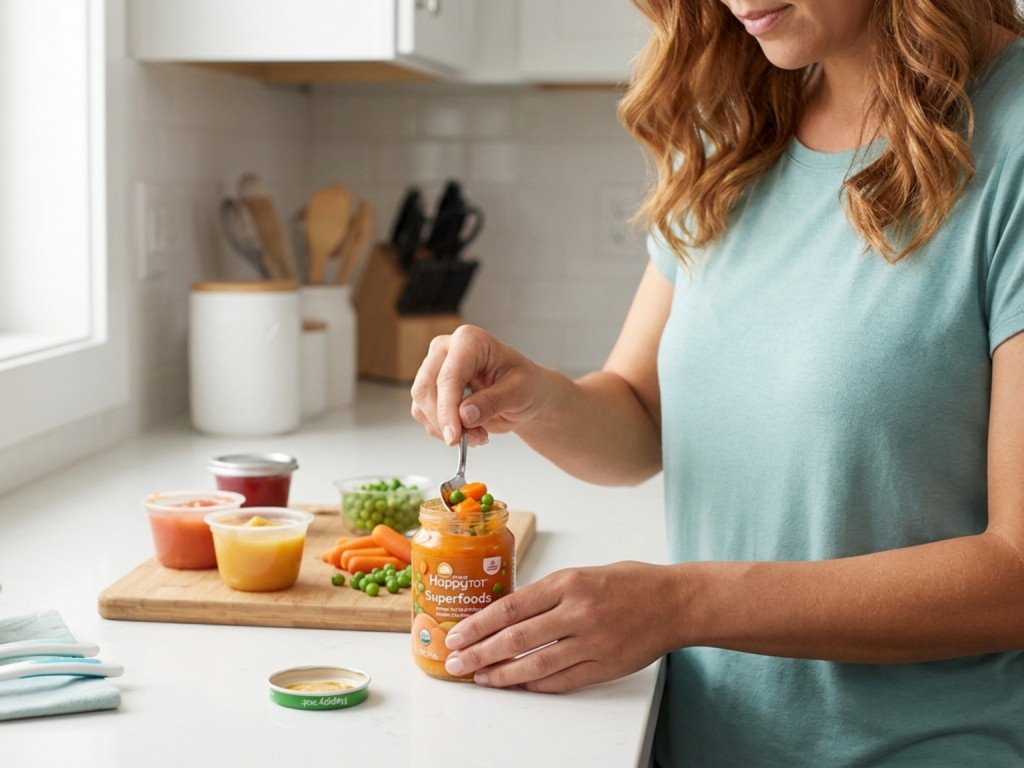
Choosing between store-bought and homemade baby food can feel like a nutritional decision, a safety decision, and a test of your caregiving all at once. In practice, both options can support healthy complementary feeding. The better choice is usually the one that provides developmentally appropriate textures, adequate nutrient density, safe preparation, and a feeding routine your household can sustain.
Commercial products offer convenience and standardized labeling, while homemade foods provide flexibility and greater control over ingredients and texture. Neither category is automatically superior. A thoughtful approach considers your baby’s developmental readiness, dietary pattern, storage conditions, budget, time, and advice from a pediatrician or other qualified healthcare professional.
Highlights
Homemade and commercial infant foods can differ in energy, protein, and fiber content, so the label or recipe matters more than the category alone.
Store-bought foods can simplify feeding during travel, illness, childcare, or demanding work periods; using them does not indicate inadequate caregiving.
Homemade food allows control over ingredients, texture, and flavor variety, but it requires careful hygiene, cooking, cooling, and storage.
Testing has not established that homemade baby food consistently contains fewer heavy metals than commercial products.
A combination of homemade and commercial foods can be nutritionally sound and practically sustainable.
What complementary foods need to provide
Complementary foods are introduced alongside breast milk or infant formula when a baby shows developmental readiness, commonly around 6 months, although timing should be individualized. Readiness includes being able to sit with support, maintaining head and neck control, showing interest in food, and moving food toward the back of the mouth rather than repeatedly pushing it out with the tongue. A clinician can help assess readiness, particularly for babies born prematurely or those with oral-motor, neurologic, gastrointestinal, or growth concerns.
At this stage, food is not simply a source of calories. It also provides opportunities to develop oral skills, accept varied flavors, and obtain nutrients that may become increasingly important. Iron and zinc deserve particular attention, especially for breastfed infants, because iron stores decline during the first half-year. Suitable choices may include smooth or mashed meats, beans, lentils, iron-fortified cereals, tofu, eggs, and other iron-rich complementary foods. Vitamin C-containing foods can improve absorption of non-heme iron from plant sources.
Texture should progress gradually from smooth purees to thicker mashed foods, soft lumps, and appropriately prepared finger foods as skills develop. Guidance on safe textures for infant feeding is more useful than focusing only on whether a food is homemade or commercial. Feeding should remain responsive: caregivers offer appropriate foods and observe hunger and satiety cues, while the infant determines how much to eat.
Nutritional comparison: homemade and commercial foods
The nutritional profile of baby food depends on its ingredients, proportions, preparation method, serving size, and texture. A study comparing homemade and commercial infant foods found meaningful differences in energy, protein, and fiber. These findings do not establish a universal winner; they show that products marketed for infants and recipes prepared at home can have different nutrient densities.
Homemade food can be designed around the family’s usual diet. A puree made from meat and vegetables, mashed beans with avocado, or full-fat plain yogurt with soft fruit may provide more protein, fat, or fiber than a fruit-only pouch. However, homemade meals can also be low in iron or calories if they rely heavily on watery fruits and vegetables. Blending or diluting food may increase volume without increasing nutrient density, which can matter when a baby eats only small amounts.
Commercial foods are often portioned and labeled with ingredients, serving information, and sometimes iron or other nutrient data. This standardization can make it easier to compare products, although labels still require careful reading. Some products are predominantly fruit-based and may taste very sweet. Frequent exposure to sweet flavors is not inherently dangerous, but rotating vegetables, legumes, meats, grains, and unsweetened foods can broaden dietary exposure.
For either option, avoid honey before 12 months because of infant botulism risk, and avoid products with added sugar or excessive sodium when possible. Cow’s milk should not replace breast milk or infant formula as the primary drink before 12 months, although pasteurized dairy foods may be appropriate earlier when introduced in suitable forms and according to professional guidance.
Convenience, cost, and caregiver workload
Store-bought baby food reduces preparation time and can be particularly useful when caregivers are traveling, returning to work, managing several children, or coping with limited kitchen access. Shelf-stable jars, tubs, and pouches can provide predictable portions when refrigeration is unavailable. Commercial food may also be practical for childcare because the package supplies clear product information and a defined serving.
Convenience has clinical relevance when it makes regular feeding more feasible. A nutritionally adequate commercial option is generally preferable to skipping complementary foods because preparation feels overwhelming. It is also reasonable to use commercial food temporarily during periods of family illness or exhaustion. Pouches should not become the only feeding format, however. Whenever developmentally appropriate, offering food from a spoon or an open cup supports interaction with texture and may give the infant more opportunities to practice self-feeding.
Homemade food may cost less when caregivers prepare larger batches from family ingredients, but savings depend on shopping patterns, food waste, cooking time, and equipment. Small portions can be frozen in clean, labeled containers. Batch cooking is most efficient when the base food is unsalted and unsweetened, then adapted for the infant and the rest of the family separately. A mixed approach often minimizes both cost and workload: homemade foods at some meals, with commercial foods reserved for busy days or specific ingredients.
Food safety and contamination risks
Homemade food requires control of several hazards: contaminated hands or surfaces, undercooked animal products, inadequate refrigeration, and prolonged time at room temperature. Wash hands, clean preparation surfaces, separate raw meat from ready-to-eat food, and cook foods thoroughly. Cool prepared food promptly, store it in small containers, and use the refrigerator or freezer according to current public-health recommendations. Do not feed directly from a container that will be saved unless unused food is transferred first, because saliva can introduce bacteria.
Commercial products are not risk-free. Inspect packaging for damage, swelling, leakage, or broken seals, and follow the manufacturer’s storage and discard instructions. Once opened, perishable products require refrigeration and should not be kept indefinitely. A recalled product should not be used, even if it looks or smells normal.
Heavy metals, including lead, arsenic, cadmium, and mercury, are an additional concern because infants are more vulnerable to neurodevelopmental effects. The available report from Healthy Babies Bright Futures found no evidence that homemade baby food had lower heavy-metal levels than store-bought brands. Exposure can arise from ingredients, water, soil, processing, or packaging, so choosing one preparation method does not eliminate the issue. Offer a varied diet rather than relying heavily on one food, particularly rice-based products, and discuss local water quality and dietary concerns with a healthcare professional.
Choking, allergies, and texture progression
Choking prevention depends on food shape, hardness, size, and the baby’s skills. Babies should eat upright and be directly supervised. Avoid hard, round, sticky, or tough foods such as whole nuts, whole grapes, raw carrot pieces, popcorn, chunks of meat, spoonfuls of nut butter, and unmodified hot dogs. Prepare foods into soft, appropriately sized pieces or smooth textures. Pureeing alone does not guarantee safety, and a commercial label stating that a product is suitable for a particular age cannot replace supervision or developmental judgment.
Common allergenic foods, including peanut, egg, dairy, wheat, soy, sesame, and fish, can usually be introduced in safe, age-appropriate forms once complementary feeding begins, unless a clinician has advised otherwise. Introduce one new allergen at a time when practical, use a small amount, and observe the infant. Infants with severe eczema, an existing food allergy, or another elevated-risk history may need an individualized introduction plan.
Possible allergic reactions include hives, facial swelling, repeated vomiting, coughing, wheezing, pallor, or unusual lethargy. Breathing difficulty, swelling of the tongue or throat, or signs of circulatory compromise require emergency care. Food allergy guidance is separate from ordinary food dislike or gagging, which can occur as babies learn new textures. Caregivers can review How to introduce new foods safely with their healthcare team and should seek urgent advice when a reaction is concerning.
How to choose a balanced routine
Start with the feeding format that fits your household, then check whether it meets the baby’s nutritional and developmental needs. For commercial foods, read the ingredient list, compare products for iron and protein, and choose unsweetened options when available. A pouch containing only fruit may be convenient, but pairing it at another meal with an iron-rich or protein-containing food creates a more balanced pattern. Do not assume that an organic label guarantees higher nutrient content or lower contamination.
For homemade foods, plan at least one reliable iron source and include energy-dense ingredients when appropriate, such as smooth nut or seed butter thinned into a safe consistency, avocado, full-fat yogurt, eggs, legumes, or tender meat. Avoid adding salt, sugar, honey, or spicy ingredients that may irritate the infant. Family meals can often be modified before salt and strong seasonings are added, reducing the need to prepare a completely separate menu.
Keep a practical record of foods offered if it helps you notice variety, tolerance, or gaps; a detailed log is not necessary for every family. Continue breast milk or infant formula as the primary source of nutrition during the first year unless your clinician recommends otherwise. Feeding goals should account for growth, iron status, oral skills, allergies, and the baby’s appetite rather than forcing a predetermined number of spoonfuls.
There is no requirement to choose one method exclusively. Homemade purees, soft family foods, commercial jars, and ready-to-eat options can all have a place. The most supportive plan is one that is safe, nutritionally varied, developmentally appropriate, and realistic enough to continue.
When individualized medical guidance matters
Consult a pediatrician, registered dietitian, feeding specialist, or other qualified clinician when a baby has poor weight gain, persistent vomiting or diarrhea, suspected anemia, swallowing difficulty, recurrent coughing during feeds, significant eczema, a known food allergy, or a complex medical condition. Babies born prematurely may have different corrected-age and developmental considerations. Some infants need specialized textures, calorie density, thickened feeds, or nutrition monitoring; these decisions should not be made solely from online recipes or product labels.
Professional advice is also useful when caregivers are uncertain about vitamin or mineral supplementation, possible lead exposure, food insecurity, or the safety of local water and ingredients. A clinician can help distinguish normal variation in appetite from a problem requiring evaluation. The aim is not to grade caregiving choices, but to support safe growth and a feeding relationship that works for the infant and family.
Safety reminders
- Never leave an infant unattended while eating, and keep the baby upright.
- Do not offer honey before 12 months, whole nuts, popcorn, whole grapes, or other choking hazards.
- Discard food that has been contaminated by saliva or stored outside recommended temperature limits.
- Seek emergency care for breathing difficulty, facial or throat swelling, collapse, or a rapidly worsening allergic reaction.
- Ask a clinician about feeding plans for premature infants or babies with swallowing, growth, allergy, or medical concerns.
Tools & Assistance
- Pediatrician or family doctor
- Registered pediatric dietitian
- Infant feeding or occupational therapy specialist
- Local food-safety and water-quality authority
- Food recall and product-safety database
FAQ
Is homemade baby food healthier than store-bought food?
Not automatically. Homemade food offers ingredient and texture control, while commercial food offers standardized labeling and convenience. Nutritional quality depends on the specific ingredients, nutrient density, preparation, and portion.
Can I combine homemade and commercial baby food?
Yes. A mixed approach is common and can provide variety while reducing caregiver workload. Continue to prioritize safe textures, iron-rich foods, and developmentally appropriate feeding.
Do commercial pouches cause feeding problems?
Pouches are convenient, but relying exclusively on sucking food from them may limit practice with spoon-feeding, textures, and self-feeding. Use them as one format rather than the only format when possible.
Does homemade baby food contain fewer heavy metals?
There is no reliable guarantee. The cited Healthy Babies Bright Futures report found no evidence that homemade baby food had lower heavy-metal levels than store-bought brands. Dietary variety can help reduce reliance on one potentially higher-exposure ingredient.
When should I ask a clinician for advice?
Seek individualized guidance for poor growth, feeding or swallowing difficulty, repeated vomiting, suspected allergy, anemia risk, prematurity, or a complex medical condition. Urgent evaluation is needed for breathing difficulty or severe allergic symptoms.
Sources
- PubMed Central — Are Homemade and Commercial Infant Foods Different? A Nutritional Comparison
- Healthy Babies Bright Futures — Is Homemade Baby Food Better?
- CHOC Children’s Health Hub — Homemade or store-bought baby food: Which should parents choose?
Disclaimer
This article is for general educational purposes and does not diagnose, treat, or replace advice from a pediatrician or other qualified healthcare professional. Seek urgent medical care for breathing difficulty or signs of a severe allergic reaction.














Please log in to leave a comment.