
Intro
Newborn skin folds are warm, moist areas where milk, saliva, sweat, urine, stool, and normal skin shedding can collect. The neck, armpits, groin, diaper area, and creases behind the ears therefore need occasional attention, but cleaning should remain gentle and proportionate. Newborn skin has a developing barrier and can be injured by vigorous rubbing, frequent washing, or strongly fragranced products.
A safe routine uses warm water, soft materials, careful inspection, and thorough but gentle drying. The aim is to remove visible residue without stripping protective oils or causing friction. This article explains practical techniques, product choices, common mistakes, and situations that warrant advice from a midwife, health visitor, pediatrician, or other qualified healthcare professional.
Highlights
Warm water and a soft washcloth are usually sufficient for routine cleaning of newborn skin folds.
Clean only as needed, using gentle wiping rather than scrubbing or pulling the folds apart forcefully.
Moisture control matters: pat folds dry carefully, including the spaces between adjacent surfaces.
Avoid talcum powder, fragranced products, harsh antiseptics, and unapproved creams in delicate creases.
Persistent redness, erosions, discharge, swelling, odor, fever, or a baby who seems unwell should be assessed by a healthcare professional.
Why Newborn Skin Folds Need Gentle Care
Folds create an occluded microenvironment: skin surfaces lie close together, ventilation is limited, and warmth promotes accumulation of moisture and residue. The newborn neck is especially prone to collecting milk or saliva, while the axillae and groin may retain sweat. In the diaper region, urine and stool add chemical and microbial irritants. Creases behind the ears can also collect vernix remnants, milk, sweat, or normal desquamated skin.
These areas do not need constant washing. Excessive cleansing can remove epidermal lipids and disturb the stratum corneum, the outer layer that helps limit water loss and protects against irritants. Repeated friction can produce microscopic trauma even when the skin looks intact initially. A practical principle is to clean visible or suspected contamination, then leave healthy skin undisturbed.
Inspect folds during ordinary care, such as diaper changes, clothing changes, and bathing. Look without stretching the skin more than necessary. A brief, regular check is generally more useful than a prolonged cleaning session. If a fold is clean and dry, there is no need to manipulate it repeatedly.
Prepare a Safe Cleaning Routine
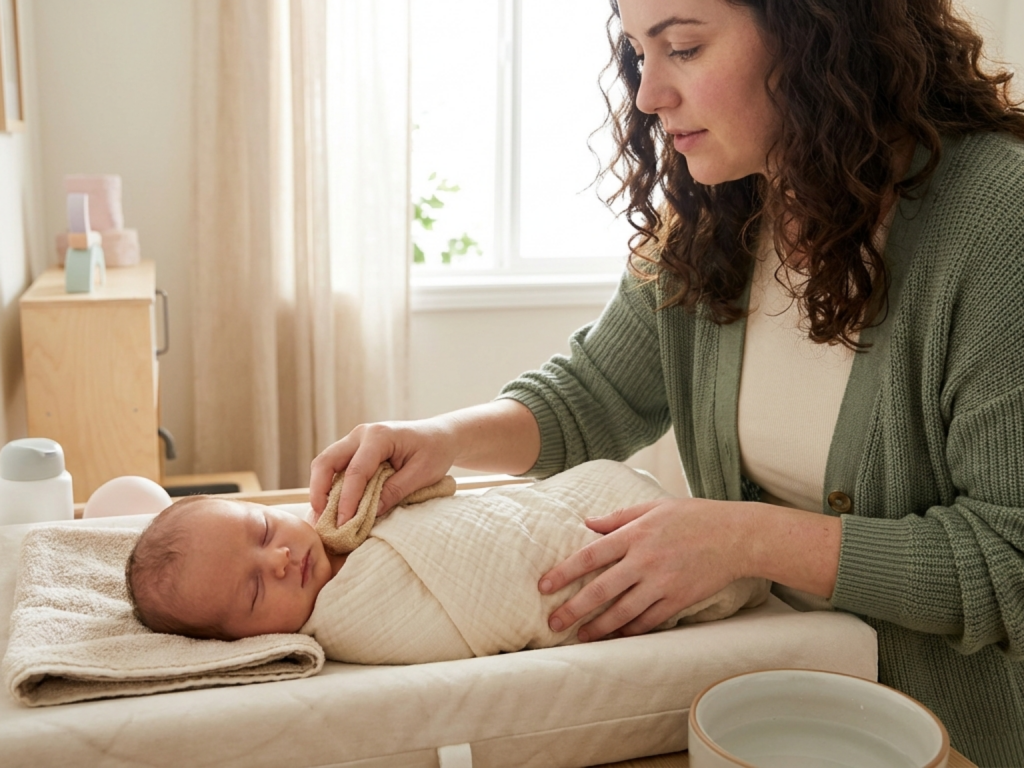
Gather everything before undressing the baby: a basin of comfortably warm water, clean cotton wool or a very soft washcloth, a dry towel, and a fresh diaper and clothing if needed. Test the water with the inside of your wrist or another sensitive area; it should feel warm rather than hot. Keep the baby on a secure, flat, warm surface and maintain one hand on the baby whenever the baby is near an edge or water.
For most routine fold cleaning, plain warm water is adequate. If residue is difficult to remove, a small amount of mild, fragrance-free, pH-neutral or moisturizing cleanser may be appropriate. Use the product sparingly and follow the product label. The Royal Children’s Hospital Melbourne advises warm water or a pH-neutral cleanser when needed and emphasizes avoiding trauma to vulnerable neonatal skin.
Wash your hands before and after care. Use a clean section of cloth for each area, or rinse the cloth thoroughly before moving to another site. Do not share a damp cloth between the diaper area and the face or neck. Keep cleansing materials separate from household cleaning products, and avoid leaving the baby unattended while you reach for supplies.
Step-by-Step Cleaning Technique
Begin with the least soiled areas and finish with the diaper region. Moisten the cloth or cotton wool with warm water and squeeze out excess liquid. Gently support the baby’s head and neck while cleaning the neck fold. Wipe along the crease with short, light strokes, using a fresh area of the cloth as residue lifts. Do not forcefully open a tight fold or scrape away adherent material.
For the axillae, lift the arm only as far as comfortable. Clean the central crease and surrounding skin, paying attention to milk, sweat, or lint. For the groin and diaper region, wipe from front to back when cleaning the genital and perianal area. Warm water and cotton wool are often sufficient. Clean external genital skin only; do not insert anything into the vagina, urethra, or anus.
Clean behind the ears by gently wiping the accessible crease. Avoid inserting cotton-tipped applicators into the ear canal. If residue is stuck, soften it with warm water and allow it to loosen rather than picking at it. For a broader newborn hygiene routine, the same principle of clean skin folds safely applies: minimal pressure, clean materials, and no unnecessary manipulation.
After cleansing, use a dry, soft towel to pat rather than rub. Carefully dry between folds, including the underside of the neck, the axillae, the groin creases, and behind the ears. Allowing a few seconds of gentle air exposure while holding the baby securely can help evaporate residual moisture. Avoid vigorous fanning or chilling the baby.
Cleaning During Sponge Baths and Regular Baths
Newborns do not need a full bath every time a skin fold becomes soiled. A targeted wipe is often enough and reduces unnecessary exposure to water and cleanser. When giving a sponge bath, keep the baby warm, expose one area at a time, and cover the remaining body with a towel. Clean folds as part of the sequence, then dry them before moving to the next area.
During a full bath, wash the face and areas that are least soiled first, followed by the body and diaper region. Support the baby securely because wet newborns are slippery. Keep the bath brief and prepare a towel within reach before placing the baby in the water. Never leave the baby alone in a bath, even for a moment and even if another adult is nearby.
Cleanser is optional for many baths and should be limited to areas that need it. A mild moisturizing soap or pH-neutral cleanser may help remove oily or adherent residue, but more product does not provide better hygiene. Rinse cleanser away and dry folds promptly after lifting the baby from the water. A gentle bathing routine should preserve the skin barrier rather than aiming for a squeaky-clean sensation.
Products and Practices to Avoid
Avoid fragranced soaps, bubble baths, essential oils, deodorizing products, and adult exfoliating or antibacterial cleansers unless a healthcare professional specifically recommends a product. Fragrance and other additives can irritate immature skin or make it harder to identify the cause of a reaction. Strong antiseptics are not routine cleaning agents for healthy newborn folds.
Do not use talcum powder. Powder can become airborne and irritate the respiratory tract, and it can cake in moist folds. Cornstarch-based powders are also not automatically harmless; retained powder and moisture may contribute to irritation. Avoid applying thick layers of ointment, oil, or home remedies to an intact fold unless advised, because occlusive products can trap moisture.
Do not scrub with a sponge, brush, rough towel, or textured mitt. Do not peel scales, pick crusts, or use alcohol-based products. Frequent washing in an attempt to prevent all germs may worsen barrier disruption. If the skin appears dry, cracked, or increasingly sensitive, reduce friction and product exposure and seek professional guidance about appropriate care.
Recognizing Irritation and Knowing When to Seek Help
Brief, mild pinkness after handling may settle quickly, but persistent or worsening redness deserves attention. Contact a healthcare professional if a fold develops marked erythema, weeping, erosions, blisters, pustules, bleeding, swelling, a spreading rash, or an unusual odor. Seek advice if the area remains moist despite careful drying, if the baby appears painful when the fold is touched, or if the problem keeps recurring.
Prompt medical assessment is particularly important when skin changes occur with fever, poor feeding, unusual sleepiness, reduced wet diapers, breathing difficulty, or a general impression that the newborn is unwell. Newborn infections can progress quickly, and appearance alone cannot reliably distinguish simple irritant dermatitis from infection or another condition.
Do not diagnose or treat a suspected fungal, bacterial, or inflammatory rash using leftover medication or a product intended for another person. Some topical medicines are unsuitable for newborn skin or for particular body sites. A clinician can examine the distribution and severity, review exposures, and recommend an appropriate management plan if treatment is necessary.
At routine visits, ask the baby’s clinician to demonstrate cleaning if a fold is difficult to access or if the skin remains irritated. Caregivers may also benefit from guidance on newborn skin fold cleaning as part of a broader bathing and diaper-care plan.
When to Contact a Healthcare Professional
- Redness is spreading, intense, swollen, broken, bleeding, or associated with blisters or pus.
- The fold has persistent discharge, crusting, or a strong unusual odor.
- The newborn has fever, poor feeding, unusual drowsiness, fewer wet diapers, or appears generally unwell.
- The skin does not improve with gentle cleansing and careful drying, or irritation repeatedly returns.
- A caregiver is unsure whether a cleanser, cream, powder, or medicine is appropriate for the newborn.
Tools & Assistance
- Warm water in a stable basin
- Soft clean washcloths or cotton wool
- Dry towel and clean clothing
- A secure, warm, flat changing or bathing surface
- Advice from a midwife, health visitor, pediatrician, or primary-care clinician
FAQ
How often should newborn skin folds be cleaned?
Check folds daily during routine care and clean them when there is visible residue, moisture, or soiling. Healthy, clean folds do not require repeated washing.
Can I use baby wipes on newborn skin folds?
Plain warm water is often the simplest option, especially for sensitive skin. If wipes are used, choose products intended for newborns and free of fragrance and alcohol, and stop if irritation develops.
Should I put powder in the neck or groin folds?
No. Talcum powder should be avoided because it can become airborne, and powders can accumulate in moist folds. Gentle cleansing and careful patting dry are preferable.
What if residue behind the ears will not come off?
Soften it with warm water and wipe gently when it loosens. Do not scrape, pick, or insert anything into the ear canal. Persistent crusting, discharge, odor, or redness should be assessed.
Is redness in a newborn skin fold always an infection?
No. Irritant dermatitis, friction, retained moisture, and other causes can look similar to caregivers. A healthcare professional should assess persistent, severe, spreading, or symptomatic redness.
Sources
- Mayo Clinic — Baby bath basics: A parent's guide
- NHS — Washing and bathing your baby
- Royal Children's Hospital Melbourne — Nursing guidelines: Neonatal & infant skin care
Disclaimer
This article provides general educational information and is not a diagnosis or a substitute for individualized medical advice. Contact a qualified healthcare professional for concerns about a newborn’s skin or overall condition.
















Please log in to leave a comment.