
Intro
The umbilical cord stump is a small but visible reminder of your newborn's transition from placental support to independent circulation and breathing. Caring for it is usually straightforward: keep it clean and dry, protect it from friction, and allow it to separate on its own. It is also understandable to feel uncertain when the stump changes color, becomes firm, or leaves a small spot of blood.
Highlights
Dry cord care is commonly recommended for healthy newborns in high-resource settings.
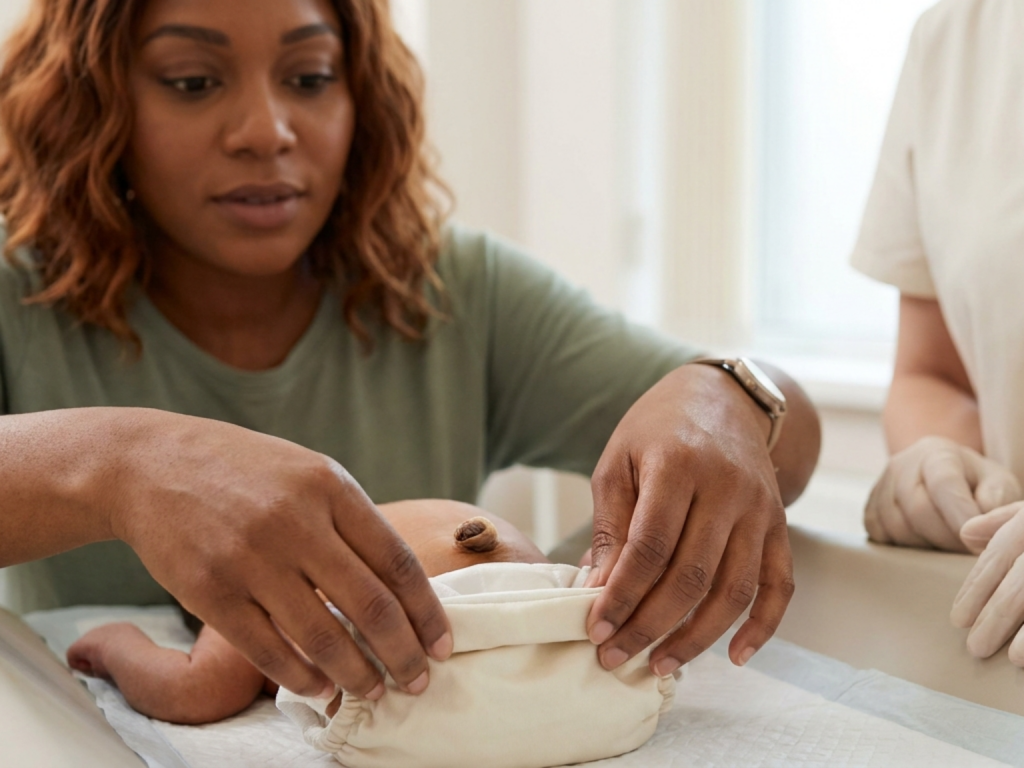
Fold the diaper below the stump and use sponge baths until the stump has fallen off and the skin has healed.
Do not pull, twist, or routinely apply alcohol, powders, oils, or other products unless a clinician specifically instructs you to do so.
Redness spreading onto the surrounding skin, pus, foul odor, fever, lethargy, or poor feeding requires prompt medical assessment.
What the umbilical cord stump is
After birth, the umbilical cord is clamped and cut, leaving a short remnant attached to the baby’s abdomen. The stump contains no functioning nerves, so routine handling should not be painful, although the surrounding skin may be sensitive. Over the following days, the tissue progressively dries, contracts, and changes from a moist yellow-white or greenish appearance to brown, gray, or black before separating.
Separation commonly occurs during the first few weeks of life, although timing varies. A stump that remains attached somewhat longer is not automatically abnormal. The important issue is the condition of the surrounding skin and the baby’s general health. Once the stump detaches, the navel may have a small amount of moisture or blood spotting for a short time while the area finishes healing.
Good newborn daily care includes observing the cord briefly during diaper changes without repeatedly touching it. You do not need to inspect it anxiously after every feed or wake the baby solely to check it. A calm, consistent routine is sufficient.
The basic dry-care routine
For most healthy newborns, dry cord care means leaving the stump exposed to clean air as much as practical and avoiding unnecessary substances. Before and after touching the area, wash your hands with soap and water. If urine or stool contaminates the stump, gently clean it with clean water and a soft cloth or cotton swab, then pat it dry. Avoid rubbing, scraping, or attempting to remove attached tissue.
Keep the diaper folded down below the stump so that urine does not soak the area and the diaper edge does not rub against it. Some newborn diapers have a notch for this purpose; if not, folding the front of the diaper is adequate. Dress the baby in clean, loose clothing that does not compress the abdomen. The stump should not be covered with a tight bandage or dressing unless directed by a healthcare professional.
- Let the stump dry naturally whenever possible.
- Keep hands, clothing, and diaper surfaces clean.
- Change wet or soiled diapers promptly.
- Allow the stump to detach without pulling it, even if it seems to be hanging by a small strand.
If a clinician or local public-health program has given different instructions because of regional infection risk, follow that guidance. Cord-care recommendations may depend on the baby’s birth circumstances, the home environment, and the availability of clean water and medical care.
Bathing, cleaning, and everyday handling
Use sponge baths rather than submerging the baby in a tub while the stump is attached. A sponge bath lets you clean the baby’s face, neck folds, hands, body, and diaper area while keeping the cord as dry as possible. After washing, dry skin folds carefully and check that the stump has not become damp beneath clothing or a diaper.
There is usually no need to use rubbing alcohol, antiseptic solutions, antibiotic ointment, talcum powder, herbal preparations, oils, or other home remedies on an uncomplicated stump. These products can irritate the skin, delay natural drying, or expose the newborn to substances that have not been recommended for them. Alcohol is not routinely needed in many settings, but local clinical protocols can differ. Ask the baby’s clinician before applying anything.
Handling the baby normally does not dislodge a healthy stump. Support the newborn’s head and neck during lifting, and avoid catching the cord on clothing, towels, or blankets. If the cord becomes stuck to fabric, moisten the fabric with clean water and release it gently rather than pulling the stump.
After the stump falls off, continue gentle hygiene until the navel is dry and the surrounding skin appears healed. A small spot of blood can occur with separation, but persistent bleeding, increasing drainage, or a worsening appearance should be discussed with a healthcare professional.
Why dry cord care is commonly recommended
The stump is devitalized tissue, meaning it is no longer supplied by the baby’s circulation. Keeping it clean and dry supports desiccation and natural separation while limiting unnecessary manipulation. Evidence summarized by the American Academy of Pediatrics supports dry cord care for many newborns in high-resource settings, where clean delivery practices, hand hygiene, and access to follow-up care are available.
This recommendation is not identical in every part of the world. The World Health Organization has supported chlorhexidine application in some higher-risk environments, particularly where harmful traditional substances are commonly used or where hygienic birth and postnatal conditions are limited. Chlorhexidine should be used only according to an appropriate local protocol or direct professional instruction.
For caregivers, the practical message is to follow the plan provided by the maternity unit or pediatric clinician. Do not combine products or switch between protocols based on advice from social media, family tradition, or an old supply of medication. The safest approach is individualized guidance that considers gestational age, birth setting, immune status, and the cleanliness of the care environment.
Normal findings and changes to watch
Several changes can occur as the cord dries. The stump may become darker, harder, and slightly shriveled. A small amount of blood staining on clothing or the diaper can occur around the time of separation. A limited amount of clear or lightly blood-tinged moisture may also be seen briefly. These findings should gradually improve rather than become more pronounced.
Caregivers should focus on trends and on the baby’s overall condition. Concerning umbilical cord infection signs include redness that spreads from the navel onto the abdominal skin, warmth, swelling, tenderness, cloudy or pus-like drainage, or a foul smell that persists after gentle cleaning. Red streaking, skin discoloration, or rapidly worsening inflammation is particularly concerning.
General illness can be more important than the appearance of the stump alone. Seek urgent medical advice for a newborn with a measured fever according to local pediatric guidance, marked sleepiness or difficulty waking, poor feeding, repeated vomiting, breathing difficulty, unusual floppiness, or fewer wet diapers than expected. Do not wait for the cord to fall off before seeking help when the baby appears unwell.
Bleeding, drainage, and delayed separation
If the stump bleeds, apply gentle, steady pressure with clean gauze or a clean cloth for several minutes without repeatedly lifting it to look. If bleeding does not stop, recurs repeatedly, or seems more than minor spotting, contact the baby’s healthcare professional promptly. A clinician may need to assess local irritation, a clotting problem, or another cause; caregivers should not attempt to cauterize or treat the area themselves.
Persistent moisture or a small bright-red growth after separation may represent an umbilical granuloma, but appearance alone is not enough to establish a diagnosis. Similarly, a bulge at the navel may have several explanations. Arrange an examination rather than applying home remedies or tying anything tightly around the abdomen.
Delayed cord separation can occur for benign reasons, but it should be raised at a routine newborn visit or sooner if there are recurrent infections, ongoing drainage, significant redness, or concerns about the baby’s immune function. The baby’s clinician can determine whether observation is appropriate and whether any testing or treatment is needed.
Reducing infection risk at home
Hand hygiene is the most useful routine measure. Wash your hands before diaper changes, bathing, or cord observation, and ask visitors or other caregivers to do the same. Keep the baby’s clothing, towels, and changing surface clean. Avoid placing the newborn on visibly dirty surfaces and do not share personal towels or cloths with other children.
Do not cover the stump with household substances such as ash, soil, cooking oils, butter, powders, or plant preparations. These materials can introduce bacteria and may make it difficult to recognize inflammation. Keep pets away from the diaper-changing area, and clean any urine or stool contamination promptly.
As part of broader newborn infection prevention, limit contact with people who are ill and seek advice about immunizations for household members. These measures complement, but do not replace, professional evaluation when a newborn develops fever or concerning cord findings.
Seek prompt medical care
- Redness, warmth, swelling, or tenderness spreading onto the abdomen
- Pus-like drainage, persistent foul odor, or rapidly worsening discharge
- Bleeding that does not stop with gentle continuous pressure
- Fever, poor feeding, unusual sleepiness, floppiness, or breathing difficulty
- Repeated vomiting, markedly reduced urine output, or any sudden change in the baby's condition
Tools & Assistance
- Clean handwashing supplies and a dedicated clean changing surface
- Soft clean cloths or gauze for gentle cleaning and brief pressure
- Newborn diapers that can be folded below the cord stump
- A written list of the baby's clinician, after-hours service, and emergency number
- A simple daily note of cord appearance, feeding, temperature concerns, and wet diapers
FAQ
How often should I clean the umbilical cord stump?
Usually, clean it only when it is visibly soiled or contaminated and otherwise keep it dry. Frequent unnecessary cleaning or handling is not needed.
Can my newborn have a bath before the cord falls off?
Use sponge baths until the stump has detached and the navel has healed. Submerging the area can keep it damp and may irritate the surrounding skin.
Is a small amount of blood normal when the stump separates?
A small spot or brief blood staining can occur. Apply gentle pressure if needed and contact a clinician if bleeding persists, recurs, or appears more than minor spotting.
Should I pull off a cord stump that is almost detached?
No. Let it fall off naturally. Pulling can cause bleeding and tissue injury.
When should I ask about a cord that has not fallen off?
Mention delayed separation to the baby's healthcare professional, especially if there is redness, drainage, repeated bleeding, or any sign that the baby is unwell.
Sources
- Mayo Clinic — Umbilical cord care: Do's and don'ts for parents
- Pediatrics / American Academy of Pediatrics — Umbilical Cord Care in the Newborn Infant
- MedlinePlus — Umbilical cord care in newborns: MedlinePlus Medical Encyclopedia
Disclaimer
This article provides general educational information and is not a diagnosis or a substitute for advice from your baby's healthcare professional. Seek urgent medical care if your newborn appears seriously unwell or has concerning cord findings.
















Please log in to leave a comment.