
Intro
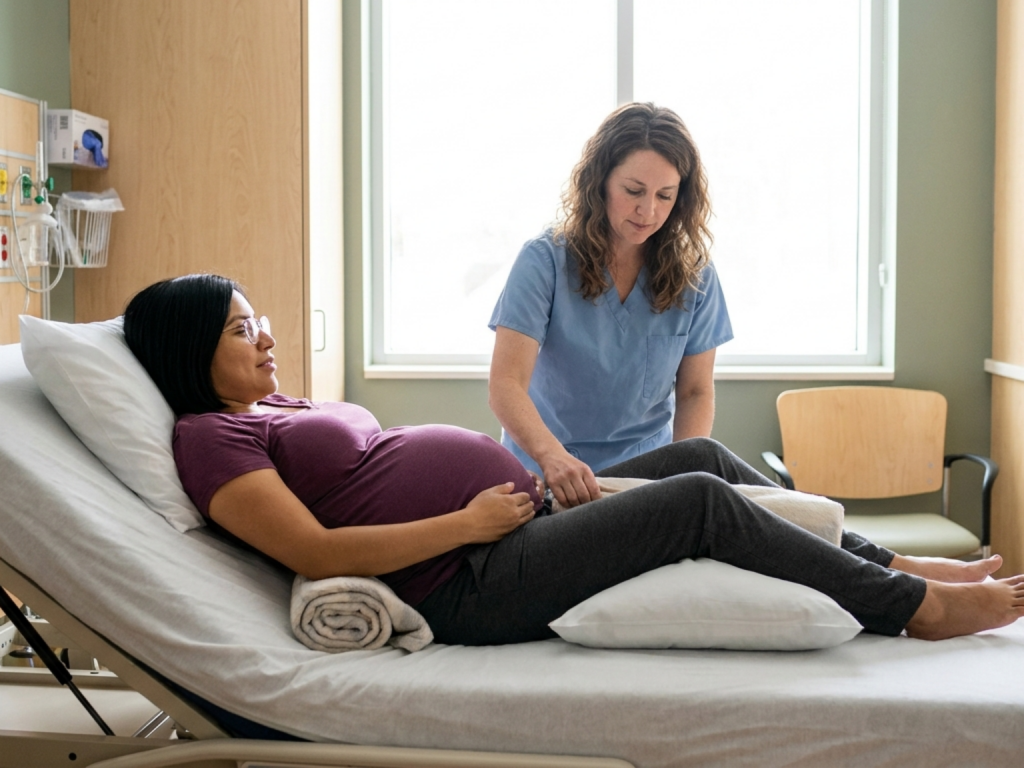
Late pregnancy, labor, birth, and early recovery can all place sustained pressure on the pelvis, sacrum, hips, back, perineum, and soft tissues. Position changes are not only about comfort; they can support circulation, reduce focal tissue loading, ease muscle fatigue, and help a birthing person conserve energy during a physically demanding process.
No single position is best for everyone. The safest and most useful approach is usually individualized, responsive, and guided by the clinical situation, including fetal monitoring needs, epidural analgesia, mobility, wounds, pain patterns, and the advice of the maternity care team.
Highlights
Pressure relief depends on unloading vulnerable areas before discomfort becomes severe, not waiting until pain forces a change.
Alternating between side-lying, upright, forward-leaning, hands-and-knees, and supported resting positions can reduce localized pressure and muscular fatigue.
In late pregnancy and labor, avoiding prolonged flat-on-the-back positioning may help reduce aorto-caval compression and improve comfort.
After epidural analgesia or limited mobility, assisted repositioning is especially important because protective sensation and spontaneous movement may be reduced.
Why pressure builds during labor and recovery
Pressure is the force created when body weight rests on a surface for a sustained period. During labor and early postpartum recovery, this often concentrates over bony prominences such as the sacrum, coccyx, greater trochanters at the hips, heels, elbows, and shoulder blades. The perineum and vulvar tissues may also feel heavy or swollen, particularly in the second stage of labor or after birth. When pressure persists, small blood vessels can be compressed, reducing local oxygen delivery and contributing to pain, numbness, tissue irritation, and fatigue.
Fatigue is not only general tiredness. It can also be local muscle fatigue from holding a posture, bracing through contractions, gripping bed rails, or maintaining hip flexion. A position that felt stabilizing early in labor may become exhausting later because the pelvis, abdomen, diaphragm, pelvic floor, and back muscles are working under changing loads. This is why effective positioning is dynamic. The goal is to alternate loading, unload tender areas, and choose postures that support the body rather than requiring constant effort.
Clinical pressure-injury guidance emphasizes regular repositioning and avoiding prolonged loading over one area, while also acknowledging that evidence does not identify one universally superior position. In birth care, that same principle applies with additional considerations: uterine activity, fetal position, maternal blood pressure, analgesia, mobility, and birth progress all matter.
Side-lying for rest and pelvic unloading
Side-lying is often one of the most useful positions for reducing pressure and conserving energy. It moves weight away from the sacrum, can soften tension through the lower back, and allows the birthing person to rest between contractions. In late pregnancy, left or right lateral positioning may also reduce the chance of aorto-caval compression in late pregnancy, which can occur when the heavy uterus compresses major blood vessels while lying flat on the back.
A supported side-lying position usually works best when the upper knee is cushioned, the lower shoulder is not trapped underneath the torso, and the pelvis is kept neutral rather than twisted. Pillows can be placed between the knees, behind the back, under the abdomen, and under the upper arm. If the upper hip feels compressed, a slight backward tilt of the torso or an additional pillow may help distribute pressure more evenly.
During pushing, the side-lying pushing position can be helpful when fatigue is high, blood pressure is a concern, an epidural limits standing, or the perineum needs a slower, more controlled stretch. It may also reduce the effort of holding the legs up because one leg can be supported by a partner, nurse, stirrup, or pillow. The care team can help adjust hip flexion so the position supports fetal descent without forcing the pelvis into an uncomfortable angle.
Forward-leaning and hands-and-knees positions
Forward-leaning positions shift pressure away from the sacrum and lower back while giving the abdomen space. A person may lean over a raised bed, birth ball, counter, stacked pillows, or the back of a chair. This can reduce the need to hold the torso upright through every contraction, which may lower muscular fatigue in the shoulders, back, and hips. It can also create room for gentle pelvic rocking, which changes pressure points without requiring large movements.
The hands-and-knees position for back labor is commonly used when contractions are felt intensely in the lower back or when lying down increases sacral pressure. In this position, weight is shared through the hands, knees, shins, and sometimes the forearms. A folded towel or cushion under the knees and support under the wrists can make it more sustainable. Some people prefer a variation with forearms on the bed and hips elevated, which reduces wrist load and lets the head and shoulders rest.
These positions are not mandatory and should not be forced if they worsen pain, dizziness, pelvic girdle symptoms, or exhaustion. They may also need modification when continuous monitoring, intravenous lines, epidural analgesia, or medical concerns limit movement. Even then, a supported forward lean in bed or a side-lying version with the upper leg supported may provide some of the same pressure-relieving effect.
Upright positions without overworking the body
Upright positions during labor can help some people feel more in control and may use gravity to support fetal descent. Standing, slow swaying, leaning into a partner, sitting on a birth ball, kneeling upright, and supported squatting all change how pressure is distributed through the pelvis and legs. The key word is supported. An unsupported upright posture can become tiring quickly, especially during a long labor, dehydration, anemia, sleep deprivation, or intense contractions.
To reduce fatigue, upright positions should include places to rest the arms, torso, or head. Leaning the chest onto a raised bed while standing can unload the back. Sitting on a birth ball with feet grounded can reduce sacral compression compared with lying flat, but it should be stable and supervised if balance is reduced. Supported squatting in labor may widen pelvic outlet dimensions for some people, but it can also increase strain in the thighs, knees, ankles, and pelvic floor if held too long.
A practical approach is to use upright positions as intervals rather than endurance tests. For example, a person might stand or sway for several contractions, then rest in side-lying, then move to forward-leaning kneeling. The best position is often the one that can be maintained with relaxed breathing, steady circulation, and enough support to avoid bracing.
Position changes after epidural analgesia or limited mobility
Position changes after epidural analgesia require more planning because leg strength, proprioception, and protective sensation may be reduced. A person may not feel pressure building over the sacrum, heels, or hips as clearly as they would without an epidural. This makes scheduled assistance from nurses, midwives, or clinicians important. The goal is to alternate pressure areas while keeping the person stable, comfortable, and safely monitored.
Common options include left lateral, right lateral, semi-sitting with a tilted pelvis, supported throne position, exaggerated side-lying with the upper leg supported, and peanut ball positioning. A peanut ball between the legs can help maintain pelvic opening without requiring active muscle effort. However, it should be sized and placed carefully so the hip, knee, and ankle are not strained. If numbness is dense, the care team should move the legs gently and avoid letting the heels press into the mattress for long periods.
Limited mobility can also occur because of magnesium sulfate therapy, illness, fatigue, fetal monitoring, or postoperative recovery after cesarean birth. In these situations, small changes still matter: tilting the pelvis, floating the heels, turning from one side to the other, adjusting pillows, raising or lowering the head of the bed, and relieving pressure from the tailbone can all reduce sustained loading. The timing should be individualized to maternal and fetal status rather than treated as a rigid rule.
Protecting skin, wounds, and tender tissue
Pressure relief is especially important if there is a wound, skin irritation, reduced sensation, edema, or prolonged immobility. Clinical pressure-care guidance emphasizes removing pressure from vulnerable tissue and alternating positions so the same area is not loaded continuously. After birth, this may include protecting the perineum, cesarean incision area, hips, sacrum, and heels. People with spinal cord injury, neurologic conditions, diabetes, vascular disease, or previous pressure injuries may need a more formal positioning plan.
Useful measures can include placing pillows to offload the sacrum, keeping heels slightly lifted rather than pressed into the mattress, avoiding wrinkles or hard seams under the body, and changing position before pain becomes intense. For sitting, pressure relief may involve leaning forward onto a stable surface, shifting side to side, or briefly lifting weight with assistance if safe. Wheelchair users or people sitting for long periods often benefit from individualized pressure-relief techniques taught by rehabilitation clinicians.
After a vaginal birth, some people prefer side-lying feeding or reclined positions that keep direct pressure off the perineum. After cesarean birth, a slightly reclined or side-lying position with abdominal support may reduce pulling across the incision. Any increasing wound pain, drainage, redness, separation, fever, foul odor, numbness, blistering, or dark skin change should be assessed promptly by a healthcare professional.
Building a practical rotation
A good position plan is flexible, not ceremonial. It should answer three questions: where is pressure building, which muscles are tiring, and what clinical limits are present right now? During early labor, a person may rotate between walking, leaning, sitting, and side-lying. During active labor, shorter position intervals may be more realistic. During pushing, the team may suggest positions that balance fetal descent, maternal energy, perineal control, and fetal heart rate patterns.
One practical sequence might be side-lying rest, then forward-leaning over the bed, then upright sitting, then hands-and-knees, then side-lying again. Another person may need mostly bed-based options because of epidural analgesia or monitoring. In that case, the rotation might include left lateral, right lateral, supported semi-sitting, exaggerated side-lying with a peanut ball, and short periods of upright sitting if safe.
The best guide is the combination of body feedback and clinical observation. Persistent numbness, sharp joint pain, dizziness, shortness of breath, severe headache, abnormal bleeding, concerning fetal monitoring, or a feeling that something is wrong should change the plan immediately. Positioning is a supportive tool, not a substitute for medical evaluation. Used thoughtfully, it can reduce pressure, preserve energy, and help the birthing person feel cared for rather than simply placed in a posture.
When to get clinical help
- Seek urgent assessment for dizziness, fainting, chest pain, shortness of breath, severe headache, heavy bleeding, or sudden weakness.
- Tell the care team promptly if a position causes numbness, sharp joint pain, worsening pelvic pain, or loss of balance.
- Report skin changes such as blistering, dark discoloration, open areas, drainage, spreading redness, or increasing wound pain.
- After epidural analgesia, do not stand or walk unless the maternity team confirms it is safe.
- If fetal monitoring or maternal vital signs become concerning, clinical priorities may override preferred positioning.
Tools & Assistance
- Ask the maternity team to help create a position rotation for labor or recovery.
- Use pillows, wedges, a peanut ball, or folded towels to unload the sacrum, hips, knees, and heels.
- Set gentle reminders to change position if mobility or sensation is reduced.
- Request assessment from a physiotherapist, occupational therapist, wound-care nurse, or rehabilitation clinician when pressure risk is high.
FAQ
How often should I change positions during labor?
There is no single perfect interval. Many people benefit from changing when pressure builds, fatigue increases, or contractions change, while those with reduced mobility may need scheduled assistance from the care team.
Is lying on my back unsafe?
Brief periods may be clinically useful, but prolonged flat supine positioning in late pregnancy can worsen aorto-caval compression for some people. A side tilt, side-lying, or supported semi-sitting position is often more comfortable.
Can I use these positions with an epidural?
Often yes, but assistance is important because sensation and leg strength may be reduced. Nurses or midwives can help with side-lying, peanut ball placement, semi-sitting, and other bed-based options.
What position is best for perineal pressure?
Side-lying, hands-and-knees, or supported kneeling may reduce direct perineal pressure for some people, but the best choice depends on fetal position, pushing stage, comfort, and clinical guidance.
Do pressure-relieving positions prevent pressure injuries?
Repositioning can reduce sustained tissue loading, but evidence does not prove one best position for all situations. People at higher risk need individualized prevention and skin monitoring.
Sources
- PubMed Central — Repositioning for pressure injury prevention in adults
- Agency for Clinical Innovation, NSW Health — Bed positioning to remove pressure from the wound and protect ...
- Northwest Regional Spinal Cord Injury System, University of Washington — Pressure relief
Disclaimer
This article is for general medical education and does not replace individualized care. Consult your midwife, obstetrician, physician, or rehabilitation clinician about safe positioning for your situation.















Please log in to leave a comment.