
Intro
Pain around birth can be intense, meaningful, and sometimes frightening, especially when it begins at home before hospital admission or birth center transfer. Natural pain relief does not mean ignoring pain or proving endurance. It means using non-drug strategies that support the nervous system, reduce muscle tension, improve coping, and help you decide when additional clinical support is needed.
This article focuses on home-based comfort measures that may be useful in late pregnancy, early labor, and the immediate postpartum period, while keeping medical caution at the center. Pain that is severe, unusual, associated with bleeding, fever, reduced fetal movement, chest pain, shortness of breath, neurologic symptoms, or concern for labor complications should be discussed urgently with a healthcare professional.
Highlights
Natural pain relief works best as a flexible set of tools, not as a single technique that must succeed every time.
Heat, cold, movement, breathing, rest, and supportive touch can reduce pain perception by calming the stress response and easing muscular guarding.
Birth-related pain should be interpreted in clinical context; new, severe, or concerning pain deserves professional assessment.
Medication and natural methods can coexist. Choosing medical analgesia later does not mean earlier non-drug coping was wasted.
Start with safety and context
Natural pain relief methods at home are most useful when the pain pattern is expected, the pregnancy or postpartum course is being monitored, and you have a clear plan for when to contact your midwife, obstetrician, labor unit, or emergency service. Pain is not only a sensation; it is clinical information. Cramping, pelvic pressure, low back discomfort, and rhythmic contractions may be part of late pregnancy or early labor, but the meaning changes if symptoms are sudden, one-sided, accompanied by bleeding, associated with fever, or paired with reduced fetal movement.
Before relying on home comfort measures, review any pregnancy-specific instructions you have been given. People with placenta previa, hypertensive disorders, preterm labor risk, ruptured membranes, fetal growth concerns, significant medical conditions, or previous complicated births may need a lower threshold for assessment. The goal is not to diagnose yourself at home, but to use comfort strategies while staying connected to clinical guidance.
A practical approach is to ask three questions: Is this pain familiar or expected for my stage of pregnancy or recovery? Is it changing in a concerning direction? Do I have any red flags that my care team told me to report? If uncertainty persists, calling for advice is appropriate. Reassurance from a clinician can make home coping safer and less emotionally exhausting.
Heat, cold, and hydrotherapy
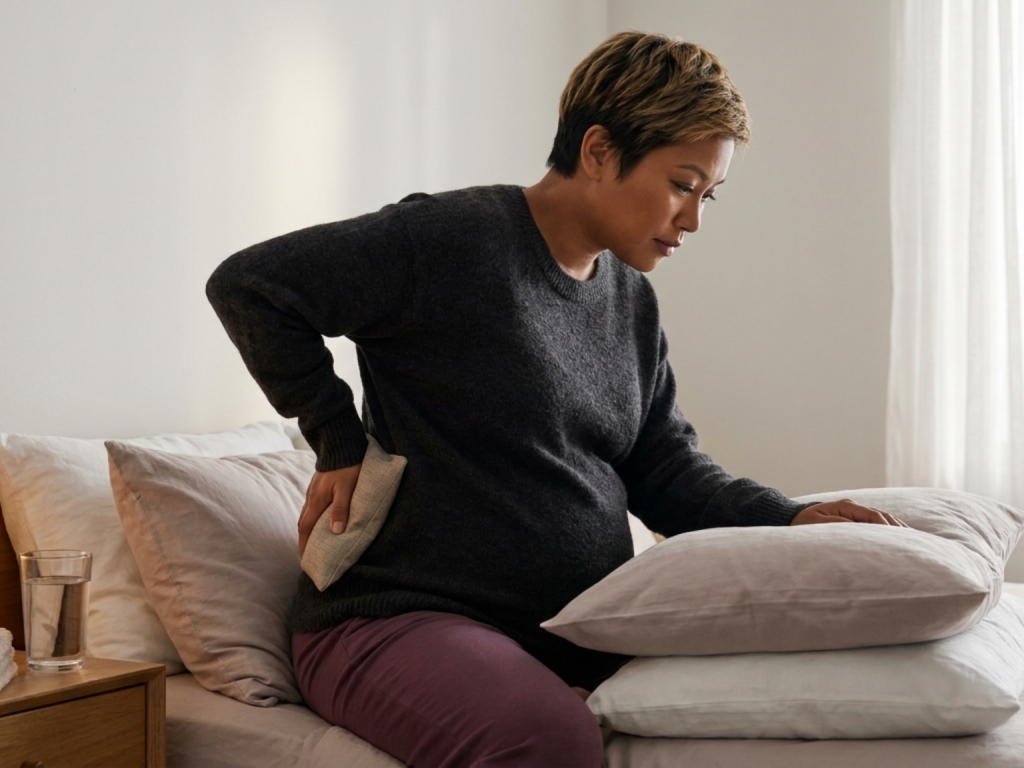
Heat and cold are among the most accessible non-drug pain management tools. Heat can reduce muscle spasm, increase local blood flow, and provide soothing sensory input. A warm pack on the lower back, a warm shower directed at the shoulders or lumbar area, or a warm bath when approved by your care team may help with musculoskeletal discomfort and early contraction coping. Heat should feel comfortably warm, not hot, and should not be applied over numb skin or used while sleeping.
Cold can be helpful when pain is linked to swelling, inflammation, or acute soft-tissue irritation. In the postpartum period, cold packs may ease perineal soreness when used with a cloth barrier and limited application time. For headaches, neck tension, or localized back discomfort, some people prefer alternating warmth and coolness. Avoid placing ice directly on skin, and stop if the area becomes painful, pale, or unusually numb.
Water can also change the way pain is perceived. A shower offers warmth, pressure, sound, and privacy, all of which may reduce sympathetic nervous system arousal. In early labor, water can support relaxation between contractions. However, water immersion is not appropriate in every situation, especially if there are concerns about bleeding, infection, ruptured membranes with specific instructions, or a need for continuous monitoring. Follow your care team’s guidance about baths and timing.
Breathing, relaxation, and the pain-stress cycle
Pain often intensifies when the body enters a sustained threat response. Adrenaline rises, breathing becomes shallow, muscles brace, and the brain may interpret sensations as less tolerable. Breathing exercises during labor and other painful moments are not meant to erase pain; they help interrupt the pain-stress cycle so that each contraction, cramp, or wave of discomfort is easier to meet.
A simple method is slow nasal or gentle mouth breathing with a longer exhale than inhale. The longer exhale can stimulate parasympathetic activity, lowering heart rate and muscle tension. During contractions, some people use patterned breathing: a slow inhale at the beginning, steady breathing through the peak, and a deliberate release at the end. Between contractions, the priority is recovery: unclench the jaw, drop the shoulders, soften the hands, and let the abdomen move if that feels comfortable.
Relaxation can also be cognitive. Guided imagery, body scanning, prayer, meditation, music, or a repeated phrase may narrow attention and reduce catastrophizing. For a medically literate reader, it may help to think of these methods as top-down modulation: the brain uses attention, expectation, and safety cues to influence nociceptive processing. This is not imaginary pain. It is real pain shaped by the nervous system, environment, fatigue, and emotional state.
Movement and position changes
Stillness can sometimes make birth-related pain harder. Gentle movement, walking around the home, pelvic rocking, leaning over a counter, sitting on a birth ball, or resting in side-lying positions may reduce pressure on sensitive tissues and help the pelvis respond to fetal position. Position changes are a core part of nonpharmacologic pain coping strategies because they give the body options when one posture becomes intolerable.
In early labor, upright positions may help some people feel more in control, while supported forward-leaning positions can be useful for back discomfort. Hands-and-knees positioning may reduce pressure in the lower back for some, particularly when contractions are felt posteriorly. Side-lying with pillows between the knees can support rest when fatigue becomes a bigger pain amplifier than movement restriction.
Movement should remain gentle and sustainable. Avoid overexertion, especially if you have not slept, have nausea, are dehydrated, or were instructed to limit activity. The NHS emphasizes pacing as a pain-management principle: doing too much during a better moment can worsen pain later. At home, pacing might mean alternating ten to twenty minutes of movement with a rest position, using contractions as the rhythm rather than forcing a rigid exercise plan.
If movement increases pain sharply, causes dizziness, triggers bleeding, or makes you feel unsafe, stop and seek advice. Effective natural labor-pain management is responsive, not performance-based.
Massage, counterpressure, and supportive touch
Touch can reduce pain through several mechanisms: competing sensory input, decreased muscle tension, emotional reassurance, and the calming effect of co-regulation with a trusted person. Massage therapy during labor may include light effleurage over the abdomen, slow strokes over the shoulders, firm kneading of the hips, or gentle lower-back massage between contractions. Consent matters. A technique that felt good ten minutes ago may feel irritating during the next contraction.
Counterpressure during contractions can be particularly helpful for lower back or sacral pain. A support person can use the heel of the hand, a tennis ball, or a firm warm pack to apply steady pressure to the sacrum during the contraction, then release afterward. Some people prefer a double hip squeeze, where pressure is applied inward at the sides of the pelvis. Pressure should be firm but not bruising, and the birthing person should be able to direct location and intensity.
Supportive touch is not limited to massage. A hand on the shoulder, holding hands, helping with a position change, offering sips of fluid if allowed, or maintaining a calm voice can reduce the sense of isolation that amplifies pain. The support person’s role is also observational: tracking contraction timing, noticing changes in bleeding or fluid, and helping contact the care team when needed. At home, comfort and safety work together.
Rest, sleep, hydration, and pacing
Fatigue lowers pain tolerance. In late pregnancy and early labor, the most therapeutic natural method may be rest, even when it feels emotionally difficult to do less. If contractions are irregular or still manageable, lying down in a supported position, dimming lights, limiting notifications, and trying to sleep can preserve energy for active labor. Pain relief is not always active; sometimes it is removing stimulation so the nervous system has fewer inputs to process.
Hydration and nourishment also matter, within the limits of your care plan. Dehydration can worsen headaches, muscle cramps, dizziness, and the subjective intensity of contractions. Small sips of water or an electrolyte drink may be useful unless you have been told to restrict intake. Light food may be appropriate in early labor for some people, but recommendations vary depending on risk factors, planned anesthesia, nausea, and local clinical policy.
Pacing applies to postpartum pain as well. After birth, perineal soreness, uterine cramping, breast or chest discomfort with milk changes, incision discomfort, and musculoskeletal strain may all compete for attention. Rest periods, supported feeding positions, help with household tasks, and avoiding unnecessary lifting can reduce pain escalation. Natural methods can complement prescribed medications, but they should not replace medicines your clinician has recommended for infection prevention, blood pressure control, anticoagulation, or postoperative recovery.
Complementary methods and medication choices
Some people consider acupressure, aromatherapy, TENS units, mindfulness apps, prenatal yoga techniques, or hypnobirthing-style scripts as part of home pain relief. The quality of evidence varies by method, and safety depends on pregnancy status, medical history, product quality, and timing. Essential oils, herbs, and supplements deserve particular caution because natural does not automatically mean safe in pregnancy, labor, lactation, or after surgery.
If you want to use complementary methods, discuss them before labor if possible. Ask whether a TENS unit is appropriate for you, whether any oils or topical products should be avoided, and whether your hospital or birth center has policies about water immersion, monitoring, or support tools. This is especially important for people with epilepsy, implanted devices, high-risk pregnancy, skin conditions, medication interactions, or allergy history.
It is also reasonable to hold both natural and medical options in the same plan. Epidural natural and medication preferences can be discussed antenatally so that you understand timing, benefits, side effects, monitoring, and alternatives. Some people use non-drug methods throughout labor; others use them until they choose nitrous oxide, systemic medication, or epidural analgesia. A flexible birth comfort plan protects dignity because it treats pain relief as individualized care rather than a test of willpower.
Call for medical advice urgently if
- Pain is sudden, severe, one-sided, worsening rapidly, or unlike anything you were told to expect.
- You have vaginal bleeding, fever, fainting, chest pain, shortness of breath, severe headache, visual symptoms, or swelling with concern for high blood pressure.
- Fetal movement is reduced, absent, or notably different from your baby’s usual pattern.
- Your waters break and you have been told to call, the fluid is green or foul-smelling, or you are preterm.
- Postpartum pain is accompanied by heavy bleeding, foul discharge, wound opening, calf pain, or thoughts of self-harm.
Tools & Assistance
- A written birth comfort plan reviewed with your midwife or obstetric team
- Warm pack, cold pack, towels, pillows, and a birth ball if approved for you
- Contraction timer and direct phone numbers for your labor unit or clinician
- A support person briefed on massage, counterpressure, hydration, and when to call
- A quiet rest space with dim lighting, water, snacks if allowed, and easy access to transport
FAQ
Can natural pain relief methods replace medical pain relief in labor?
Sometimes they are enough, and sometimes they are not. They can be used alone or alongside medical analgesia, depending on your preferences, clinical situation, and care team guidance.
Is a warm bath safe during early labor at home?
It may be safe for some people, but not everyone. Ask your clinician about your specific situation, especially if your waters have broken, you are preterm, you have bleeding, or monitoring has been recommended.
What is the simplest method to try during contractions?
Many people start with a longer exhale, relaxed jaw and shoulders, and a position that allows the pelvis to move. Add heat, counterpressure, or a shower if those feel helpful.
Are herbal remedies safe for birth-related pain?
Do not assume safety. Herbs and supplements can affect bleeding, contractions, blood pressure, sedation, and medications, so discuss them with a qualified healthcare professional before use.
When should I stop trying home methods?
Stop and seek medical advice if pain feels unsafe, symptoms are escalating, red flags appear, or your care plan says it is time to call or come in.
Sources
- MedlinePlus — Non-Drug Pain Management
- NHS — 10 ways to reduce pain
- Mayo Clinic — Home Remedies: Self-care approaches to treating pain
Disclaimer
This article is for general educational purposes and is not a substitute for individualized medical advice, diagnosis, or treatment. Contact your healthcare professional or emergency services for concerning, severe, or changing symptoms.













Please log in to leave a comment.