
Intro
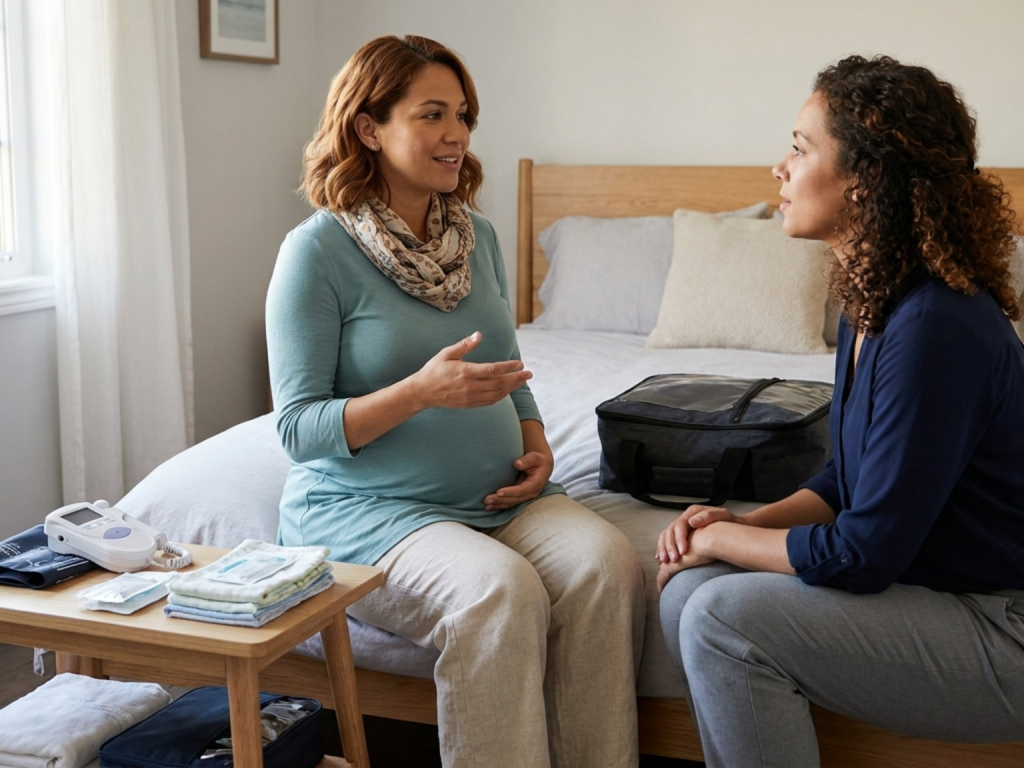
Questions about home birth often become emotionally charged because they touch safety, autonomy, past medical experiences, and trust. A planned home birth is not the same as an unattended birth, and it is not simply a hospital birth moved into a bedroom. It is a specific care model that depends on risk selection, skilled clinical support, supplies for maternal and newborn stabilization, and a rapid hospital transfer pathway.
The most accurate answer is nuanced: home birth can be a reasonable option for some low-risk pregnancies, but it is not appropriate for every pregnancy or every setting. The safest decisions are made with qualified maternity professionals who can explain your individual risks, local transfer arrangements, and alternatives without pressure or judgment.
Highlights
Home birth is not automatically dangerous, but safety depends strongly on whether the pregnancy is low risk and whether the birth is planned with qualified care.
Some studies show similar outcomes for low-risk planned home births and birth center births, while other research finds higher risks of rare but serious newborn outcomes compared with hospital birth.
A good home birth plan includes clinical screening, fetal and maternal monitoring, emergency supplies, newborn resuscitation capability, and clear transfer criteria.
Blanket statements such as "home birth is always unsafe" or "hospitals are always unnecessary" both miss the medical reality.
Myth 1: Home birth is the same as giving birth without medical care
This is one of the most persistent misunderstandings. A planned home birth should involve prenatal screening, a qualified birth attendant, ongoing labor assessment, basic emergency medications and equipment, neonatal resuscitation equipment, documentation, postpartum surveillance, and a defined plan for escalation. That is very different from an unassisted birth or an unexpectedly rapid birth that happens before professional help arrives.
In a well-organized model, the clinician or midwife assesses maternal vital signs, labor progress, fetal heart rate patterns, bleeding, fluid color, pain pattern, hydration, and the newborn’s transition after birth. These observations are not decorative; they guide whether labor can continue at home or whether hospital transfer is indicated. A home setting does not remove medical judgment. It changes which resources are immediately available and makes timely decision-making especially important.
The distinction matters because many statistics about “home birth” are difficult to interpret if they mix planned, low-risk home births with unplanned, unattended, or high-risk births. When discussing evidence, the key question is not simply where the baby was born, but whether the birth was planned, who attended it, what the pregnancy risk profile was, and whether a reliable transfer system existed.
Myth 2: Home birth is always more dangerous than hospital birth
The evidence does not support a simple “always dangerous” label for low-risk planned home birth. Recent U.S. research comparing planned home births with planned birth center births for low-risk women reported similar outcomes and did not support blanket warnings against home birth. Reviews of the broader literature also describe many studies in which low-risk planned home birth, attended by qualified midwives within supportive systems, was not associated with increased neonatal morbidity or mortality.
That said, the comparison is not medically identical to hospital birth. Mayo Clinic notes that most planned home births proceed without major problems, but also that some research has found higher risks of serious newborn outcomes, including neonatal seizures, neurologic dysfunction, or death, when planned home birth is compared with planned hospital birth. These outcomes are uncommon, but they are important because they are severe.
A careful interpretation is that planned home birth safety is conditional. It is most defensible when the pregnancy is low risk, the fetus is singleton fetus in cephalic presentation, the gestational age is appropriate, the birth attendant is trained and regulated, and transfer can happen without dangerous delay. It becomes less defensible when risk factors are present or when the surrounding health system does not support smooth collaboration between home and hospital care.
Myth 3: Low risk means no risk
“Low risk” is not the same as “no risk.” It means the known probability of complications is lower based on current information. Labor can still change quickly. Shoulder dystocia, postpartum hemorrhage, fetal intolerance of labor, cord prolapse, placental abruption, meconium aspiration concerns, hypertensive deterioration, retained placenta, or newborn respiratory depression can occur even after an uncomplicated pregnancy.
This is why a home birth emergency transfer plan is not a pessimistic add-on; it is a central safety feature. A credible plan includes the nearest appropriate hospital, transport options, estimated travel time, communication between clinicians, records available for transfer, and thresholds for leaving home before the situation becomes critical. Transfer is not a failure. It is one of the ways planned home birth remains medically accountable.
Low-risk status also needs reassessment throughout pregnancy. A person may begin pregnancy as a good candidate for home birth but later develop gestational hypertension, preeclampsia concern, fetal growth restriction, abnormal placental location, malpresentation, insulin-requiring gestational diabetes, significant anemia, or other conditions that shift the balance toward hospital care. Shared decision-making works best when the birth setting remains flexible rather than fixed as an identity or promise.
Myth 4: Midwives cannot manage emergencies
This myth is too broad. The more precise question is: what type of midwife or clinician, with what training, scope, equipment, medications, and integration into the local maternity system? In many settings, qualified midwives are trained to recognize abnormal labor, manage common urgent problems within their scope, initiate neonatal resuscitation, administer uterotonic medication for postpartum hemorrhage when permitted, and arrange transfer.
However, a home birth attendant cannot provide everything available in a hospital. They cannot perform an emergency cesarean at home, provide an operating room, offer continuous access to anesthesiology, run a blood bank, or manage a critically ill newborn in a neonatal intensive care unit. The safety question is therefore not whether the attendant is caring or experienced, but whether their skill set matches the planned setting and whether they can escalate care rapidly when needed.
Families considering home birth should ask practical questions: What credentials does the attendant hold? Are they licensed or regulated in the state or country? How many births have they attended? What equipment and medications do they bring? How often do they transfer clients in labor? Which hospital receives transfers? Will they communicate directly with hospital staff? These questions are not confrontational; they are part of informed consent.
Myth 5: Hospital transfer means the home birth plan failed
Transfer is a normal part of a well-designed planned home birth system. Common reasons include prolonged labor, maternal exhaustion, request for epidural analgesia, need for augmentation, abnormal fetal heart rate assessment, elevated blood pressure, bleeding, meconium-stained fluid with additional concerns, or newborn transition problems. Many transfers are non-emergent and occur because the clinical picture suggests that hospital resources may be helpful before a crisis develops.
The language around transfer matters. If people fear shame or judgment for transferring, they may delay a decision that should be made clinically. The healthiest framing is that the goal is not to preserve the location at all costs; the goal is a supported birth with appropriate care at each stage. A flexible low-intervention birth plan can still include hospital care if circumstances change.
Planning for transfer should happen prenatally, not during a tense moment in labor. Discuss transport time, weather or traffic barriers, whether ambulance use is appropriate, what records will accompany the birthing person, and who will go with them. Also ask how newborn transfer would be handled if the parent and baby need different levels of care. These details may feel uncomfortable, but they reduce confusion when minutes and clarity matter.
Myth 6: Anyone who wants a natural birth should choose home
A desire for physiologic or low-intervention labor does not automatically mean home birth is the best setting. Many people pursue natural birth in hospitals or birth centers with mobility, intermittent auscultation when appropriate, hydrotherapy, doulas, upright positioning, delayed cord clamping, skin-to-skin contact, and limited intervention when mother and baby remain well. Myths about natural birth can make people feel that they must choose between autonomy and safety, but good maternity care should support both as much as medically possible.
Home birth is usually not recommended in higher-risk situations, such as multiple gestation, breech or transverse presentation, placenta previa, prior classical cesarean incision, significant hypertensive disease, certain cardiac conditions, preterm labor, post-term pregnancy beyond locally accepted limits, poorly controlled diabetes, or when the fetus has known conditions requiring immediate specialist care. Individual recommendations vary, so these issues should be reviewed with an obstetric clinician or appropriately credentialed midwife.
For some families, the safest and most emotionally acceptable plan may be a hospital birth with a midwife, a birth center birth near hospital backup, or a planned hospital birth that emphasizes shared decision-making. The right setting is not the one that proves a point. It is the one that fits the medical facts, the available system, and the birthing person’s values.
How to have a grounded safety conversation
A medically literate discussion about home birth should include absolute risk, not only relative risk. For example, a severe newborn outcome may be statistically increased in one setting but still rare overall. At the same time, rarity does not make an outcome irrelevant. Parents deserve clear numbers when available, plain-language explanations of uncertainty, and acknowledgment that different people weigh risks differently.
Ask your care team to separate three categories: your personal pregnancy risks, the birth attendant’s capabilities, and the local system’s transfer reliability. A low-risk pregnancy in a region with integrated midwifery and respectful hospital transfer is not the same scenario as a higher-risk pregnancy far from emergency obstetric services. The setting around the home matters almost as much as the home itself.
It is also reasonable to ask about maternal outcomes, not only newborn outcomes. Some studies associate planned home birth with fewer interventions such as epidural analgesia, operative vaginal birth, cesarean birth, and severe perineal trauma in selected low-risk populations. These potential benefits should be weighed against the limits of emergency response outside the hospital. A balanced decision does not minimize either side.
Finally, revisit the plan near term. Confirm fetal presentation, blood pressure status, lab issues, group B streptococcus plan, postpartum hemorrhage risk, newborn vitamin K and eye prophylaxis preferences, infant feeding support, and postpartum follow-up. A safe plan is specific, documented, and adaptable.
When to seek urgent care
- Heavy vaginal bleeding, severe abdominal pain, seizure, fainting, or symptoms concerning for preeclampsia require urgent medical evaluation.
- Decreased fetal movement, persistent abnormal fetal heart rate concerns, or suspected cord prolapse are emergencies.
- Fever in labor, foul-smelling fluid, or signs of infection should be discussed immediately with a clinician.
- Newborn breathing difficulty, poor tone, persistent cyanosis, or poor feeding after birth needs urgent assessment.
- Do not attempt a home birth without a qualified attendant and a clear transfer plan.
Tools & Assistance
- Schedule a risk review with an obstetric clinician or qualified midwife
- Ask for written transfer criteria and the nearest receiving hospital plan
- Confirm provider licensing, emergency equipment, and neonatal resuscitation training
- Prepare a concise prenatal record packet for possible hospital transfer
- Discuss postpartum hemorrhage prevention and newborn care plans before labor
FAQ
Is planned home birth safe for a first baby?
It may be an option for some low-risk first pregnancies, but transfer rates are generally higher for first births. Discuss your individual risk profile, distance from hospital care, and provider experience before deciding.
Does home birth mean refusing medical care?
No. Planned home birth should include prenatal care, skilled monitoring, emergency preparation, and willingness to transfer when clinical concerns arise.
Who should not plan a home birth?
People with higher-risk conditions such as significant hypertension, placenta previa, certain prior uterine surgeries, multiple pregnancy, breech presentation, or preterm labor are often advised to give birth in a hospital. A clinician should assess the specifics.
What is the most important safety feature of home birth?
There is no single feature, but low-risk eligibility, a qualified attendant, neonatal resuscitation capability, and a rapid hospital transfer pathway are all central.
Sources
- PubMed — Planned Home Births in the United States Have Outcomes Similar to Planned Birth Center Births for Low-Risk Women
- Mayo Clinic — Home birth: Know the pros and cons
- PubMed Central — Planned home birth: benefits, risks, and opportunities
Disclaimer
This article is for informational purposes only and does not replace medical advice. Discuss birth setting, risk factors, and emergency planning with a qualified healthcare professional.














Please log in to leave a comment.