
Intro
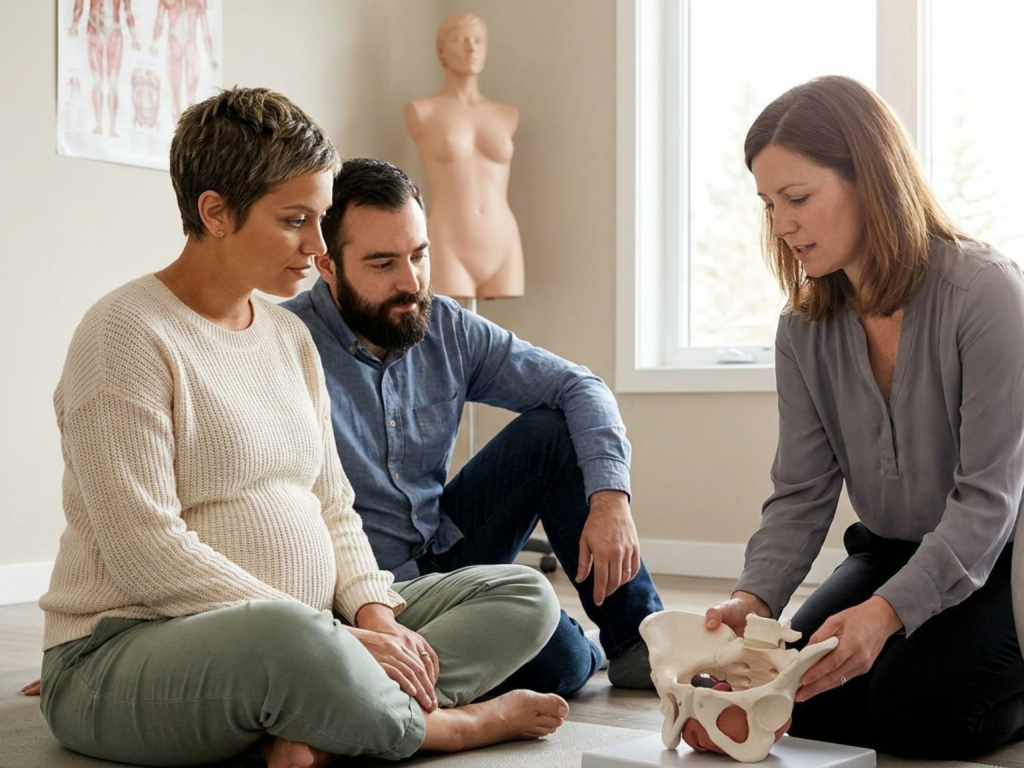
Birth classes are structured prenatal education sessions that help expectant parents understand labor, birth, early newborn care, feeding, recovery, and the practical realities of becoming a parent. They are broader than a single lesson on contractions or breathing techniques: many programs combine childbirth preparation with hospital orientation, breastfeeding education, infant safety, and postpartum support.
There is no single correct class or birth philosophy. The most useful option depends on your medical history, pregnancy circumstances, preferred learning style, planned birth setting, and the questions you want answered. A flexible, evidence-informed class can build confidence without implying that labor will follow a predictable script.
Highlights
Birth classes may cover labor, analgesia, cesarean birth, newborn care, feeding, and postpartum adjustment.
Options range from hospital-based general courses to focused approaches such as Lamaze-style coping education or self-hypnosis programs.
A good class prepares you for both your preferences and possible changes in clinical circumstances.
Ask whether the instructor is appropriately qualified and whether the content reflects current guidance from your maternity care team.
What are birth classes?
Birth classes are prenatal education programs designed to help families prepare for labor, delivery, newborn care, and the early postpartum period. Although the term “birth class” often suggests instruction about vaginal birth, comprehensive programs may also address induction, pain relief, operative vaginal delivery, cesarean birth, infant feeding, safe sleep, and emotional adjustment after delivery.
Core teaching commonly includes the physiology of labor, cervical dilation and effacement, stages of labor, fetal monitoring, common interventions, and when to contact the maternity unit. Classes may also explain nonpharmacologic comfort measures such as movement, positioning, breathing, massage, hydrotherapy where available, and continuous support. Medical terminology is usually translated into practical decisions: for example, what an epidural involves, why an oxytocin infusion might be recommended, or how a cesarean birth is organized.
Many programs include practical preparation beyond labor itself. Kaiser Permanente describes prenatal education as encompassing childbirth preparation, Cesarean birth preparation, hospital tours, breastfeeding, infant safety, and postpartum support. This broader scope can be particularly helpful for first-time parents, although those who have given birth before may also benefit from an update or a class tailored to a new clinical situation.
What does a standard childbirth class cover?
A general childbirth preparation course usually offers a balanced overview rather than training for one specific type of labor. Mayo Clinic identifies childbirth preparation classes as a way to learn about labor and delivery, coping strategies, medical procedures, and early parenting topics. The exact curriculum varies by institution, but a well-designed course often covers:
- How labor may begin, including spontaneous rupture of membranes, contractions, and cervical change.
- When to call a clinician or go to the hospital, while emphasizing that individualized instructions take priority.
- Comfort measures and pain management options in labor, including systemic medications, neuraxial analgesia, and nonmedication approaches.
- Common monitoring and interventions, such as fetal heart rate assessment, intravenous access, induction medications, and assisted vaginal delivery.
- Cesarean birth preparation, including anesthesia, the operating-room process, recovery, and newborn contact policies.
- Immediate newborn care, feeding choices, safe sleep, and signs that require prompt professional attention.
Some classes also discuss birth plans. A birth plan is best understood as a communication tool describing preferences, questions, and priorities rather than a guarantee. Clinical decisions may need to change because of maternal status, fetal status, labor progress, gestational age, or available resources. A useful course explains how to participate in shared decision-making when circumstances evolve.
Main types of birth classes available
Classes differ in both content and philosophy. The following categories frequently overlap, and a hospital may use different names for similar programs.
General hospital or community classes. These are broad introductory courses, often taught over one day, several evenings, or a short series. They may include a tour of the labor unit, local admission procedures, pain relief choices, newborn care, and feeding. Hospital-based teaching can clarify site-specific policies, such as support-person limits or monitoring practices.
Natural-birth-oriented classes. These courses generally emphasize physiologic labor, preparation for an unmedicated birth, relaxation, movement, upright positions, and continuous support. WebMD discusses commonly recognized approaches that focus on natural childbirth and coping skills. The phrase “natural birth” is used inconsistently, however, and should not be treated as a measure of effort, virtue, or parental success. A class is safer and more realistic when it also explains medication, induction, assisted birth, and cesarean options without stigma.
Self-hypnosis or hypnobirthing classes. These programs teach focused breathing, guided imagery, relaxation, and self-hypnosis techniques intended to reduce fear and improve coping. They may be appealing to people who prefer rehearsal and mind-body strategies. They should be presented as comfort and coping tools, not as a guarantee of painless labor or a substitute for assessment and treatment when clinically indicated.
Cesarean-specific classes. These are useful for people planning a cesarean or who want focused preparation because of a prior cesarean, placenta-related concerns, fetal presentation, medical disease, or another indication. Topics may include preoperative instructions, anesthesia, surgical steps, postoperative pain control, mobility, wound care, feeding after surgery, and emotional recovery. Ask the obstetric team which details are relevant to your individual plan.
Breastfeeding, newborn-care, and postpartum classes. These focused sessions may address lactation physiology, positioning and attachment, hand expression, pumping, formula preparation, infant bathing, cord care, choking response, safe sleep, and parental recovery. Postpartum courses can also discuss mood changes, mental health, contraception, pelvic-floor recovery, and when to seek care, although they do not replace a postpartum clinical visit.
Choosing between in-person, online, and private formats
Format affects what you can learn and how easily you can ask questions. In-person group classes allow discussion, demonstrations, partner practice, and sometimes a hospital tour. They may also help families learn what is customary in a particular maternity unit. However, scheduling, transportation, language access, sensory needs, infection-control policies, or high-risk pregnancy restrictions can make attendance difficult.
Online live classes can provide interaction with an educator while reducing travel. Recorded courses offer flexibility and can be paused or revisited, but they may provide less opportunity for individualized clarification. Check whether the material is regularly updated and whether a clinician or qualified educator is available for questions. A private session may be useful when a person has a complex medical history, prior traumatic birth, language needs, disability-related accommodations, or a highly specific birth plan.
Ask practical questions before enrolling:
- Who teaches the class, and what professional training or certification do they have?
- How current is the curriculum, and does it discuss both routine and unexpected outcomes?
- Does the class include evidence-informed information about analgesia, induction, operative birth, and cesarean birth?
- Are partners, doulas, or other support people included?
- Is the program accessible in your preferred language and learning format?
- Does the fee include a tour, handouts, demonstrations, or follow-up resources?
When to take a class and who should attend
Many families begin a general class during the late second or early third trimester, allowing time to absorb information and prepare questions without leaving it until the final weeks. The best timing depends on the course schedule, estimated delivery date, local registration requirements, and whether a hospital tour or infant-care session is offered separately. People at risk of preterm birth or those with a planned induction or cesarean may prefer earlier education so that preparation is not compressed.
The pregnant person may attend alone, but involving the intended support person is often valuable. Partners and support people can learn how to recognize labor changes, provide physical and emotional support, communicate preferences, assist with positioning, and understand when clinical guidance takes precedence. They can also learn newborn safety and feeding skills, which makes preparation a shared responsibility rather than something placed entirely on the pregnant person.
People with previous birth experience should not assume classes are unnecessary. A refresher may be helpful after a substantial interval, a prior traumatic experience, a new diagnosis, a planned cesarean, a trial of labor after cesarean, or a change in hospital or support team. Ask the clinician or midwife whether a specialized course is appropriate for your circumstances.
How to use a birth class safely and effectively
Approach a class as preparation for informed participation, not as a test you can pass or fail. Labor varies considerably, and even a carefully developed plan may change. The most transferable skills are asking clear questions, identifying your priorities, using coping strategies, understanding consent, and knowing how to obtain help.
Bring questions about your own care to the obstetrician, midwife, anesthesiologist, pediatric clinician, or maternity-unit staff. A class instructor can explain general concepts, but cannot replace individualized assessment. This is especially important for conditions such as hypertension, diabetes, bleeding, fetal growth concerns, placenta previa, suspected preterm labor, multiple gestation, or a history of cesarean birth. The appropriate timing and type of birth education may differ in these situations.
Be cautious of programs that promise a particular outcome, portray one method as universally superior, discourage evidence-based medical care, or advise participants to ignore symptoms or professional recommendations. High-quality education acknowledges uncertainty, describes benefits and limitations of interventions, respects informed refusal, and explains how emergency care may be provided when needed.
After the class, consider making a concise preparation document. Include contact numbers, transportation arrangements, support people, medication and allergy information, feeding preferences, questions for the care team, and practical postpartum support planning. Keep the document flexible and review it with the clinician who will provide maternity care.
When to seek professional guidance
- Do not use a class to self-assess bleeding, leaking fluid, severe pain, reduced fetal movement, fever, or possible preterm labor.
- Contact your maternity care team promptly for urgent symptoms or follow the emergency instructions given for your pregnancy.
- A class cannot determine whether labor, induction, vaginal birth, or cesarean birth is safest for an individual.
- Avoid programs that promise painless labor, guaranteed vaginal birth, or a specific outcome regardless of medical circumstances.
- Confirm exercise, breathing, dietary, and medication-related advice with your clinician when you have a medical or obstetric complication.
Tools & Assistance
- Ask your obstetrician, midwife, or family physician for recommended local educators.
- Check the hospital or birth center website for childbirth, cesarean, breastfeeding, and newborn-safety courses.
- Prepare a written list of questions about labor, analgesia, monitoring, admission, and postpartum care.
- Invite your partner, doula, or chosen support person and discuss how they can assist.
- Request language interpretation, disability accommodations, or a private format if needed.
FAQ
Do I need a birth class if I have given birth before?
Not everyone needs a full course, but a refresher can be useful after a long interval, a previous difficult experience, a new pregnancy complication, a planned cesarean, or a change in care setting.
Are natural-birth classes against epidurals or cesarean birth?
They should not be. A responsible class may emphasize unmedicated coping while also explaining analgesia, assisted birth, cesarean birth, and the possibility that clinical circumstances can change.
Can an online class replace a hospital tour?
It may provide excellent general education, but it cannot always explain local admission procedures, unit layout, support-person policies, or site-specific emergency arrangements. Ask the maternity unit whether a virtual or in-person tour is available.
When should my partner attend?
Partners and support people can attend any relevant session. Early participation gives them time to learn comfort measures, communication skills, newborn care, and practical plans for transport and postpartum support.
What if my birth plan changes?
That is common and does not mean preparation failed. Use the class to understand options, ask informed questions, and identify priorities that can often be supported across different clinical pathways.
Sources
- Kaiser Permanente — Prenatal classes
- Mayo Clinic — Classes
- WebMD — Types of Childbirth Classes
Disclaimer
This article provides general educational information and is not a substitute for individualized advice, diagnosis, or treatment from a qualified healthcare professional. Contact your maternity care team or emergency services for urgent concerns.


















Please log in to leave a comment.