
Intro
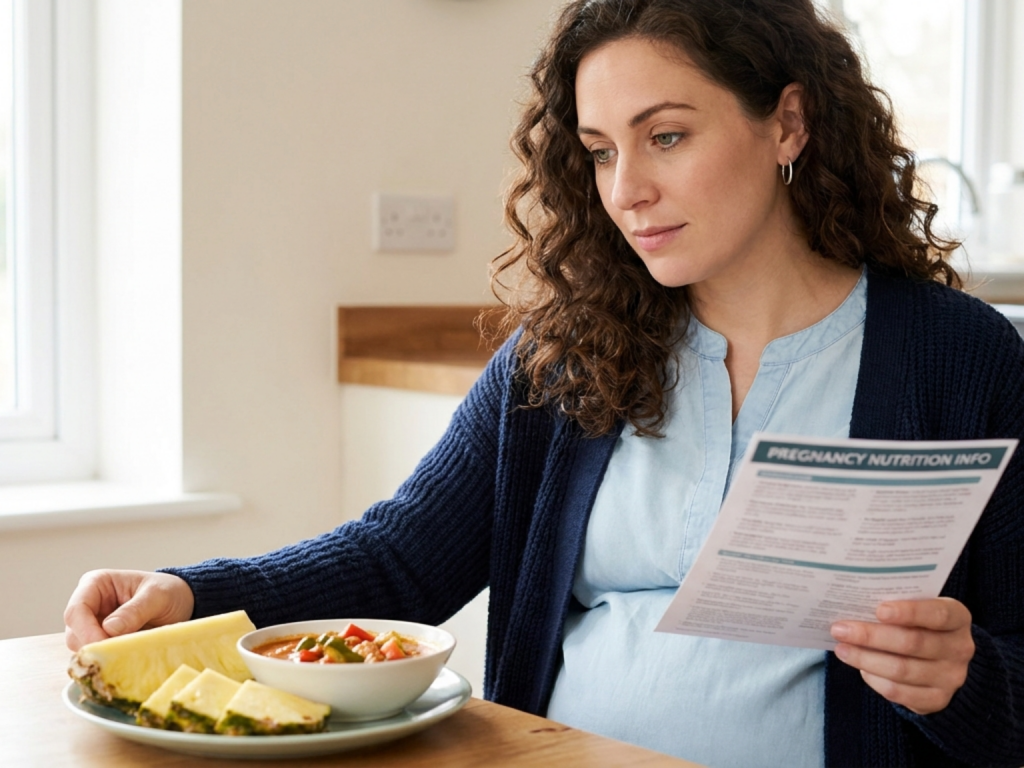
Many pregnant people hear the same advice in the last weeks of pregnancy: eat spicy food, eat pineapple, and labor may start. It is an understandable idea. When you are near term, every twinge, cramp, or bathroom trip can feel meaningful, and a hopeful “natural trick” can be appealing.
But the biology of labor is more complex than a single meal. Spicy food can irritate the gastrointestinal tract, and pineapple contains enzymes that are often mentioned in this myth, yet the clinical evidence does not show that either food reliably initiates labor. This article reviews what is known, what is not known, and what to watch for instead.
Highlights
Spicy food may make you feel warm, sweaty, or crampy, but that is not the same as triggering true labor.
Pineapple is often linked to labor because of bromelain, yet direct clinical evidence in pregnant people is very limited.
Labor is driven by a coordinated hormonal and cervical process, not by one specific food in a single sitting.
If you are near your due date and want to try foods for comfort, it is wise to think about reflux, diarrhea, and hydration first.
When contractions, bleeding, or leaking fluid begin, it is better to contact your maternity team than rely on home remedies.
Why this myth is so persistent
Labor myths survive because they are emotionally appealing. Near the end of pregnancy, people are often tired, uncomfortable, and eager for a predictable sign that birth is close. If a spicy dinner or a bowl of pineapple happens to be followed by contractions, it is easy to assume cause and effect, even when the timing is coincidental.
There is also a cultural pattern here. Food is a familiar, accessible tool, so advice about “eating something hot” or “trying fruit enzymes” spreads quickly through families, social media, and casual conversation. The problem is that labor has a biologic threshold. In most pregnancies, the body does not move into labor simply because a certain food was eaten. More often, these foods change how the digestive system feels, which can be mistaken for uterine activity.
That distinction matters. True labor is a progressive process involving regular uterine contractions, cervical change, and a hormonal cascade that prepares the uterus and cervix. Indigestion, gas, and bowel movement are common near term too, but they are not the same thing.
What actually starts labor
From a physiologic standpoint, labor involves coordinated activity among the fetus, placenta, uterus, and cervix. Hormonal signaling increases uterine contractility, prostaglandins contribute to cervical ripening, and the cervix gradually softens, shortens, and dilates. Oxytocin then amplifies contractions once labor is underway. This is why clinicians describe labor as a dynamic process rather than a switch that flips after one food or one activity.
Because cervical ripening and contraction patterns are biologically regulated, an exposure would need to have a meaningful systemic effect to change labor timing. For spicy food or pineapple, that level of effect has not been demonstrated in pregnant people. Reviews of the pineapple claim note that the available evidence is limited and does not establish a real labor-inducing effect. Likewise, plain-language guidance from maternity organizations says there is no proof that spicy curry or pineapple brings on labor.
It is reasonable to ask whether a food could influence prostaglandins or smooth muscle activity. The short answer is that this remains speculative, and the data do not support using these foods as induction methods.
Spicy food: why it can feel like labor is starting
Spicy foods contain capsaicin and related compounds that stimulate pain and heat receptors in the mouth and gut. In pregnancy, especially late pregnancy, this can cause heartburn, reflux, abdominal burning, or faster bowel motility. Those effects can feel dramatic if your stomach is already crowded by the uterus and your digestion is slower than usual.
Some people notice lower abdominal discomfort or what feels like cramping after a spicy meal. That discomfort is usually gastrointestinal rather than uterine. True contractions are typically rhythmic, increasingly regular, and often intensify over time. By contrast, digestive cramps may come and go, improve after a bowel movement, or change with position, burping, or passing gas.
The key point is not that spicy food is always uncomfortable. The key point is that discomfort is not proof of labor. There is no reliable evidence that a spicy meal initiates cervical ripening or starts labor in an otherwise stable pregnancy. If you enjoy spicy food and it agrees with you, it is generally a culinary preference question, not a labor trigger. If it worsens reflux or diarrhea, that is a separate reason to moderate it.
Pineapple: bromelain, biology, and the gap in evidence
Pineapple is the other classic labor myth, usually linked to bromelain, a mixture of proteolytic enzymes found in the fruit and especially in the core. The theory is that bromelain might soften the cervix or affect uterine activity. This idea sounds plausible at first glance because enzymes can affect tissues in laboratory settings.
The clinical problem is that plausible does not mean proven. The evidence reviewed in medical literature suggests that direct studies in pregnant people are lacking, and the available animal or tissue findings do not establish that eating pineapple causes cervical ripening or labor. The amount of bromelain in ordinary servings of pineapple is also unlikely to produce a pharmacologic effect comparable to medication used for labor induction.
Pineapple can still be useful as food, of course. It provides fluid, carbohydrate, and some micronutrients. But a fruit serving is not the same thing as a medication. Even if someone eats a large amount of pineapple and then has contractions later that day, timing alone cannot show causation. Labor often starts in the late evening or overnight, which makes coincidental associations particularly easy to overinterpret.
What to expect if you try these foods near the end of pregnancy
If you are at term and considering spicy food or pineapple out of curiosity, the most practical question is often not “Will this start labor?” but “How will my body react?” Some people tolerate both foods well. Others experience reflux, mouth burning, abdominal discomfort, loose stools, or nausea. In late pregnancy, those symptoms may be unpleasant enough to mimic the feeling that something important is happening.
A more helpful frame is to watch for patterns. Labor contractions tend to become more regular, closer together, and more intense over time. They are not usually explained by one meal. If symptoms improve when you rest, hydrate, change positions, or use the bathroom, digestive causes become more likely. If there is no clear pattern but you feel uneasy, contact your maternity unit or obstetric clinician rather than trying to self-diagnose.
Also remember that home tips should never replace evidence-based labor management when there is a medical indication for delivery. If induction is needed, it is usually planned and monitored by healthcare professionals using established methods.
How to respond to labor advice without self-blame
People often feel judged when labor does not begin after they tried a popular remedy. If you ate pineapple, ordered a spicy meal, or followed a friend’s advice and nothing happened, that does not mean you did anything wrong. It simply reflects the fact that the myth is stronger than the evidence.
It can help to treat these stories as anecdotes, not medical instructions. Pregnancy already brings enough uncertainty without adding pressure to “make labor happen” through food. If you are past your due date or anxious about timing, the best next step is a conversation with your clinician about what is normal for your pregnancy, when monitoring is appropriate, and what signs should prompt an evaluation.
Supportive planning is usually more useful than experimentation. Keep your phone charged, know where to go if contractions start, and ask your care team how they prefer to be contacted. That approach reduces stress and keeps the focus on safety rather than folklore.
When to contact maternity care urgently
- Regular painful contractions that are becoming closer together or stronger.
- Leaking fluid, especially if you think your membranes may have ruptured.
- Vaginal bleeding, not just a small amount of spotting.
- Noticeably decreased fetal movement compared with your baby's usual pattern.
- Severe abdominal pain, persistent vomiting, or signs of dehydration.
- Headache, visual changes, or swelling with high blood pressure concerns.
Tools & Assistance
- Your obstetrician, midwife, or maternity clinic for individualized guidance
- Labor and delivery triage or your hospital maternity phone line
- A trusted pregnancy education resource from a medical organization
- A written plan for when to call, when to go in, and who to contact
FAQ
Can spicy food actually start labor?
There is no proof that spicy food reliably starts labor. It may cause heartburn, cramping, or bowel activity that can feel similar to labor.
Does pineapple induce labor because of bromelain?
The bromelain idea is common, but direct clinical evidence in pregnant people is lacking. Ordinary pineapple servings have not been shown to induce labor.
If I get cramps after spicy food or pineapple, is that labor?
Not necessarily. Digestive cramps are common and can mimic contractions. True labor usually becomes rhythmic, progressive, and more intense.
Is it dangerous to eat spicy food or pineapple in late pregnancy?
For many people, these foods are not dangerous in ordinary amounts, but they may worsen reflux, diarrhea, or discomfort. If you have pregnancy complications or dietary restrictions, ask your clinician.
What should I do if I think labor has started?
Contact your maternity team and follow their instructions. They can help you tell whether symptoms suggest labor, false labor, or another issue.
Sources
- PubMed Central — The impact of pineapple consumption on cervical ripening and labor: a comprehensive review
- WebMD — Does Pineapple Induce Labor? - Pregnancy
- Tommy's — Can anything bring labour on?
Disclaimer
This article is for general education only and is not a substitute for personalized medical advice. If you think you may be in labor or have concerning symptoms, contact your pregnancy care team promptly.
















Please log in to leave a comment.