
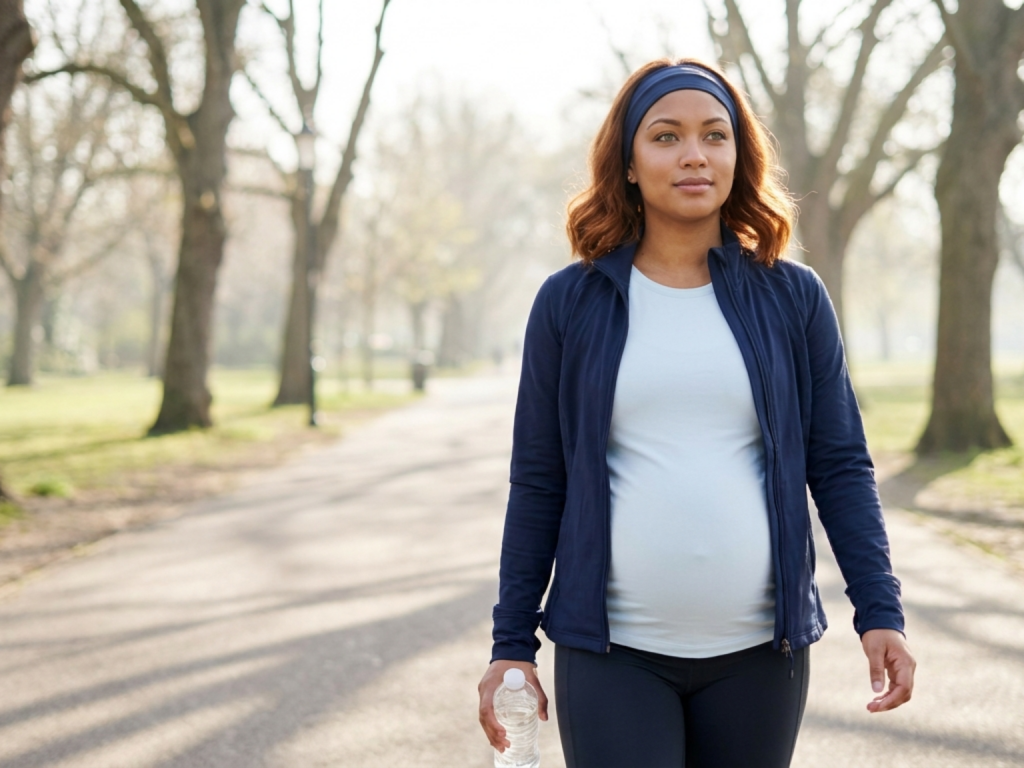
Intro
Pregnancy often brings a flood of advice, and some of it is contradictory: move more, rest more, don’t overdo it, don’t be sedentary. That can make a simple habit like walking feel more complicated than it really is. The idea that walking is automatically unsafe if you do it "too much" is usually an oversimplification, not a medical rule.
For most pregnant people with an uncomplicated pregnancy, walking is a low-impact, adaptable form of activity that is generally well tolerated. The more useful question is not whether walking is inherently dangerous, but whether the dose, pace, and context fit your body and pregnancy. That means listening to symptoms, paying attention to hydration, balance, fatigue, and any clinician-specific restrictions, and recognizing when walking may be becoming too much for you.
Highlights
Walking is usually a safe, low-impact activity in pregnancy, but safety still depends on your individual medical context.
The real risk is often not the number of steps alone; it is overuse, dehydration, overheating, falls, or exercising through warning symptoms.
Research on comfortable low-to-moderate activity does not define a single universal upper limit for everyone, which is why personalization matters.
If walking causes pain, pelvic pressure, dizziness, bleeding, contractions, or unusual shortness of breath, it should be reassessed with a clinician.
Why the myth exists
People often hear the word “exercise” and picture intense workouts, so a long walk can sound deceptively demanding. In pregnancy, that confusion is even more common because fatigue, nausea, pelvic discomfort, and balance changes may make a previously easy routine feel harder. It is understandable that someone might wonder whether a daily walk, or several walks, could somehow be “too much” for the pregnancy itself.
The myth also survives because pregnancy advice is often delivered in absolutes. One source may emphasize staying active, while another warns against overexertion. In reality, walking sits in a middle ground: it is usually gentle enough to be tolerated, yet still a physical load on muscles, joints, circulation, and heat regulation. The question is not whether walking is dangerous by definition, but whether it becomes excessive for the person doing it, at that time, under those conditions.
That is why blanket statements are not very helpful. A comfortable walk for one pregnant person may be exhausting for another, especially if sleep is poor, anemia is present, or the pelvis and lower back are already sore.
What the evidence says about walking
The broader exercise literature supports a nuanced view: low-to-moderate leisure-time activities such as walking at a comfortable pace do not appear to have a clear universal upper safety threshold for most people. In practical terms, that means walking is not automatically harmful simply because it is repeated regularly or done for longer than a very short stroll. The body generally adapts to appropriate, progressive activity.
Walking is also widely recognized as a broadly beneficial form of movement. Reviews of walking highlight its accessibility and the fact that serious adverse events are uncommon in people who are appropriately conditioned. Still, the same literature also notes an important caveat: too much walking can be harmful for people who are not properly conditioned or who push through pain, fatigue, instability, or medical limitations. That balance is the heart of the issue.
For pregnancy, the safest reading of this evidence is not “walk as much as you want no matter what,” and not “walking is dangerous if you do it often.” It is more accurate to say that walking is usually safe, but the total dose, pace, terrain, and symptoms matter. Comfortable, steady walking is generally very different from relentless, exhausting walking that leaves you depleted or sore.
When walking can become too much
Walking becomes “too much” when the body starts signaling that the load is exceeding recovery. In pregnancy, that may show up as pain that escalates rather than settles, persistent stiffness, limping, pelvic girdle pain, calf or foot discomfort, or a sense that every walk takes longer to recover from. Overuse is less about one dramatic event and more about cumulative strain.
Other concerns include dehydration, overheating, and falls. Pregnancy changes circulation, balance, and joint laxity, so a long walk in heat or on uneven ground may be riskier than the same route would have been before pregnancy. People who are not properly conditioned may also reach fatigue sooner, and fatigued muscles can make gait less stable. That raises the chance of awkward steps, tripping, or musculoskeletal irritation.
Symptoms matter as much as mileage. If you are walking through dizziness, chest discomfort, unusual breathlessness, contraction-like cramping, bleeding, or a feeling that something is “not right,” the problem is not simply how far you walked. The safer move is to stop, rest, and contact a healthcare professional for individualized advice.
Pregnancy-specific factors that change the equation
Pregnancy is not one uniform physiologic state. Hydration needs rise, thermoregulation can feel less forgiving, blood volume changes, and the center of gravity shifts as the uterus grows. Those changes can make walking feel easier on one day and unexpectedly difficult the next. In that sense, the same route may be manageable early in pregnancy and much more stressful later on.
Symptoms common in pregnancy can also alter tolerance. Nausea, reflux, round ligament discomfort, lower back pain, pelvic floor heaviness, and swelling can all change how long and how fast a person can walk comfortably. A small amount of discomfort may be a normal training signal, but persistent or worsening pain is not something to ignore. The point is not to be fearful; it is to be observant.
Because pregnancy can change day by day, the most useful standard is a personalized one. If your obstetric clinician has suggested activity restriction, if you have a pregnancy complication, or if a prior condition affects exercise tolerance, then even a low-impact activity should be discussed rather than guessed at. Walking during pregnancy benefits many people, but the right amount is individual.
How to walk safely without overthinking it
A practical approach is to treat walking as a flexible activity rather than a test of endurance. Start with a pace that allows you to speak comfortably, and let the route, duration, and frequency rise gradually if you are feeling well. Comfort matters more than arbitrary goals. If you usually feel better after walking, that is a good sign; if you feel progressively worse, it is a signal to back off.
Simple precautions help. Choose stable shoes, avoid overheating, carry water, and consider softer or flatter surfaces if balance feels off. Shorter walks spread through the day may be easier than one long session, especially if fatigue or pelvic pressure appears later in the day. Rest is not a failure; it is part of appropriate conditioning.
For many pregnant people, safe walking in pregnancy is less about strict limits and more about respecting symptom feedback. That also means not ignoring pain because the activity is “supposed to be safe.” A safe exercise can still become the wrong exercise if it is done in the wrong dose, at the wrong intensity, or through the wrong symptoms. Walking should leave you functioning well, not wiped out.
When to stop and ask a clinician
Walkers are often told to “listen to your body,” but in pregnancy that advice is most useful when paired with clear escalation points. Stop the walk and seek medical guidance if you develop bleeding, fluid leakage, regular contractions, marked shortness of breath, dizziness that does not quickly resolve, chest pain, faintness, or significant pelvic or abdominal pain. These are not signs to power through.
It is also worth checking in if walking routinely causes limping, numbness, persistent swelling that feels abnormal, or pain that affects sleep or daily movement afterward. Recurrent symptoms can mean the current walking pattern is too much for your joints, muscles, or overall pregnancy status. Adjusting volume, pace, or terrain may help, but a clinician or pelvic health specialist can help determine whether the issue needs formal evaluation.
The bottom line is reassuring: the myth that walking is automatically unsafe is not supported. What matters is context, symptoms, and individualized medical advice. Walking is often one of the most reasonable ways to stay active in pregnancy, as long as it is comfortable, progressive, and responsive to warning signs.
Stop and seek medical advice promptly if you notice:
- Vaginal bleeding or fluid leakage
- Regular contractions, cramping, or worsening abdominal pain
- Dizziness, faintness, chest pain, or unusual shortness of breath
- Painful limping, pelvic pressure, or severe joint pain after walking
- Any symptom your obstetric clinician has told you to treat as urgent
Tools & Assistance
- Obstetrician or midwife visit for personalized activity guidance
- Pelvic floor physical therapist if walking triggers pelvic or back pain
- Prenatal exercise class with a qualified instructor
- Symptom and walking log to track distance, pace, pain, and recovery
- Labor and delivery triage or urgent care if red-flag symptoms appear
FAQ
Is walking too much unsafe in pregnancy?
Not by default. For most people, walking is safe, but it can become too much if it causes pain, dizziness, overheating, or other warning symptoms, or if your clinician has given you restrictions.
How do I know if I am overdoing walking?
Signs include pain that worsens with each walk, limp or instability, persistent fatigue, pelvic pressure, dehydration, or symptoms that take a long time to settle afterward.
Should I stop walking if I feel tired?
Mild fatigue can be expected in pregnancy, but persistent exhaustion or a sudden drop in tolerance is worth slowing down and discussing with a healthcare professional.
Can long walks be okay in pregnancy?
They can be, if you are comfortable, well hydrated, not overheated, and free of warning symptoms. The right amount is individual and may change as pregnancy progresses.
Sources
- PubMed Central / NIH — The Goldilocks Zone for Exercise: Not Too Little, Not Too Much
- PubMed Central / NIH — The multifaceted benefits of walking for healthy aging
- Mayo Clinic — Walking: Trim your waistline, improve your health
Disclaimer
This article is for general educational purposes only and is not a substitute for personalized medical care. If you are pregnant and have pain, bleeding, contractions, dizziness, or any concern about exercise safety, contact your obstetric clinician promptly.

















Please log in to leave a comment.