
Intro
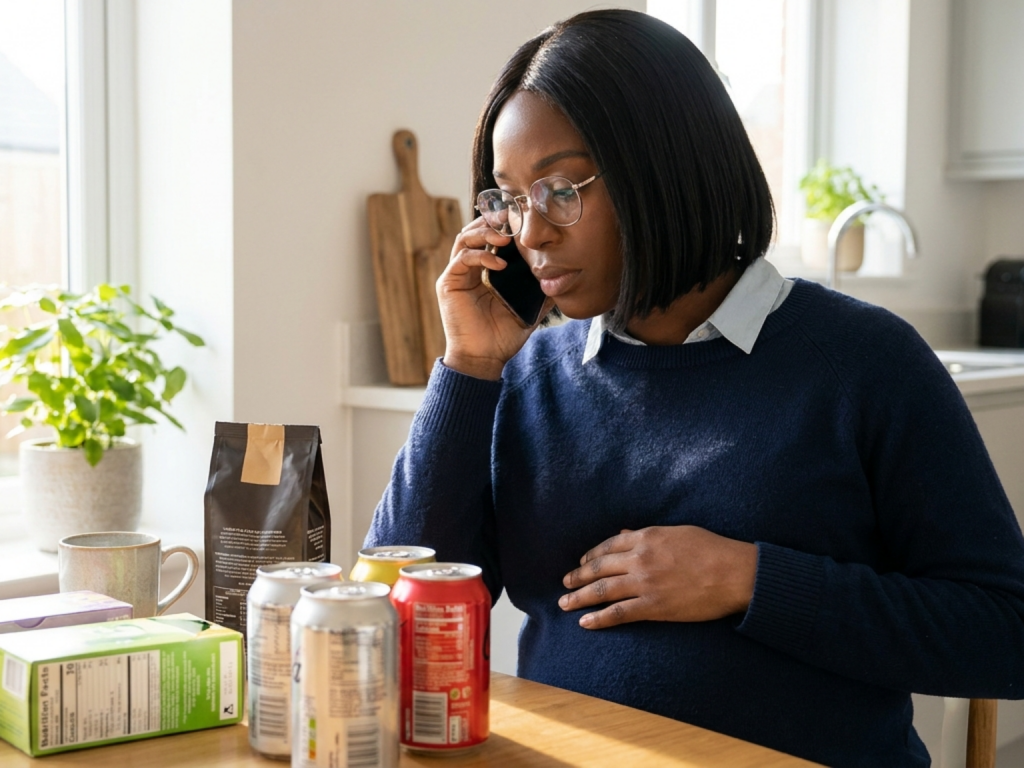
It is completely understandable to worry about caffeine after a positive pregnancy test, especially if you have already had a loss or if you are trying to make every choice “the right way.” The short answer is that the best available evidence does not show that low to moderate caffeine intake is a major cause of miscarriage. In current obstetric guidance, intake below 200 mg per day has not been associated with a clear increase in miscarriage risk.
That said, the research is not perfectly uniform. Some studies have found an association between higher caffeine intake and miscarriage, while others show little indication of harm within the intake ranges people actually reported. Because miscarriage has many possible causes, caffeine is usually only one piece of a much larger picture.
Highlights
Low caffeine intake, especially under 200 mg per day, has not been linked to a clear increase in miscarriage risk in major guidance sources.
Some observational studies suggest higher caffeine intake may be associated with miscarriage, but association is not the same as proven causation.
Miscarriage has many possible causes, so a pregnancy loss should not automatically be blamed on coffee, tea, or other caffeine sources.
If you are worried about your intake, the most useful next step is to review total daily caffeine with your obstetric clinician.
What the evidence says overall
When people ask whether caffeine can cause miscarriage, they are usually asking whether an ordinary pregnancy habit is dangerous enough to change. The most balanced answer is that low to moderate intake has not been shown to be a major contributor to miscarriage. The American College of Obstetricians and Gynecologists states that moderate caffeine consumption of less than 200 mg per day does not appear to be a major contributing factor in miscarriage or preterm birth. MotherToBaby gives a similar message, noting that low caffeine intake under 200 mg per day has not been associated with an increased chance of miscarriage.
That does not mean the question is settled forever or that every study agrees. Rather, the pattern is that risk signals become more noticeable in some studies as intake rises, especially when caffeine consumption is higher than the commonly recommended limit. For someone reading the literature, that can feel contradictory. In practice, clinicians usually translate the evidence into a cautious middle ground: moderate intake is generally considered compatible with pregnancy, while very high intake is something to avoid and discuss with a professional.
Why the research can look conflicting
Most of the data on caffeine and miscarriage come from observational studies, not randomized trials. That matters because people who consume more caffeine may differ in many other ways from people who consume less. For example, nausea, fatigue, or other early pregnancy symptoms can change caffeine habits, and some people reduce intake only after they already suspect a problem. These patterns can make caffeine look more strongly associated with miscarriage than it really is.
A PubMed study on caffeine and miscarriage risk reported little indication of harmful effects within the range of intake reported and suggested that reporting bias may have influenced results among women who had losses before interview. In simpler terms, the timing of interviews and the way intake is remembered or reported can shape the findings. This is why one study may look alarming while another appears reassuring. It is also why experts focus on the whole body of evidence rather than a single headline.
The distinction between association and causation is especially important here. An association means two things occur together more often than expected; it does not prove that one directly causes the other. That nuance is vital in miscarriage research, where many biologic, genetic, and maternal factors can overlap.
What counts as moderate caffeine intake
In pregnancy counseling, the most commonly used cutoff is 200 mg per day. That number is not magical, but it is a practical ceiling supported by major guidance. Staying below it is the usual way clinicians talk about caffeine limits in pregnancy. Because caffeine content varies widely, it is more accurate to think in terms of tracking total daily caffeine rather than counting only coffee.
Total caffeine can come from several places: brewed coffee, espresso drinks, tea, cola, energy drinks, chocolate, and some over-the-counter products or headache medications. A person who has “just one coffee” may still be getting a meaningful dose if the serving is large or especially strong, and another person may reach the same total through smaller amounts spread across the day. That is why a careful review of the whole day’s intake is more useful than trying to judge from a single item.
If you want to make your intake more predictable, it can help to write down everything that contains caffeine for a few days. The goal is not perfection or guilt. It is to get a realistic estimate so you and your clinician can decide whether your pattern is already comfortably within the usual pregnancy range.
If you think you had too much caffeine
It is common to have a day that turns out higher than expected, especially before you know you are pregnant or when fatigue is severe. One higher-caffeine day is not the same as a diagnosis or a guarantee of harm. The evidence is about patterns of intake over time, not a single anxious afternoon or a one-off extra cup.
It can also help to remember that miscarriage has many possible causes. In other words, even when caffeine is part of the story, it is rarely the whole story. Many people feel immediate self-blame after a loss, but that emotional reaction is not the same as medical truth. If you are reading this because you are grieving, please know that looking for a cause is normal. The search for meaning is human, and it does not mean you did something wrong.
If you are trying to reduce caffeine, the most practical approach is usually to lower intake in a way that you can maintain. For some people, that means switching part of the day to decaffeinated options or choosing smaller servings. For others, it means simply becoming more aware of hidden sources. If changing intake feels difficult because of headaches, nausea, or work demands, bring that up with your obstetric clinician rather than struggling alone.
When miscarriage symptoms need urgent evaluation
Caffeine itself usually is not an emergency. However, pregnancy symptoms that might signal miscarriage or another urgent problem should always be taken seriously. Heavy vaginal bleeding, severe abdominal or pelvic pain, fainting, shoulder pain, or fever deserve prompt medical assessment. These symptoms can have several causes, including ectopic pregnancy, which needs urgent attention.
If you have any of those warning signs, do not wait to see whether they improve on their own. Contact your maternity care team, urgent care, or emergency services according to local guidance. Early evaluation matters because the right diagnosis can change what needs to happen next, and because not every early-pregnancy bleed means miscarriage.
Even if the symptoms turn out to be benign, it is better to be checked than to sit with uncertainty. Pregnancy loss can be emotionally overwhelming, and having a clinician assess the situation can provide both medical clarity and emotional relief.
A practical, compassionate way to think about caffeine
For most pregnant people, the goal is not to eliminate every trace of caffeine in a panic. The goal is to make a reasonable, informed choice based on the best evidence we have. That means recognizing that low intake has not been associated with an increased miscarriage risk, while also respecting the advice to avoid higher intake. It also means accepting that pregnancy risk is never controlled by one ingredient alone.
If you are unsure where your intake falls, a helpful conversation with your obstetrician, midwife, or family doctor can be very specific. You can ask how they interpret the caffeine limits in pregnancy, whether they want you to count all sources, and what matters most in your situation. Some people with migraine, anxiety, reflux, or sleep problems may also notice benefits from lowering caffeine for reasons beyond miscarriage risk.
Most importantly, try to avoid turning this question into a test of whether you are “careful enough.” Pregnancy often comes with a lot of moral pressure, but caffeine is not a reliable measure of how much you care about your baby. A supportive, evidence-based plan is usually far more helpful than guilt.
Seek urgent medical care if you have:
- Heavy vaginal bleeding or bleeding with large clots.
- Severe or one-sided abdominal or pelvic pain.
- Fainting, dizziness, shoulder pain, or trouble breathing.
- Fever, chills, or a foul-smelling discharge.
- Any sudden symptom pattern that makes you worry about ectopic pregnancy or pregnancy loss.
Tools & Assistance
- Pregnancy visit with your obstetrician, midwife, or family doctor to review total caffeine intake.
- A simple 3-day caffeine log that includes coffee, tea, cola, chocolate, and energy drinks.
- Medication and supplement review with a pharmacist to check for hidden caffeine sources.
- Urgent care or emergency evaluation if you develop heavy bleeding or severe pain.
FAQ
Can caffeine directly cause miscarriage?
At low to moderate intake, current guidance does not show caffeine as a major cause of miscarriage. Some studies suggest higher intakes may be associated with increased risk, but that does not prove direct causation.
Is it safe to have less than 200 mg of caffeine per day?
That level is generally considered acceptable in pregnancy by major guidance, and it has not been associated with an increased chance of miscarriage in the sources used here.
If I had too much caffeine before I knew I was pregnant, did I harm the pregnancy?
Not necessarily. One higher-caffeine day or a brief period of higher intake does not automatically mean harm. If you are worried, discuss the details with your clinician.
Does decaf count?
Yes, decaf can contain some caffeine, though usually much less than regular coffee. It is still worth counting as part of your total daily intake if you are trying to stay under a limit.
Should I stop caffeine completely if I am pregnant?
Not everyone needs to eliminate caffeine entirely. Many clinicians focus on staying below the usual limit and keeping intake consistent and moderate, based on your own health history.
Sources
- American College of Obstetricians and Gynecologists — Moderate Caffeine Consumption During Pregnancy
- PubMed — Caffeine and miscarriage risk
- MotherToBaby / NCBI Bookshelf — Caffeine - MotherToBaby | Fact Sheets
Disclaimer
This article is for educational purposes only and does not replace medical advice, diagnosis, or treatment. If you are pregnant, have bleeding or pain, or are worried about caffeine exposure, contact a licensed healthcare professional promptly.















Please log in to leave a comment.