
Intro
It is completely understandable to worry if you have felt overheated in pregnancy, especially after a hot day, a warm bath, or a fever. The short answer is that repeated or sustained overheating can be harmful, and the concern is greater when the mother’s core temperature rises enough that the body cannot cool itself effectively.
Not every warm environment will harm the baby. The key issues are how high the temperature gets, how long the exposure lasts, and when in pregnancy it happens. The strongest concerns are with prolonged heat exposure, fever, hot tubs or saunas, and situations that raise core body temperature in pregnancy for a meaningful period.
Highlights
Heat exposure in pregnancy has been associated with preterm birth, stillbirth, low birth weight, and some birth defects; the evidence is strongest when exposure is intense or prolonged.
The first trimester is the most sensitive period because organ formation is active, so maternal hyperthermia in early pregnancy deserves extra caution.
A single warm day is not the same as dangerous overheating; duration, humidity, and the rise in core temperature matter more than discomfort alone.
Fever from illness is also relevant in pregnancy and should not be ignored, especially if it is persistent or accompanied by other symptoms.
Prevention is usually practical: hydration, cooling, rest, and avoiding extreme heat sources can reduce risk substantially.
What counts as overheating in pregnancy?
In pregnancy, overheating is more than simply feeling hot or flushed. Clinically, the issue is hyperthermia, meaning an abnormally elevated body temperature, or a sustained rise in the mother’s core body temperature in pregnancy. That can happen in a hot room, during exercise in heat, after prolonged sun exposure, in a hot tub or sauna, or with fever from infection.
The body usually protects itself through sweating, vasodilation, and increased skin blood flow. Problems arise when those cooling mechanisms are overwhelmed or impaired by humidity, dehydration, illness, or prolonged exposure. In that setting, the mother may become dizzy, weak, nauseated, or faint, and the fetus is exposed to the physiologic effects of maternal heat stress as well.
It helps to separate brief warmth from true overheating. Feeling uncomfortable on a hot afternoon is common; sustained heat stress that changes physiology is the part that raises medical concern.
Can overheating harm the baby?
Yes, it can. Large public health and scientific reviews have linked heat exposure during pregnancy with adverse outcomes including preterm birth, stillbirth, low birth weight, small-for-gestational-age infants, and some congenital anomalies. A recent systematic review and meta-analysis also found associations with hypertensive disorders in pregnancy. The CDC similarly notes that heat exposure in any trimester has been associated with preterm birth, stillbirth, low birth weight, and some birth defects, with particular concern when exposure occurs in the first trimester.
That said, these findings are mostly based on observational studies, so they show association rather than a simple one-to-one cause for every heat episode. Still, the signal is consistent enough that clinicians treat substantial overheating as a meaningful risk factor, especially when it is prolonged, repeated, or combined with dehydration or illness.
For a medically literate reader, the important takeaway is this: the placenta and fetus are not isolated from maternal physiology. When maternal temperature, hydration, and circulation are stressed, fetal growth and pregnancy maintenance can be affected.
Why timing and duration matter
The timing of exposure matters because fetal development is not equally vulnerable throughout pregnancy. Maternal hyperthermia in early pregnancy is of special concern because organogenesis is underway, and the neural tube is closing during a narrow developmental window. Excess heat during this period has been studied in relation to neural tube defects and other developmental concerns.
Later in pregnancy, overheating may still matter, but the mechanisms are often different. Heat stress can contribute to dehydration, reduced maternal blood volume, changes in uteroplacental perfusion, and uterine irritability. In practical terms, that may increase the chance of contractions or make a pregnancy already at risk for preterm birth more fragile. The risk also tends to rise with higher temperatures and longer exposures, rather than a brief, well-tolerated warm period.
Humidity, direct sun, poor ventilation, heavy clothing, and limited access to fluids all amplify risk. Even if someone feels they are “managing fine,” the physiologic load can still be significant if the core temperature keeps climbing.
Common situations that raise concern
Some of the most important situations are easy to underestimate. Hot tubs, saunas, steam rooms, and very hot baths can raise body temperature quickly, especially if the water or air is hot enough to prevent normal cooling. Questions about safe warm baths in pregnancy usually come down to temperature, duration, and whether the bath is truly warm versus hot.
Outdoor heat waves can also be risky, particularly when combined with walking long distances, standing in direct sun, or being in a poorly ventilated space. Driving or sitting in a parked car without cooling is especially dangerous because temperature can rise rapidly. Exercising in heat deserves attention as well: moderate movement is often healthy in pregnancy, but if the environment is hot and humid, the body may not dissipate heat efficiently enough.
Fever from infection is another category that deserves respect. A fever is not the same as environmental heat, but it also elevates core temperature. In pregnancy, persistent fever should be discussed with a clinician because the underlying illness and the temperature itself may both matter.
How to lower risk without overcorrecting
Most people do not need to live in fear of every warm day. The goal is to reduce sustained heat exposure and support the body’s cooling system. Practical measures include drinking fluids regularly, resting in shaded or air-conditioned spaces, wearing loose and breathable clothing, and taking cooling breaks before you feel exhausted or dizzy. If you must be outdoors, plan for shorter intervals, a cooler time of day, and access to water.
It also helps to think ahead. Grocery trips, commutes, and errands can be rearranged to avoid peak heat. At home, fans and air conditioning can make a major difference, and a cool shower may be more helpful than trying to “push through” discomfort. If you are exercising, reduce intensity, stop at the first sign of overheating, and avoid high-heat environments.
If you have a fever, ask your maternity care team how they want you to manage it rather than guessing. The safest plan often depends on trimester, the cause of the fever, and your personal pregnancy risk factors.
When to contact a clinician or seek urgent help
Get medical advice promptly if you develop a fever that does not settle, feel faint, have ongoing vomiting, or cannot keep fluids down. Seek urgent assessment for confusion, severe headache, chest pain, shortness of breath, contractions, reduced fetal movement, or signs of dehydration such as very dark urine or minimal urination. Those symptoms may reflect heat illness, infection, or another pregnancy complication that should not be managed at home alone.
If you were exposed to extreme heat for a long period and you are worried about the baby, it is reasonable to call your obstetrician, midwife, or labor and delivery triage line. They can help decide whether you need evaluation based on gestational age, symptoms, and the type of exposure.
Try not to blame yourself for a single episode. The more important question is whether the exposure was severe enough to raise core temperature or was followed by symptoms. When in doubt, check in early; reassurance is often easier when a clinician can review the details.
When heat needs urgent attention
- Fainting, confusion, or trouble staying awake can signal heat illness and needs urgent care.
- Fever in pregnancy should be discussed promptly, especially in the first trimester or if it persists.
- Contractions, reduced fetal movement, or severe dehydration after heat exposure need immediate evaluation.
- Do not stay in a hot tub, sauna, steam room, or parked car to try to “sweat it out.”
- If you cannot cool down after resting and drinking fluids, seek medical help.
Tools & Assistance
- Your obstetrician, midwife, or maternity care team
- Labor and delivery triage or urgent pregnancy assessment services
- A reliable thermometer for checking fever
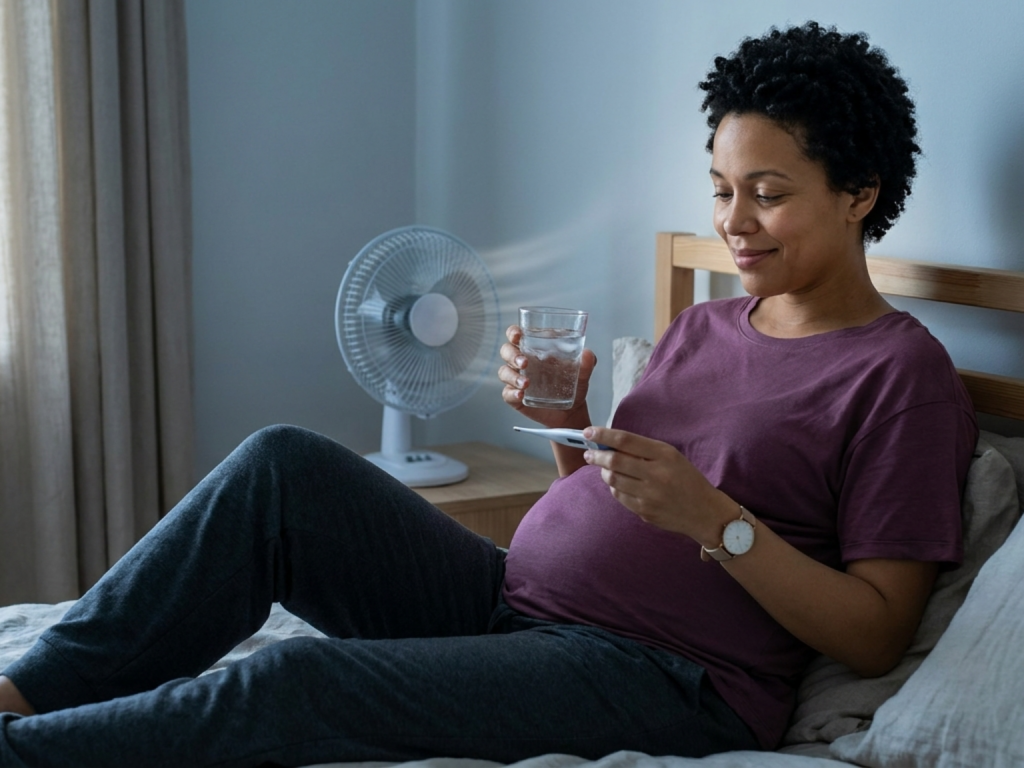
- Air conditioning, a fan, and a cool water bottle
- A simple heat-exposure plan for hot days and travel
FAQ
Is a hot day automatically dangerous for the baby?
No. Brief warmth is not the same as harmful overheating. Risk rises when heat exposure is intense, prolonged, or causes a sustained increase in core temperature.
Are hot baths, saunas, or hot tubs safe in pregnancy?
They can be risky because they may raise core temperature quickly. Ask your clinician for individualized guidance, especially if you are in the first trimester or have any pregnancy complications.
Can a fever hurt the baby?
Fever can matter in pregnancy, both because of the elevated temperature and because it may reflect an infection that needs treatment. Contact your clinician if you have a persistent fever.
When is overheating most concerning?
The first trimester is the most sensitive period, but heat exposure in any trimester has been associated with adverse outcomes. The length and severity of exposure also matter.
What should I do if I think I overheated?
Move to a cool place, rest, hydrate, and monitor symptoms. If you feel faint, develop contractions, or do not improve quickly, contact a clinician or seek urgent care.
Sources
- Centers for Disease Control and Prevention — Clinical Overview of Heat and Pregnancy
- Nature Medicine — A systematic review and meta-analysis of heat exposure impacts on maternal, fetal and neonatal health
- MotherToBaby / NCBI Bookshelf — Fever / Hyperthermia - MotherToBaby | Fact Sheets
Disclaimer
This article is for general educational purposes and is not a diagnosis or a substitute for individualized medical advice. If you are pregnant and worried about heat exposure, fever, or any new symptoms, contact your healthcare professional.















Please log in to leave a comment.