
Intro
Cleaning a baby’s ears can feel nerve-racking, especially when you notice visible wax or worry that bath water has collected near the ear. The reassuring news is that most babies do not need deep ear cleaning. In typical care, the safest approach is to clean only the outer ear and the skin behind the ear, while leaving the ear canal alone.
Baby earwax, or cerumen, is usually protective rather than dirty. It helps lubricate the ear canal, traps debris, and supports the ear’s natural self-cleaning mechanism. A calm, gentle routine with warm water and a soft cloth is usually enough, and any concern about pain, discharge, hearing, or suspected blockage should be discussed with a pediatrician or qualified healthcare professional.
Highlights
Clean only the outside of your baby’s ear; do not insert cotton swabs, cloth corners, fingers, or tools into the ear canal.
Use warm water and a soft, soap-free washcloth, then pat the outer ear and surrounding skin dry.
Earwax is often normal and protective, and attempts to remove it from the canal can push it deeper or injure delicate tissues.
Seek medical guidance if you notice ear pain, fever, foul-smelling drainage, bleeding, swelling, or new hearing concerns.
Understanding baby earwax and the ear canal
It is very understandable to want every part of your baby to be clean, including the ears. However, the ear canal is different from skin folds, the diaper area, or the scalp. It is a narrow, sensitive structure lined with delicate epithelium and protected by cerumen, commonly called earwax. Cerumen is produced by glands in the outer part of the ear canal. It has a lubricating function, helps trap dust and small particles, and contributes to a mildly protective environment.
In many infants, wax gradually migrates outward on its own through normal jaw movement, crying, feeding, sucking, and growth of the ear canal skin. This is why you may see a small amount of yellow, orange, tan, or brown wax near the ear opening. That visible wax is not automatically a sign of poor hygiene, infection, or a need for removal. In fact, repeated attempts to clean inside the canal may disrupt the normal self-cleaning mechanism.
The baby ear canal is shorter and more delicate than an adult’s, and the tympanic membrane, or eardrum, sits beyond the canal. Inserting objects may abrade the canal lining, cause bleeding, introduce bacteria, or push wax deeper toward the eardrum. A deeper wax plug can be harder to remove and may require clinical assessment. For routine care, the key principle is simple: clean what you can see on the outside, and leave the inside to its own physiology unless a healthcare professional advises otherwise.
What you need for safe outer-ear cleaning
The safest supplies are minimal. You do not need special ear tools, scoops, spiral cleaners, or cotton swabs for the canal. A clean, soft washcloth and warm water are usually enough. Choose warm not hot water, because infant skin can be irritated or burned more easily than adult skin. If you are already doing gentle face cleansing for babies or a bath routine, the outer ears can be included as a brief final step.
Avoid using soap directly on or inside the ears during routine cleaning. Soap residue may irritate the thin skin of the outer ear and can be uncomfortable if it drips toward the ear opening. If cleanser or shampoo accidentally runs near the ear during a bath, wipe it away with a damp cloth and dry the area gently. This is especially relevant when washing hair, because liquid can travel along the scalp and collect behind the ears.
- Use a soft, clean washcloth reserved for baby care when possible.
- Wet the cloth with warm water, then wring it out well so it is damp rather than dripping.
- Have a dry towel nearby for patting the ear and skin folds dry.
- Wash your hands first; hand hygiene before newborn care reduces the chance of transferring germs to irritated skin.
If your baby has eczema, very sensitive skin, a history of ear surgery, ear tubes, recurrent ear infections, or current ear symptoms, ask your pediatrician whether any modification to routine cleaning is appropriate. The same gentle method may still apply, but individualized advice is safer for babies with medical history involving the ears or skin barrier.
Step-by-step: how to clean the outside of a baby’s ears
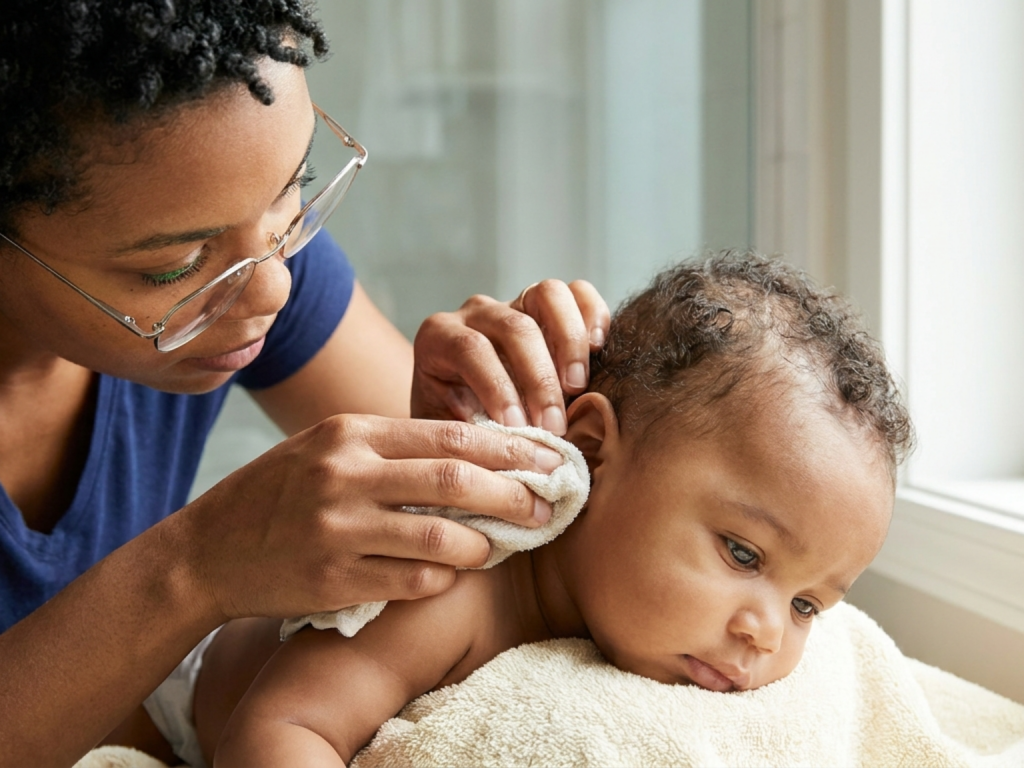
Choose a time when your baby is calm, warm, and supported. Many caregivers find it easiest during or just after a bath, before the baby becomes tired or hungry. Keep one hand supporting the head and neck if your baby is very young. There is no need to pull the ear open or try to look deeply into the canal.
- Wash your hands and prepare a soft washcloth with warm water only.
- Wring the cloth thoroughly. It should not drip into the ear canal.
- Gently wipe the outer ear, including the curved visible parts of the pinna, using light pressure.
- Wipe behind the ear where milk, spit-up, sweat, or lint can collect in the crease.
- If there is visible wax at the very entrance of the ear, wipe only what is already outside or easily reachable without entering the canal.
- Pat the outer ear and the skin behind the ear dry with a clean towel.
Think of this as skin care, not canal cleaning. You are removing surface moisture and debris from the external ear and adjacent folds. If your baby turns away, fusses, or startles, pause and try again later. A firm cleaning attempt is not necessary and can make the baby associate ear care with discomfort.
Drying matters because persistent moisture in skin creases can contribute to irritation, maceration, or local overgrowth of microorganisms. The goal is not to make the ear canal dry; rather, it is to leave the outer ear and the area behind the ear comfortable and free from trapped wetness. If bath water splashes near the ear, simply dry the visible outer area. Do not insert anything to absorb moisture from inside the canal.
What not to do when cleaning baby ears
The most important safety rule is to never insert anything into the ear canal unless a clinician specifically instructs you and explains how to do it. This includes cotton swabs, rolled tissue, washcloth corners, fingernails, hair pins, ear picks, suction devices, or so-called baby ear cleaning tools. Even products marketed for infants can be unsafe if they enter the canal or encourage deeper manipulation.
Cotton swabs are a common source of accidental injury because a baby may suddenly turn, kick, or startle. The swab can scratch the canal wall or, rarely, injure the eardrum. Swabs can also push wax inward, converting normal wax into impacted cerumen. Impacted wax can sometimes cause fullness, reduced hearing, discomfort, or interfere with an examination, but only a healthcare professional can determine whether removal is needed and how to do it safely.
Do not use ear candles. They are not recommended for infants and may cause burns, wax obstruction, or injury. Do not place oils, peroxide, alcohol, herbal drops, or over-the-counter wax softeners into a baby’s ear unless your pediatrician recommends them for that child. A baby with a perforated eardrum, ear tubes, or active infection may be harmed by inappropriate liquids in the ear.
Also avoid flushing the ear canal with bath water, syringes, droppers, or spray bottles at home. Excess water can be uncomfortable, may irritate the canal, and is not necessary for routine hygiene. If wax needs to be removed from the canal, it should be done only under medical guidance, because the correct approach depends on the baby’s age, symptoms, ear anatomy, and medical history.
When earwax is normal and when to ask for help
Small amounts of visible wax are usually normal. Color and texture vary: wax may be soft, sticky, flaky, dry, yellowish, orange, or brown. Some babies simply produce more visible wax than others. If your baby is comfortable, feeding well, responding to sounds as expected, and has no drainage or fever, routine outer-ear wiping is generally all that is needed.
It is reasonable to contact your pediatrician if you think wax is blocking the ear opening, if your baby seems uncomfortable when the ear is touched, or if you notice a sudden change in hearing responses. In infants, hearing concerns can be subtle: not startling to loud sounds, not turning toward voices at an expected age, or a change from the baby’s usual responses. These observations do not diagnose a problem, but they are worth discussing.
Seek prompt medical advice for ear drainage that looks like pus, has a foul odor, contains blood, or occurs with fever, persistent crying, poor feeding, unusual sleepiness, swelling around the ear, or redness spreading on the outer ear. Pulling at the ear alone is not specific; babies may do this when tired, teething, exploring their body, or uncomfortable for many reasons. Still, if ear pulling is accompanied by systemic symptoms or clear distress, a clinician should assess the situation.
If a pediatrician prescribes or recommends ear drops, ask for precise instructions. Confirm which ear, how many drops, how often, and for how many days. Ask whether the drops should be warmed in the hand first and how to position your baby safely. Use ear drops only as directed, and do not continue or restart them later without medical advice.
Making ear care part of a calm hygiene routine
Safe baby ear cleaning works best when it is brief and predictable. You might clean the outer ears a few times per week during bathing, or whenever you see milk residue, lint, or sweat behind the ear. Daily scrubbing is unnecessary and may irritate sensitive skin. For many families, a gentle wipe and dry after baths is enough.
Because babies are sensitive to temperature and handling, prepare everything before you begin. Keep the room comfortably warm, use warm not hot water, and speak softly while cleaning. If your baby has skin folds behind the ears that become red or damp, drying carefully after baths and feeds may help reduce irritation. If redness persists, cracks, oozes, or seems painful, check with a healthcare professional rather than increasing cleaning intensity or adding medicated products on your own.
Coordinate ear care with nearby routines, such as washing the face, rinsing the scalp, and drying the neck folds. This helps you avoid repeated handling and reduces the chance of missing the area behind the ears, where residue commonly accumulates. If you use mild baby shampoo on the scalp, rinse carefully and wipe around the ears afterward so cleanser does not remain on the skin.
Most importantly, give yourself permission not to over-clean. Many caregivers worry that visible wax means they are neglecting hygiene, but earwax is part of the body’s protective design. Your role is to keep the outer ear clean, dry the surrounding skin, avoid trauma, and seek professional care when symptoms suggest something beyond routine hygiene.
Call a healthcare professional if you notice
- Fever, persistent inconsolable crying, poor feeding, or unusual sleepiness with ear concerns.
- Blood, pus-like fluid, foul-smelling drainage, or fluid leaking from the ear.
- Swelling, spreading redness, or significant tenderness around the outer ear.
- Suspected hearing change, lack of expected response to sound, or sudden behavioral change.
- Wax that appears to block the canal or any concern after ear surgery, ear tubes, or known eardrum problems.
Tools & Assistance
- Soft soap-free baby washcloth
- Warm water and a clean dry towel
- Pediatrician or family doctor for ear symptoms or wax concerns
- Urgent care or emergency services for severe symptoms or injury
FAQ
Can I use cotton swabs to clean my baby’s ears?
Use cotton swabs only on the outside folds if you choose, and never insert them into the ear canal. A damp washcloth is usually safer for routine outer-ear cleaning.
How often should I clean my baby’s ears?
There is no need for aggressive daily cleaning. Wiping the outer ear and behind the ear during baths or when residue is visible is usually enough.
Is baby earwax a sign of infection?
Not usually. Earwax is often normal and protective. Drainage that is foul-smelling, bloody, pus-like, or associated with fever or distress should be assessed by a clinician.
Can I put oil or peroxide in my baby’s ear to remove wax?
Do not put oil, peroxide, alcohol, or wax-softening drops in a baby’s ear unless a pediatrician specifically recommends it for your child.
What if water gets in my baby’s ear during a bath?
Gently dry the visible outer ear with a towel. Do not insert anything into the canal to absorb water, and contact a clinician if your baby has pain, drainage, or a relevant ear history.
Sources
- Pampers — How to Clean Baby's Ears, Eyes & Nose - Newborn
- The Bump — How to Clean Baby Ears
- Dr. Talbots — How to Clean Infant Ears – Safe & Easy Methods
Disclaimer
This article is for informational purposes only and does not replace medical evaluation, diagnosis, or treatment. Consult your baby’s pediatrician or another qualified healthcare professional with any ear symptoms, injury, or care concerns.














Please log in to leave a comment.