
Intro
Creative hobbies are more than a pleasant way to fill an afternoon. For children, making, building, cooking, drawing, gardening, storytelling, music, drama, and other expressive activities can support emotional regulation, cognitive flexibility, motor coordination, language, confidence, and social connection.
Families often wonder whether a hobby is “worth it,” especially when schedules are full or a child seems easily frustrated. A supportive approach is to view creative hobbies not as performance training, but as developmentally appropriate opportunities for exploration, recovery, and connection. If a child has medical, developmental, sensory, mental health, or learning concerns, individualized advice from a pediatrician, occupational therapist, psychologist, speech-language pathologist, or other qualified professional can help adapt activities safely.
Highlights
Creative hobbies can support emotional well-being, self-efficacy, language, attention, fine motor skills, and social participation.
The best hobby is usually not the most impressive one; it is the one a child can return to with curiosity, manageable challenge, and enough adult support.
Children benefit when adults separate creativity from perfection, grades, competitions, or social media comparison.
Medical and developmental needs matter. Sensory sensitivities, fatigue, chronic illness, neurodevelopmental differences, anxiety, or motor difficulties may require thoughtful adaptations.
What creative hobbies mean for children
A creative hobby is any repeated, voluntary activity in which a child uses imagination, skill-building, and personal choice to make, transform, perform, or design something. It may be visual, verbal, sensory, physical, musical, digital, culinary, or nature-based. Drawing, painting, clay, collage, sewing, woodwork, simple robotics, gardening, cooking, journaling, comics, storytelling, dance, theater games, photography, and music all belong in this broad category.
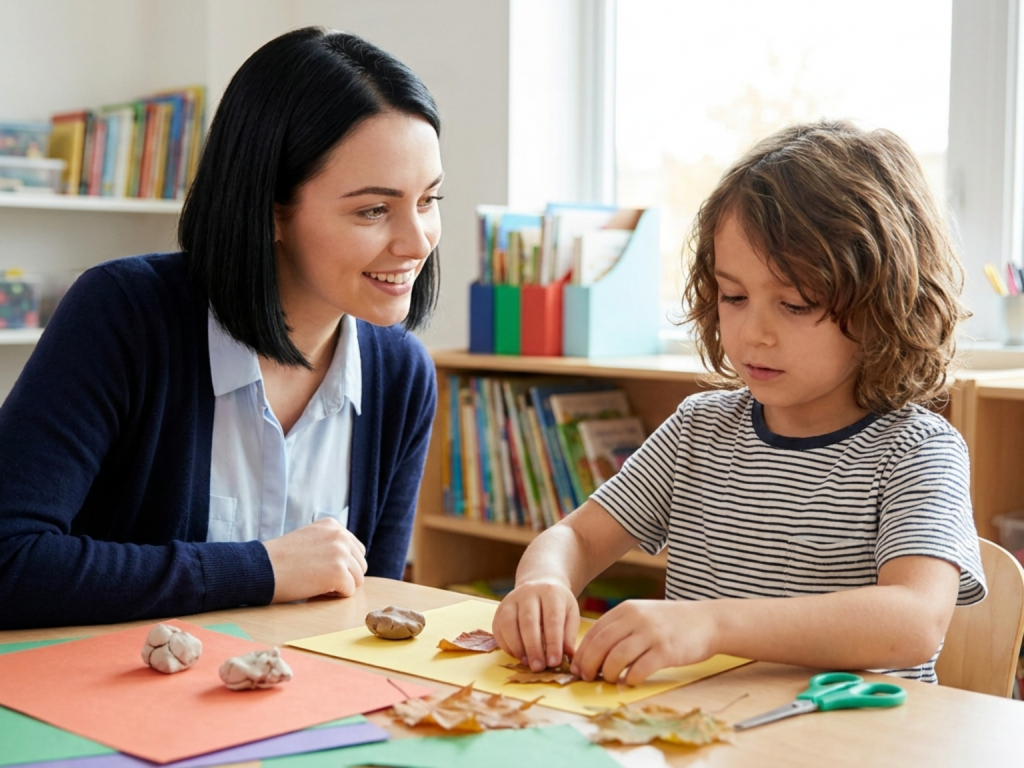
The word “creative” can accidentally sound exclusive, as if only highly artistic children qualify. In childhood, creativity is better understood as experimentation: trying an idea, noticing what happens, revising, combining materials, and tolerating uncertainty. A child who builds a cardboard city, invents a soup recipe, writes a silly song, or arranges leaves by color is practicing the same core processes involved in problem-solving and adaptive thinking.
Creative hobbies differ from assigned schoolwork because they usually include more autonomy. Autonomy is developmentally important because it allows children to experience agency: “I can choose, try, change, and improve.” This does not mean adults disappear. Many children need scaffolding, meaning gentle structure such as setting out materials, modeling one step, helping clean up, or breaking a project into smaller parts. The aim is not to remove challenge, but to keep challenge within a tolerable range.
Why creative hobbies may support mental health
Research in adults and mixed populations has linked creative leisure activities with better well-being, including lower depressive and anxiety symptoms and higher life satisfaction. Studies of hobbies also describe potential benefits for stress reduction, social functioning, and perceived health. These findings should be applied cautiously to individual children, because a hobby is not a treatment for a psychiatric disorder and does not replace clinical care. Still, the mechanisms are relevant to child development.
Creative activities may help children regulate arousal. Repetitive hand movements in drawing, knitting, clay work, or gardening can provide predictable sensory feedback. Music, movement, and dramatic play can give safe channels for emotional expression. Storytelling and journaling can help children organize experiences into language, which may reduce the intensity of confusing feelings.
Hobbies also build mastery. Mastery is not the same as winning. It means noticing that practice changes ability: a child’s lines become steadier, a song becomes easier, a plant grows, a recipe improves. This can strengthen self-efficacy, the belief that effort and strategy can influence outcomes. For children who struggle academically, socially, or medically, a creative domain may offer a less stigmatizing space to feel capable.
Socially, group hobbies can support how children make friends by giving them shared attention and a common activity. A child who finds direct conversation difficult may connect more easily while building scenery, cooking with a peer, or trading ideas for a comic. Adult coaching can help children practice turn-taking, flexible thinking, repair after disagreement, and respectful feedback.
Choosing hobbies by age and developmental stage
Children do not all mature at the same pace, so age suggestions should be flexible. Thinking about how children learn by age can help caregivers match the activity to the child’s attention span, motor control, language ability, and need for supervision.
Infants and toddlers benefit from sensory-rich, safe exploration: finger painting with non-toxic materials, water play, stacking blocks, songs with gestures, tearing paper, and simple pretend play. The goal is not a finished product. It is cause and effect, sensory integration, joint attention, and early motor planning. Choking hazards, unsafe art supplies, sharp tools, and unsupervised food preparation must be avoided.
Preschool children often enjoy pretend play, dress-up, simple crafts, rhythm instruments, playdough, gardening with large tools, and storytelling. They may have big ideas but limited frustration tolerance. Adults can offer two choices, demonstrate one step, and accept unexpected results. “You made the sky purple” is usually more supportive than “The sky should be blue.”
School-age children can handle more sequencing: beginner sewing, model building, cooking with measured ingredients, comics, photography, dance routines, choir, pottery, coding games, or woodworking with close supervision. This is a good time to introduce planning, safety routines, and cleanup as part of the creative process.
Adolescents may use hobbies for identity, emotional processing, peer connection, and stress recovery. Music production, creative writing, theater, digital art, fashion design, advanced cooking, community gardening, or film-making can be meaningful. Privacy and respect matter, especially for journals, songs, and art that contain emotional material. Adults should stay available without turning every creative expression into an interrogation.
Arts, crafts, music, writing, cooking, and gardening
Different hobbies strengthen different clusters of skills. Visual arts and crafts support fine motor coordination, bilateral hand use, visual-spatial reasoning, planning, and tolerance of ambiguity. For children with dysgraphia, developmental coordination disorder, arthritis, hypermobility, or other motor challenges, adaptive grips, larger tools, slanted surfaces, breaks, or occupational therapy guidance may reduce strain.
Music and rhythm activities can support auditory discrimination, working memory, sequencing, breath control, and social synchrony. Singing together, drumming patterns, or learning an instrument can be joyful, but practice expectations should be realistic. Pain, persistent hoarseness, dizziness with breathing exercises, or distress around performance deserves attention from an appropriate clinician or instructor.
Writing, journaling, and storytelling help children organize thoughts, strengthen language pathways, and experiment with perspective. A child can dictate stories, draw storyboards, use speech-to-text, or co-create tales with an adult. These adaptations are especially helpful when written output is limited by motor fatigue, spelling difficulty, or expressive language delays.
Cooking blends creativity with mathematics, chemistry, sensory exploration, executive function, and family culture. Measuring, comparing textures, predicting melting or thickening, and sequencing steps all exercise cognitive skills. Cooking also intersects with a healthy diet for children, but it should not become a pressure campaign around eating. A selective eater may first tolerate washing vegetables, stirring batter, or smelling herbs before tasting.
Gardening offers biology, patience, responsibility, and outdoor sensory input. Planting seeds, watering, observing insects, and harvesting herbs can be calming and concrete. Families should consider sun protection, safe soil handling, allergies, asthma triggers, pesticides, and appropriate hand hygiene.
Supporting motivation without pressure
Many children stop hobbies not because they lack talent, but because the emotional climate becomes too heavy. Excessive correction, comparison with siblings, public posting without consent, or rapid escalation to competitions can turn a restorative activity into another performance demand. Children are more likely to persist when adults notice effort, strategy, and enjoyment rather than only the final product.
Helpful adult phrases include: “What part was most interesting?” “What might you try next time?” “Do you want help or do you want me to watch?” and “It is okay for this to be unfinished.” These comments promote metacognition, the child’s ability to think about their own thinking, without implying that the work must be perfect.
It is also useful to avoid rigid learning styles in children, such as assuming a child is only a “visual learner” or only a “hands-on learner.” Most children benefit from multimodal experiences: seeing, hearing, moving, speaking, and making. A child may draw a plan, talk through steps, watch a demonstration, and then build. The key is matching the strategy to the task and the child’s current needs, not labeling the child permanently.
For a child who quits quickly, reduce the activation energy. Keep materials visible but not overwhelming. Offer projects that take 10 to 20 minutes. Begin alongside the child. For a perfectionistic child, model mistakes deliberately: spill a little flour, draw an uneven line, then show repair. For a child who seeks novelty, rotate materials rather than buying constantly. For a child who hyperfocuses and resists transitions, use visual timers, previews, and predictable stopping points.
Adapting hobbies for neurodiversity, disability, and health needs
Creative hobbies should be accessible, not reserved for children with easy motor skills, calm sensory systems, or abundant energy. Children with autism, ADHD, anxiety disorders, intellectual disability, cerebral palsy, chronic pain, epilepsy, visual or hearing impairment, or complex medical conditions may enjoy the same hobbies with modifications. The safest adaptations are individualized and may require professional input.
For sensory-sensitive children, consider low-odor materials, gloves, noise-reducing headphones, predictable textures, or a quiet workspace. For sensory-seeking children, clay, water, large-scale painting, drumming, dance, or digging in soil may be satisfying, with clear boundaries for safety. For children with ADHD, short projects, movement breaks, visible steps, and immediate feedback can reduce overload. For anxious children, private practice before group participation may help.
Motor adaptations can include spring-loaded scissors, loop scissors, thicker brushes, non-slip mats, tabletop easels, seated gardening containers, lightweight instruments, or pre-cut materials. Children with fatigue may need pacing: shorter sessions, rest breaks, and permission to leave projects unfinished. Children with food allergies, diabetes, swallowing disorders, or gastrointestinal conditions need medically appropriate cooking activities and supervision.
Some creative content can reveal distress. Dark themes in art or writing are not automatically pathological, especially in adolescents exploring complex emotions. However, repeated references to self-harm, hopelessness, abuse, violence, eating-disorder behaviors, or substance use should be taken seriously and discussed calmly with a healthcare or mental health professional. If there is immediate safety concern, seek urgent help.
Making creativity part of family life
Creative hobbies do not require a dedicated studio or expensive supplies. A small basket of paper, washable markers, tape, recycled cardboard, measuring spoons, seed packets, fabric scraps, or rhythm objects can be enough. The most important ingredient is a predictable invitation: a time when the child can explore without being rushed, mocked, or evaluated.
Families can build rituals around creativity: Sunday soup-making, bedtime story circles, balcony gardening, a weekly music hour, repair-and-make afternoons, or a “bad art” session where the goal is experimentation. These rituals can also support connection between caregivers and children who communicate more easily side by side than face to face.
Equity matters. Some families face cost, space, disability access, transport, or time barriers. Libraries, schools, community centers, parks, museums, faith communities, and local youth programs may offer low-cost options. At home, many creative hobbies can be built from ordinary materials. A child does not need premium equipment to experience imagination, mastery, and belonging.
Finally, creativity should coexist with sleep, movement, relationships, medical care, and school responsibilities. If a hobby becomes compulsive, disrupts sleep, worsens pain, triggers severe distress, or becomes the only way a child can cope, it may be time to reassess with professional support. In a balanced form, creative hobbies give children a humane message: their ideas matter, their hands can make change, and learning can include joy.
When to be cautious
- Seek urgent help if a child expresses intent to self-harm, harm others, or cannot stay safe.
- Consult a healthcare professional if creative activities consistently trigger panic, severe distress, pain, dizziness, breathing symptoms, or exhaustion.
- Use age-appropriate supervision for scissors, heat, sharp tools, small objects, chemicals, soil, and food preparation.
- Ask for individualized guidance when a child has allergies, seizures, swallowing difficulty, significant motor impairment, chronic illness, or sensory intolerance.
- Do not use hobbies as a substitute for assessment or treatment of depression, anxiety, trauma, developmental delay, or learning disorders.
Tools & Assistance
- Create a small, visible creativity basket with safe, age-appropriate materials.
- Use a visual timer and a simple cleanup routine to reduce transition stress.
- Ask a pediatrician, occupational therapist, psychologist, or speech-language pathologist about adaptations when needed.
- Explore low-cost library, school, community center, garden, museum, or youth arts programs.
- Keep a private portfolio so the child can notice growth without public comparison.
FAQ
What is the best creative hobby for a child?
The best hobby is one the child can enjoy repeatedly with manageable challenge, safe materials, and supportive adults. Interest, accessibility, and emotional fit matter more than prestige.
Can creative hobbies treat anxiety or depression?
Creative hobbies may support well-being and stress regulation, but they are not a replacement for professional mental health care. Persistent or severe symptoms should be discussed with a qualified clinician.
What if my child says they are not creative?
Use low-pressure activities and emphasize experimentation rather than talent. Cooking, building, gardening, storytelling, and music all count as creative, even when the result is imperfect.
How much time should children spend on hobbies?
There is no universal prescription. Short, regular sessions may work better than long sessions, especially for younger children or those with fatigue, attention difficulties, or sensory overload.
Should parents correct mistakes during creative activities?
Correct only when safety or essential technique requires it. Otherwise, ask whether the child wants help, and focus on curiosity, problem-solving, and effort.
Sources
- PubMed Central — Creative leisure activities, mental health and well-being during 5 months of the COVID-19 pandemic
- Taylor & Francis Online — Exploring the Impact of Hobbies on Mental Health and Well-Being
- Artful Parent — 7 after-school hobbies that boost your child's brain development
Disclaimer
This article is for informational purposes only and does not provide medical diagnosis or treatment. Consult a qualified healthcare professional for concerns about a child’s development, mental health, safety, or medical needs.














Please log in to leave a comment.