
Intro
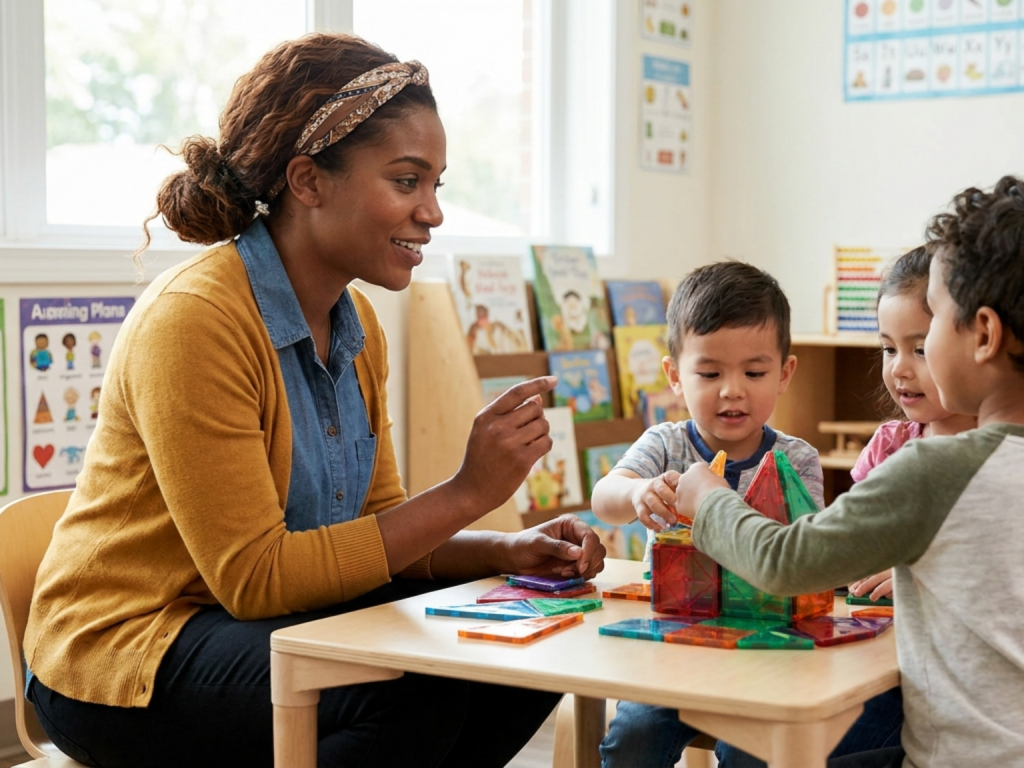
Social skills are not simply “nice manners” or a personality trait. In childhood, they are a core part of neurodevelopment: the growing ability to understand other people, regulate impulses, communicate needs, cooperate, repair conflict, and participate in family, school, and community life.
Every child develops at a different pace. Some children are naturally outgoing, while others are cautious, quiet, neurodivergent, anxious, language-delayed, or still learning how to manage big feelings. A supportive approach focuses on teaching, modeling, and noticing progress rather than blaming the child.
Highlights
Social skills help children form safer, more satisfying relationships with peers, siblings, teachers, and caregivers.
Early social competence is associated with later educational, employment, and mental health outcomes in longitudinal research.
Social development is closely connected to language, executive function, emotional regulation, and school readiness.
Children can learn social skills through warm relationships, play, coaching, structured practice, and help from professionals when needed.
What social skills mean in childhood
Social skills are the behaviors and mental processes that allow a child to interact with others in a flexible, respectful, and effective way. They include greeting, taking turns, sharing materials, listening, asking for help, joining play, reading facial expressions, understanding personal space, apologizing, negotiating, and coping when things do not go as expected. These abilities depend on several developing systems: receptive and expressive language, attention, working memory, inhibitory control, emotional regulation, sensory processing, and social cognition.
Social competence is not the same as being extroverted. A quiet child may have strong social skills if they can communicate needs, maintain a friendship, and recover from disagreements. Likewise, a very talkative child may still struggle with reciprocity, boundaries, or frustration tolerance. Temperament, culture, disability, language exposure, and family norms all shape how social behavior looks.
For this reason, adults should be cautious about labeling a child as rude, manipulative, or “bad at people.” Many behaviors that look defiant may reflect immature executive function, anxiety, speech-language difficulty, autism-related communication differences, attention problems, trauma exposure, sleep deprivation, or overwhelming environments. The helpful question is not “What is wrong with this child?” but “What skill or support is missing?”
Relationships are a foundation for learning
Children learn through relationships before they learn through formal instruction. In infancy and early childhood, responsive interactions help build neural circuits involved in attachment, stress regulation, communication, and attention. As children enter preschool and kindergarten, peer play becomes a powerful learning context. A child who can wait briefly, follow a simple group routine, ask another child to play, and tolerate small frustrations has more opportunities to practice language, problem-solving, and flexible thinking.
Social interaction also strengthens school readiness in early childhood. In a classroom, learning is not only about knowing letters or numbers. Children must listen to a teacher, shift from one activity to another, share space, participate in a group, and seek help when confused. These skills reduce cognitive load: when a child is not constantly overwhelmed by social conflict, they have more mental energy available for memory, reasoning, and early literacy.
Research on children at home and in preschool supports the view that social skills contribute to successful relationships and readiness for school. Cooperation and self-control are especially important because they help children engage with adults and peers in ways that make learning more accessible. Importantly, these are teachable skills, not fixed traits.
Emotional regulation and behavior are closely connected
Many social challenges in childhood are emotional regulation challenges in disguise. A child may know the rule “do not hit,” yet still hit when the nervous system is flooded by anger, embarrassment, fatigue, or sensory overload. Emotional regulation involves noticing internal signals, naming feelings, using coping strategies, and returning to a calmer state. This capacity develops gradually and is strongly supported by adult co-regulation.
Co-regulation means the adult lends the child a calmer nervous system: using a steady voice, reducing stimulation, validating the feeling, setting a boundary, and helping the child repair. For example, “You were angry that the block tower fell. I will not let you throw blocks. Let’s move your body, then we can try again.” Over time, repeated co-regulation helps children internalize strategies for self-control.
Social skills also protect self-esteem. Children who repeatedly fail in peer situations may begin to see themselves as unlikeable or “always in trouble.” Supportive coaching can interrupt that cycle. Adults can teach scripts such as “Can I have a turn when you’re done?” or “I don’t like that,” then praise effort and repair rather than demanding perfect behavior. This approach builds social confidence in shy children and children who are easily discouraged.
Long-term outcomes: why early competence matters
Longitudinal research suggests that early social competence is associated with meaningful adult outcomes. A widely cited study highlighted by the Robert Wood Johnson Foundation found that children rated as more socially competent in kindergarten, including behaviors such as sharing, helping, and resolving peer problems, were more likely to achieve positive outcomes by age 25. The report noted that children with stronger social competence were twice as likely to obtain a college degree and 46% more likely to have full-time employment by age 25.
Educational research summaries have similarly reported that teacher-rated kindergarten social competence is a consistent indicator of later education, employment, public assistance, substance use, and mental health outcomes. These findings do not mean that a child’s future is determined in kindergarten. Correlation is not destiny, and many protective factors can change a developmental pathway. However, the research does show that social-emotional skills are not secondary to academics; they are part of the infrastructure that supports academic and life success.
Why might the connection be so strong? Children who can cooperate, manage conflict, and ask for help may experience more positive teacher relationships, fewer disciplinary exclusions, better peer support, and more engagement with learning. Over years, these small advantages can accumulate. Conversely, persistent peer rejection or behavioral conflict can increase stress and reduce access to instruction. Early support is therefore a public health and educational priority, not merely a matter of etiquette.
Social skills can look different across children
There is no single normal way to be social. Some children prefer one close friend rather than a large group. Some need extra time before speaking in unfamiliar settings. Some communicate better through play, drawing, movement, gestures, augmentative communication, or predictable routines. Cultural expectations also influence eye contact, adult-child conversation, independence, and emotional expression. A medically literate approach respects these differences while still asking whether the child can participate safely and meaningfully in daily life.
Developmental differences may affect social learning. Children with speech-language disorders may miss parts of conversation or struggle to express ideas. Children with attention-deficit/hyperactivity symptoms may interrupt, act impulsively, or miss social cues because attention and inhibition are under strain. Autistic children may communicate, play, or interpret social signals differently and may need explicit teaching, sensory accommodations, and acceptance rather than pressure to mask. Children with anxiety may avoid peers despite wanting connection.
Families should seek guidance when social difficulty is persistent, causes distress, interferes with school or family life, or is accompanied by regression, aggression, severe withdrawal, bullying involvement, sleep or appetite changes, or developmental concerns. A pediatrician, psychologist, speech-language pathologist, occupational therapist, or school-based team can help clarify needs and recommend appropriate supports without assuming a diagnosis from behavior alone.
How adults can build social skills without shame
Children learn social skills best when adults combine warmth, structure, modeling, and repetition. Lectures after a conflict rarely work well because the child’s stress physiology may still be activated. Brief, concrete coaching before and during social situations is usually more effective.
- Model the skill. Let children hear respectful disagreement, apologies, turn-taking, and problem-solving in real life.
- Name the hidden rule. Instead of “be good,” say “When you want a turn, tap my arm and say, ‘Can I try next?’”
- Practice through play. Pretend play, board games, building projects, and playground games create natural opportunities for waiting, negotiating, and coping with losing.
- Use emotion coaching. Help the child identify feelings, body signals, and calming strategies before expecting complex social reasoning.
- Reinforce repair. Notice when a child tries again, returns a toy, uses words, accepts “no,” or checks on someone they hurt.
Collaboration between home and school is especially helpful. Teachers can observe peer patterns that may not appear at home, while caregivers understand the child’s history, sleep, health, temperament, and stressors. If concerns persist, school-based academic evaluation, developmental screening, or therapy referral may be appropriate. The goal is not to make every child socially identical; it is to help each child communicate, connect, and function with dignity.
When to seek extra support
- Social withdrawal, panic, or distress that repeatedly prevents school, play, or family participation should be discussed with a healthcare professional.
- Loss of previously acquired language, play, or social abilities warrants prompt medical or developmental evaluation.
- Frequent aggression, self-injury, or unsafe impulsive behavior needs timely professional guidance and a safety plan.
- Bullying, peer rejection, or humiliation can affect mental health and should not be dismissed as a normal part of growing up.
- Do not assume a diagnosis from social behavior alone; assessment should consider development, language, hearing, sleep, trauma, neurodivergence, and environment.
Tools & Assistance
- Pediatric well-child visit with developmental and behavioral screening
- Teacher or preschool observation notes about peer interaction and classroom routines
- Speech-language pathology evaluation when communication or comprehension concerns are present
- Occupational therapy evaluation for sensory processing, play participation, or self-regulation concerns
- Child psychologist, school counselor, or behavioral health professional for persistent anxiety, aggression, or social distress
FAQ
Are social skills more important than academic skills?
They are not competitors. Social skills support attention, participation, help-seeking, and persistence, which make academic learning easier and more sustainable.
Should a shy child be pushed to socialize more?
Gentle support is better than pressure. Shy children often benefit from preparation, small-group opportunities, predictable routines, and praise for brave attempts.
Can social skills be taught at home?
Yes. Everyday routines, play, shared chores, reading stories, and calm conflict repair are powerful teaching moments when adults model and coach specific behaviors.
When is professional help appropriate?
Consider professional guidance if social difficulties are persistent, distressing, unsafe, associated with developmental concerns, or interfering with school, friendships, or family life.
Sources
- Robert Wood Johnson Foundation — Social Skills in Kindergarten Help Children Thrive as Adults
- National Institutes of Health via PubMed Central — Social Skills in Children at Home and in Preschool
- U.S. Department of Education ERIC — How Children's Social Skills Impact Success in Adulthood
Disclaimer
This article is for informational purposes only and does not replace medical, developmental, psychological, or educational evaluation. If you have concerns about a child’s behavior, communication, safety, or wellbeing, consult a qualified healthcare professional.
















Please log in to leave a comment.