
Intro
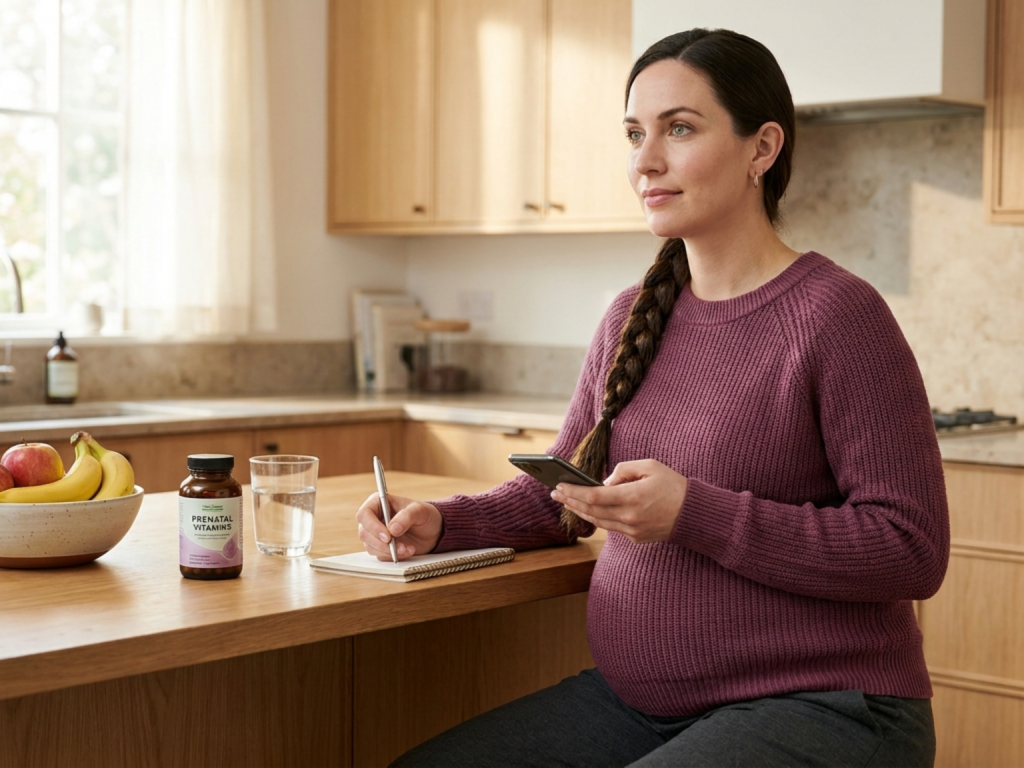
Tracking food intake during pregnancy can be a practical way to understand what you are actually eating, not just what you think you ate. For many people, appetite, nausea, aversions, reflux, work schedules, and social routines change from day to day, so a single memory of “a typical day” can be misleading.
A thoughtful log does not need to be perfect or obsessive. Used well, it can help you notice patterns, support nutrient adequacy, and make nutrition conversations with your obstetric clinician, midwife, or dietitian more specific and useful.
Highlights
Pregnancy intake often varies substantially from day to day, so repeated logging can be more informative than a single recall.
A good food record is meant to support pattern recognition in pregnancy, not to create pressure to eat “perfectly.”
Photo-based or app-based records may be easier to sustain and can still be clinically useful for counseling.
The most useful logs usually capture not only foods, but also timing, symptoms, hydration, and missed meals.
Tracking works best when it is paired with a clear purpose, such as reviewing nutrient intake, nausea patterns, or meal regularity.
Why tracking matters more than a single recall
Pregnancy nutrition is dynamic. In research using repeated food records, daily intake varied markedly within the same pregnant participant and also between participants, which means a single day or a casual memory can miss important nutrient gaps or overestimate how well someone is eating. That matters because pregnancy changes nutrient needs, blood volume, appetite, and tolerance for certain foods.
For a medically literate reader, the key concept is nutrient adequacy: whether the overall pattern of intake supplies enough energy, protein, essential fatty acids, vitamins, and minerals across time. A person may appear to eat “well” on average, yet still have several low-intake days that affect total nutrient exposure. Conversely, a difficult day does not necessarily mean the overall pattern is poor. Tracking helps distinguish noise from signal.
The goal is pattern recognition in pregnancy. Instead of asking “Did I eat enough today?” in isolation, a record can answer more useful questions: Am I regularly skipping breakfast? Are nausea days associated with lower protein intake? Do certain times of day reliably lead to missed snacks? Those patterns are often the most actionable findings for a prenatal care team.
What to record in a useful pregnancy food log
An effective log is usually broader than a calorie count. Many clinicians want to know not only what was eaten, but also when, how much, and under what circumstances. That context can help distinguish low appetite, food aversion, work-related meal skipping, reflux-related avoidance, or a practical schedule problem from a true lack of access to food.
At minimum, consider recording:
- Meals, snacks, drinks, and supplements
- Approximate portions or serving sizes
- Time of day and whether the meal was skipped or delayed
- Nausea, vomiting, reflux, cravings, aversions, or early fullness
- Hydration and whether fluids were tolerated well
- Food safety details if relevant, such as undercooked foods or unpasteurized items
In pregnancy, it can also be useful to note specific nutrient targets that often come up in counseling, such as protein density, iron-rich foods, choline, folate, calcium, and DHA, a long-chain omega-3 fatty acid important for fetal neurodevelopment. Some people also benefit from noting fiber intake if constipation is an issue.
If calorie tracking is recommended by your care team, it should be interpreted in the context of trimester calorie needs, pre-pregnancy body size, activity level, and gestational weight-gain recommendations rather than as a one-size-fits-all target.
How to track without turning it into a burden
The best tracking system is the one you can actually keep using. For many people, a one-minute daily log is enough. Others prefer a structured app, a notebook, or photos taken before meals. In fact, image-based dietary records have been studied in pregnant women and showed acceptable validity for assessing key nutrient intakes, which supports their use when written detail feels unrealistic.
Photo logging can be especially helpful on busy days, when portions are hard to estimate, or when nausea makes meal planning unpredictable. A photo plus a short note about timing, symptoms, or leftovers can provide enough information for later review. Apps may also reduce the burden of estimating every gram or nutrient manually.
To keep the process balanced, it helps to define one clear purpose. For example: “I want to see whether I’m getting enough protein at breakfast” or “I want to identify nausea-trigger foods.” A weekly review is often more useful than checking every entry repeatedly, because it allows patterns to emerge without constant self-monitoring. If tracking starts to feel compulsive, anxiety-provoking, or linked to reassurance-seeking loops, it is reasonable to scale back and ask a clinician for help refining the approach.
How to interpret patterns in the record
Once you have several days of data, look for repeated patterns rather than isolated “good” or “bad” days. Are there long gaps between meals? Are certain foods consistently better tolerated in the morning? Does nausea lead to lower overall intake, or mostly to lower vegetable intake? Does stress at work lead to missed snacks and reduced fluid intake?
This is where a food log becomes clinically useful. A dietitian or obstetric clinician can compare the log with pregnancy needs and help translate the pattern into practical adjustments. For example, if breakfast is consistently minimal, the issue may be meal timing rather than appetite in general. If intake is low only on days with reflux, the pattern suggests a symptom-management question, not just a nutrition question.
It is also useful to look at distribution across the day. Some pregnant people meet approximate total intake but still have very uneven macronutrient distribution, with long fasting intervals and a large late meal. That pattern can worsen fatigue, nausea, or blood glucose variability in some settings. Again, the value of tracking is not self-judgment; it is clearer decision-making.
Special situations: nausea, meal skipping, and food safety
Some of the most important tracking data in pregnancy come from difficult days. When nausea causes meal skipping in pregnancy, the log can show whether the issue is severe enough to affect hydration, protein intake, or the ability to keep food down. Recording which foods were tolerated, which were rejected, and whether symptoms improved after smaller, more frequent meals can help your care team advise you more precisely.
Food logs are also useful when there are food safety concerns. Pregnancy is not the time for guesswork about potentially unsafe foods, especially if you are eating prepared items, deli foods, raw seafood, or unpasteurized products. If a food seems “fine” but repeatedly causes symptoms, that information is worth documenting and discussing rather than ignoring.
People with vegetarian, vegan, or highly selective eating patterns may use tracking to assess whether they are consistently getting enough protein, iron, vitamin B12, calcium, and DHA through food and supplements. Others may want to track caffeine, sugar-sweetened beverages, or highly processed snack foods simply to understand overall balance. The point is not restriction for its own sake; it is to identify whether the day-to-day pattern fits pregnancy needs and whether any changes should be guided by a clinician.
Using the log in prenatal care
Your log is most valuable when it becomes part of a conversation. Bring a short summary to prenatal visits, especially if you are concerned about poor appetite, excessive vomiting, weight change, constipation, food insecurity, or confusing advice from friends and the internet. A clinician can help interpret the data in context and decide whether you need more detailed assessment or referral to a dietitian.
Useful questions to bring may include: Are my intake patterns consistent with trimester calorie needs? Do I need more support around protein, iron, or DHA? Does my nausea pattern suggest a management strategy that could improve intake? Am I better served by a short-term structured plan or by a looser approach focused on meals and symptoms?
If you want to keep the record simple, think in terms of pattern recognition in pregnancy plus clinician-guided monitoring. That mindset keeps the process practical. A food log should help you feel more informed and supported, not watched or judged. If the record is making you anxious, scale it back and ask for help tailoring it to your needs.
When to seek professional advice
- Persistent vomiting, inability to keep fluids down, or signs of dehydration need prompt medical attention.
- Rapid or concerning weight change should be reviewed by your prenatal clinician.
- Food avoidance that leaves you unable to meet basic nutrition needs deserves assessment.
- Any concern about food safety, possible deficiency, or supplement use should be discussed with a professional.
- If tracking triggers anxiety or obsessive checking, pause and ask for a simpler plan.
Tools & Assistance
- Prenatal visits with your obstetric clinician or midwife
- A registered dietitian with pregnancy nutrition experience
- A simple notebook, notes app, or photo-based meal log
- A secure food-tracking app that allows photo entries and symptom notes
- Hospital or clinic patient education materials on pregnancy nutrition
FAQ
Do I need to count every calorie during pregnancy?
Not necessarily. Many people benefit more from tracking patterns, portions, and symptoms than from strict calorie counting. If calorie goals matter for your situation, your clinician can help interpret them.
Is taking photos of meals enough?
Often yes, especially if you add short notes about timing, symptoms, and portions. Photo-based records can be clinically useful when written logging feels too burdensome.
How long should I keep tracking before I see a pattern?
A few days can reveal obvious issues, but a weekly review is often more informative because intake can vary a lot from day to day.
What if tracking makes me anxious?
That is a signal to simplify. Use a shorter log, set one clear purpose, and ask your care team to help you avoid overtracking or obsession.
Sources
- PubMed Central / National Library of Medicine — Food Records Show Daily Variation in Diet during Pregnancy
- PubMed Central / National Library of Medicine — A Brief Tool to Assess Image-Based Dietary Records and Guide Nutrition Counselling Among Pregnant Women: An Evaluation
- Oregon Health & Science University — Nutrition During Pregnancy
Disclaimer
This article is for general educational purposes only and does not replace individualized medical advice. Please discuss your nutrition questions, symptoms, and tracking plan with your obstetric clinician, midwife, or dietitian.















Please log in to leave a comment.