
Intro
Taking a baby outdoors can support family wellbeing and make daily life feel more manageable, but it also requires attention to temperature regulation, sun exposure, infection risk, and safe transport. For most healthy, medically stable babies, brief outdoor time is generally compatible with routine care. There is no universal requirement to remain indoors for a fixed period after birth.
Every infant is different. Prematurity, chronic disease, recent illness, feeding difficulties, immune compromise, or a clinician's specific instructions may change the appropriate plan. Start with short, flexible outings, observe your baby closely, and ask a pediatrician or other qualified healthcare professional for individualized advice when there is uncertainty.
Highlights
Healthy, medically stable babies can often go outside from the early newborn period when caregivers use appropriate precautions.
Shade, breathable clothing, and frequent checks are central to preventing overheating and sun exposure.
Avoid crowded settings and close contact with people who are ill, particularly during the newborn period.
A safe outing includes appropriate transport, feeding and diaper supplies, and a plan to return indoors if the baby becomes uncomfortable.
When can a baby go outside?
For a healthy term newborn who is medically stable, going outdoors does not usually need to wait until a particular age. A quiet walk, time in a shaded garden, or a short necessary appointment may be reasonable soon after birth. The first outing can be brief and close to home, allowing caregivers to learn how the baby responds to the environment without becoming committed to a long trip.
Timing should be guided by the baby’s clinical circumstances and the caregiver’s readiness. A premature infant, a baby with respiratory or cardiac disease, or an infant recently discharged from hospital may need a more individualized plan. Ask the neonatal, pediatric, or primary care team about outdoor exposure, transport, and infection precautions before an outing if the baby has complex medical needs.
Choose a time when the baby is fed, dry, and relatively calm, while recognizing that newborn schedules are unpredictable. Flexibility is more useful than trying to maintain a rigid itinerary. If the baby is unusually sleepy, difficult to console, breathing differently, or not feeding normally, postpone a nonessential outing and seek medical guidance when appropriate.
Prepare for weather and temperature
Infants have immature thermoregulation and can become too warm or too cold more quickly than adults. Check the actual weather conditions before leaving, including temperature, humidity, wind, precipitation, and, in hot weather, the heat index. A mild air temperature can still be hazardous when humidity and radiant heat are high.
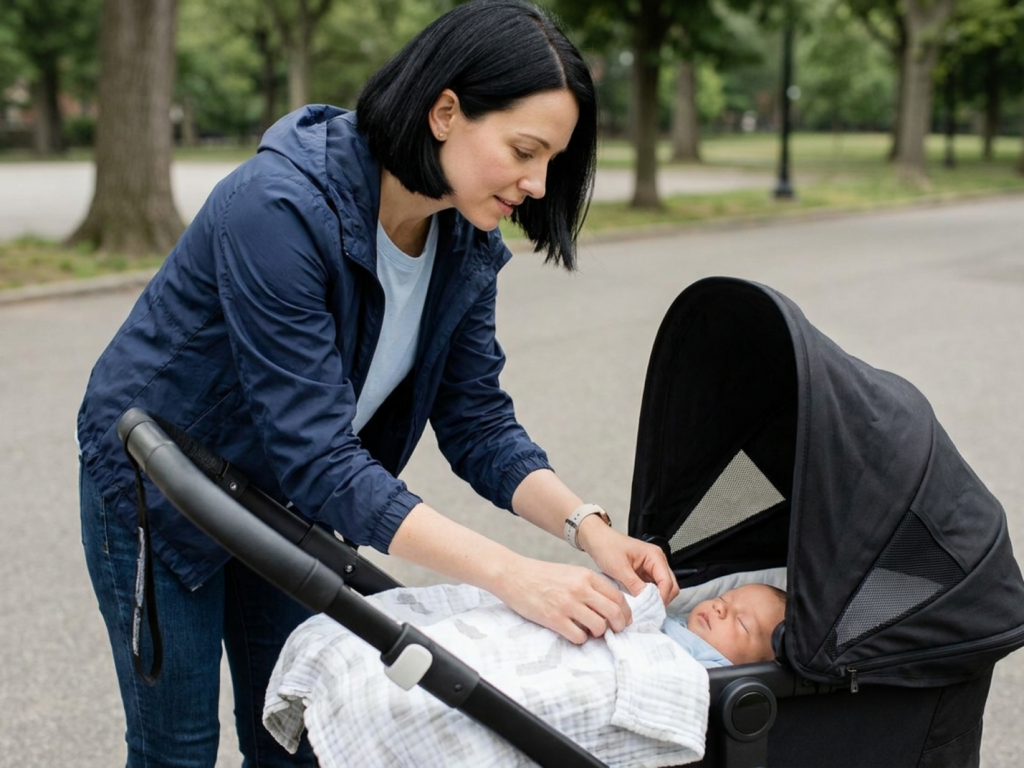
Dress the baby in light, breathable layers that can be added or removed easily. In cool conditions, layers are usually more practical than one heavy garment; cover exposed areas without restricting the airway or causing overheating. In warm conditions, choose loose, lightweight clothing. Do not use clothing or blankets to cover a stroller opening, because this can trap heat and reduce air circulation.
Check the baby’s chest or upper back rather than relying only on hands and feet, which may normally feel cool. Sweating, flushed or hot skin, damp hair, unusual irritability, lethargy, rapid breathing, or reduced feeding can indicate that the baby is too warm. Move indoors or to a genuinely cool, ventilated area and remove excess layers. Cooling breaks should be frequent during warm-weather outings, even if the baby initially appears comfortable.
Never leave a baby alone in a parked vehicle, even for a short time. Vehicle interiors can heat rapidly, and opening a window does not reliably make the environment safe. Plan errands so that the baby is not left unattended in a car.
Protect skin and eyes from the sun
Direct sunlight can cause overheating and ultraviolet injury. Keep young babies in dense shade whenever possible, particularly around the middle of the day. A stroller canopy, parasol designed for the equipment, or natural shade can help, but shade should not obstruct airflow or the caregiver’s view of the baby.
Do not drape a muslin, blanket, or other fabric over the entire stroller to create shade. Even a thin covering may substantially increase the internal temperature and make it harder to monitor breathing and comfort. Position the stroller away from reflective surfaces such as water, pale pavement, or large windows when practical.
Use a broad-brimmed hat only when it fits securely and does not slip over the eyes or interfere with breathing. Clothing that covers the arms and legs can provide physical protection while remaining loose and breathable. Sun-protective clothing may be useful for longer outdoor periods.
For sunscreen use, follow advice from the baby’s healthcare professional and the product label, especially for very young infants. Sunscreen is not a substitute for shade, protective clothing, or limiting exposure. Seek medical advice for a blistering sunburn, significant skin injury, or concern about heat illness.
Reduce infection exposure outdoors
Outdoor air itself is not the same as exposure to a crowded indoor environment. During the newborn period, however, close contact with people who are ill can expose a baby to respiratory and gastrointestinal pathogens. Prefer uncrowded outdoor locations and avoid gatherings where people may be coughing, febrile, vomiting, or otherwise unwell.
Ask anyone who wants to hold the baby to wash their hands first and avoid kissing the baby’s face or hands. Do not share bottles, pacifiers, utensils, or other items that contact the baby’s mouth. Caregivers should remain current with recommended immunizations and follow local public health guidance during periods of increased respiratory-virus activity.
Consider the setting, not only the fact that it is outdoors. A busy queue, crowded festival, packed public transport vehicle, or enclosed shelter may provide more opportunities for transmission than a quiet walk. For a young or medically vulnerable baby, a short uncrowded outing may be a more appropriate first step than a large social event.
If the baby develops a fever, breathing difficulty, poor feeding, repeated vomiting, marked drowsiness, or a concerning change in behavior after an outing, contact a healthcare professional promptly. Infants, particularly young newborns, may require urgent assessment for fever or other signs of infection.
Use safe transport and positioning
Choose transport equipment that matches the baby’s developmental stage and follows the manufacturer’s instructions. A newborn’s head and neck require support, and the airway must remain open with the chin lifted away from the chest. In a stroller, use a fully reclined bassinet or a newborn-approved seat when available. An inclined seat that is not designed for a young infant can allow the head to fall forward and compromise breathing.
In a soft carrier or sling, keep the baby upright when the product permits this, close enough to kiss, and visible at all times. The face should remain uncovered, the nose and mouth unobstructed, and the back supported. Recheck positioning after bending, sitting, or walking, because a baby can shift gradually. Heat from the caregiver’s body and the carrier can also contribute to overheating.
Use the stroller harness as directed, engage the brakes whenever stopped, and keep heavier items low rather than hanging them from the handle. Do not allow a baby to sleep unsupervised in a sitting device. A stroller or carrier is for transport and observation; when sleep occurs, follow safe sleep guidance by moving the baby to a firm, flat, separate sleep surface as soon as reasonably possible.
For car travel, use a properly installed rear-facing car seat that is appropriate for the baby’s size and meets local safety standards. Avoid bulky outerwear beneath the harness because it can prevent a snug fit. Follow the seat manufacturer’s limits and take breaks on longer trips so the baby can be removed from the seat under supervision.
Pack for feeding, hygiene, and comfort
A practical outing bag reduces the pressure to stay out longer than planned. Bring more diapers and wipes than the expected duration requires, spare clothing, a clean changing surface, feeding supplies, and a way to dispose of waste. Pack any prescribed medication or medically necessary equipment according to the healthcare team’s instructions, but do not start or alter treatment based solely on an outdoor symptom.
Continue breastfeeding or formula feeding according to the baby’s usual pattern. Heat does not automatically mean that a young infant should receive extra water; additional fluids should be discussed with a healthcare professional because feeding recommendations depend on age, feeding method, and medical status. Prepare formula safely, use clean equipment, and follow storage and time limits provided by the manufacturer or healthcare team.
Choose a location with access to shade, handwashing facilities, toilets, and a private feeding or changing area if useful. A simple exit plan matters: identify where you can cool the baby, feed, change a diaper, or return home quickly. The goal is a manageable outing, not completing every planned task.
Caregivers also need protection from heat, dehydration, and fatigue. Take turns carrying equipment, drink fluids, and stop when concentration or physical comfort declines. A calm, attentive caregiver is an important part of outdoor safety.
Know when to end the outing
Monitor the baby throughout the trip rather than waiting for a scheduled check. Look for normal color, comfortable breathing, an unobstructed face, and behavior that is broadly consistent with the baby’s usual state. A baby may need to go home because of hunger, a wet diaper, fatigue, overstimulation, temperature discomfort, or simply the caregiver’s concern.
Move indoors and assess the situation if the baby becomes hot, sweaty, pale, flushed, unusually irritable, weak, difficult to wake, or less interested in feeding. Breathing that is rapid, labored, noisy, or associated with color change requires urgent medical attention. Seek urgent help for collapse, seizure, severe breathing difficulty, blue or gray lips, or an infant who cannot be roused normally.
Do not diagnose heat illness, dehydration, infection, or another condition at home based only on an article. For a baby younger than three months, any measured fever should be discussed urgently with a healthcare professional because age changes the level of concern. Use a reliable thermometer and follow local emergency guidance when symptoms are severe.
With experience, caregivers usually become better at judging the length and setting of an outing. It is entirely appropriate to return home early. Safe outdoor time is built through observation, adaptation, and professional advice when the baby’s health history makes routine guidance insufficient.
Seek prompt medical help
- A baby has severe or labored breathing, blue or gray lips, collapse, or cannot be roused normally.
- A young infant has a measured fever or a significant change in feeding, alertness, or behavior.
- The baby remains hot, lethargic, unusually irritable, or difficult to cool after moving indoors.
- There are signs of dehydration, including markedly fewer wet diapers or inability to keep feeds down.
- The baby has a blistering sunburn, extensive skin injury, or possible prolonged heat exposure.
Tools & Assistance
- A reliable digital thermometer
- Weather and heat-index forecast
- Newborn-appropriate stroller, carrier, or rear-facing car seat
- Prepared diaper and feeding bag
- Contact details for the baby's pediatrician or local urgent care service
FAQ
Can I take a newborn outside before the first pediatric appointment?
A healthy, medically stable newborn can often go outside briefly, but individual circumstances matter. Ask the baby's healthcare professional if the infant was premature, has a medical condition, or has specific discharge instructions.
How do I know if my baby is too hot outdoors?
Check the chest or upper back and watch for sweating, flushed or hot skin, damp hair, rapid breathing, unusual irritability, lethargy, or reduced feeding. Move indoors, remove excess layers, and seek medical advice if the baby does not improve promptly.
Can I cover the stroller with a blanket for shade?
Do not cover the stroller opening with a blanket or other fabric because it can trap heat and obstruct airflow. Use the equipment's canopy or a shade accessory designed for that stroller while keeping the baby visible.
Should my baby drink water in hot weather?
Do not add water routinely for a young infant unless advised by a qualified healthcare professional. Continue the usual feeding plan and ask for individualized advice if heat, illness, or feeding difficulty is affecting hydration.
Is an outdoor gathering safer than an indoor gathering?
Outdoor air may reduce some transmission risk, but crowded settings and close contact can still expose a baby to infection. Prefer uncrowded spaces and keep people who are ill away from the baby.
Sources
- WebMD — Can I Take My Newborn Outside?
- Children's Health — Keeping Your Baby Safe and Cool in Summer
- Pregnancy, Birth and Baby — Getting out of the house with your new baby
Disclaimer
This article provides general educational information and does not diagnose, treat, or replace advice from a qualified healthcare professional. Seek urgent medical care for severe or rapidly worsening symptoms.











Please log in to leave a comment.