
Intro
Choosing preschool products for children ages 3 to 5 is not only about buying supplies. It is about supporting autonomy, safety, sensory regulation, early learning, toileting, rest, nutrition, and participation in a group setting. At this age, children are developing rapidly but unevenly: one child may write a recognizable name while another is still refining grip strength; one may nap daily while another needs quiet time instead.
A practical preschool kit should match the child, the preschool environment, and any medical, developmental, allergy, or sensory needs. The goal is not to overpack, but to send items that help a child move through the day with less friction and more confidence.
Highlights
The most useful preschool products are durable, washable, easy for small hands to manage, and clearly labeled.
Safety matters: avoid small detachable parts, choking hazards, allergen-containing items, and footwear that increases fall risk.
Learning materials such as blocks, puzzles, books, art tools, and pretend-play items support fine motor skills, language, problem-solving, and social-emotional learning.
A strong daily kit includes clothing, hygiene items, hydration, rest supplies, and comfort objects when the school allows them.
Children with asthma, eczema, food allergy, neurodevelopmental differences, or toileting concerns may need individualized planning with caregivers and healthcare professionals.
Start with the preschool day, not the shopping list
The best preschool products are the ones that fit the real demands of the day: arrival, separation, toileting, handwashing, outdoor play, meals or snacks, structured learning, free play, rest, and pickup. Children ages 3 to 5 are building executive functions in preschool children, including inhibition, working memory, flexible attention, and emotional self-regulation. Products should reduce avoidable stress rather than add complexity.
Begin with the school’s written supply list. Many programs specify backpack size, nap mat style, labeling rules, food restrictions, spare clothing storage, and whether toys from home are permitted. These policies are not arbitrary. They help prevent lost items, allergen exposure, crowding in cubbies, unsafe footwear during evacuation drills, and conflict over personal toys.
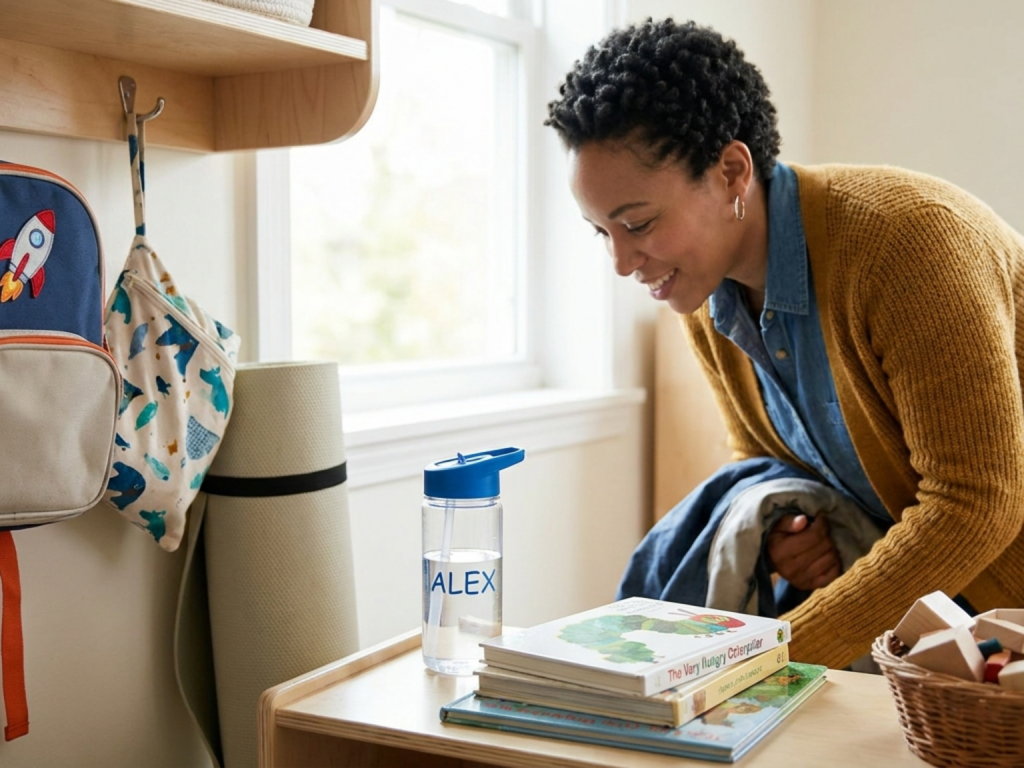
For most children, the essential daily items include a child-sized backpack, a spill-resistant water bottle, weather-appropriate outerwear, closed-toe shoes, spare clothing, hygiene supplies, and any school-approved rest item. The backpack should be large enough for a folder, lunch container, and extra clothes, but not so large that it alters posture or balance. A preschooler should be able to open and close it independently after practice.
Independence is a major criterion. Look for wide zipper pulls, simple buckles, easy-open containers, and clothing that supports toileting. A product that requires constant adult intervention may be appropriate for occasional use, but it is less useful as a daily preschool essential. Preschool products should meet children where they are developmentally while gently inviting the next skill.
Backpacks, clothing, and shoes that support independence
A preschool backpack should be lightweight, washable or wipeable, and labeled inside. It should have enough structure that papers do not crumple, but it does not need multiple complicated compartments. For many children, one large compartment and one outer pocket are easier than a heavily divided bag. Avoid dangling cords, decorative attachments, or keychains that may become distracting or unsafe.
Spare clothing is one of the most medically and emotionally useful preschool supplies. Pack a full change: underwear, socks, pants or leggings, shirt, and weather-appropriate extras. Even children who are toilet trained may have urine accidents during transitions, diarrhea during viral illness, water-table spills, paint, mud, or food stains. Wet clothing can irritate skin, worsen eczema, and increase distress. Place clothing in a labeled resealable or washable wet bag so soiled items can return home hygienically.
Closed-toe shoes are usually the safest option for preschool. They protect toes, improve traction, and reduce injury risk during climbing, running, tricycle play, and emergency drills. Shoes should be flexible at the forefoot, secure at the heel, and easy for the child or teacher to fasten. Sandals, flip-flops, and shoes with slippery soles can increase falls and may be prohibited by schools.
Choose clothing with toileting in mind. Elastic waists are often easier than belts, tight buttons, or complex overalls. Children with constipation, urinary urgency, developmental delays, or anxiety around toileting benefit from clothing that allows quick access. For children still learning preschool toileting routines, pack extra underwear and communicate with staff about cues, timing, and language used at home.
Hydration, meals, hygiene, and allergy-aware packing
A water bottle should be leak-resistant, easy to open, and simple to clean. Preschoolers may not reliably report thirst, and busy classrooms can make hydration less visible. A bottle with a straw or spout may work well, but every part should be removable for cleaning to reduce biofilm and microbial growth. Label the bottle clearly, because shared drinking containers are an infection-control concern.
If the program requires lunch or snacks from home, choose containers that the child can open with minimal help. Practice at home before the first week. Bento-style containers can support variety, but avoid overcomplicated latches if they lead to frustration. Consider choking risk: whole grapes, large chunks of hard raw vegetables, nuts, popcorn, hard candies, and similar foods may be unsafe for some preschoolers. Cut foods appropriately and follow school policies. For children with food allergy, confirm whether the classroom is allergen-restricted and whether an emergency action plan is required.
Useful hygiene products may include tissues, wipes if permitted, hand sanitizer only if the school allows supervised use, and a small pack of personal care items for children with sensitive skin. If a child has eczema, contact dermatitis, or recurrent vulvar or perianal irritation, ask the clinician whether a specific barrier ointment or fragrance-free product is appropriate, and follow the school’s medication or topical product policy.
Do not place medications, vitamins, cough drops, essential oils, or medicated creams in a backpack unless the preschool has explicitly instructed you to do so through its health policy. Even common products can be unsafe if accessed by another child. Asthma inhalers, epinephrine auto-injectors, seizure rescue medication, diabetes supplies, or other medically necessary items should be managed through the preschool’s formal care plan and the child’s healthcare professional.
Rest, comfort, and sensory regulation products
Many preschoolers still need daytime sleep, while others need quiet time instead of naps. A nap mat, small blanket, crib-size sheet, or labeled sleep sack may be requested depending on the program. Choose washable items that fit the assigned cot or mat and can be transported easily. Oversized bedding can create storage issues and may not meet safety or hygiene policies.
A comfort item can be valuable during separation, rest, or transitions, especially in the first weeks. Some children regulate better with a small stuffed object, family photo, soft cloth, or familiar blanket. However, schools may limit personal items to reduce loss, disputes, or contamination. If a comfort item is allowed, choose something replaceable and not highly fragile.
Sensory supports during transitions can help some children participate without feeling overwhelmed. Examples include noise-reducing headphones for loud assemblies, chewable jewelry only when approved and used safely, compression clothing recommended by an occupational therapist, or a small tactile object stored by the teacher. These are not universal essentials. They should be selected based on a child’s actual sensory profile, safety, and school supervision.
For medically literate caregivers, it can help to distinguish sensory preference from functional impairment. A child may dislike loud sounds but still cope well with routine classroom noise. Another child may experience distress that interferes with participation, sleep, feeding, or peer interaction. In that situation, discuss sensory processing, anxiety, hearing concerns, autism spectrum features, or developmental coordination issues with the pediatrician, early childhood team, or occupational therapist rather than relying only on products.
Learning products that build fine motor, language, and problem-solving skills
Preschool learning products should be open-ended, safe, and developmentally appropriate preschool learning tools. Blocks, interlocking construction toys, simple puzzles, magnetic tiles, beads sized safely for the age group, play dough, crayons, safety scissors, and manipulatives all support hand strength, bilateral coordination, spatial reasoning, and early mathematics skills in preschoolers. These materials also make repetition enjoyable, which matters because mastery at this age often comes through repeated practice.
Fine-motor activities for preschool children are especially useful when they strengthen the small muscles of the hand without turning learning into a worksheet. Peg boards, lacing cards, large tweezers, sorting counters, and shape puzzles can support pincer grasp, visual-motor integration, and motor planning. Avoid tiny pieces for children who still mouth objects or have impulsive behavior that increases choking risk.
Books are also essential products, not extras. Board books may still be appropriate for children who are rough with pages, while picture books with richer narratives support vocabulary, phonological awareness, story sequencing, and social understanding. Choose books that invite conversation rather than passive recitation. Ask what the child notices, predicts, remembers, or feels about the characters.
Pretend play and emotional regulation are closely connected in preschool. Toy kitchens, doctor kits, dolls, vehicles, dress-up items, and animal figures allow children to rehearse roles, negotiate rules, process fears, and practice language. A pretend medical kit, for example, can normalize routine care without pretending that a toy replaces real clinical evaluation. For children with medical experiences, pretend play may bring up feelings that deserve calm adult attention.
Art supplies should be washable, non-toxic, and age-labeled. Thick crayons, washable markers, glue sticks, child-safe scissors, paper, stickers, and blunt paintbrushes support creative expression and motor control. Supervision still matters. Even age-appropriate items can become unsafe if used in the mouth, nose, ears, or around younger siblings.
Outdoor, gross motor, and classroom participation essentials
Outdoor learning for preschoolers is not merely recess. It supports vestibular and proprioceptive input, cardiometabolic health, bone loading, sleep pressure, mood regulation, and social negotiation. Products that support outdoor play include weather-appropriate coats, hats, mittens, sun hats if needed, rain boots when requested, and labeled sunscreen if the program permits application under policy.
Gross motor toys such as balls, tricycles, balance beams, hoops, tunnels, and climbing structures are typically classroom or playground equipment rather than backpack items. At home, similar materials can reinforce strength, coordination, balance, and motor confidence. Choose equipment that matches the child’s size and skill level. A product that is too advanced may increase injury risk; one that is too easy may not provide meaningful practice.
For classroom participation, children often benefit from simple organizational tools: a folder for papers, labels on all items, a family communication notebook if used by the school, and visual cues for children who need help remembering routines. Visual schedules for preschool transitions can reduce uncertainty, especially for children with language delays, anxiety, autism spectrum disorder, or difficulty shifting attention.
Some children need adaptive products. Examples include an easy-grip spoon, weighted or angled utensils recommended by a therapist, a modified pencil grip, Velcro shoes, adaptive clothing, or a communication card system. These products should be chosen for a clear functional goal. When developmental delays, motor asymmetry, frequent falls, persistent feeding difficulty, or loss of skills is present, product selection should accompany professional assessment rather than substitute for it.
What to skip, label, and review regularly
Preschool essentials do not need to be expensive or extensive. Skip toys with many small detachable parts, breakable sentimental items, noisy electronics, sharp accessories, jewelry that can snag, strongly scented products, and food treats intended for sharing unless the school requests them. Many classrooms also discourage personal toys because they complicate sharing, increase conflict, and can be lost.
Label everything: backpack, clothing, shoes, water bottle, lunch containers, bedding, comfort item, and outerwear. Use the child’s name in a way the school recommends. Some programs prefer full names; others prefer first name and last initial for privacy. Labels should withstand washing, moisture, and frequent handling.
Review the preschool kit every few weeks. Children grow quickly, seasons change, toileting skills evolve, and water bottles develop worn seals. Replace outgrown spare clothes, check that shoes still fit, wash bedding routinely, and inspect containers for cracks or mold-prone parts. If the child has a medical care plan, review expiration dates for relevant supplies with the school according to policy.
Finally, observe the child’s lived experience. A backpack that looks ideal online may be too stiff. A lunchbox may be impossible to open. A blanket may be too bulky for the cubby. Preschool products are successful when they help a child feel capable, safe, and included in the daily rhythm of the classroom.
Safety and health cautions
- Keep medications, vitamins, essential oils, and medicated creams out of backpacks unless managed through the preschool’s formal health policy.
- Avoid small parts, hard round foods, and toys that increase choking risk, especially for children who mouth objects.
- Follow allergy policies strictly, including restrictions on nuts, dairy, eggs, sesame, or other allergens when applicable.
- Choose closed-toe, secure shoes for active play and emergency drills; avoid slippery or loose footwear.
- Consult a pediatrician, occupational therapist, or other qualified professional for persistent feeding, toileting, sensory, motor, behavioral, or developmental concerns.
Tools & Assistance
- Ask the preschool for its current supply list and health policy before buying items.
- Practice opening lunch containers, backpack zippers, and water bottles at home.
- Create a labeled wet bag with a full spare outfit and update it seasonally.
- Use the child’s clinician-approved allergy, asthma, seizure, diabetes, or medication action plan when relevant.
- Review classroom supplies every few weeks for fit, cleanliness, expiration dates, and wear.
FAQ
What is the most important preschool item for ages 3 to 5?
There is no single universal item, but a labeled backpack with spare clothes, water, and any school-required rest or hygiene supplies is usually the core daily kit.
Should preschoolers bring toys from home?
Only if the preschool allows it. Many programs limit personal toys because they can be lost, damaged, distracting, or difficult to share.
Are educational toys necessary for preschool readiness?
Helpful materials include books, blocks, puzzles, art supplies, manipulatives, and pretend-play items, but responsive adult interaction matters more than expensive products.
What should I pack for a toilet-trained child?
Pack a full spare outfit anyway. Accidents, spills, mud, and illness can happen even when toileting skills are well established.
How should medical supplies be handled at preschool?
Use the preschool’s formal health procedure. Emergency medications and condition-specific supplies should be documented and coordinated with qualified healthcare professionals.
Sources
- Kaplan Early Learning Company — 10 Must-Have Toys for Children 3 to 5 Years Old
- Brightwheel — The Essential Preschool Supply List for 2026
- Just Jass — Preschool Must Haves For 3-Year-Olds
Disclaimer
This article is for general educational information and does not diagnose, treat, or replace professional medical advice. Consult a qualified healthcare professional for concerns about your child’s health, development, allergies, medications, or safety needs.












Please log in to leave a comment.