
Intro
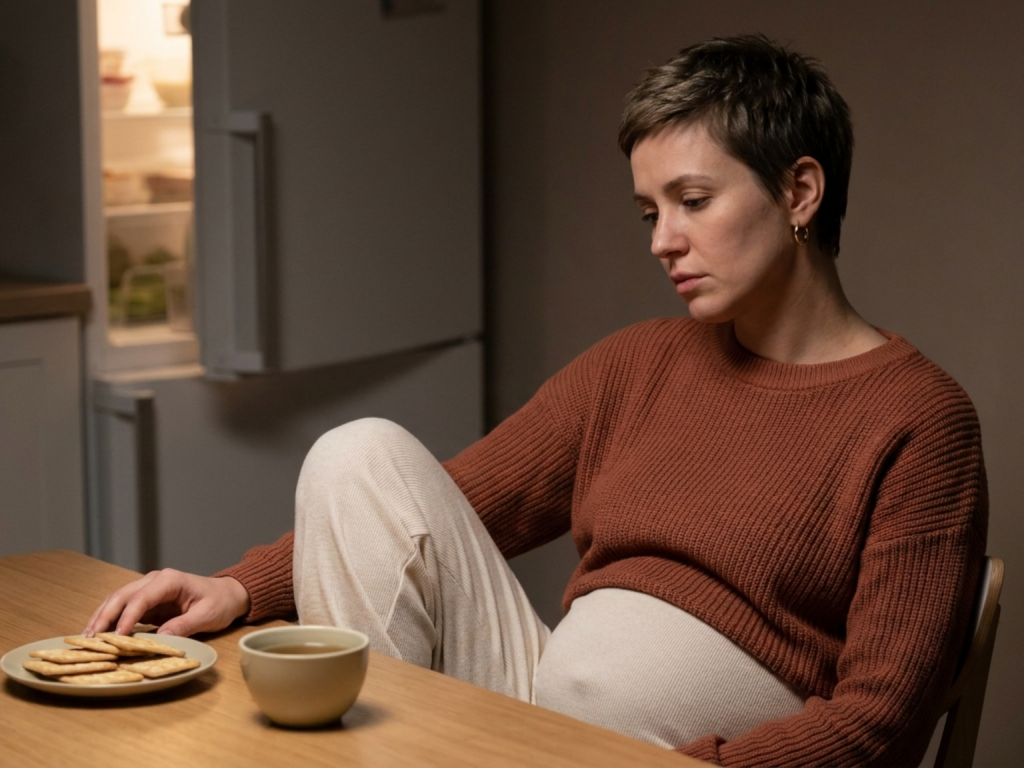
Pregnancy can change appetite in ways that feel unpredictable: one person may feel ravenous after dinner, while another can barely tolerate the smell of a favorite food. Night eating and pregnancy food aversions can coexist, and both may be shaped by nausea, sleep disruption, reflux, stress, and the body’s shifting metabolic demands.
Most of the time, these patterns are uncomfortable rather than dangerous, but they matter because they can affect hydration, nutrient intake, sleep quality, and emotional well-being. This article explains what clinicians mean by night eating syndrome, why aversions happen, how to think about the difference between common pregnancy symptoms and more concerning patterns, and when it is worth speaking with your obstetric clinician or midwife.
Highlights
Night eating is not the same as an occasional bedtime snack; a recurrent pattern of eating a large share of intake after dinner or waking at night to eat may fit a clinical syndrome.
Food aversions in pregnancy are common and often relate to nausea, vomiting, and heightened smell sensitivity, especially early on.
The combination of under-eating in the daytime and feeling hungrier later can make evening or overnight eating more likely.
Supportive nutrition strategies should focus on tolerated foods, hydration, and flexibility rather than forcing intake of trigger foods.
Persistent vomiting, weight loss, dehydration, or distress around eating deserve medical review.
What night eating means in a pregnancy context
If you notice that most of your intake is clustered after dinner, or you routinely wake to eat, it is reasonable to mention that pattern at a prenatal visit. The goal is not to label yourself, but to understand what is driving it and whether nutrition, sleep, reflux, mood, or blood glucose deserve closer attention.
Why pregnancy can shift appetite toward the evenings
Pregnancy physiology can make appetite timing less predictable. Hormonal changes, delayed gastric emptying, reflux, and fatigue can all influence when eating feels comfortable. For some people, early pregnancy appetite changes begin with nausea or aversions during the day, so by evening the body is genuinely under-fueled and the first time eating feels possible is after dinner. That can create a pattern that looks like night eating, even when the original driver is daytime under-eating.
Sleep fragmentation is another common factor. If sleep is broken by reflux, fetal movement, anxiety, urination, or discomfort, a person may become more aware of hunger signals during the night. Some people also eat more at night because the day is busy and they have limited time for regular meals. In a medically literate sense, the behavior may reflect a mismatch between energy needs, meal timing, and symptom burden rather than a primary eating disorder.
Still, repeated nocturnal eating can become self-reinforcing: eating late may worsen reflux, which disrupts sleep, which then increases fatigue and the appeal of quick carbohydrate-rich foods the next evening. If that cycle is forming, it is worth discussing early.
Food aversions: why smells, textures, and nausea matter
Food aversions are among the most recognizable pregnancy symptoms. The NHS notes that nausea and vomiting in pregnancy are common, and they can make specific foods, smells, or cooking methods feel intolerable. For some people the aversion is strongly tied to odor; for others, texture, temperature, or the sight of food is enough to trigger nausea. A once-enjoyed protein source may suddenly seem unbearable, while bland or cold foods are easier to tolerate.
These reactions are especially common in the first trimester, when pregnancy food aversions may appear abruptly and shift from day to day. Because aversions can narrow the range of accepted foods, they can lead to lower protein, iron, or vegetable intake, even when overall calories are still adequate. That is one reason clinicians pay attention to the pattern rather than dismissing it as simple pickiness.
Food aversion is not a moral failing and it is not a sign that you are doing pregnancy “wrong.” It is often a neuro-sensory and gastrointestinal response to pregnancy itself. The practical question is whether you can maintain hydration and enough tolerated nourishment while the aversion phase runs its course.
How to support nutrition when aversions are strong
When nausea and aversions are active, the most useful approach is often flexibility. Small frequent meals in pregnancy can be easier to tolerate than large plates, especially if the stomach feels emptier and then suddenly overfull. Some people do better with dry foods on waking, some with cold foods that smell less intense, and some with simple combinations that are easy to repeat. The point is not perfection; it is to preserve intake in a form the body accepts.
It can help to think in terms of tolerable building blocks: a starch, a protein source, a fruit or vegetable if possible, and fluids that you can sip. If a certain smell triggers nausea, ventilation, serving food cold, or avoiding cooking odors may make a meaningful difference. If a prenatal supplement worsens nausea, bring that up with your clinician rather than quietly stopping it, because timing, formulation, or alternate preparations may help.
For night eating, a more balanced evening snack may sometimes reduce repeated waking: something with protein, fiber, and fluid can be more satisfying than a very sugary snack. But the best option depends on the person’s symptoms, reflux, and work schedule. The guiding principle is to reduce symptom burden while still meeting nutritional needs as consistently as possible.
When night eating or aversions need clinical review
Most pregnancy-related appetite changes are manageable with routine prenatal guidance, but some patterns need more attention. Contact a healthcare professional if you cannot keep fluids down, are losing weight unintentionally, are becoming lightheaded or faint, or are eating so little that daily functioning is affected. Significant dehydration, persistent vomiting, or inability to tolerate almost all foods is not something to simply wait out.
Night eating also deserves review if it feels compulsive, is happening most nights, or is paired with insomnia, anxiety, low mood, or a sense of loss of control. In some cases clinicians will consider whether the pattern fits night eating syndrome or another sleep-related eating problem. That is not a diagnosis to self-apply; it is a reason to seek a proper assessment.
It is also wise to mention relevant medical issues such as reflux, diabetes risk, or prior eating disorders. Those details help the clinician decide whether a dietitian, mental health professional, or additional medical evaluation would be useful. The aim is support, not judgment.
What to track before your prenatal appointment
A brief diary can make the conversation much more efficient. Note when you eat, whether you wake at night to eat, what seems to trigger nausea or aversion, and which foods are reliably tolerated. If a pattern appears, such as eating very little until late evening, that can help your clinician distinguish ordinary pregnancy hunger from a repetitive cycle that might need intervention.
Also record symptoms that travel with the eating pattern: reflux, vomiting, sleep disruption, constipation, or mood changes. If you are feeling hungry at night because daytime intake is low, that is useful to know. If you wake hungry despite eating adequately, that is also useful. The same is true for aversions that are getting narrower over time or causing you to avoid entire food groups.
Bringing concrete examples to a visit often makes it easier to get practical guidance. In many cases the right answer is a combination of reassurance, symptom control, and realistic nutrition planning rather than a strict meal rule.
When to seek medical advice
- You cannot keep fluids down, or you are showing signs of dehydration such as dizziness, dark urine, or fainting.
- You are losing weight unintentionally or can barely eat for more than a day or two.
- Waking to eat is frequent, distressing, or involves little awareness of the behavior.
- Food aversions are so severe that you are avoiding most foods or whole food groups.
- You have diabetes concerns, severe reflux, or a history of an eating disorder and symptoms are worsening.
Tools & Assistance
- Your midwife, obstetrician, or family doctor
- A registered dietitian familiar with prenatal nutrition
- A simple food-and-symptom diary
- NHS pregnancy and morning sickness guidance
- Perinatal mental health support if eating feels compulsive or distressing
FAQ
Is waking up hungry in pregnancy normal?
Occasional night hunger can happen, especially if you ate little during the day or have reflux or nausea. Recurrent waking to eat, however, is worth discussing with a prenatal clinician.
Are food aversions during pregnancy dangerous?
They are common and often temporary, but they can become a problem if they lead to dehydration, weight loss, or very limited intake. That is when medical advice is important.
Should I force myself to eat foods that make me nauseated?
Usually not. It is often better to work with tolerated foods and adjust timing, texture, or temperature while seeking guidance if the list of tolerated foods becomes very small.
Can night eating mean I have an eating disorder?
Not necessarily. Pregnancy-related hunger shifts are common, but a persistent pattern of eating after dinner or waking to eat can sometimes reflect a clinical eating pattern and should be assessed if it causes distress.
Sources
- PubMed Central / National Institutes of Health — Night eating syndrome: implications for severe obesity
- NCBI Bookshelf / StatPearls Publishing — Night Eating Syndrome - StatPearls
- NHS — Pregnancy and morning sickness
Disclaimer
This article is for informational purposes only and does not replace individualized medical advice. If symptoms are severe, persistent, or worsening, please contact your obstetric clinician or midwife.














Please log in to leave a comment.