
Intro
Preparing food and recovery supports before birth is not about trying to control the unpredictable parts of labor or postpartum healing. It is about protecting your energy, reducing avoidable decisions, and making nourishment easier during a period when sleep, mobility, feeding, pain, bleeding, and emotions may all be changing quickly.
Highlights
Postpartum meal prep works best when it is simple, flexible, and matched to your medical needs, culture, appetite, and support network.
Balanced meals after birth generally emphasize protein, fiber-rich carbohydrates, fruits, vegetables, healthy fats, and steady hydration.
Recovery planning should include food, rest, medication organization, mobility limits, feeding support, and clear escalation plans for warning signs.
People recovering from cesarean birth, hypertensive disorders, gestational diabetes, anemia, severe tears, or major blood loss may need individualized guidance from their clinical team.
Start with realistic postpartum physiology
The first weeks after birth are metabolically and physically demanding. The uterus is involuting, lochia is changing, wounds may be healing, breast or chest tissue may be establishing milk production, and sleep is often fragmented. Even after an uncomplicated vaginal birth, many people have perineal swelling, hemorrhoids, constipation risk, musculoskeletal soreness, and hormonal shifts. After cesarean birth, recovery also includes abdominal surgery, incisional care, limits on lifting, and a higher need for pain-control planning.
Meal prep and recovery planning before birth should therefore be designed around low effort and high usefulness. A plan that requires elaborate cooking, strict timing, or perfect appetite is unlikely to survive contact with real postpartum life. A better goal is to create several reliable pathways to eating: freezer meals, pantry meals, ready-to-eat snacks, hydration stations, and a list of people who can bring food without needing detailed instructions.
Before delivery, ask your obstetric clinician, midwife, diabetes educator, lactation consultant, or registered dietitian whether you have any condition that should shape your postpartum food plan. Examples include gestational diabetes, hypertensive disorders of pregnancy, renal disease, thyroid disease, inflammatory bowel disease, food allergies, anemia, hyperemesis recovery, prior eating disorder, or medications with dietary interactions. General nutrition advice can be helpful, but individualized medical history matters.
Build meals around recovery nutrition, not perfection
A practical postpartum plate usually includes protein, fiber-rich carbohydrate, vegetables or fruit, and a source of fat. Protein supports tissue repair and helps with satiety; options may include eggs, poultry, fish, beans, lentils, tofu, yogurt, cottage cheese, lean meats, nuts, and seeds. Fiber-rich carbohydrates such as oats, brown rice, whole-grain bread, potatoes with skin, beans, fruit, and vegetables can support bowel regularity, which is especially important when pain medicines, iron supplements, reduced mobility, or perineal discomfort increase constipation risk.
Healthy fats can make meals more satisfying and calorie-dense when appetite is low. Olive oil, avocado, nut butters, seeds, and fatty fish are common options, depending on preferences and medical guidance. If you are breastfeeding or pumping, calorie and fluid needs may rise, but this does not mean every meal has to be large. Frequent smaller meals and snacks may be more realistic than three full meals.
It is also reasonable to plan for taste fatigue. Many people prepare several large casseroles and then cannot face eating the same texture repeatedly. Include variety in temperature, texture, and flavor: soups, rice bowls, breakfast foods, wraps, stews, roasted vegetables, smoothies, and snack plates. Comfort foods can absolutely belong in the plan. The clinical priority is not dietary purity; it is consistent nourishment, adequate fluids, and enough flexibility to keep eating possible on hard days.
Stock the freezer with low-decision options
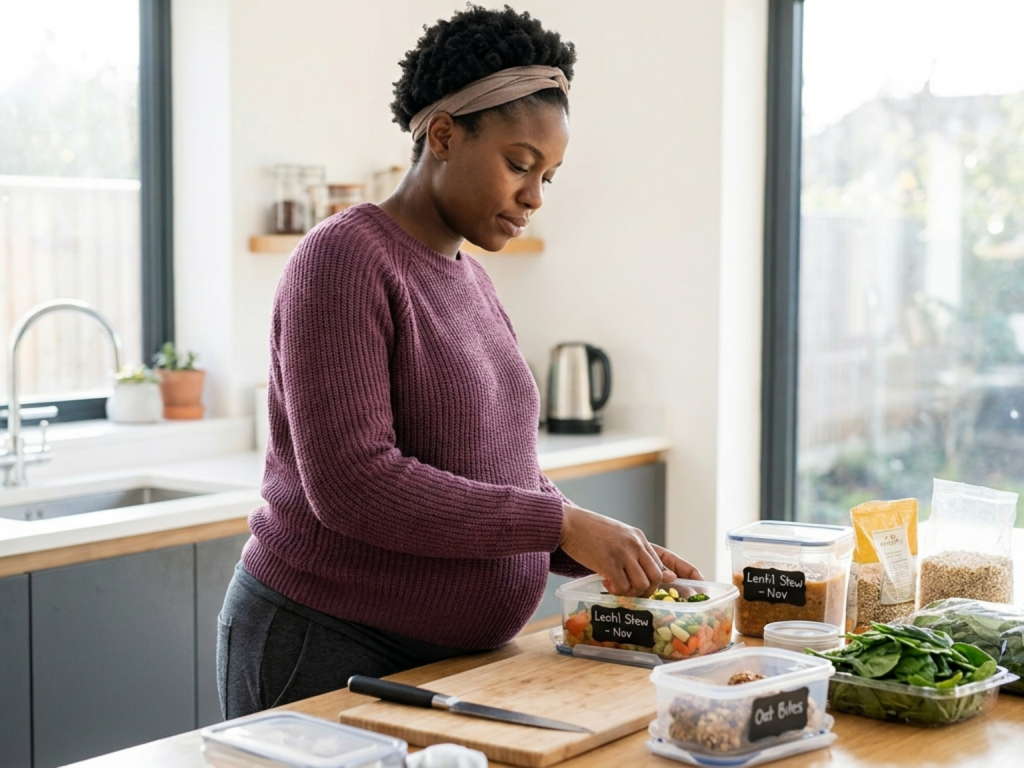
The freezer is most useful when it holds complete or nearly complete meals that can be reheated safely with minimal handling. In the last month of pregnancy, consider making double portions of meals you already cook rather than adding a separate meal-prep project. Label containers with the meal name, date, reheating instructions, and any allergens. Smaller portions are often more useful than very large containers because postpartum appetite, household schedules, and refrigerator space can be unpredictable.
Good freezer candidates include lentil soup, bean chili, chicken or vegetable stew, meatballs, cooked shredded chicken, breakfast burritos, muffins with nuts or oats, lasagna, baked oatmeal, rice-and-bean fillings, pasta sauces, and marinated proteins. If you have a planned cesarean or a higher chance of surgical birth, prioritize meals that can be moved and reheated without lifting heavy dishes.
- Freeze some single-serving meals for moments when only one adult is awake or hungry.
- Freeze components, not only full meals: cooked grains, sauces, chopped vegetables, broth, and proteins.
- Keep mild options available in case nausea, reflux, medication effects, or appetite changes appear.
- Use flat freezer bags or shallow containers when safe for the food; they thaw more quickly and stack efficiently.
Food safety remains important. Cool cooked food promptly, freeze it in suitable containers, reheat thoroughly, and discard anything that smells or looks unsafe. If friends or relatives bring meals, ask them to include ingredients and dates, especially if there are allergies, glucose concerns, or dietary restrictions.
Prepare pantry, refrigerator, and bedside snacks
Freezer meals help, but many postpartum eating moments are not sit-down meals. They are one-handed snacks during feeding, early-morning calories after a long night, or quick food before taking medication that irritates the stomach. Before birth, stock shelf-stable and refrigerated options that do not require chopping, cooking, or much cleanup.
Useful pantry items may include oats, whole-grain crackers, nut or seed butter, canned beans, canned fish, shelf-stable soups, dried fruit, nuts, trail mix, granola, rice packets, pasta, broth, and electrolyte packets if your clinician says they are appropriate. Refrigerator options might include yogurt, cheese, hummus, boiled eggs, cut fruit, washed greens, rotisserie chicken, tofu, prepared salads, and fortified milk or nondairy alternatives.
Hydration deserves its own plan. Keep water bottles in the bedroom, feeding area, bathroom, and near any postpartum recovery station. If you are lactating, thirst during feeds can be intense. If you are not lactating, hydration still supports bowel function, circulation, and general recovery. People with fluid restrictions, cardiac disease, kidney disease, preeclampsia, or significant swelling should follow their clinician’s specific instructions rather than generic hydration targets.
Think about snacks as medical logistics, not indulgence. A small snack near pain medication, iron, or stool softeners may make adherence easier if your clinician has recommended those medicines. Do not start medications or supplements solely because they are common postpartum; confirm what is appropriate for your situation.
Plan recovery support before labor begins
Food planning works best when it is integrated into a broader postpartum support plan. Before labor, decide who can handle groceries, dishes, laundry, pet care, older-child care, transportation, and meal drop-offs. The person recovering from birth should not have to become the household dispatcher while bleeding, healing, feeding, or recovering from anesthesia.
A simple written plan can include emergency contacts, pharmacy information, medication and allergy information, feeding preferences, pediatrician details, and the best times for visitors to bring food. It can also state what help is actually useful: washing bottles or pump parts, taking out trash, loading the dishwasher, holding the baby while the birthing parent showers, or bringing a warm meal in a disposable or easily returned container.
Recovery needs differ by birth course. After vaginal birth, support may focus on perineal care essentials after birth, bowel comfort, pelvic rest instructions, and monitoring bleeding. After cesarean birth, the plan should account for incision protection, stair use, lifting limits, driving restrictions if applicable, and pain medication timing. In either case, ask your clinical team what level of activity is recommended and which symptoms require urgent evaluation.
It is also wise to prepare for emotional variability. Postpartum mood changes can be mild and transient, but anxiety, depression, intrusive thoughts, panic, or inability to sleep even when the baby sleeps deserve prompt professional support. Meal trains and household help are not substitutes for mental health care when symptoms are significant.
Make the plan adaptable for feeding and medical needs
Whether you breastfeed, chestfeed, pump, combination feed, use donor milk, or formula feed, you deserve food and recovery support. Lactation can increase hunger and thirst, and some people find that protein-rich snacks and easy fluids help them meet their needs during long feeding sessions. However, there is no universal postpartum diet that guarantees milk supply, prevents mood symptoms, or accelerates healing. Be cautious with lactation supplements, herbal products, and high-dose vitamins; some can interact with medications or medical conditions.
If you had gestational diabetes, ask when glucose monitoring should stop and whether postpartum diabetes screening is scheduled. If you had anemia or postpartum hemorrhage, discuss iron supplementation, dietary iron, constipation prevention, and follow-up labs. If you had preeclampsia or gestational hypertension, clarify blood pressure monitoring, medication instructions, fluid guidance, and warning signs. If you had a third- or fourth-degree tear, bowel management may be especially important and should be directed by your clinician.
Adaptability also includes cultural and sensory needs. Warm foods, soups, specific spices, family recipes, vegetarian meals, religious dietary practices, and familiar textures may make eating feel safer and more comforting. Recovery planning should not erase identity or preference. The best plan is medically aware and personally usable.
Use a simple final-week checklist
In the final weeks before birth, aim for completion rather than intensity. A birth preparation checklist can help you avoid mental overload. Focus on the highest-impact tasks: freeze several meals, stock snacks, confirm support people, prepare recovery supplies, and write down medical contacts. If birth happens earlier than expected, even partial preparation can still help.
- Choose five to ten meals or components your household already likes.
- Buy containers, labels, easy snacks, and hydration supplies.
- Create a shared grocery list for support people.
- Write down allergies, dietary restrictions, preferred restaurants, and foods you do not want.
- Set up a small eating and hydration area near the most likely feeding or resting spot.
- Confirm who can help during the first 72 hours and the first two weeks.
Do not let meal prep become another late-pregnancy performance standard. If cooking is not feasible, plan alternatives: grocery delivery, prepared foods, frozen store-bought meals, community meal trains, family cooking days, postpartum doulas, or asking visitors to bring specific items. The goal is a lower-friction recovery, not a full freezer as proof of readiness.
When to seek medical guidance
- Call your maternity care team urgently for heavy bleeding, large clots, fainting, chest pain, shortness of breath, severe headache, vision changes, or right upper abdominal pain.
- Seek prompt care for fever, worsening incision or perineal pain, foul-smelling discharge, calf pain, or one-sided leg swelling.
- Contact a clinician for persistent inability to eat or drink, repeated vomiting, severe constipation, or symptoms of dehydration.
- Get urgent mental health support for thoughts of self-harm, harming the baby, hallucinations, paranoia, or feeling unable to stay safe.
- Ask for individualized nutrition advice if you have diabetes, hypertension, kidney disease, anemia, eating disorder history, food allergies, or complex medications.
Tools & Assistance
- Shared grocery and meal-train list with allergies and preferred foods
- Freezer labels with meal name, date, ingredients, and reheating instructions
- Postpartum recovery station with water, snacks, medications approved by your clinician, and hygiene supplies
- Registered dietitian, lactation consultant, midwife, obstetric clinician, or postpartum doula
- Blood pressure cuff or glucose monitoring supplies if specifically recommended by your care team
FAQ
When should I start postpartum meal prep?
Many people start in the early third trimester and do the most practical freezer and pantry work around 34 to 37 weeks. If you have a higher chance of early delivery, ask your clinician how to prioritize preparation sooner.
Do I need a special diet after giving birth?
Most people benefit from balanced, regular meals with protein, fiber-rich carbohydrates, fruits, vegetables, fats, and fluids. Specific medical conditions, medications, allergies, or lactation concerns may require individualized advice.
What are the easiest foods to eat while feeding a newborn?
One-handed foods often help: wraps, burritos, boiled eggs, yogurt, cheese, cut fruit, nut-butter toast, muffins, smoothies, hummus with crackers, and pre-portioned leftovers.
How should I plan meals if I have a cesarean birth?
Prioritize foods that are easy to reheat, not heavy to lift, and supportive of bowel regularity. Ask your clinical team about pain medicines, constipation prevention, activity limits, and incision-related precautions.
Are lactation teas or supplements necessary?
They are not necessary for everyone and may not be appropriate with certain conditions or medications. Discuss herbs, supplements, and supply concerns with a lactation consultant or clinician.
Sources
- Healthline — Postpartum Diet Plan: Tips for Healthy Eating After Giving Birth
- FamilyEducation — Your Postpartum Meal Plan: Healthy and Simple Postpartum Diets
- Cradlewise — A doula's tips on postpartum meal planning and nutrition
Disclaimer
This article is for general educational purposes and is not a diagnosis, treatment plan, or substitute for individualized medical care. Consult your obstetric, midwifery, nutrition, or lactation professional about your specific needs.














Please log in to leave a comment.