
Intro
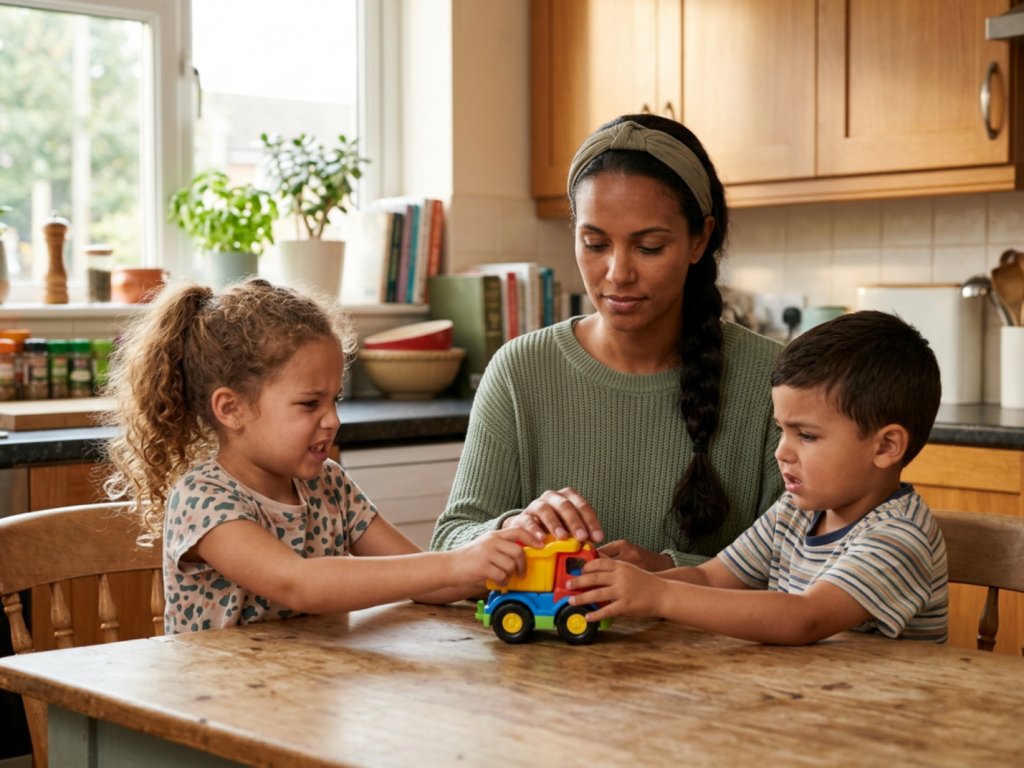
Sibling conflict is one of the most common family stressors in childhood. It can look ordinary from the outside, but for children it may feel intense: a toy is taken, a boundary is crossed, a younger child follows an older one too closely, or a new baby changes the family balance. Many disagreements are part of normal development, especially when children are close in age or still learning self-control.
At the same time, repeated conflict matters. Research suggests that sibling relationships can act as both a source of risk and a source of resilience for emotional and behavioral adjustment. In practical terms, the pattern of arguing, hitting, mocking, or excluding can shape how children learn to regulate emotion, negotiate, and recover after stress.
Highlights
Sibling conflict is often a mix of temperament, developmental stage, shared resources, and attention needs rather than simple dislike.
Common patterns include bickering, name-calling, physical aggression, jealousy, and regression after family changes such as a new baby.
Frequent or intense conflict can affect adjustment, especially when it becomes one child’s expected role in the family.
Supportive parenting usually focuses on safety, clear limits, emotional coaching, and fair mediation rather than choosing sides.
Why sibling conflict is so common
Siblings live in close proximity, compete for time and attention, and often have uneven power depending on age, size, language skills, and impulse control. That combination makes conflict almost inevitable. A preschooler may not yet have the inhibitory control to wait, share, or tolerate frustration. An older child may understand the rules but still react strongly to perceived unfairness or intrusion.
From a developmental perspective, many disputes are not just about the object in question. They may reflect attachment needs, rivalry for parental attention, territorial behavior, or simple mismatch in temperament. One child may be highly reactive, while another becomes provocative when bored or overstimulated. The result can be a repeating interactional cycle of conflict in which each child’s behavior escalates the other’s.
This is why sibling conflict is best understood as a relationship pattern, not a single bad moment. A brief argument over a toy is usually not concerning. Repeated episodes that end in tears, fear, or physical aggression deserve closer attention because they may interfere with emotional learning and family stability.
What sibling conflict often looks like in real life
Parents often notice predictable forms of rivalry, especially during transitions such as school stress, bedtime, or the arrival of a new baby. Mayo Clinic guidance notes that older siblings may respond with bickering, name-calling, hitting, or regressive behavior. These reactions are not unusual, but they can be exhausting and confusing for families.
- Verbal sparring, teasing, or repeated tattling
- Competition for toys, seats, devices, or parental attention
- Shoving, grabbing, hitting, or kicking
- Refusal to share space, food, or belongings
- Jealousy when one child receives praise, help, or privileges
- Temporary regression such as baby talk, clinginess, or sleep disruption after family change
In many homes, the same themes recur because children are still learning how to express frustration without aggression. The presence of conflict does not automatically mean the relationship is unhealthy. The pattern becomes more important than the isolated event. If the children can cool down, repair, and move on, the conflict may be part of normal learning. If not, the behavior may need more structured adult support.
Why some children clash more than others
No two siblings share the same nervous system or developmental timeline. One child may have higher sensory sensitivity, a lower frustration threshold, or more difficulty with executive function, which includes planning, inhibition, and flexible shifting. Another may be more verbal, more physically assertive, or more comfortable pushing boundaries. These differences can make ordinary disagreements feel larger and faster.
Context matters too. Conflict often increases when children are tired, hungry, overstimulated, or rushed. Family stress, inconsistent routines, changes in caregiving, and major life events can reduce a child’s capacity for self-regulation. In those moments, a small provocation may trigger a disproportionate reaction.
It also helps to remember that some conflict is about identity. Older children may resent being copied. Younger children may want access to the same privileges. Children with strong attachment needs may compete for the closest relationship with a parent. When adults can name the underlying need, the behavior often becomes easier to interpret and manage.
When sibling conflict becomes a concern
Most sibling disagreements are brief and recoverable. Concern rises when aggression is frequent, one-sided, or associated with fear, injury, humiliation, or coercion. A child who constantly avoids a sibling, appears tense at home, or expects to be hurt may be living with more than ordinary rivalry.
Signs that deserve a closer look include:
- Physical aggression that causes injury or requires repeated adult intervention
- Threats, intimidation, or persistent cruelty
- One child always being the target while the other rarely loses control
- Marked changes in sleep, appetite, school functioning, or mood
- Conflict that spreads into across home, school, or social settings
In some families, repeated sibling stress also overlaps with anxiety, depressive symptoms, trauma exposure, or neurodevelopmental differences. That does not mean conflict is the cause of every difficulty, but it does mean the family may benefit from a broader assessment. If the pattern includes developmental regression warning signs, such as a sudden loss of toileting skills, speech, or previously stable behavior, it is especially sensible to consult a clinician.
What helps reduce sibling conflict
The best-supported approaches in the research literature tend to combine child skill-building with parent mediation training. Reviews of sibling intervention studies suggest that social-skills coaching for children and guidance for parents in how to mediate disputes can improve some outcomes, especially aggression and problem-solving. The goal is not to eliminate all disagreement, but to reduce escalation and teach repair.
Helpful strategies often include:
- Setting clear household rules about safety, respect, and when adults step in
- Avoiding comparisons such as “why can’t you be more like your sibling?”
- Staying neutral when possible and listening to each child’s account
- Separating children briefly when emotions are high, then returning to the problem later
- Praising cooperation, turn-taking, and repair after an argument
- Building one-on-one time so children do not feel they must compete for every bit of attention
It can also help to interrupt the interactional cycle of conflict early. When adults respond only after a blowup, children may learn that escalation is the path to attention. When adults notice the first signs of teasing, grabbing, or rising tension, they can redirect before the argument becomes entrenched. Over time, children often learn that conflict can end without humiliation or force.
When to seek professional support
Families do not need to wait for a crisis before asking for help. A pediatrician, child psychologist, or family therapist can help distinguish developmentally typical rivalry from patterns that may need more structured intervention. This is especially important when one child seems consistently overwhelmed, frightened, or singled out.
Professional support is worth considering if:
- Fights are frequent, severe, or physically dangerous
- There is a sustained pattern of blame, scapegoating, or fear
- Conflict is affecting school attendance, sleep, eating, or friendships
- Parents feel unable to mediate without the situation escalating
- There are concerns about trauma, anxiety, depression, or neurodevelopmental differences
Sibling relationships can be a source of resilience when adults help children learn repair, empathy, and boundaries. They can also amplify risk when conflict becomes chronic and unmanaged. The key is not to label every disagreement as pathological, but to watch the pattern, protect safety, and ask for help when the pattern starts to shape a child’s well-being.
Seek help promptly if you notice:
- A child is injured, terrified, or unable to feel safe around a sibling.
- Aggression is repeated, escalating, or clearly one-sided.
- A child shows sudden regression, withdrawal, or major mood change.
- Family attempts at mediation repeatedly fail and stress is rising.
- There are concerns about anxiety, trauma, or developmental difficulties.
Tools & Assistance
- Pediatrician or primary care visit for a developmental and behavioral check-in
- Child psychologist or family therapist for conflict patterns and emotional regulation support
- School counselor if sibling stress is spilling into school behavior or concentration
- Family rules sheet with simple safety limits and repair steps after arguments
FAQ
Is sibling rivalry normal?
Yes, some rivalry is common in childhood. The key question is whether the conflict is occasional and recoverable, or frequent, intense, and distressing.
Does sibling conflict mean my children do not love each other?
No. Children can care deeply about each other and still fight over territory, attention, fairness, or control.
Should parents always intervene right away?
Not always. Minor disagreements can sometimes be managed by children themselves, but adults should step in quickly if there is hitting, intimidation, fear, or repeated escalation.
Can sibling conflict affect mental health?
Yes. Research links chronic sibling conflict with later adjustment problems in some children, although supportive sibling relationships can also be protective.
Sources
- PubMed — The State of Interventions for Sibling Conflict and Aggression
- PubMed — Sibling relationships as sources of risk and resilience in the development of adjustment problems in childhood and adolescence
- Mayo Clinic Press — How older siblings may react to a new baby
Disclaimer
This article is for informational purposes only and is not a diagnosis or medical advice. If sibling conflict is severe, persistent, or involves injury, fear, or developmental regression, please consult a qualified healthcare professional.














Please log in to leave a comment.