
Intro
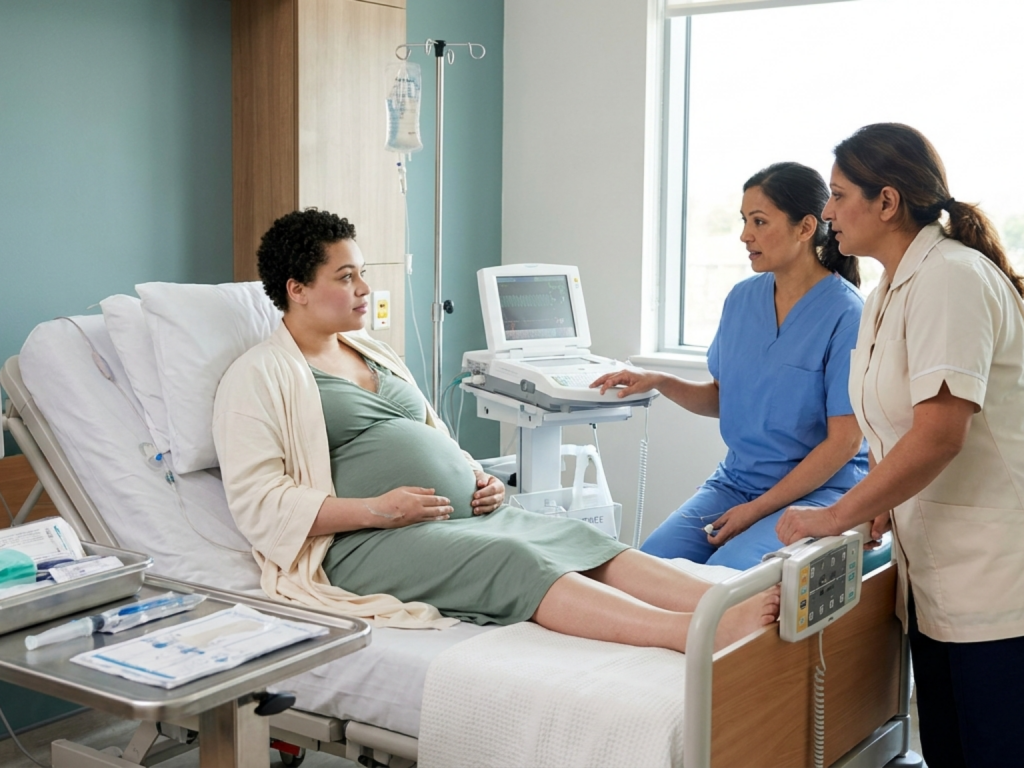
Assisted delivery with epidural brings together two common parts of modern birth care: neuraxial pain relief and instrumental help with vaginal birth. This situation can arise when the cervix is fully dilated, the baby is low enough in the pelvis, and the clinical team believes that forceps or vacuum assistance may help complete the birth safely.
For many people, the words "assisted delivery" can sound abrupt or frightening, especially if the decision is made quickly. An epidural can make the procedure more tolerable, but it does not remove the need for clear communication, careful assessment, informed consent, and individualized medical judgment.
Highlights
An epidural may already be working when forceps or vacuum assistance is recommended, or it may be topped up to provide stronger pain relief for the procedure.
Modern evidence is more nuanced than older teaching: earlier studies linked epidurals with more assisted vaginal births, while more recent trials show no clear increase with contemporary techniques.
Assisted vaginal birth is considered only when specific clinical prerequisites are met, including full dilation, known fetal head position, and a plan if the attempt is not successful.
Recovery depends on the type of instrument, perineal trauma, duration of pushing, bladder function, and emotional experience, not just whether an epidural was used.
What assisted delivery with epidural means
Assisted delivery, also called assisted vaginal birth or operative vaginal birth, means that an obstetric clinician uses an instrument to help guide the baby through the final part of the birth canal. The two main instruments are vacuum extraction, which uses a suction cup placed on the fetal scalp, and forceps delivery, which uses curved blades positioned around the baby’s head. These are not casual interventions; they are considered when vaginal birth appears close but additional help is needed.
An epidural is a form of neuraxial analgesia. Medication is delivered through a small catheter placed in the epidural space near the spinal nerves, usually giving strong contraction pain relief while allowing some pressure and movement. During an assisted delivery, the existing epidural may be continued or topped up. If there is no epidural, other pain relief or regional anesthesia may be considered depending on urgency, the instrument planned, and local practice.
When assisted delivery with epidural is discussed, it usually means the person is already in the second stage of labor, after full cervical dilation. The baby’s head should be low enough for an experienced clinician to judge that vaginal birth is achievable. The team also assesses maternal wellbeing, fetal heart rate, bladder emptying, fetal head position, and whether there is a safe backup plan, including moving to cesarean birth if the attempt is not appropriate or unsuccessful.
Why assistance may be recommended
Assisted vaginal birth is commonly considered for a prolonged second stage, exhaustion, ineffective descent despite pushing, or a concerning fetal heart rate pattern when birth needs to be expedited. In some cases, medical conditions affecting the birthing person may make prolonged active pushing less desirable. The decision is based on the whole clinical picture, not simply on the presence of an epidural.
An epidural can change the sensations of second-stage labor. Some people feel less spontaneous urge to push, especially if the block is dense. Others feel pressure clearly enough to coordinate pushing well. Clinicians may use contraction cueing during pushing, position changes, or a period of delayed pushing after full dilation, sometimes called laboring down with epidural, if the baby and birthing person are stable. These approaches aim to allow descent before active pushing begins.
It is important to separate correlation from cause. Historically, epidurals were associated with a higher rate of assisted vaginal birth, and older trials reflected medication doses and management styles that differ from many current practices. Contemporary epidural techniques often use lower concentrations of local anesthetic, sometimes combined with opioids, to preserve more motor function. A large Cochrane review found that while older studies suggested increased assisted vaginal birth with epidurals, more recent studies after 2005 did not show a clear difference.
How the epidural is used during forceps or vacuum birth
If an epidural catheter is already in place and functioning, the anesthesia team or obstetric team may assess the level and density of the block. For an instrumental birth, pain relief often needs to cover vaginal examination, instrument placement, perineal stretching, and possible episiotomy or repair. A top-up dose may be given if the existing block is insufficient, while vital signs and fetal status are monitored.
The goal is not necessarily complete numbness. Clinicians often want a balance: enough analgesia for humane, controlled care, but ideally enough sensation or motor function for the birthing person to participate in pushing when appropriate. In urgent circumstances, the balance may shift toward speed and adequate procedural anesthesia. If pain is severe despite an epidural, the team should know immediately; breakthrough pain can happen if the catheter is patchy, migrated, or not covering the sacral nerves well.
For vacuum extraction, the clinician places a cup on the baby’s head and applies traction during contractions while the birthing person pushes if able. For forceps delivery, the blades are positioned around the head and traction is coordinated with contractions. The clinician should explain what is happening, what sensations to expect, and what would lead them to stop. An assisted birth attempt is usually abandoned if descent is not occurring, cup detachments occur repeatedly with vacuum, or safety criteria are no longer met.
Benefits and limits of epidural in assisted birth
The most immediate benefit of epidural analgesia is pain control. Instrumental birth can involve intense pressure, perineal stretching, episiotomy, and repair of tears. Having an epidural in place can reduce suffering and may make it easier for the clinician to perform a controlled birth, especially when time allows careful preparation. For some people, it also reduces fear because they can remain awake, aware, and supported while avoiding the pain of an unmedicated procedure.
Research on epidural and assisted delivery is mixed and context dependent. A retrospective cohort study of primiparous women reported that epidural analgesia was associated with a lower failed vacuum-assisted delivery rate, without an increase in measured maternal or neonatal adverse outcomes. This does not mean epidurals guarantee success, but it suggests that in some settings epidural use may support a more controlled and successful vacuum attempt.
The limits are also real. A dense epidural block during pushing may reduce mobility, impair proprioception, or make it harder to feel contractions. Epidurals can be associated with maternal hypotension, fever, urinary retention, itching, motor block, and the need for bladder catheterization, although individual risk varies. Rare complications include severe headache from dural puncture, infection, bleeding, nerve injury, or local anesthetic toxicity. These are reasons for proper monitoring, not reasons to assume epidural is inappropriate.
Epidural analgesia does not eliminate all risks of assisted delivery. Forceps and vacuum can be associated with perineal trauma, obstetric anal sphincter injuries, postpartum pain, bleeding, and pelvic floor symptoms. For the baby, possible issues include scalp swelling, bruising, cephalohematoma, facial marks, or, rarely, more serious injury. The absolute risk depends on fetal position, station, instrument type, operator skill, urgency, and whether the attempt is stopped promptly when progress is poor.
Consent, communication, and clinical checks
Even when the situation is urgent, consent matters. The clinician should explain why assistance is being recommended, which instrument is proposed, what the main alternatives are, and what may happen if the attempt does not work. Informed consent for assisted delivery does not have to be a long lecture during an emergency, but it should be understandable and respectful. People often remember not only the procedure but whether they felt informed and included.
Key prerequisites usually include full cervical dilation, ruptured membranes, an engaged fetal head, known head position, adequate pelvis assessment, empty bladder, appropriate analgesia or anesthesia, and a clinician trained in the chosen instrument. The team should also have a plan for neonatal assessment after birth and for escalation if the birth does not proceed as expected.
Communication during the birth can help preserve dignity. Useful statements include when a contraction is starting, when to push, when traction is being applied, whether descent is occurring, and whether the plan is changing. If the birthing person feels pain, panic, pressure without warning, or uncertainty, those concerns are clinically relevant. Support people can also help by repeating information, maintaining eye contact, and asking for clarification when the person in labor is overwhelmed.
Recovery after assisted delivery with epidural
After birth, attention shifts to bleeding, perineal repair, bladder function, pain control, mobility, and the baby’s condition. If an epidural was used, the legs may remain heavy or numb for a period, so getting out of bed should wait until staff confirm strength and sensation are returning. Urinary retention can occur after epidural, prolonged labor, or instrumental birth, and may require monitoring or temporary catheterization.
Perineal recovery varies widely. Some people have no tear or a small tear, while others need suturing for an episiotomy or more complex laceration. Ice packs, appropriate analgesia, stool-softening measures, pelvic floor guidance, and follow-up assessment may be part of care. Severe pain, fever, heavy bleeding, wound breakdown, urinary or fecal incontinence, worsening swelling, or symptoms of infection should be assessed promptly by a healthcare professional.
Emotional recovery after assisted delivery also deserves attention. Some people feel relief and gratitude; others feel shocked, disappointed, or frightened by how quickly decisions unfolded. These reactions can coexist. A postnatal debrief with the obstetric or midwifery team can help explain why assistance was recommended, what instrument was used, whether there were complications, and what it may mean for a future birth. Assisted delivery with epidural is a clinical event, but it is also a personal birth experience that may need time and support to process.
Seek urgent medical advice if
- You have heavy bleeding, faintness, chest pain, shortness of breath, or feel acutely unwell after birth.
- You develop fever, worsening pelvic or perineal pain, foul-smelling discharge, or a wound that opens.
- You cannot pass urine, lose bladder or bowel control, or have new leg weakness or numbness after the epidural should have worn off.
- Your baby is unusually sleepy, feeding poorly, has worsening scalp swelling, seizures, or any breathing concern.
- You feel persistently distressed, panicky, detached, or unable to sleep because of memories of the birth.
Tools & Assistance
- Ask the obstetric or midwifery team for a postnatal birth debrief.
- Request assessment from an anesthetist if numbness, weakness, severe headache, or back symptoms persist.
- Use maternity triage, labor ward, or urgent care pathways for concerning postpartum symptoms.
- Arrange pelvic floor physiotherapy if you have pain, heaviness, incontinence, or recovery concerns.
- Bring written questions to your postpartum visit, including instrument used, tear grade, and implications for future birth.
FAQ
Does having an epidural mean I will need forceps or vacuum?
No. Older studies found higher assisted vaginal birth rates with epidurals, but more recent evidence using modern techniques shows no clear difference. Many people with epidurals have spontaneous vaginal births.
Can I still push effectively with an epidural?
Often, yes. Some people feel pressure and coordinate pushing well; others need contraction cueing or time for the baby to descend. A very dense block may make pushing harder, so clinicians may adjust support based on sensation and progress.
Is assisted delivery with epidural safer than cesarean birth?
It depends on the situation. If the baby is low and prerequisites are met, assisted vaginal birth may avoid a second-stage cesarean. If criteria are not met or the attempt is unsuccessful, cesarean birth may be safer. This decision is individualized.
Will the epidural cover stitches after forceps or vacuum?
If the epidural is working well, it can often be used for perineal repair. If coverage is incomplete, additional local anesthetic or other pain relief may be needed.
What should I ask after the birth?
Useful questions include why assistance was recommended, which instrument was used, whether there was an episiotomy or tear, how the baby was assessed, and what symptoms should prompt urgent review.
Sources
- PubMed — Epidural analgesia and vacuum-assisted delivery in primiparous women: a retrospective cohort study
- Cochrane / PubMed Central — Epidural versus non-epidural or no analgesia for pain management in labour
- NHS — Forceps or vacuum delivery
Disclaimer
This article is for general medical information only and does not replace care from your midwife, obstetrician, anesthetist, or pediatric team. Always seek professional advice for decisions about labor, birth, and postpartum symptoms.


















Please log in to leave a comment.