
Intro
School age emotional development is the gradual strengthening of a child’s ability to understand feelings, manage impulses, build friendships, tolerate frustration, and see themselves as a capable person. It usually spans the primary school years and continues into the early preteen period, when peer relationships, school expectations, and self-consciousness become more powerful.
Children in this stage can often think more logically than preschoolers, but their emotional regulation is still developing. They may sound mature one moment and become overwhelmed the next. Support works best when adults combine warmth, clear limits, realistic expectations, and timely professional guidance when concerns are persistent or impairing.
Highlights
School-age children are learning to regulate emotions, understand social rules, and separate fantasy from reality more consistently.
Self-esteem becomes closely tied to competence, peer acceptance, and adult feedback, so praise should be specific and realistic.
Friendship conflict, jealousy, embarrassment, and peer pressure are common developmental challenges, not automatic signs of pathology.
Caregivers can support emotional growth through predictable routines, open communication, clear rules, and positive discipline.
Persistent distress, regression, avoidance, aggression, or major functional impairment should be discussed with a pediatrician or qualified mental health professional.
What changes during the school years
School age emotional development sits between early childhood dependence and adolescent autonomy. Most children become better able to name feelings, delay immediate reactions, understand rules, and consider another person’s point of view. Their prefrontal cortex, which supports executive functions such as inhibition, planning, cognitive flexibility, and working memory, is still immature, so emotional control remains variable.
A child may be able to explain why hitting is wrong but still shove a sibling when tired, hungry, embarrassed, or overstimulated. This gap between knowledge and performance is typical. The goal is not perfect self-control; it is a gradual increase in recovery time, problem solving, and willingness to repair after conflict.
Children also become more realistic thinkers. They are increasingly able to distinguish fantasy from reality, understand cause and effect, and notice inconsistencies in adult explanations. This helps them feel safer when adults give honest, age-appropriate information. It can also make them more vulnerable to worry because they better understand illness, accidents, family conflict, unfairness, and social rejection.
Emotional regulation and coping
Emotional regulation in school-age children includes recognizing body signals, labeling emotions, pausing before action, using words, and returning to baseline after distress. These skills are learned through repeated co-regulation: an adult stays calm enough to help the child organize their own nervous system. Over time, the child internalizes that pattern.
Common emotions in this age group include jealousy, pride, shame, worry, anger, sadness, and guilt. Jealousy may appear around siblings, friendships, grades, sports, or attention from adults. Shame may appear as defiance because admitting hurt or failure feels too exposed. Anxiety may show up as stomachaches, refusal, perfectionism, irritability, or repeated reassurance seeking.
Useful caregiver responses are concrete and brief. Name the feeling, set the limit, and offer a next step. For example: “You are angry that the game ended. It is not okay to throw the controller. You can take a break or help me choose what happens next.” This approach validates emotion without endorsing unsafe behavior.
Children also learn that emotions can be hidden. Masking feelings can be adaptive in some settings, such as staying composed in class, but chronic suppression can increase stress. Families can help by creating regular opportunities for honest conversation, especially at low-pressure times such as car rides, walks, bedtime routines, or shared chores.
Self-esteem, competence, and identity
In middle childhood, children compare themselves with peers more often. They notice who reads quickly, who is invited to parties, who wins games, who gets corrected, and who seems liked by teachers. Self-esteem becomes increasingly linked to perceived competence and belonging. Warm parenting remains protective, but vague praise may be less effective than specific reinforcement.
Instead of “You are the best,” children benefit from feedback such as “You kept trying even after the first answer was wrong,” or “You told your friend you needed space without insulting them.” This kind of praise strengthens self-efficacy, the belief that effort and strategies can influence outcomes.
School-age children also begin forming a more complex identity. They may think about gender roles, cultural background, family values, body size, abilities, interests, and fairness. Adults do not need to have perfect answers to every difficult topic. They do need to be emotionally available and willing to discuss bullying, exclusion, identity, online experiences, and family stress without immediate criticism or panic.
When a child feels chronically incompetent, emotional symptoms may intensify. Learning disorders, attention difficulties, sleep problems, sensory processing differences, or chronic stress can all look like laziness, oppositionality, or low motivation. School-age behavior problems sometimes reflect unmet developmental, educational, or mental health needs rather than deliberate misbehavior.
Friendships, empathy, and peer pressure
Peers become a major emotional classroom during the school years. Children practice cooperation, negotiation, loyalty, apology, humor, leadership, and repair. Friendships may shift quickly, especially in groups where status and belonging change from week to week. A child who seems devastated by a playground conflict may be responding to a real developmental threat: the fear of exclusion.
Between about 8 and 10 years, many children show more independence and confidence. They may want more privacy, stronger friendships, and chances to take reasonable risks. They also become more sensitive to peer pressure. This does not mean caregivers should withdraw; it means guidance should become more collaborative.
Adults can ask questions that build social cognition: “What do you think your friend felt when that happened?” “What were your choices?” “What could you try tomorrow?” These questions teach perspective taking without turning every conflict into a lecture.
Group activities, team projects, clubs, sports, music, or community programs can support social-emotional development in children when the environment is safe and well supervised. The best fit is not always the most competitive option. Some children thrive in structured groups with clear rules; others need smaller settings where they can build confidence gradually.
What school-age children need from adults
Children in this stage need warmth and structure at the same time. Warmth communicates that the relationship is secure. Structure communicates that the world is predictable and that adults can hold boundaries. A child who receives only warmth may feel emotionally supported but unsure about limits. A child who receives only control may comply outwardly while becoming anxious, resentful, or secretive.
Helpful emotional supports include:
- Predictable routines for sleep, meals, schoolwork, play, and screens.
- Clear family rules that are explained before conflict occurs.
- Positive discipline, meaning instruction, repair, and logical consequences rather than humiliation or fear.
- Specific praise for effort, honesty, kindness, problem solving, and emotional recovery.
- Regular conversations about friendships, school stress, online experiences, and worries.
Children also need adults to model emotional literacy. It is useful for a parent to say, “I am frustrated, so I am going to take a minute before I answer.” This shows that strong feelings are manageable. Apologizing after an adult overreacts is also powerful; it teaches accountability without weakening authority.
Expectations should be realistic. A tired seven-year-old may need help starting homework. A ten-year-old may need coaching to plan a project. Independence grows best when adults provide scaffolding, then gradually reduce support as the child demonstrates readiness.
Responding to big feelings and difficult behavior
When a child has a strong emotional reaction, the first task is safety and regulation, not moral analysis. Long explanations during a meltdown often fail because the child’s arousal level is too high for reflective thinking. A calm voice, fewer words, physical space, and a simple limit usually work better.
After the child is calmer, adults can help them review what happened. A practical sequence is: identify the trigger, name the feeling, describe the behavior, discuss the impact, and choose a repair. Repair might mean apologizing, replacing an item, drawing a plan, practicing words for next time, or taking responsibility in another concrete way.
It is important to separate the child from the behavior. “You are a bad kid” increases shame and defensiveness. “Throwing the book was unsafe, and we need a different plan for anger” keeps the focus on learning. This distinction is especially important for children who already struggle with attention, anxiety, trauma exposure, learning differences, or chronic criticism.
Caregivers should also look for patterns. Does the behavior happen before school, during transitions, after screen time, with certain peers, during reading, or when sleep is poor? Patterns can reveal modifiable triggers. If concerns persist, a pediatrician, school counselor, psychologist, developmental-behavioral specialist, or other qualified clinician can help assess contributors without assuming one cause.
When to seek professional guidance
Variation is normal, but some patterns deserve timely attention. Seek professional guidance when emotional distress is persistent, escalating, or impairing daily life. Examples include ongoing school refusal, frequent panic-like episodes, prolonged sadness, withdrawal from previously enjoyed activities, repeated aggression, self-injury, talk of wanting to die, severe sleep disruption, major appetite change, regression, or intense fear after a stressful event.
Care is also warranted when family strategies that used to help no longer work, or when teachers report that emotions or behavior are interfering with learning and peer relationships. Developmental surveillance and screening can help clarify whether concerns involve anxiety, depression, attention-deficit/hyperactivity disorder, autism-related social communication differences, learning disorders, trauma responses, sleep disorders, medical conditions, or environmental stressors.
Professional support does not mean a child has failed. It can provide parents and teachers with a shared formulation, practical accommodations, and evidence-informed strategies. For urgent safety concerns, caregivers should contact local emergency services, a crisis line, or the child’s healthcare team immediately.
Get help promptly
- Seek urgent help if a child talks about self-harm, wanting to die, or harming someone else.
- Consult a healthcare professional if emotional distress causes school refusal, social withdrawal, or major sleep or appetite changes.
- Do not assume aggression, refusal, or irritability is simply deliberate misbehavior.
- Ask for assessment when learning difficulties, bullying, trauma, or anxiety may be contributing.
- Use emergency or crisis services if safety cannot be maintained at home or school.
Tools & Assistance
- Schedule a visit with the child’s pediatrician for persistent emotional or behavioral concerns.
- Ask the school counselor or psychologist about classroom observations and support plans.
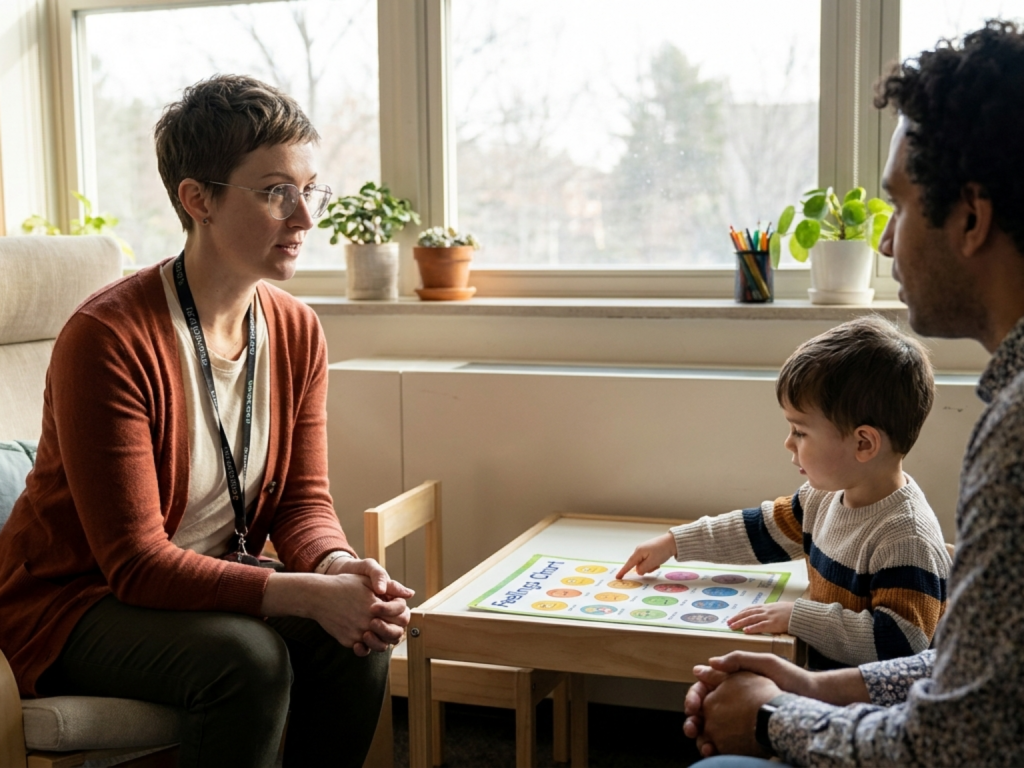
- Use a simple feelings chart or emotion scale during calm moments.
- Create predictable routines for sleep, homework, meals, play, and screen time.
- Keep brief notes on triggers, behaviors, recovery time, and what helped.
FAQ
Is it normal for a school-age child to still have meltdowns?
Yes, occasional meltdowns can be normal, especially with fatigue, hunger, stress, or transitions. Frequent, intense, unsafe, or impairing episodes should be discussed with a healthcare professional.
How should parents respond when a child says they hate themselves?
Stay calm, take the statement seriously, and ask simple questions about what they mean and whether they feel unsafe. Contact a pediatrician or mental health professional, and seek urgent help if there is any self-harm concern.
Can peer problems affect emotional development?
Yes. Friendship conflict, exclusion, bullying, and peer pressure can strongly affect self-esteem, anxiety, mood, and behavior. Adults should listen carefully and involve the school when safety or repeated bullying is involved.
Does positive discipline mean there are no consequences?
No. Positive discipline uses clear limits, teaching, repair, and logical consequences while avoiding humiliation, threats, or physical punishment.
When does a child need therapy?
Therapy may help when distress is persistent, functioning is impaired, relationships are suffering, or caregivers feel stuck. A pediatrician or qualified mental health professional can guide next steps.
Sources
- About Kids Health — Social and emotional development in school-age children
- Mental Health America — Healthy mental and emotional development
- KidCentral TN — Social and Emotional Development: Ages 8-10
Disclaimer
This article is for general educational information and is not a diagnosis or treatment plan. Consult a qualified healthcare professional for concerns about a child’s emotional health, behavior, development, or safety.


















Please log in to leave a comment.