
Intro
When surgery becomes part of birth, most often as a cesarean section, it can bring relief, uncertainty, or both. Knowing the sequence of events can make the operating room feel less mysterious and help you understand what your care team is doing at each step.
This article explains what typically happens before, during, and after birth-related surgery, how anesthesia and monitoring work, and why timing varies. It is educational, not a substitute for advice from your obstetric, anesthesia, or surgical team.
Highlights
A cesarean section is a structured surgical birth with preparation, anesthesia, delivery, uterine repair, and recovery monitoring.
Most planned cesareans are performed with regional anesthesia, while general anesthesia may be used in selected urgent or medically complex situations.
The time in the operating room is longer than the actual delivery of the baby because positioning, anesthesia checks, antiseptic preparation, closure, and recovery planning all take time.
Monitoring continues throughout surgery and afterward, including blood pressure, heart rate, oxygen level, bleeding, pain control, and uterine tone.
Why surgery may happen during birth
In the birth setting, “surgery” most often means a cesarean section, a procedure in which the baby is delivered through incisions in the abdomen and uterus. A cesarean may be planned before labor begins, scheduled because of a known obstetric factor, or performed after labor has started if the balance of safety changes. Reasons vary widely and should always be discussed in the context of the individual pregnancy, fetal status, prior uterine surgery, placental location, presentation of the baby, labor progress, and maternal health.
Surgery can feel emotionally different depending on the circumstances. A planned operation may allow time for discussion, consent, fasting instructions, laboratory testing, and meeting the anesthesia team. An urgent operation may move much faster, with the team explaining key decisions while also preparing for birth. Even when the room feels busy, the workflow is highly organized: obstetric clinicians, anesthesia professionals, nurses, pediatric or neonatal staff, and surgical technologists each have defined roles.
Birth surgery shares core principles with other operations: preparation of the skin with antiseptic, sterile draping, anesthesia, continuous physiologic monitoring, controlled surgical access, and postoperative observation. It is also unique because there are two patients to consider. The team is watching maternal vital signs and comfort while also anticipating the baby’s transition after birth.
Before entering the operating room
Preparation usually begins with confirmation of identity, the planned procedure, allergies, relevant medical history, and consent. Your team may review when you last ate or drank, medications such as anticoagulants, prior reactions to anesthesia, bleeding history, and any airway or spine concerns. Blood tests may be checked, and an intravenous line is used for fluids and medications. If surgery follows labor, some of these steps may already be complete.
In many hospitals, a urinary catheter is placed to keep the bladder empty and reduce the risk of bladder injury during the operation. Compression devices may be placed on the legs to support circulation and reduce clot risk. Antibiotics are commonly given before incision according to institutional protocols, and additional medications may be used to reduce stomach acidity or nausea. These details can differ, so it is appropriate to ask what is being given and why.
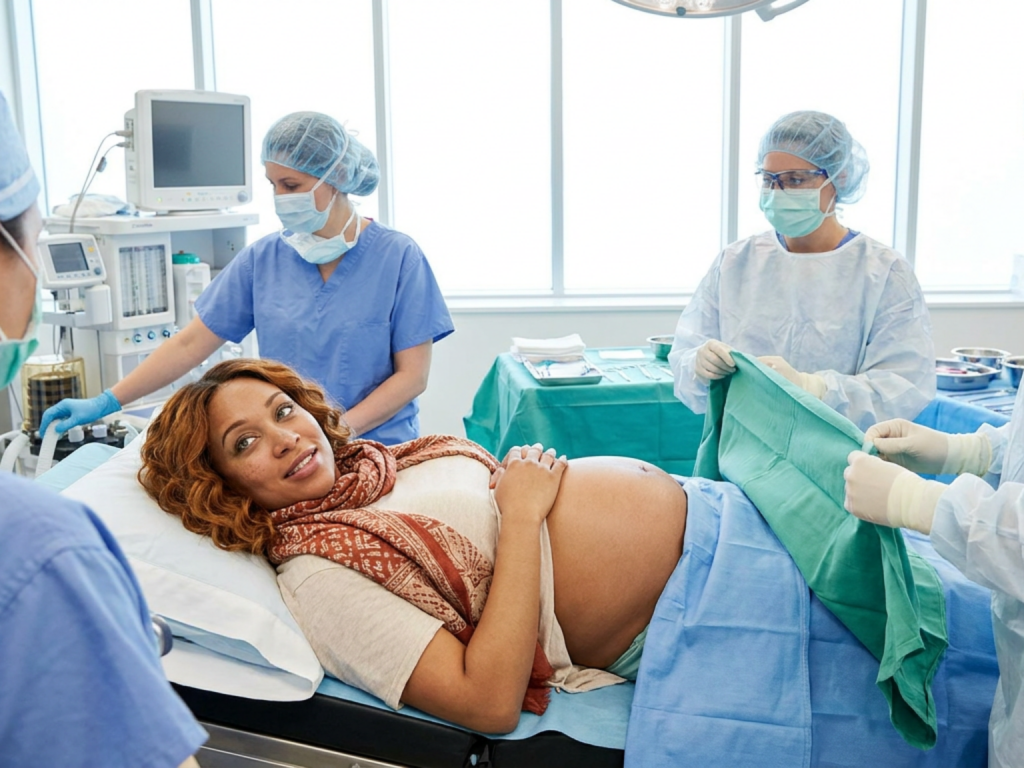
The operating room can feel bright, cool, and crowded. Monitors are applied to measure blood pressure, heart rhythm, and oxygen saturation. If fetal heart rate monitoring has been used during labor, it may continue until the team is ready to prepare the abdomen. The skin is cleaned with an antiseptic solution, and sterile drapes are placed. A screen is usually positioned so the sterile surgical field is separated from the upper body, while anesthesia staff remain near your head to monitor you and communicate throughout the case.
Anesthesia and what you may feel
Anesthesia for birth surgery is most often regional anesthesia for C-section, meaning the lower body is numbed while you remain awake. This may be a spinal anesthetic, an epidural that is already in place from labor and is dosed for surgery, or a combined spinal-epidural technique. Regional anesthesia reduces pain while preserving awareness, allowing many parents to hear the baby and sometimes have immediate skin-to-skin contact if both parent and baby are stable and the hospital setup supports it.
With regional anesthesia, you should not feel sharp pain, but you may feel pressure, pulling, rocking, or a sensation of movement. These sensations can be surprising but are not the same as surgical pain. The anesthesia team checks the level of numbness before incision, often using cold sensation, touch, or another method. Tell them immediately if you feel pain, shortness of breath, severe nausea, dizziness, or anxiety. They can adjust medication, treat blood pressure changes, and support breathing if needed.
General anesthesia makes you unconscious and requires airway support. It may be chosen for some emergencies, when regional anesthesia is not adequate, or when there are medical reasons regional techniques are unsuitable. Monitored sedation and local anesthesia are used for some minor procedures in surgery generally, but they are not the usual approach for cesarean birth. The safest option depends on urgency, medical history, airway assessment, bleeding risk, spine anatomy, and the clinical situation, so individualized anesthesia counseling matters.
The surgical steps from incision to birth
Once anesthesia is confirmed, the obstetric surgeon makes an abdominal incision. Many cesareans use a low transverse skin incision, often called a bikini-line incision, although the exact approach depends on anatomy, prior scars, urgency, placental concerns, and surgical judgment. The surgeon then moves through layers of tissue to reach the uterus. Some layers are opened sharply, while others may be separated bluntly along natural tissue planes.
The uterine incision during cesarean is commonly a low transverse uterine incision, but other uterine incisions may be needed in specific clinical circumstances. After the uterus is opened, the baby is delivered. This portion can happen quickly after the uterine incision, especially in planned surgery. You may feel strong pressure as the surgeon guides the baby out. A member of the team usually announces the birth time, and the cord is clamped and cut according to the clinical situation and local practice.
After the baby is born, neonatal staff assess breathing, tone, color, and heart rate. If the baby is vigorous and the parent is stable, some operating rooms support brief viewing, cheek-to-cheek contact, or skin-to-skin contact with assistance. If the baby needs extra help, the neonatal team may move promptly to a warmer. This can be emotionally intense, but it does not necessarily mean something is wrong; it reflects the team’s focus on safe transition.
The delivery of the placenta follows, and the uterus is treated to contract and limit bleeding. The surgeon examines the uterus and surgical field, then closes the uterine incision and abdominal layers. Closure usually takes longer than the birth itself because bleeding control, tissue alignment, instrument counts, and safety checks are deliberate and methodical.
How long surgery takes
Timing depends on what is being measured. Families often ask how long surgery takes, but there are several clocks: time from entering the operating room, time from incision to birth, total operative time, and time until discharge from the recovery area. General surgery information often describes duration from operating room entry through recovery milestones, not just the incision-to-closure interval.
For an uncomplicated planned cesarean section, many people spend roughly one to two hours in the operating and immediate recovery workflow, although the baby may be born within minutes after the surgical incision once the operation is underway. The remaining time is used for anesthesia placement or dosing, positioning, antiseptic cleaning, sterile draping, safety checks, placental delivery, uterine and abdominal closure, transfer, and early recovery monitoring.
Several factors can lengthen or shorten the procedure. These include whether the surgery is planned or urgent, whether labor has already been underway, the type of anesthesia, prior abdominal or uterine surgery, adhesions, body anatomy, fetal position, placental location, bleeding, infection risk, and whether additional procedures are required. Surgeon experience, team coordination, and institutional protocols also influence timing. In some urgent circumstances, the time from decision to birth may be compressed, but the team still performs essential safety steps as rapidly as possible.
It is reasonable to ask your care team what timeline they expect for your specific case. A precise promise is rarely possible because surgical findings can change the plan. A longer-than-expected operation does not automatically mean an emergency; careful repair, scar tissue, or extra bleeding control can add time while the team works steadily.
Monitoring and safety during the operation
Continuous monitoring is a central part of surgical safety. During the operation, the anesthesia team tracks oxygen saturation, blood pressure, heart rate, level of consciousness, comfort, and response to medications. If general anesthesia is used, ventilation, airway status, anesthetic depth, and carbon dioxide levels are also monitored. Intravenous fluids and medications can be adjusted quickly if blood pressure drops, nausea develops, or pain control needs improvement.
The surgical team monitors bleeding, uterine tone, tissue planes, and the integrity of the bladder and surrounding structures. Counts of instruments, needles, and sponges are performed according to protocol. The team also communicates around critical moments, such as incision, birth, placenta delivery, uterine closure, and skin closure. This communication may sound technical, but it is part of maintaining shared awareness.
If you are awake, you may hear suction, monitor tones, staff conversation, or updates about timing. Some people find this reassuring; others prefer minimal detail. You can tell the anesthesia clinician whether you want explanations as things happen. If anxiety rises, say so. Support can include coaching, medication when appropriate, adjusting the drape, warming measures, nausea treatment, or simply having someone narrate what is normal.
Recovery immediately after surgery
After closure and dressing placement, you are transferred to a recovery area or a labor-and-delivery recovery space. Post-anesthesia recovery after cesarean focuses on stability: blood pressure, heart rate, oxygen level, bleeding, uterine tone, pain, nausea, itching, and the return of sensation and movement after regional anesthesia. Nurses check the incision dressing and the amount of vaginal bleeding, because bleeding after cesarean still comes from the uterus and placental site.
Pain control is usually multimodal, meaning different medication classes and nonmedication measures may be combined to reduce opioid need while maintaining comfort. The best plan depends on allergies, breastfeeding goals, kidney or liver disease, bleeding risk, anesthesia type, and local protocols. Do not take additional medications or supplements without checking with your care team, especially soon after surgery.
If both parent and baby are stable, feeding, bonding, and skin-to-skin contact may begin in recovery. The team will also watch for shivering, low blood pressure, nausea, excessive sedation, heavy bleeding, fever, or breathing concerns. Later recovery includes gradual return of leg strength, removal of the urinary catheter when appropriate, assisted standing and walking, diet advancement, incision care education, and planning for discharge. Before leaving the hospital, ask whom to call for increasing pain, heavy bleeding, fever, wound drainage, calf pain, chest symptoms, severe headache, or mood concerns.
When to seek urgent help
- Heavy bleeding, soaking pads rapidly, passing large clots, or feeling faint after surgery needs urgent assessment.
- Chest pain, shortness of breath, coughing blood, or sudden severe weakness should be treated as an emergency.
- Fever, worsening abdominal pain, foul-smelling discharge, or increasing incision redness or drainage should be reported promptly.
- Severe headache, vision changes, right upper abdominal pain, or high blood pressure symptoms after birth require medical advice urgently.
- New calf swelling or pain, especially on one side, may signal a blood clot and should not be ignored.
Tools & Assistance
- Ask your obstetric team for a step-by-step explanation of the planned surgical birth workflow.
- Request an anesthesia consultation if you have prior anesthesia complications, spine surgery, bleeding disorders, or severe anxiety.
- Prepare a short medication and allergy list to bring to the hospital.
- Clarify your hospital’s recovery policies for support person presence, baby contact, and feeding after cesarean.
- Use your discharge instructions and after-hours number if symptoms change at home.
FAQ
Will I be awake during a cesarean section?
Many cesareans use regional anesthesia, so you are awake but numb from the chest or abdomen downward. General anesthesia may be used in selected urgent or medically necessary situations.
How soon is the baby born after surgery starts?
In many uncomplicated planned cesareans, the baby is delivered relatively soon after incision, but the total operating room time is longer because preparation, closure, and monitoring take time.
Is pressure during surgery normal?
Pressure, pulling, and movement can be normal with regional anesthesia. Sharp pain is not expected; tell the anesthesia team immediately if you feel pain or distress.
Why might surgery take longer than expected?
Prior scars, adhesions, bleeding control, fetal position, placental issues, anesthesia needs, and careful closure can all extend the duration without necessarily meaning something is wrong.
What happens right after the operation?
You are monitored in recovery for vital signs, bleeding, uterine tone, pain, nausea, and return of sensation. If stable, bonding and feeding may begin with staff support.
Sources
- WebMD — What Happens in Surgery - A Guide on What To Expect
- Cleveland Clinic — Surgery: Types, Why It's Done, Considerations
- Arlington Orthopedic Surgery — How Long Does the Average Surgery Take?
Disclaimer
This article is for general medical education only and does not diagnose, prescribe, or replace care from your obstetric, anesthesia, or surgical team. Always follow the advice and emergency instructions given by your healthcare professionals.


















Please log in to leave a comment.