
Intro
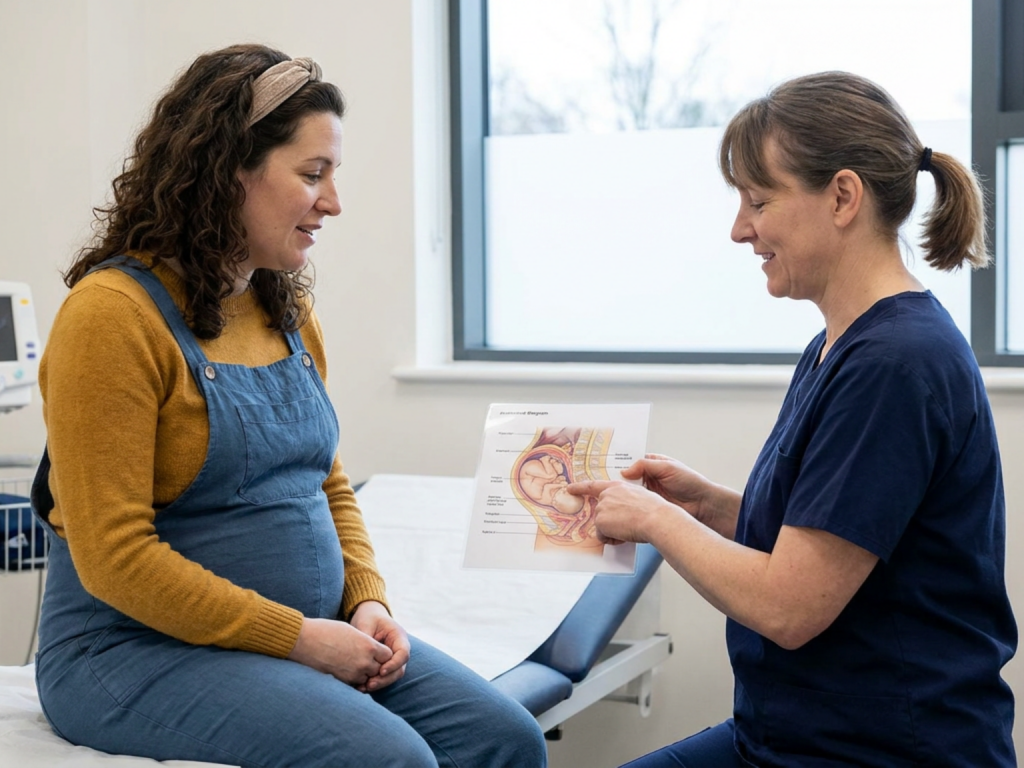
Contractions can feel surprisingly different from one person to another, and even from one stage of labor to the next. Many people expect all contraction pain to sit in the front of the abdomen, but true labor contractions can also be felt deep in the pelvis, across the lower back, into the hips, and sometimes down the thighs.
This article explains where contractions are commonly felt in the body, why the abdomen and back are often involved, and how contraction patterns may help distinguish early labor, active labor, Braxton Hicks contractions, and symptoms that need prompt medical advice.
Highlights
Labor contractions are rhythmic tightening and relaxing of the uterus, usually felt across the abdomen and often radiating to the lower back.
Back labor can feel like intense lower back pressure or pain, sometimes persisting between contractions, and may be influenced by fetal position.
True labor contractions tend to become stronger, longer, closer together, and less relieved by rest, hydration, or changing position.
Severe pain, bleeding, leaking fluid, fever, reduced fetal movement, or contractions before 37 weeks should be discussed promptly with maternity care professionals.
How contractions create pain and pressure
A contraction is a coordinated tightening and relaxing of the uterine muscle. During labor, the uterus contracts from the upper portion downward, helping the cervix efface and dilate while gradually moving the baby lower through the pelvis. The sensation is not only local muscle tightness; it also involves pressure on the cervix, stretching of uterine ligaments, pelvic floor pressure, and nerve pathways that refer discomfort to nearby regions.
Because the uterus occupies much of the abdomen near the end of pregnancy, contractions are often felt as a wave across the belly. Some people describe the abdomen becoming hard, rounded, or board-like at the peak, then softening as the contraction fades. Others notice the sensation first as low pelvic pressure, a crampy ache, or a pulling feeling that wraps from the back toward the front.
Medically, the location of pain is not enough by itself to confirm labor. Clinicians look at the whole pattern: frequency, duration, intensity, cervical change, gestational age, membrane status, fetal movement, and maternal symptoms. Still, understanding the usual body map of contractions can make the experience less confusing and help you describe what is happening when you call your maternity unit.
Abdominal contractions: front, sides, and lower belly
The abdomen is the most familiar place to feel contractions. Early labor contractions may feel like period-like cramps in early labor, a low belly ache, or intermittent tightening that comes and goes. The discomfort can begin around the lower abdomen, spread upward, or feel as if the entire uterus is squeezing at once. At the peak, the belly may feel firm to the touch, then relax afterward.
As labor progresses, abdominal contractions usually become more organized. Instead of brief or random tightening, they tend to develop a more predictable contraction timing pattern. They may last longer, come closer together, and demand more attention during breathing, talking, or walking. In active labor, many people cannot comfortably speak through the strongest part of a contraction.
Abdominal sensations can also occur with Braxton Hicks contractions. These practice contractions often feel like tightening rather than progressive pain, may be irregular, and may ease with hydration, rest, urination, or a change in position. However, the distinction is not always clear at home. If contractions are regular, intensifying, associated with fluid leakage or bleeding, or occur before term, it is safer to ask your clinician or triage service for guidance.
Lower back contractions and back labor
Many people feel contractions in the lower back, either together with abdominal tightening or as the dominant sensation. True labor contractions can radiate from the abdomen to the back, or feel as if they start in the back and wrap around to the front. The pain may sit over the sacrum, the bony area at the base of the spine, and may feel deep, aching, squeezing, or sharply pressurized.
Back labor is often used to describe contractions with prominent lower back pain. It may be related to the baby’s position, especially when the back of the baby’s head presses toward the mother’s spine, though fetal position is not the only possible factor. Some people experience back pain that rises and falls with each contraction; others feel a persistent backache between contractions that worsens during each wave.
Lower back pain alone does not prove that labor has started. Musculoskeletal strain, pelvic girdle pain, urinary symptoms, constipation, and other pregnancy discomforts can also affect the back. What makes labor more likely is a progressive rhythm: stronger, more regular contractions, associated pelvic pressure, bloody show, rupture of membranes, or documented cervical change. If the pain is severe, one-sided, associated with fever, urinary symptoms, neurologic symptoms, or you feel something is wrong, contact a healthcare professional promptly.
Pelvis, hips, thighs, and rectal pressure
Contractions are not limited to the belly and back. As the cervix changes and the baby descends, sensations often move lower and deeper. Some people feel pressure in the pelvis, aching in the hips, heaviness in the vaginal area, or pain that travels into the upper thighs. This happens because the uterus, cervix, pelvic joints, and nerves share overlapping pathways, and the baby’s presenting part applies increasing pressure as labor advances.
During later labor, rectal pressure before birth can become very noticeable. People may describe a sensation similar to needing to pass stool, even when the bowel is empty. This pressure can reflect the baby moving lower, but it should be discussed with the care team, especially if it comes with an urge to push. Pushing before full dilation may not be advised, depending on the clinical situation.
Hip and thigh sensations can also fluctuate with position. Standing, kneeling, side-lying, hands-and-knees, or leaning forward may change how pressure is distributed. Non-drug comfort measures such as counterpressure, warm packs, massage, movement, or water immersion may help some people cope, but they should fit the birth setting and be used with the guidance of the care team, particularly if there are complications or fetal monitoring needs.
How the feeling changes from early to active labor
In early labor, contractions may feel mild to moderate, crampy, and spaced far apart. They may be felt low in the abdomen, in the back, or as generalized uterine tightening. Some contractions may be irregular at first, which can make it hard to know whether labor is truly beginning. This phase can be emotionally demanding because the body is working, but the pattern may not yet be clear.
Active labor contractions are typically stronger, longer, and more frequent. The pain often becomes more encompassing: the abdomen tightens intensely, the lower back may ache or throb, and pelvic pressure increases. Contractions commonly require focused coping, breathing, vocalizing, movement, or support. The uterus relaxes between contractions, but the rest periods may shorten as labor advances.
Transition, the late part of the first stage of labor, can bring very intense sensations. Contractions may feel close together, with pressure in the rectum, pelvis, back, and thighs. Nausea, shaking, sweating, and emotional overwhelm can occur. These sensations can be normal in labor, but they can also feel frightening. Continuous support and clear communication with the care team are important, especially if pain feels unmanageable or symptoms change abruptly.
True labor versus false contractions
True labor contractions usually become progressively stronger, longer, and closer together. They often continue despite drinking fluids, resting, walking, showering, or changing position. They may be felt in the abdomen and lower back, and they are often accompanied by other signs such as bloody show, pelvic pressure, or water breaking. The defining clinical feature is that they produce cervical change.
Braxton Hicks contractions are often irregular and may remain uncomfortable rather than intensely painful. They can be felt as tightening across the front of the abdomen and may happen more after activity, dehydration, sex, or a full bladder. They do not usually settle into a consistent intensifying pattern. However, people do not need to diagnose the difference alone, especially if they are preterm or have risk factors.
A practical approach is to time contractions from the start of one contraction to the start of the next, while also noting how long each contraction lasts and whether the intensity is increasing. Describe where you feel them: front abdomen, low belly, lower back, pelvis, hips, thighs, or rectal pressure. This information helps maternity triage decide whether you should come in, keep monitoring at home, or seek urgent assessment.
When to call for medical advice
Call your maternity care team, labor unit, or emergency service according to your local instructions if contractions are regular and intensifying, if your waters break, or if you have bleeding that is more than light spotting. You should also call promptly for decreased fetal movement, severe constant abdominal pain, severe headache, visual changes, fever, fainting, chest pain, shortness of breath, or any symptom that feels alarming.
Before 37 weeks, contractions, backache, pelvic pressure, abdominal cramping, watery discharge, or bleeding may suggest possible preterm labor warning signs and should be assessed without delay. Even if symptoms turn out not to be labor, early evaluation can be important for maternal and fetal safety.
If you are at term and unsure whether to go in, it is reasonable to call and describe your contraction timing, pain location, membrane status, fetal movement, and any medical conditions such as previous cesarean birth, high blood pressure, diabetes, placenta concerns, Group B strep status, or a history of rapid labor. Your care team can give individualized advice based on your pregnancy and local protocols.
Seek urgent advice if
- Contractions, pelvic pressure, or back pain occur before 37 weeks.
- You have heavy bleeding, severe constant pain, fever, or feel faint or very unwell.
- Your waters break, especially if the fluid is green, brown, foul-smelling, or you are preterm.
- You notice decreased fetal movement or a major change from your baby’s usual pattern.
- You have an urge to push, intense rectal pressure, or labor seems to be progressing rapidly.
Tools & Assistance
- Contraction timer or written log of start time, duration, and spacing
- Maternity triage or labor unit phone number saved in your phone
- Birth plan and hospital bag kept accessible near term
- Support person who can help observe patterns and communicate with clinicians
- Comfort measures approved by your care team, such as warm packs, movement, or breathing techniques
FAQ
Can contractions be felt mostly in the back?
Yes. Some people feel labor mainly as lower back pain or pressure, with or without strong abdominal tightening. A progressive pattern and cervical change help confirm labor.
Do contractions always hurt in the abdomen?
No. Many contractions involve abdominal tightening, but pain may also be felt in the lower back, pelvis, hips, thighs, or rectal area.
How can I tell Braxton Hicks from true labor?
Braxton Hicks contractions are often irregular and may ease with rest, hydration, or position change. True labor usually becomes stronger, longer, closer together, and may cause cervical change.
Is rectal pressure during contractions normal?
Rectal pressure can happen as the baby descends, especially later in labor. Tell your care team if you feel pressure or an urge to push.
When should I call if contractions are in my back and belly?
Call if they are regular and intensifying, if your waters break, if there is bleeding, if fetal movement is reduced, or if you are less than 37 weeks.
Sources
- Cleveland Clinic — Contractions: Pregnancy, How They Feel & How Long They Last
- March of Dimes — Contractions and signs of labor
- Texas Health Resources — When Labor is Near
Disclaimer
This article is for general medical education only and does not diagnose labor or replace individualized care. Contact your healthcare professional or maternity triage for advice about your symptoms.

















Please log in to leave a comment.