
Intro
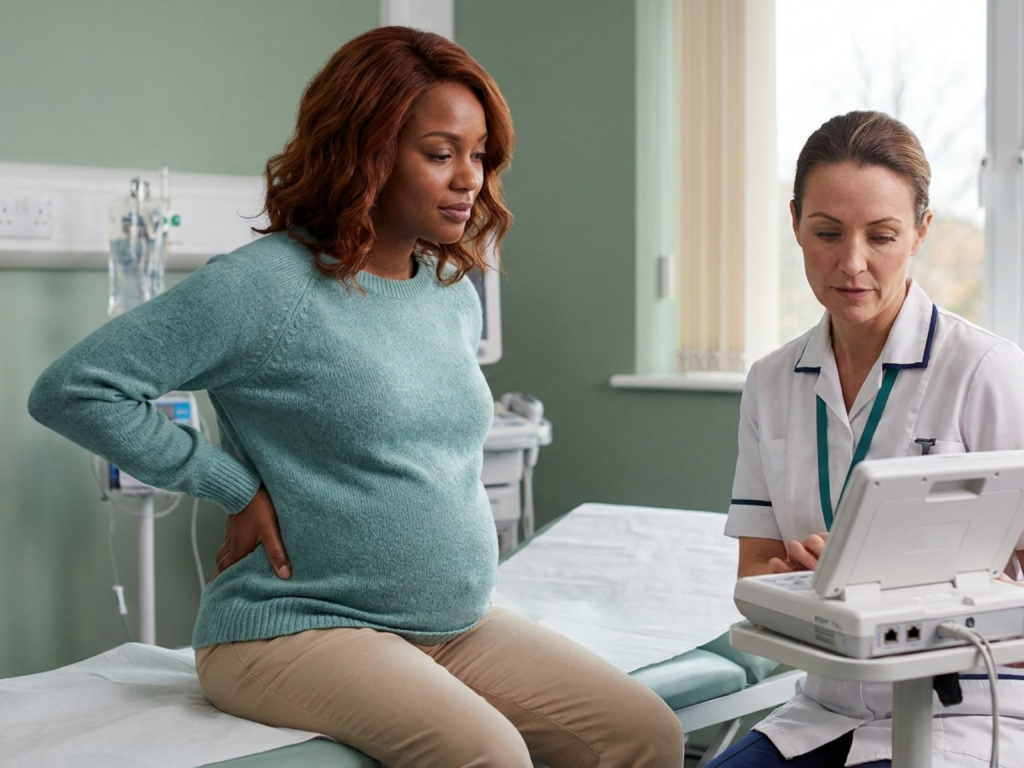
As the end of pregnancy approaches, every new sensation can feel significant. Lower back pain and pelvic pressure are common in late pregnancy, but they can also be part of the body’s transition into labor. The challenge is that these sensations often overlap with normal musculoskeletal strain, fetal positioning, Braxton Hicks contractions, and cervical change.
This article explains how lower back pain and pelvic pressure may relate to labor, what patterns are more suggestive of true labor, and when to contact your maternity care team. It is intended to support informed decision-making, not to diagnose your situation from symptoms alone.
Highlights
Lower back pain can be a labor sign when it becomes rhythmic, intensifies with contractions, or does not improve with rest and position changes.
Pelvic pressure may reflect fetal descent, cervical effacement and dilation, or strong uterine activity, especially when accompanied by regular contractions.
Back labor often feels like intense pain in the lower back or sacral area and may be related to fetal position, although it can occur in different labor patterns.
Call your healthcare professional promptly for bleeding, fluid leakage, decreased fetal movement, fever, severe pain, or labor symptoms before 37 weeks.
Why lower back pain can appear near labor
Lower back pain is extremely common in the final weeks of pregnancy. The lumbar spine, sacroiliac joints, pelvic ligaments, and surrounding muscles are under sustained mechanical load, while hormonal changes increase ligamentous laxity. For many people, this produces an aching, heavy, or unstable feeling that worsens after standing, walking, or changing position. On its own, that kind of discomfort does not necessarily mean labor has started.
Labor-related back pain tends to have a different pattern. It may come in waves with uterine contractions, build in intensity, and become harder to ignore over time. Some people feel pain across the low back; others describe deep sacral pressure, pain that radiates toward the hips, or a sensation that the baby is pressing backward. The key clinical question is not simply whether the back hurts, but whether the pain is linked to a progressive contraction pattern, cervical change, or other signs of labor.
Back pain may also be prominent when the fetus is positioned with the occiput, or back of the head, toward the pregnant person’s spine. This is often discussed as one contributor to back labor, although pain patterns are individual and fetal position can change. If the discomfort is persistent, severe, or confusing, it is reasonable to call your maternity unit or clinician rather than trying to interpret it alone.
Pelvic pressure and the feeling of the baby moving lower
Pelvic pressure near term can feel like heaviness in the vagina, rectum, pubic bone, or lower abdomen. Many people describe it as the baby being “very low,” a need to have a bowel movement, or pressure that increases while walking. This can occur before labor when the presenting part descends into the pelvis, a process often called lightening. In a first pregnancy, this may happen days or weeks before labor; in later pregnancies, it may occur closer to active labor.
During labor, pelvic pressure may intensify as contractions push the fetus downward and the cervix effaces and dilates. Pressure that comes and goes with uterine tightening can be more suggestive of labor than constant heaviness alone. As labor progresses, some people notice pressure in the rectum or an involuntary bearing-down sensation. That can be normal in later labor, but it is also a reason to contact your care team immediately if you are not already in the birth setting, especially if the urge to push is strong.
Pelvic pressure should be interpreted in context. Mild pressure at 39 or 40 weeks with irregular tightenings may be part of the body preparing. New pelvic pressure before 37 weeks, pressure accompanied by regular contractions, vaginal bleeding, fluid leakage, fever, or decreased fetal movement requires prompt medical advice because preterm labor or another complication must be considered.
True labor versus practice contractions
Braxton Hicks contractions can be uncomfortable and may create pelvic tightness, low abdominal pressure, or back discomfort. They are typically irregular, often remain mild, and may ease with hydration, rest, a warm shower, or a change in position. True labor contractions generally become more regular, longer, stronger, and closer together. They tend not to stop with simple comfort measures, and they are associated with progressive cervical change.
A practical way to assess the pattern is to time contractions from the start of one tightening to the start of the next. Note how long each contraction lasts, how intense it feels, and whether you can talk or walk through it. Back pain that peaks at the same time as a contraction and then partially fades may be part of a contraction pattern, even if the uterus does not feel dramatically tight to the touch.
Other labor signs may occur alongside back pain and pelvic pressure. These include loss of the mucus plug, a bloody show, rupture of membranes, nausea, diarrhea, or a general change in energy. None of these signs alone can confirm labor for every person. For example, the mucus plug can pass before labor begins, and mild gastrointestinal symptoms can have many causes. The overall trend matters: symptoms that become more organized, rhythmic, and progressive are more consistent with labor than symptoms that remain scattered and unchanged.
What back labor may feel like
Back labor is commonly described as intense pain or pressure in the lower back during labor, often centered around the sacrum. For some people it is present only during contractions; for others it lingers between contractions and then worsens during each wave. It may feel sharp, crushing, burning, or like deep bone pressure. Because the pain can be severe, people sometimes worry that something is wrong, but back labor itself can occur in otherwise normal labor.
One commonly discussed factor is fetal position, particularly when the fetus is occiput posterior, meaning the back of the fetal head is oriented toward the pregnant person’s spine. In that position, pressure on the sacrum and surrounding tissues may contribute to back pain. However, back pain does not prove fetal position, and fetal position does not determine the whole birth outcome. Babies can rotate during labor, and clinicians can assess position when needed.
Back labor can be physically and emotionally exhausting because it may reduce the sense of rest between contractions. Supportive care can make a meaningful difference. Counterpressure over the sacrum, hands-and-knees positioning, side-lying positions, pelvic rocking, warm compresses, water therapy if available and approved, and continuous labor support may help some people cope. If pain relief options such as epidural analgesia, nitrous oxide, or systemic medications are available in your setting, discuss risks, benefits, and timing with your care team.
How to respond at home while monitoring symptoms
If you are at term and symptoms are mild or irregular, your care team may advise observation at home for a period of time. Comfort measures can help you gather information as well as reduce distress. Try changing positions, drinking fluids, emptying your bladder, taking a warm shower, using a birth ball if safe for you, or applying heat to the low back. If symptoms fade or become irregular, they may have been prodromal labor or practice contractions. If they continue to intensify, become rhythmic, or are associated with pelvic pressure that builds, labor may be progressing.
It can be useful to keep a brief symptom log. Record contraction frequency, duration, whether back pain is constant or wave-like, fetal movement, any fluid leakage, and any bleeding. This information helps triage nurses, midwives, or physicians give more specific guidance. Avoid repeatedly checking your own cervix, as it is difficult to interpret and may increase infection risk, particularly if membranes have ruptured.
Do not hesitate to call if you feel uncertain. Many maternity units expect calls about possible labor, and early communication is especially important if you have a high-risk pregnancy, prior cesarean birth, multiple pregnancy, placenta concerns, hypertension, diabetes, reduced fetal movement, group B streptococcus considerations, or a history of rapid labor. Personalized instructions from your own clinician should take priority over general timing rules.
When lower back pain or pelvic pressure needs urgent attention
Some symptoms should not be managed by watchful waiting. Contact your healthcare professional, maternity triage unit, or emergency services according to your local instructions if you have bright red bleeding, a gush or continuous trickle of fluid, severe abdominal pain, fever, fainting, severe headache, visual symptoms, chest pain, shortness of breath, or a marked decrease in fetal movement. These signs may indicate conditions that require timely assessment.
Labor symptoms before 37 weeks deserve particular caution. Regular contractions, menstrual-like cramping, low backache, pelvic pressure, or changes in vaginal discharge can be signs of preterm labor. Even if symptoms seem mild, early evaluation can matter. Similarly, if you feel intense rectal pressure or an urge to push, call immediately, because birth may be closer than expected.
Your emotional experience also matters. Severe pain, panic, a sense that something is not right, or inability to cope at home is a valid reason to seek help. Clinicians can assess fetal well-being, contraction pattern, membrane status, cervical change, maternal vital signs, and pain relief needs. The goal is not to overreact; it is to make sure you and your baby are safe while labor unfolds.
Seek medical advice urgently if
- You have regular contractions, pelvic pressure, or low back pain before 37 weeks.
- You notice bright red bleeding, fluid leakage, fever, or severe abdominal pain.
- Your baby’s movements are decreased or feel significantly different than usual.
- You feel a strong urge to push, intense rectal pressure, or rapid symptom escalation.
- You have headache, visual changes, fainting, chest pain, or shortness of breath.
Tools & Assistance
- Call your obstetrician, midwife, maternity triage unit, or labor and delivery department for individualized guidance.
- Use a contraction timer to record frequency, duration, and intensity before calling if time allows.
- Prepare your hospital or birth center bag and transportation plan before symptoms become intense.
- Ask your care team about safe comfort measures, fetal movement monitoring, and when to come in.
FAQ
Can lower back pain be the first sign of labor?
Yes, it can be, especially if it becomes rhythmic, intensifies, or occurs with contractions. Constant mild backache alone is common late in pregnancy and may not mean labor has started.
What does pelvic pressure in labor feel like?
It may feel like heaviness in the vagina, rectum, pubic bone, or lower abdomen. As labor progresses, pressure may become stronger and may come with an urge to bear down.
How do I know if it is back labor?
Back labor often feels like intense lower back or sacral pain during contractions and may persist between them. A clinician can help assess labor progress and fetal position.
Should I go to the hospital for back pain and pelvic pressure?
Follow your care team’s instructions. Go or call urgently if symptoms are before 37 weeks, contractions are regular and intensifying, membranes rupture, bleeding occurs, fetal movement decreases, or you feel an urge to push.
Can changing position help?
Sometimes. Hands-and-knees, side-lying, pelvic rocking, warm compresses, showering, and sacral counterpressure may help, but persistent or severe symptoms should still be discussed with a healthcare professional.
Sources
- Mayo Clinic — Back pain in labor: What it feels like and how to cope
- MedlinePlus — Labor signs and stages of labor
- HealthPartners — Back labor: What it is, what it feels like and how to deal with it
Disclaimer
This article is for informational purposes only and is not a substitute for medical advice, diagnosis, or treatment. Contact your healthcare professional for guidance about your pregnancy or labor symptoms.


















Please log in to leave a comment.