
Intro
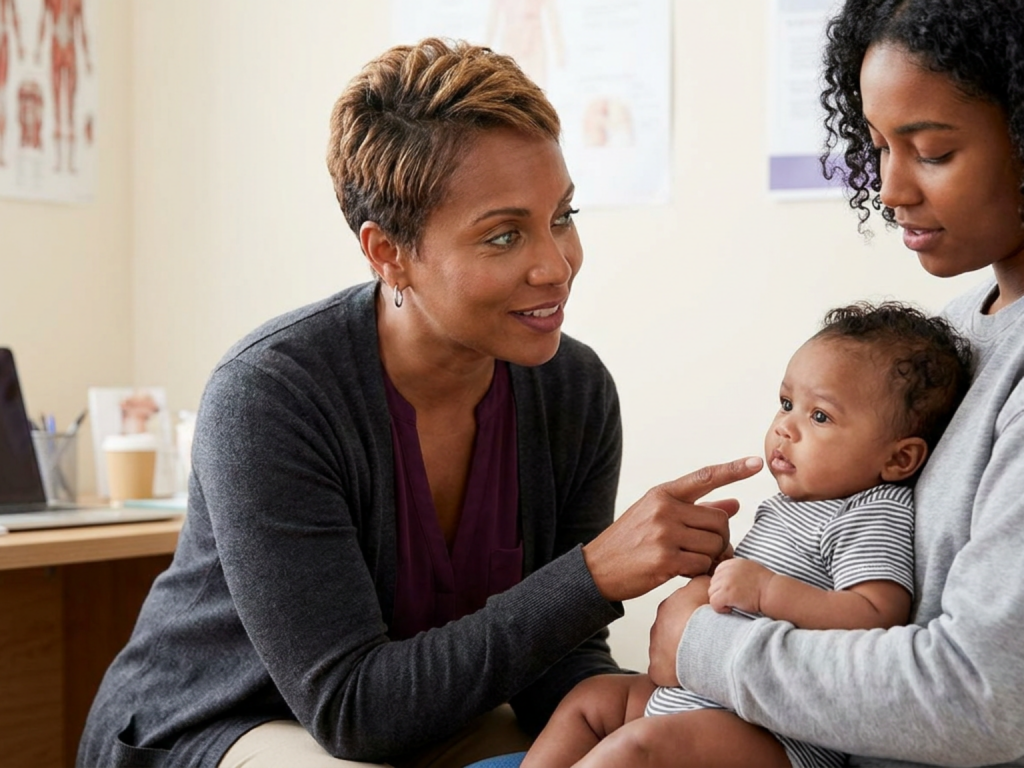
Social development in babies is the gradual emergence of connection: how an infant recognizes familiar people, communicates needs, seeks comfort, responds to emotion, and begins to participate in shared moments. It is closely intertwined with emotional regulation, sensory processing, motor development, sleep, feeding, language exposure, and the quality of day-to-day caregiving. A newborn is not socially passive; from the first weeks, babies orient toward voices, faces, touch, smell, and predictable caregiving patterns that help the nervous system feel safe.
For parents and caregivers, this area of development can feel both beautiful and worrying. One baby may smile early and seek eye contact often; another may be quieter, more easily overstimulated, or slower to warm up. Variation is common, and milestones are best understood as ranges rather than strict deadlines. Still, knowing what social-emotional growth often looks like across the first year can help families support secure attachment, notice concerns early, and discuss questions with a pediatrician or child development professional.
Highlights
Social development begins at birth through responsive caregiving, sensory connection, and repeated experiences of safety.
Babies learn trust when adults respond consistently to crying, feeding cues, fatigue, discomfort, and bids for interaction.
Smiling, cooing, turn-taking sounds, stranger awareness, and separation anxiety are common parts of infant social-emotional growth.
Temperament strongly affects how babies express social interest, so quieter or more cautious behavior is not automatically abnormal.
Persistent loss of social skills, absent response to caregivers, or major feeding, hearing, vision, or regulation concerns should be discussed with a healthcare professional.
What social development means in infancy
In infancy, social development refers to the way a baby learns to connect with other people and participate in emotional exchanges. This includes recognizing familiar voices, looking toward faces, calming with a trusted caregiver, smiling, vocalizing, showing preferences, sharing attention, and eventually using gestures to communicate. These abilities are not separate from the brain and body; they depend on sensory input, arousal regulation, motor control, hearing, vision, sleep, and the infant’s developing autonomic nervous system.
Social and emotional development are often discussed together because they develop through the same relationships. A baby who cries and is comforted repeatedly begins to learn that distress can be relieved and that caregivers are reliable. This early pattern supports attachment, which is the infant’s biologically driven relationship with familiar adults who provide protection and regulation. Secure attachment does not require perfect parenting. It grows through many ordinary moments of noticing, responding, repairing, and reconnecting.
Social development also includes the beginning of self-awareness. Over time, babies start to understand that they can affect their environment: a smile brings a smile back, a sound starts a vocal exchange, reaching raises the chance of being picked up. These early cause-and-effect learning experiences are social as well as cognitive, because the most meaningful responses usually come from people.
Birth to 3 months: safety, recognition, and early smiles
During the newborn period, babies are learning whether the world is predictable and whether their signals matter. Newborns may briefly look at faces, turn toward familiar voices, quiet when held, and show a preference for the smell, sound, and touch of their primary caregivers. Their social behavior can be subtle because their nervous system is immature and they tire quickly. Looking away, hiccupping, yawning, arching, or fussing can mean they need a break rather than more stimulation.
By around 1 to 2 months, many babies become more alert during face-to-face interaction. They may watch a caregiver’s face, respond to a soothing voice, and begin to show social smiling. A social smile is different from reflexive facial movements because it occurs in response to interaction. By 3 months, many infants smile more predictably, make cooing sounds, and seem to enjoy gentle back-and-forth exchanges.
Helpful support at this stage is simple but powerful: hold the baby close, speak in a warm voice, respond to crying, pause when they look away, and repeat familiar routines. Prompt, sensitive responses do not spoil a young infant. Instead, they help the baby’s stress-response system learn that discomfort can be met with care.
3 to 6 months: interaction becomes more reciprocal
Between 3 and 6 months, many babies become increasingly expressive. They may smile readily, laugh, squeal, watch mouths and eyes, and use their whole body to show excitement. Social communication often becomes more rhythmic: the baby makes a sound, the caregiver responds, the baby pauses, and then answers again. These serve-and-return interactions are a foundation for language, emotional regulation, and later social understanding.
At this age, babies may show clear enjoyment of familiar people and daily rituals. They often like songs, peekaboo-like anticipation, gentle touch games, and being spoken to during feeding, diapering, and dressing. They may also become more selective about stimulation. A baby who was calm in a busy room at 2 months may become overwhelmed at 5 months because awareness is expanding.
Caregivers can support this stage by following the baby’s cues. If the baby looks interested, imitate their sounds, smile back, and wait for a response. If the baby turns away or stiffens, soften the voice, reduce activity, or offer a pause. This teaches the baby that interaction is safe and that their communication has meaning.
6 to 9 months: attachment, preferences, and secure base behavior
From about 6 to 9 months, many babies show stronger preferences for familiar caregivers. They may reach to be picked up, protest when a favorite adult leaves, or become cautious around unfamiliar people. This is not a regression; it reflects memory, recognition, and attachment becoming more organized. Stranger awareness and early separation anxiety often appear during this period, although the timing and intensity vary widely.
A baby may also begin using caregivers as a secure base. This means they explore a toy, room, or new person while checking back visually or physically with a trusted adult. The caregiver’s presence helps regulate uncertainty. When the adult responds warmly, the baby gains confidence to explore again. This pattern links social development with physical development in babies, because crawling, sitting, reaching, and moving increase the infant’s opportunities to explore and return for reassurance.
Practical support includes predictable goodbye rituals, calm transitions, and reassurance without shaming fear. A short phrase, a wave, and a reliable return can help babies gradually learn that separations are survivable. Sneaking away may seem easier in the moment, but predictable leave-taking often supports trust over time.
9 to 12 months: shared attention, gestures, and social learning
By 9 to 12 months, many babies become more intentional social communicators. They may look where a caregiver points, offer or show objects, clap, wave, imitate facial expressions, copy simple actions, and use sounds with clearer purpose. Some begin to coordinate gaze, gesture, and vocalization: looking at a caregiver, reaching toward a toy, and making a sound to request help. These behaviors are early forms of joint attention, the shared focus between baby and adult on the same object or event.
This stage is also closely tied to cognitive development in babies. As memory and problem-solving improve, babies understand more routines and anticipate familiar sequences. They may lift their arms before being picked up, crawl toward the door when someone arrives, or laugh before the final moment of a repeated game. Social learning becomes a major pathway for understanding the world.
Caregivers can encourage this by narrating everyday actions, naming emotions, offering choices, and responding to gestures. For example, if a baby points or reaches toward a cup, the adult might say, “You want the cup. Here it is.” This links social intention, language, and emotional attunement without pressuring the baby to perform.
The role of temperament and family context
Temperament is a biologically influenced pattern in how babies respond to stimulation, novelty, discomfort, and change. Some infants are highly social and intense; others are observant, slow to warm, or easily overstimulated. A cautious baby may need more time before smiling at unfamiliar people, while a highly reactive baby may need more help calming after transitions. These differences are real and can be healthy.
Family context also shapes social development. Babies learn through the caregiving styles, languages, routines, songs, facial expressions, and cultural expectations around them. Some families use animated face-to-face play; others emphasize calm closeness, carrying, massage, or quiet observation. What matters most is not one perfect style but a pattern of warm, responsive, safe care.
It is also important to consider caregiver wellbeing. Postpartum depression, anxiety, trauma, sleep deprivation, medical complications, financial stress, or lack of support can make responsive caregiving harder. This is not a moral failure. Supporting the caregiver is often one of the most effective ways to support the baby. If bonding feels difficult or caregiving feels overwhelming, pediatricians, obstetric clinicians, mental health professionals, lactation consultants, and community services can help.
Everyday ways to support social-emotional growth
Most social development support happens in ordinary moments, not special lessons. Babies learn through repeated experiences of being noticed and responded to. The goal is not constant entertainment; overstimulation can make regulation harder. Instead, aim for balanced, responsive interaction.
- Use face-to-face time when the baby is alert, and pause when they look away.
- Respond to crying with comfort, checking for hunger, fatigue, pain, temperature, and the need for closeness.
- Copy the baby’s sounds and expressions, then wait for them to answer.
- Create predictable routines around sleep, feeding, diapering, and transitions.
- Name emotions in simple language, such as “You are upset” or “That surprised you.”
- Offer safe exploration with a trusted caregiver nearby.
Reading, singing, gentle play, and shared attention to everyday objects all help. Screen-based interaction is not a substitute for live human responsiveness, especially in infancy. If screens are present in the household, protecting regular face-to-face interaction, sleep routines, and active play is more important than trying to create a perfect environment.
When to ask for professional guidance
Developmental variation is common, and many concerns turn out to be temporary or related to temperament, prematurity, illness, hearing, vision, sleep, or environmental stress. However, early discussion with a healthcare professional is wise when concerns persist. Pediatric developmental screening questionnaires are designed to identify children who may benefit from closer observation or early intervention, not to label a baby based on one behavior.
Consider discussing concerns if a baby rarely responds to familiar voices or faces, does not appear to calm with any caregiver, has very limited eye contact during alert periods, shows little social smiling by the expected range, does not make back-and-forth sounds, or loses previously acquired social or communication skills. Also seek guidance if feeding difficulty, poor growth, seizures, abnormal muscle tone, hearing concerns, vision concerns, or extreme irritability interfere with interaction.
Preterm babies are often assessed using corrected age for preterm babies, which adjusts expectations based on the due date rather than the birth date. Families should not wait if they feel something is wrong, but corrected age can make milestone discussions more accurate and less anxiety-provoking.
Seek medical advice promptly
- Loss of previously acquired social, communication, or motor skills should be discussed urgently with a pediatric clinician.
- A baby who does not respond to loud sounds, familiar voices, or visual engagement may need hearing or vision evaluation.
- Persistent poor feeding, poor weight gain, extreme lethargy, or inconsolable crying warrants medical assessment.
- Concerns about seizures, abnormal muscle tone, breathing difficulty, or reduced responsiveness should be treated as urgent.
- If a caregiver feels unable to cope, has intrusive thoughts, or feels detached from the baby, professional support is important and available.
Tools & Assistance
- Track social behaviors in a simple note, including smiles, sounds, eye contact, gestures, and responses to routines.
- Bring questions to routine well-baby visits and ask about developmental screening questionnaires.
- Use local early intervention services if a pediatrician recommends evaluation or if concerns persist.
- Ask about hearing, vision, feeding, sleep, or reflux assessment when these issues seem to affect interaction.
- Seek caregiver mental health support if bonding, anxiety, depression, or exhaustion is affecting daily care.
FAQ
Can responding quickly to a crying newborn spoil them?
No. Young infants cry to communicate needs and dysregulation. Prompt, sensitive responses help them learn safety, trust, and early self-regulation.
What if my baby is not very smiley?
Some babies are more serious, cautious, or easily overstimulated. Look at the overall pattern, including alertness, response to familiar people, sounds, feeding, and growth, and ask a pediatrician if concerns persist.
Is separation anxiety a bad sign?
Usually not. Separation anxiety often reflects memory, attachment, and recognition of familiar caregivers. Predictable routines and calm goodbyes can help.
How are social and language development connected?
They are closely linked. Eye contact, turn-taking sounds, gestures, imitation, and joint attention are social behaviors that support early communication and later language.
When should I worry about autism or another developmental condition?
It is not possible to diagnose from a single behavior. However, limited response to people, lack of social smiling, absent back-and-forth interaction, or loss of skills should be discussed with a pediatrician for appropriate screening and referral.
Sources
- ZERO TO THREE — Birth to 12 Months: Social-Emotional Development
- HealthyChildren.org / American Academy of Pediatrics — Emotional & Social Development in Babies: Birth Through 3 Months
- Virtual Lab School — Social-Emotional Development: Infants and Toddlers
Disclaimer
This article is for general educational purposes only and does not replace medical evaluation, diagnosis, or treatment. Always consult a pediatrician or qualified healthcare professional about concerns regarding your baby’s development or health.














Please log in to leave a comment.