
Intro
The years from 6 to 9 can feel both calmer and more complicated than early childhood. Many children are now in structured school settings, developing friendships, learning rules, building academic skills, and becoming more aware of fairness, embarrassment, success, and failure. At the same time, their brains are still developing the executive functions needed for impulse control, planning, emotional regulation, and flexible problem-solving.
Highlights
Children ages 6 to 9 benefit from warmth, predictability, and consistent boundaries rather than harsh or unpredictable discipline.
School-age children can take increasing responsibility, but they still need adult scaffolding for routines, emotions, homework, sleep, and social conflicts.
Parents do not need to be perfect. Repeated parent-child interactions that include repair, listening, and calm follow-through shape long-term resilience.
Medical, developmental, behavioral, or learning concerns should be discussed with qualified healthcare or educational professionals rather than handled alone.
Understanding the 6-to-9-year-old child
Between ages 6 and 9, children move further into what developmental specialists often call middle childhood. They are usually more verbal, more cooperative, and more able to follow rules than preschoolers, but their self-control is still immature. Their attention span is growing, yet fatigue, hunger, overstimulation, anxiety, or transitions can still overwhelm their capacity to cope.
Many children in this age range become increasingly interested in rules, collections, facts, games, sports, jokes, and group belonging. They may enjoy being helpful and may want to be seen as capable. At the same time, they may be highly sensitive to criticism, losing, exclusion, or perceived unfairness. This is not simply drama; it reflects a developing social brain that is beginning to compare, interpret, and predict other people’s reactions.
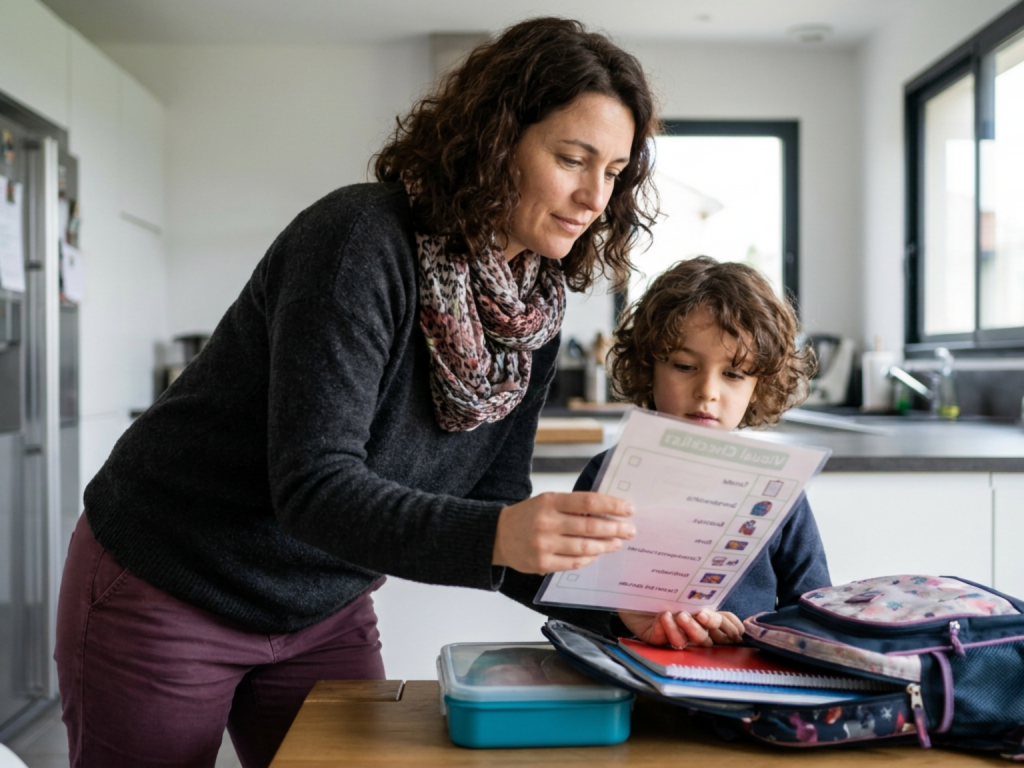
Parents can support this stage by matching expectations to developmental capacity. A 7-year-old may understand that homework must be completed, but may still need a visual reminder, a predictable time, and an adult nearby to help initiate the task. A 9-year-old may be able to pack a school bag, but may still forget items when rushed. Support is not the same as overcontrol; it is scaffolding while neural systems for planning and inhibition mature.
Connection is still the foundation
School-age children often seem more independent, but they still require secure emotional connection with caregivers. Responsive parenting means noticing the child’s cues, listening with interest, and responding in ways that are warm and appropriate to the situation. This does not mean giving in to every request. It means the child experiences the parent as safe, predictable, and emotionally available.
Small rituals matter: a greeting after school, reading together, a bedtime check-in, a weekend walk, or a few minutes of child-led play. These moments create predictable daily connection rituals that help children feel seen before they are corrected. When a child’s behavior is difficult, connection helps the nervous system settle enough for learning to occur.
Parents can use simple phrases such as, “I can see this is hard,” “I’m listening,” or “We will solve this after everyone calms down.” This approach is not permissive. It pairs empathy with limits, which is especially important for children who are learning to regulate anger, disappointment, shame, and anxiety.
Routines that reduce conflict and cognitive load
Routines are a major protective tool in middle childhood. They reduce decision fatigue in parents and help children predict what happens next. Predictability supports sleep, school readiness, medication adherence when relevant, nutrition, hygiene, and emotional regulation.
Useful routines for 6- to 9-year-olds often include:
- A consistent wake time and bedtime, including a wind-down period without stimulating screens.
- A morning checklist for dressing, hygiene, breakfast, and school materials.
- A predictable homework or reading time with breaks when needed.
- A simple after-school decompression routine before demands begin.
- Age-appropriate household responsibilities such as putting laundry in a basket, feeding a pet with supervision, setting the table, or packing part of a school bag.
Visual schedules for children can be especially effective because they shift reminders from repeated parental nagging to an external cue. For example, a morning chart with pictures or short words can help a child complete tasks in sequence. Parents can review the schedule calmly: “Check your chart. What comes next?”
Routines should be flexible enough to survive real family life. If a routine repeatedly fails, it may be too complicated, too long, or poorly timed. A behavior pattern review can help parents identify whether the problem is the demand itself, the transition into it, sleep deprivation, hunger, unclear instructions, or a developmental mismatch in parenting expectations.
Discipline that teaches self-regulation
Discipline for 6- to 9-year-olds works best when it is instructional rather than punitive. Children learn from clear expectations, calm correction, natural or logical consequences, and opportunities to repair. Research syntheses on parenting practices consistently emphasize monitoring, consistency, communication, and responsive parenting as important for child outcomes.
A practical sequence is: name the limit, state the expected behavior, offer a brief reason, and follow through. For example: “The tablet goes away when shouting starts. You may try again after dinner if you can use a calm voice.” Long lectures usually increase defensiveness and reduce learning.
Consequences should be related, respectful, and realistic. If a child throws game pieces, the game is paused and the child helps clean up. If a child is unkind to a sibling, repair may include an apology, a kind action, or helping restore what was damaged. Teaching consequences without shame helps preserve the child’s dignity while still making behavior accountable.
Harsh, frightening, or humiliating responses may stop behavior briefly but can worsen fear, secrecy, aggression, or emotional dysregulation. Calm consistency in parenting is more powerful than intensity. Parents can also model repair by saying, “I yelled. That was not okay. I’m going to take a breath and try again.” This teaches that mistakes are manageable and relationships can recover.
Supporting school, learning, and attention
At ages 6 to 9, school becomes a major developmental environment. Children are learning literacy, numeracy, classroom routines, persistence, cooperation, and how to tolerate mistakes. Parents can support school accountability without taking over by creating structure while leaving the child some ownership.
Helpful strategies include keeping a regular place for school papers, checking communication from school, using short homework blocks, and praising effort, strategy, and persistence rather than only grades. If homework leads to nightly distress, it is reasonable to ask whether the workload is developmentally appropriate, whether the child understands the material, or whether attention, vision, hearing, sleep, anxiety, or learning differences may be contributing.
Parents should avoid diagnosing learning or behavioral conditions on their own. However, persistent difficulty with reading, writing, mathematics, attention, social communication, motor coordination, or emotional regulation deserves discussion with the child’s teacher, pediatrician, school psychologist, or another qualified professional. Early support can reduce shame and prevent secondary problems such as school avoidance or low self-esteem.
Friendships, social conflicts, and moral growth
Friendships become more central in this stage. Children may prefer same-age peers, enjoy group games, and begin to understand loyalty, teasing, exclusion, and fairness. Conflicts are common and not always a sign that something is wrong. They are opportunities to practice perspective-taking and problem-solving.
Parents can coach without immediately rescuing. Ask, “What happened?” “What did you feel in your body?” “What do you think the other child felt?” and “What are two choices for tomorrow?” Role-play can help children practice joining a game, saying no, asking for a turn, or getting adult help when needed.
Bullying, threats, coercion, repeated humiliation, or unsafe behavior require adult involvement. Parents should document concerns, communicate with school staff, and seek professional guidance if the child develops marked anxiety, sleep problems, somatic complaints, school refusal, depressive symptoms, or persistent aggression. Social pain can have real physiological and psychological effects, and children should not be expected to manage it alone.
Health habits: sleep, food, movement, and screens
Physical health and behavior are closely linked in school-age children. Sleep restriction can look like irritability, hyperactivity, inattention, tearfulness, or oppositional behavior. Regular meals and snacks help stabilize energy and reduce conflict. Physical activity supports mood, motor development, cardiometabolic health, and sleep quality.
Screen use is often a major family stressor. Rather than relying only on willpower, parents can create environmental boundaries: devices charge outside bedrooms, screens are off during meals, and screen time follows essential routines rather than replacing them. Co-viewing and discussing content can help children develop media literacy and emotional understanding.
Any concerns about growth, appetite, sleep-disordered breathing, chronic pain, recurrent headaches or abdominal pain, elimination problems, medication effects, or developmental regression should be reviewed with a healthcare professional. Behavioral changes sometimes reflect medical, sleep, sensory, neurodevelopmental, or psychosocial factors.
Taking care of the parent-child system
Parenting a school-age child is affected by the whole family system: work schedules, finances, parental stress, co-parenting conflict, trauma history, health conditions, and community support. A child’s behavior may worsen when the household is overloaded, even when parents are working very hard.
Parents benefit from practical daily parenting strategies that are simple enough to repeat under stress. These include giving one instruction at a time, noticing positive behavior, preparing for transitions, offering limited choices, and using repair after conflict. When persistent parenting challenges continue despite consistent effort, it may be helpful to consult a pediatrician, child mental health professional, family therapist, or evidence-informed parenting programs.
Seeking help is not a failure. It is appropriate healthcare and preventive care for the family system. Support can clarify whether the concern is mainly developmental, behavioral, educational, relational, medical, or a combination of factors.
When to seek extra help
- Talk with a healthcare professional if behavior changes are sudden, severe, or associated with sleep, appetite, pain, regression, or school refusal.
- Seek urgent help if a child expresses self-harm, threats of serious harm, or unsafe behavior during emotional dysregulation.
- Consult school and healthcare professionals for persistent learning, attention, communication, or motor difficulties.
- Do not use harsh, humiliating, frightening, or physically harmful discipline; ask for support if you feel close to losing control.
- If aggression creates safety risks, develop a written safety plan for aggression with qualified professionals.
Tools & Assistance
- Create a one-page morning and evening routine chart with the child.
- Schedule a teacher check-in if school stress, homework battles, or peer concerns persist.
- Keep a brief sleep, behavior, and trigger log before medical or school appointments.
- Use family meetings for accountability to review chores, schedules, and repairs calmly.
- Ask the pediatrician about referrals when emotional, learning, sleep, or developmental concerns interfere with daily life.
FAQ
Is it normal for a 6- to 9-year-old to still have meltdowns?
Yes, occasional meltdowns can occur, especially with fatigue, hunger, transitions, frustration, or sensory overload. Frequent, severe, prolonged, or unsafe episodes should be discussed with a pediatrician or child mental health professional.
How much independence should I expect?
Children this age can usually take on small responsibilities, but they still need reminders, routines, and supervision. Independence should increase gradually with support, not sudden adult-level expectations.
What discipline works best for this age?
Clear rules, calm follow-through, related consequences, praise for desired behavior, and opportunities to repair are usually more effective than yelling, shame, or harsh punishment.
When should I worry about school struggles?
If reading, writing, math, attention, emotional regulation, or school attendance problems persist despite support, speak with the teacher and pediatrician. Evaluation may help identify appropriate educational or health supports.
How can I reduce daily arguing?
Use fewer repeated verbal reminders and more structure: visual schedules, predictable routines, limited choices, and consistent follow-through. Also look for underlying triggers such as poor sleep, hunger, anxiety, or overloaded schedules.
Sources
- NCBI / National Institutes of Health — Parenting Knowledge, Attitudes, and Practices
- Child Development Institute — School Age Children Development & Parenting Tips (6-12)
- VA Mid-Atlantic Mental Illness Research, Education, and Clinical Center — Veteran Parenting Toolkit for School-Age Children (6-12 Years)
Disclaimer
This article is for general educational purposes only and does not diagnose, treat, or replace care from a qualified healthcare professional. Consult a pediatrician, mental health professional, or emergency service for individualized concerns or safety risks.

















Please log in to leave a comment.