
Intro
Daily family habits are the small, repeated actions that give home life a steadier rhythm: a calm greeting after school, a predictable bedtime sequence, dinner together when possible, or a brief check-in before everyone starts the day. These habits may look simple, but they can reduce cognitive load, support emotional regulation, and make health-promoting behaviors easier to repeat.
For many parents, the challenge is not knowing that routines help; it is building them in a real household with work demands, school schedules, neurodevelopmental differences, sleep disruptions, illness, financial stress, and tired caregivers. The goal is not a perfect family timetable. The goal is a flexible structure that helps children and adults know what comes next, repair when things go off track, and return to connection without shame.
Highlights
Habits form through repetition, cues, and consistency; once established, they require less conscious effort than behaviors driven only by motivation.
Predictable routines can lower daily stress by reducing uncertainty, conflict, and repeated decision-making for both children and caregivers.
The most sustainable family habits are small, specific, and linked to existing moments such as waking, meals, transitions, and bedtime.
Flexibility matters: routines should support the family, not become another source of guilt or rigidity.
If sleep, feeding, behavior, mood, or family stress concerns are significant or persistent, it is wise to consult a qualified healthcare professional.
Why daily family habits matter
A habit is a behavior repeated in a stable context until it becomes increasingly automatic. In behavioral science, this often depends on a cue, a routine, and a reinforcing outcome. For example, the cue may be finishing dinner, the routine may be brushing teeth, and the outcome may be feeling ready for bed and receiving calm attention from a caregiver. Over time, the sequence requires less negotiation because the environment itself begins to prompt the behavior.
This matters for families because children’s executive functions are still developing. Skills such as inhibitory control, working memory, planning, and emotional self-regulation mature gradually through childhood and adolescence. A predictable routine acts like an external scaffold for these developing brain systems. Instead of asking a tired child to independently remember every step, the family environment provides cues: shoes by the door, a visual schedule, a consistent bedtime order, or a repeated phrase that signals transition.
Research on habits and routine supports the idea that consistent cues can make healthier choices easier, including nutritious eating, physical activity, and sleep-related behaviors. This does not mean routines solve every parenting challenge. It means they can reduce friction around common daily tasks and make supportive behaviors more likely to happen even on lower-energy days.
Start with connection, not control
The most effective routines are not just logistical. They are relational. Children are more likely to cooperate when they feel emotionally safe, seen, and respected. A morning routine that begins with criticism can become a daily stress trigger; a morning routine that begins with a brief warm greeting can set a different tone, even if the schedule is still busy.
Positive routines can include small moments of connection: a two-minute cuddle before getting dressed, a shared joke in the car, a check-in at dinner, or a predictable goodnight phrase. These repeated parent-child interactions help children associate family structure with safety rather than surveillance.
Parents may find it helpful to ask, “What feeling do I want this routine to create?” For mornings, it might be steadiness. For homework, it might be support without hovering. For bedtime, it might be calm separation. This focus keeps the routine anchored in emotional health, not just task completion.
Choose one small habit before redesigning the whole day
When family life feels chaotic, it is tempting to overhaul everything at once. In practice, large changes often fail because they require too much working memory and willpower from already overloaded people. A more sustainable approach is to choose one small, observable behavior and repeat it in the same context for one to two weeks.
Useful starting habits include:
- Putting backpacks, shoes, and keys in the same place each evening.
- Beginning breakfast with one predictable task, such as filling water bottles.
- Having one device-free meal or snack window each day.
- Taking a five- to ten-minute walk after dinner when weather and safety allow.
- Using the same three-step bedtime routine: wash, read, lights out.
Small habits are not small because they are unimportant. They are small because they are easier to repeat. Repetition is the mechanism that turns an intention into a dependable family rhythm.
Build routines around natural anchors
A habit is easier to remember when it is attached to something that already happens. These “anchors” can be daily events such as waking, arriving home, dinner, bath time, medication times, or bedtime. Anchoring reduces the need for constant verbal reminders because the sequence becomes familiar.
For example, after school might follow a predictable pattern: greet, snack, decompress, then homework or chores. A child who becomes dysregulated after school may need quiet time before questions or demands. Another child may do better with movement first, such as outdoor play or a brief walk. The routine should fit the child’s physiology and temperament, not an idealized schedule.
For younger children, visual schedules for children can help translate time into concrete steps. For older children and teenagers, collaboration is often more effective than top-down instruction. A teen may be more willing to follow an evening routine if they have input about timing, privacy, and responsibilities.
Morning habits: reduce urgency before it begins
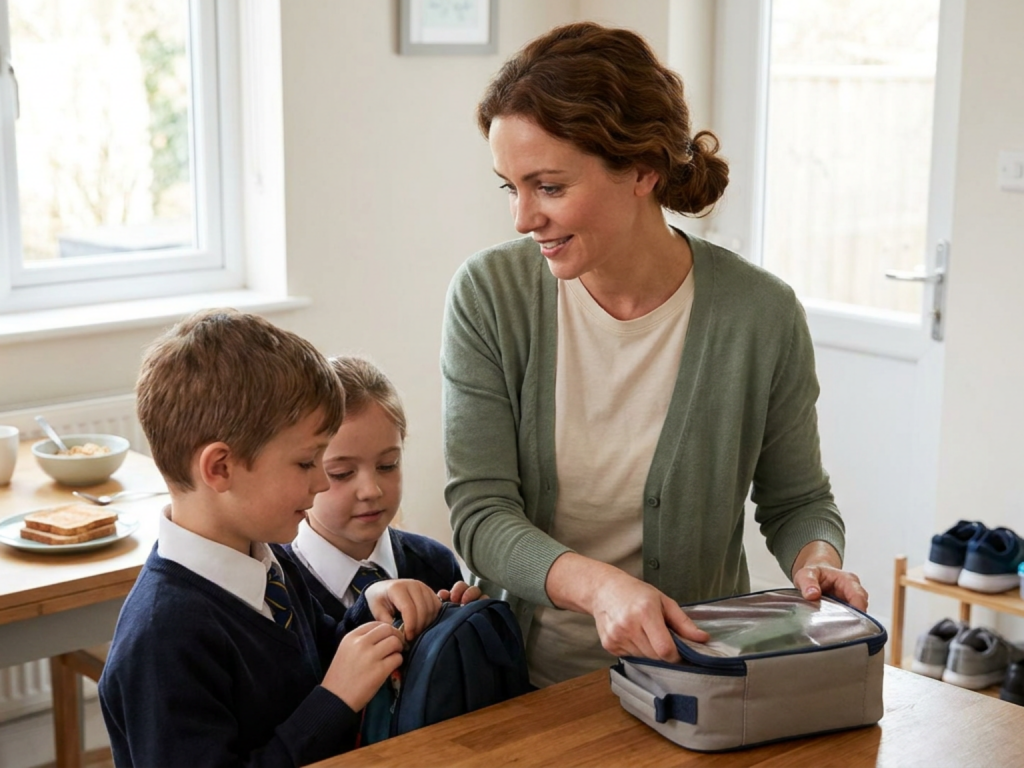
Mornings are often stressful because they combine sleep inertia, time pressure, hunger, sensory demands, and separation from home. A good morning routine actually begins the night before. Preparing clothing, bags, lunch items, forms, and sports equipment in the evening reduces morning decision fatigue in parents and children.
Consider designing the morning as a short sequence with a visible endpoint. For example: bathroom, clothes, breakfast, teeth, shoes, leave. Some families use a checklist; others use picture cards or a simple repeated phrase. The aim is to reduce repeated commands and replace them with a shared script.
A positive tone matters. Starting the day with warmth does not require a long conversation. It can be as brief as making eye contact, saying “I’m glad to see you,” or offering a calm physical gesture if the child welcomes it. For children with anxiety, attention-deficit/hyperactivity traits, autism, chronic illness, or sleep difficulties, morning routines may need extra time, fewer sensory demands, and coordination with clinicians or school supports.
Mealtime habits: nourishment and belonging
Family meals do not have to be elaborate to be meaningful. A meal can be homemade, assembled, reheated, or very simple. The protective element is often not culinary perfection but predictable connection: sitting together when possible, limiting conflict, and creating a space where children can talk without being interrogated.
Mealtime habits can also support health behaviors. Repeated exposure to a variety of foods, predictable meal and snack times, and caregiver modeling can help children learn eating patterns over time. However, feeding can be medically and emotionally complex. If a child has poor growth, rapid weight change, choking, vomiting, extreme restriction, sensory-related feeding distress, suspected allergy, gastrointestinal symptoms, or body image concerns, families should seek guidance from a pediatrician, registered dietitian, or appropriate specialist.
A realistic habit might be one shared dinner per week, a five-minute breakfast together, or a device-free snack after school. What matters is that the routine is repeatable in your actual household.
Bedtime habits and emotional regulation
Bedtime is one of the most powerful places to build a daily habit because sleep affects mood, learning, immune function, attention, and family stress. A predictable bedtime routine helps the nervous system shift from activation toward rest. Common elements include dimming lights, hygiene, pajamas, reading, quiet music, a brief conversation, and a consistent goodnight.
Bedtime rituals and emotional regulation are closely linked. Many children process worries at night because the day becomes quiet and separation is approaching. A routine can include a short “worry time” earlier in the evening, a comfort object for younger children, or a written plan for what to do if they wake. The goal is reassurance with boundaries: warm, consistent, and not endlessly renegotiated.
Parents should be cautious about interpreting sleep problems as simply “behavioral.” Snoring, witnessed pauses in breathing, restless legs, persistent insomnia, nightmares related to trauma, severe anxiety, medication effects, pain, reflux, eczema, asthma symptoms, and neurodevelopmental factors may all affect sleep. Persistent or concerning sleep symptoms warrant professional evaluation.
Make habits age-appropriate and collaborative
Family habits work best when they match developmental capacity. A preschooler may need pictures, physical proximity, and playful repetition. A school-age child may be ready for simple checklists and age-appropriate responsibilities such as feeding a pet, packing part of a lunch, or placing laundry in a basket. A teenager may need more autonomy, negotiation, and respect for sleep biology, peer relationships, and academic load.
Collaboration does not mean children control the household. It means caregivers set the non-negotiables, such as safety, school attendance, medication plans, hygiene, and respectful communication, while allowing choice where possible. “Do you want to shower before or after reading?” often works better than “Go shower now.”
For families managing chronic disease, disability, mental health concerns, or complex caregiving, routines may need to include symptom monitoring, therapy exercises, medication storage, equipment checks, or appointment planning. These should be developed with clinicians so that home routines are safe, realistic, and appropriate for the child’s condition.
When routines fall apart, practice repair
Every family loses routines during illness, travel, grief, work deadlines, school breaks, new babies, financial strain, or caregiver burnout. A broken routine is not a failed family. It is a signal to simplify and restart.
One helpful strategy is the “minimum version” of a habit. If the full bedtime routine is bath, books, and lights out, the minimum version might be teeth, one page of reading, and a goodnight phrase. If the full family dinner is not possible, the minimum version might be sitting together for fruit or tea for five minutes. This preserves continuity without demanding perfection.
Repair also includes emotional repair. If a morning becomes tense, a parent can later say, “I was frustrated and I spoke too sharply. Tomorrow we’ll try the shoe plan again.” This teaches accountability, resilience, and problem-solving. Children do not need flawless caregivers; they need caregivers who return to warmth and predictable expectations.
A simple framework for building a new family habit
To create a habit that is more likely to last, define it clearly and make it easy to repeat. Vague goals such as “be healthier” or “have calmer evenings” are harder to act on than specific routines.
- Choose one target moment. Pick a high-friction time such as school mornings, after school, dinner, or bedtime.
- Name the cue. Decide what starts the routine: alarm, arriving home, clearing the table, or putting on pajamas.
- Keep the steps short. Three to five steps are usually enough, especially for children.
- Reduce barriers. Place needed objects where the habit happens, such as toothbrushes, shoes, medication supplies, or lunch containers.
- Reinforce connection. Add praise, warmth, humor, or shared satisfaction rather than relying only on correction.
- Review and adjust. If the habit repeatedly fails, make it smaller or change the timing.
This approach respects both behavioral science and real family life. Habits are not built by intensity; they are built by repetition, environmental support, and compassion.
When to seek extra support
- Consult a pediatrician or qualified clinician if sleep problems, feeding concerns, mood changes, or behavioral distress are persistent or severe.
- Seek urgent help if a child expresses thoughts of self-harm, harm to others, or feels unsafe at home or school.
- Do not start, stop, or change medications, supplements, or therapeutic plans without professional guidance.
- If family routines are affected by violence, coercion, substance use, or severe caregiver burnout, professional and community support may be needed.
- Children with chronic medical, developmental, or mental health conditions may need individualized routines developed with their care team.
Tools & Assistance
- Create a one-page morning or bedtime checklist with three to five steps.
- Use a shared family calendar for school events, appointments, meals, and caregiving tasks.
- Ask your child’s pediatrician, school counselor, therapist, or dietitian for individualized guidance when routines involve health concerns.
- Prepare a “minimum routine” for difficult days, illness, travel, or caregiver exhaustion.
- Hold a short weekly family meeting to review what is working and what needs adjusting.
FAQ
How long does it take to build a family habit?
There is no exact timeline for every family. Habits generally become easier with repetition in a stable context, but the time needed depends on the behavior, stress level, child development, and consistency of cues.
What if my child resists every routine?
Resistance often means the routine is too long, too abrupt, poorly timed, or missing connection. Try making it smaller, adding choice, using visual cues, and checking whether sleep, anxiety, sensory needs, or learning differences are contributing.
Are routines still useful for teenagers?
Yes, but they should be more collaborative. Teenagers usually respond better when routines respect autonomy, privacy, school demands, circadian rhythm, and shared problem-solving.
Should routines be the same every day?
Not exactly. The most helpful routines are predictable enough to reduce stress but flexible enough to adapt to illness, travel, school breaks, and family needs.
Can family routines improve mental health?
Predictable routines may support emotional regulation, reduce daily stress, and improve cooperation, but they are not a substitute for mental health care when a child or caregiver has significant symptoms.
Sources
- National Center for Biotechnology Information (PMC / NIH) — The Importance of Creating Habits and Routine
- Harvard Health Publishing — Building Positive Family Routines
- Strong4Life — Creating & Sticking to an Effective Family Routine
Disclaimer
This article is for general educational purposes only and does not replace medical, developmental, nutritional, or mental health advice. Consult a qualified healthcare professional for concerns about your child or family situation.
















Please log in to leave a comment.