
Intro
Driving during pregnancy is often unavoidable: prenatal appointments, work, school runs, grocery trips, and family responsibilities continue while your body is changing week by week. It is very reasonable to wonder whether the seat belt could harm your abdomen, whether the airbag is safe, or whether there is a point in pregnancy when you should stop driving.
For most people with uncomplicated pregnancies, travelling by car can be safe when sensible precautions are used. The strongest consistent message from obstetric and injury-prevention guidance is that a properly worn three-point seat belt protects both the pregnant person and the fetus better than no belt or an incorrectly positioned belt. The goal is not to avoid all movement, but to reduce preventable risk every time you get into a vehicle.
Highlights
A three-point seat belt should be worn on every car journey in pregnancy, whether you are the driver or a passenger.
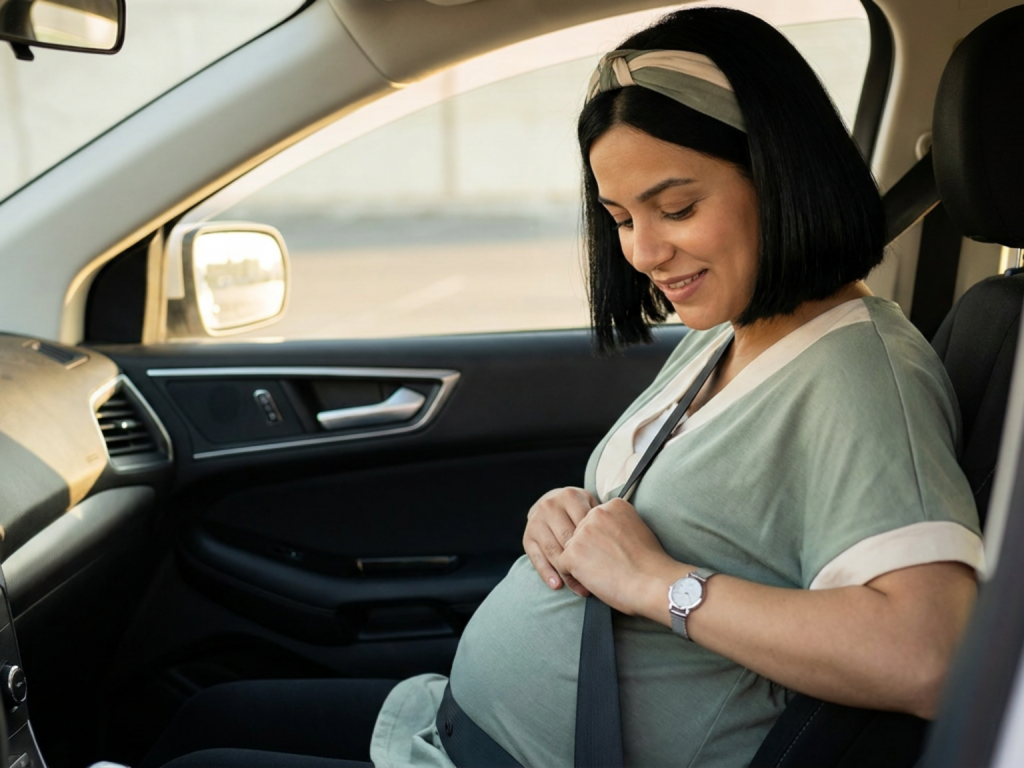
The lap belt belongs low across the pelvis and under the bump, not across the abdomen. The shoulder belt should pass between the breasts and to the side of the belly.
Long car journeys can increase discomfort and immobility; regular stops to walk, stretch, hydrate, and use the bathroom are practical safety measures.
After any significant crash, abdominal impact, seat-belt injury, pain, bleeding, contractions, reduced fetal movement, or fluid leakage warrants urgent medical assessment.
Airbags are generally part of the vehicle’s safety system, but they work best with correct seat belt use and appropriate distance from the steering wheel or dashboard.
Why car safety matters in pregnancy
Motor vehicle crashes are an important cause of trauma in pregnancy. Injury patterns can involve the pregnant person, the uterus, the placenta, and the fetus. Even when the abdomen appears uninjured, sudden deceleration may transmit force through the body, and placental abruption, uterine contractions, membrane rupture, or fetomaternal hemorrhage can occur after trauma. This is why obstetric assessment is often recommended after a significant collision, even if initial symptoms seem mild.
Pregnancy adds anatomical and physiological factors that can influence crash risk and injury. As the uterus enlarges, it rises out of the pelvis and becomes more exposed to direct pressure. Blood volume and cardiac output increase, while nausea, fatigue, back pain, reduced sleep, and ligamentous laxity can affect comfort and concentration. Later in pregnancy, the bump may also change posture and the distance between the driver and the steering wheel.
None of this means that pregnant people must stop driving automatically. It means that routine vehicle safety deserves careful attention. The protective effect of correct restraint use is especially important because it reduces the chance of the pregnant person striking the steering wheel, dashboard, windshield, or other interior surfaces.
Seat belt use: the most important rule
The safest restraint for a pregnant driver or passenger is the standard three-point seat belt: a lap belt plus a shoulder belt. Medical and road-safety sources consistently advise wearing both parts of the belt every time you travel. Skipping the belt, placing it behind your back, putting it under your arm, or using only the lap portion reduces protection and may increase injury risk in a crash.
Correct positioning is specific:
- Lap belt: place it low across the hip bones and pelvis, underneath the abdomen. It should sit snugly under the bump, not over or across the uterus.
- Shoulder belt: position it between the breasts and over the collarbone, then down to the side of the belly. It should not cut across the neck, lie over the bump, or be placed behind the back.
- Fit: keep the belt flat, untwisted, and snug. A loose belt allows more forward movement during sudden braking or a crash.
- Do not disable the belt: seat belt clips, extenders, or positioning devices should be used only if appropriate for your vehicle and body size, and they should not redirect the belt over the abdomen.
Some people worry that the lap belt could press on the baby. The key distinction is placement. A lap belt across the uterus is not ideal; a lap belt low on the bony pelvis is designed to transfer crash forces to stronger skeletal structures. In a crash, the greater danger usually comes from unrestrained movement and impact, not from a correctly positioned belt.
Airbags, steering wheel distance, and driver positioning
Airbags are designed to work with seat belts, not replace them. When a seat belt is used properly, the airbag helps reduce severe head and chest injury by cushioning forward movement. Without a seat belt, an airbag alone cannot control the body’s motion safely and may not protect the abdomen from secondary impact.
As pregnancy progresses, adjust your driving position so you can operate the pedals comfortably while maintaining as much safe distance as possible from the steering wheel. Aim the steering wheel toward your chest rather than directly at the abdomen if your vehicle allows adjustment. Sit upright, with your back supported, and move the seat back as far as practical while still being able to fully depress the pedals and maintain control. Adjust mirrors after changing seat position so you do not need to twist excessively.
If your bump is very close to the steering wheel, driving may become less comfortable or less safe. This is a good time to discuss your circumstances with a clinician, occupational health professional, or midwife, especially if you must drive for work or long distances. Some people choose to become passengers later in pregnancy, but passengers still need correct seat belt positioning and should sit as far back from the dashboard airbag as practical.
Planning safer journeys
Risk is not determined only by pregnancy; it is also shaped by journey conditions. Driving when exhausted, nauseated, dizzy, distracted, or in severe pain can impair reaction time. Bad weather, poor visibility, heavy traffic, unfamiliar roads, and late-night driving can add avoidable stress. When possible, choose safer conditions: daylight travel, well-maintained roads, adequate rest, and enough time to avoid rushing.
Long car journeys deserve extra planning. The NHS advises avoiding long car trips when possible in pregnancy, and stopping regularly if travel is necessary. Prolonged sitting can worsen back and pelvic discomfort, ankle swelling, reflux, and urinary urgency. Immobility is also one contributor to venous stasis; pregnancy itself is a hypercoagulable state, meaning the blood is more prone to clotting as part of normal pregnancy physiology.
Practical steps include:
- Stop at regular intervals to walk and stretch your calves, hips, and back.
- Drink fluids, but plan bathroom stops so you are not tempted to delay urination uncomfortably.
- Keep snacks available if nausea or low energy affects concentration.
- Avoid driving if you feel faint, have visual disturbance, severe headache, contractions, or significant abdominal pain.
- Share driving where possible, especially on long trips or if sleep has been poor.
If you are planning broader travel, it can help to review travel during pregnancy overview guidance and ask your healthcare professional whether your itinerary is appropriate for your gestational age, medical history, and access to maternity care.
Comfort and ergonomics as the bump grows
Comfort is not a luxury in pregnancy driving; discomfort can become distraction. The pelvis, lumbar spine, and abdominal wall undergo substantial load changes, and prolonged sitting may aggravate low-back pain, pelvic girdle pain, sciatica-like symptoms, or rib discomfort. Small adjustments can make driving safer and more tolerable.
Consider using the vehicle’s lumbar support or a small cushion behind the lower back, as long as it does not push you too close to the steering wheel or alter safe belt positioning. Keep the shoulder belt between the breasts and off to the side of the abdomen, even if breast tenderness makes this uncomfortable. Soft clothing layers can reduce rubbing, but bulky coats should not sit under the belt because they may prevent a snug fit.
Footwear also matters. Choose shoes that allow reliable pedal control and avoid slippery soles or very high heels while driving. If leg cramps or swelling are common, plan shorter driving intervals and move your ankles during stops. If you have been given individualized advice about activity restriction, pelvic pain, preterm labor risk, hypertensive disorders, or other complications, follow your care team’s recommendations rather than general guidance.
When to reconsider driving
There is no universal gestational week when every pregnant person must stop driving. The decision depends on symptoms, pregnancy complications, vehicle fit, local driving conditions, and the type of journey. A short familiar drive in good conditions may be very different from a two-hour commute in heavy traffic or a job that requires all-day driving.
It is sensible to ask your clinician or midwife for individualized advice if you have recurrent fainting, uncontrolled vomiting, severe anemia, significant dizziness, seizures, visual symptoms, preeclampsia concerns, preterm labor symptoms, placenta-related complications, mobility limitations, or medication side effects that could impair alertness. Do not drive if you feel unsafe, sedated, severely sleep-deprived, or unable to turn, brake, or check blind spots effectively.
Work-related driving may need additional planning. If driving is a major part of your job, a risk assessment can consider journey length, rest breaks, access to toilets, seating ergonomics, emergency plans, and alternative duties if needed. Related issues may overlap with working during pregnancy overview and office work safety, especially if your day combines commuting, prolonged sitting, and occupational demands.
What to do after a crash or sudden hard stop
After a collision, sudden deceleration, or abdominal impact, it is understandable to feel shaken and unsure whether you need care. In pregnancy, the threshold for medical advice should be low. Symptoms that require urgent assessment include abdominal pain, uterine tenderness, vaginal bleeding, leakage of fluid, contractions, fainting, chest pain, shortness of breath, reduced or absent fetal movement after the usual stage when movements are monitored, or a visible seat-belt mark across the abdomen.
Even without obvious symptoms, contact your maternity unit, obstetric clinician, emergency department, or local emergency service after a moderate or severe crash. Evaluation may include maternal vital signs, abdominal examination, fetal monitoring depending on gestational age, assessment for contractions, and testing as clinically indicated. The exact approach depends on gestational age, injury mechanism, Rh status, symptoms, and local protocols.
If emergency responders attend, tell them you are pregnant and how many weeks along you are, if known. Keep a written or phone-accessible summary of key pregnancy information when travelling: due date, blood type if known, allergies, medications, obstetric complications, and your maternity unit contact details.
Seek urgent medical advice after driving-related trauma if any of these occur
- Vaginal bleeding, fluid leakage, or new regular contractions after a crash or hard braking.
- Abdominal pain, uterine tenderness, chest pain, shortness of breath, fainting, or significant dizziness.
- Reduced fetal movement once you are far enough along to track a usual movement pattern.
- A direct blow to the abdomen or a seat-belt bruise or mark across the bump.
- Any moderate or severe collision, even if you initially feel well.
Tools & Assistance
- Keep the lap belt low on the pelvis and the shoulder belt between the breasts on every journey.
- Schedule regular walking and stretching stops for long car trips.
- Ask your obstetrician, midwife, or maternity unit about individualized driving advice if you have complications or concerning symptoms.
- Store emergency contacts and pregnancy details in your phone before longer journeys.
- Request a workplace driving risk assessment if driving is part of your job.
FAQ
Can a seat belt hurt my baby?
A correctly positioned three-point seat belt is considered protective. The lap belt should be low under the bump across the pelvis, not across the abdomen, and the shoulder belt should pass between the breasts and to the side of the belly.
Should I turn off the airbag while pregnant?
Do not turn off vehicle safety systems without professional advice. Airbags are designed to work with seat belts. Instead, wear the belt correctly, sit upright, and keep as much safe distance from the steering wheel or dashboard as practical.
When should I stop driving in pregnancy?
There is no single week that applies to everyone. Consider stopping or getting medical advice if your bump prevents safe steering, braking, or mirror checks, or if symptoms such as dizziness, fainting, contractions, severe pain, or medication-related drowsiness affect driving.
Are long car journeys safe while pregnant?
Long journeys are best avoided when possible, especially if they cause fatigue or prolonged immobility. If travel is necessary, stop regularly to walk, stretch, hydrate, and use the bathroom.
Do I need to be checked after a minor car accident?
If there was abdominal impact, pain, bleeding, contractions, fluid leakage, reduced fetal movement, or you are unsure about the force of the crash, contact a maternity unit or emergency service promptly for advice.
Sources
- PubMed Central (NIH) — Motor vehicle safety during pregnancy
- American College of Obstetricians and Gynecologists — Car Safety for Pregnant Women, Babies, and Children
- NHS — Travelling in pregnancy
Disclaimer
This article is for general educational information and is not a substitute for personalized medical advice. If you have pregnancy complications, concerning symptoms, or any crash-related injury, contact your healthcare professional or emergency services.

















Please log in to leave a comment.