
Intro
Sleep in pregnancy can become surprisingly complicated. A position that felt natural before pregnancy may suddenly aggravate reflux, hip pain, shortness of breath, pelvic pressure, or anxiety about whether the baby is safe. Many pregnant people also wake repeatedly and wonder whether they have caused harm by finding themselves on their back.
The reassuring answer is that sleep position guidance is mainly about risk reduction later in pregnancy, not perfection. Current evidence supports side sleeping from about 28 weeks onward, while sleep posture before 28 weeks does not appear to affect pregnancy outcomes. If you wake on your back, the usual advice is to calmly roll onto either side and go back to sleep.
Highlights
From 28 weeks until birth, going to sleep on either side is generally advised because supine sleep has been associated with higher risk in late pregnancy.
Before 28 weeks, available evidence does not show that sleep posture affects pregnancy outcomes in the same way.
Either the left or right side is acceptable; the key practical point is to avoid intentionally settling to sleep on your back in the third trimester.
If you wake up on your back, do not panic. Change position to your side and mention persistent concerns to your midwife, obstetrician, or maternity care team.
Why sleep position matters more after 28 weeks
Pregnancy sleep guidance changes as the uterus grows. In early and mid-pregnancy, the uterus is usually not large enough for sleep posture to have the same physiological implications. A review of current evidence notes that before 28 weeks, sleeping posture does not appear to affect pregnancy outcomes. After 28 weeks, however, pregnant patients are commonly advised to avoid going to sleep supine, meaning flat on the back, and to choose either side instead.
The reason is anatomical and hemodynamic. In later pregnancy, the enlarged uterus can compress major maternal blood vessels when a person lies flat on the back, especially the inferior vena cava and, to a lesser extent, the aorta. This may reduce venous return to the heart, lower cardiac output in some individuals, and potentially affect uteroplacental perfusion. Not everyone feels symptoms, but the association between going to sleep on the back in late pregnancy and adverse outcomes has led to precautionary public health advice.
This does not mean that every brief period on your back is dangerous. Sleep is dynamic; most people change positions unconsciously. The practical recommendation is to start every sleep episode, including naps, on your side from 28 weeks onward.
Best sleeping positions in pregnancy
The best-supported position in the third trimester is side sleeping. Either side is considered acceptable. You may have heard that the left side is always best because it may optimize blood flow through the vena cava and reduce pressure on the liver. While left-side sleeping can be comfortable and physiologically sensible for some people, current practical guidance generally emphasizes either side rather than insisting on the left only.
- Left side: Often recommended historically and may feel comfortable for circulation, reflux, and abdominal support.
- Right side: Also considered acceptable, especially if it is more comfortable or reduces hip and shoulder discomfort.
- Alternating sides: A realistic approach for many people, particularly if one hip becomes painful.
- Semi-reclined side position: Useful for reflux, nasal congestion, or breathlessness, provided you are not lying flat on your back.
Comfort matters because fragmented sleep can worsen fatigue, mood vulnerability, headaches, pain sensitivity, and daytime functioning. The safest position is one that also allows you to sleep enough. If a strict interpretation of positioning advice is making you highly anxious or severely sleep deprived, discuss individualized strategies with your maternity care team.
Sleeping on your back: what to know and what to do
Sleeping on your back is the position that receives the most attention in late pregnancy. Research has linked going to sleep supine after 28 weeks with a higher risk of stillbirth, which is why organizations advise side sleeping in the third trimester. The key phrase is going to sleep. You can control the position you choose when settling down, but you cannot fully control every movement during sleep.
If you wake and notice you are on your back, try not to interpret it as an emergency. Turn onto your left or right side and return to sleep. This applies at night and during daytime naps. If you feel faint, dizzy, nauseated, sweaty, short of breath, or unusually unwell while lying on your back, change position promptly. These symptoms can occur with supine hypotensive physiology in some pregnant people, particularly later in gestation.
Back sleeping may also worsen mechanical discomfort. The weight of the uterus can increase lumbar strain, aggravate pelvic or sacroiliac pain, and contribute to snoring or sleep-disordered breathing in some individuals. If you have obstructive sleep apnea, hypertension, fetal growth restriction, multiple pregnancy, or other high-risk factors, ask your obstetric clinician whether you need more specific sleep advice.
How to make side sleeping more comfortable
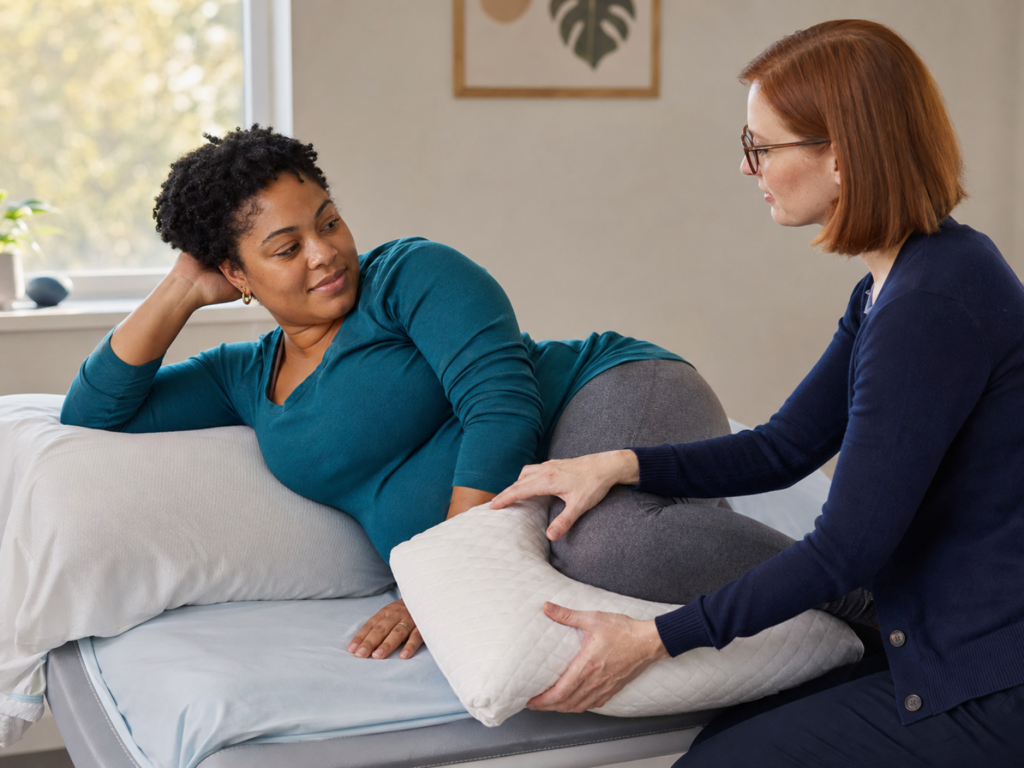
Side sleeping can feel unnatural if you previously slept on your back or stomach. The aim is to reduce torsion through the spine, support the abdomen, and prevent the upper leg from pulling the pelvis forward.
- Place a pillow between your knees: This helps align the hips, pelvis, and lumbar spine.
- Support the bump: A small pillow or wedge under the abdomen can reduce pulling sensations along the uterine ligaments and abdominal wall.
- Use a pillow behind your back: This can make it harder to roll fully supine and may provide a sense of support.
- Try a pregnancy pillow: U-shaped, C-shaped, or long body pillows can support the chest, belly, knees, and ankles at the same time.
- Keep the knees slightly bent: A gentle flexed position often reduces lumbar tension and feels more stable.
If hip pain develops, alternate sides, add a softer mattress topper if appropriate, and check whether your knees and ankles are both supported. If shoulder pain occurs, avoid collapsing onto the lower shoulder; hugging a pillow can keep the upper chest more open. For persistent back pain and lower back discomfort in pregnancy, a physiotherapist with pregnancy expertise can assess posture, pelvic mechanics, and safe strengthening options.
Reflux, breathlessness, and other sleep disruptors
Position is only one part of sleep during pregnancy. Hormonal changes, reduced lower esophageal sphincter tone, delayed gastric emptying, nasal congestion, fetal movement, nocturia, leg cramps, anxiety, and musculoskeletal pain can all interfere with rest.
For heartburn and acid reflux in pregnancy, raising the head and upper chest may help. This is different from lying flat on your back. A wedge pillow or elevating the head of the bed can create an inclined position while you remain tilted to one side. Many people also find it helpful to avoid large meals close to bedtime and to discuss persistent reflux with a healthcare professional before using medicines.
Breathlessness can be positional as the uterus elevates the diaphragm and pregnancy increases oxygen demand. A semi-upright side-lying position may feel easier. However, sudden, severe, or worsening shortness of breath, chest pain, coughing blood, fainting, or palpitations should be assessed urgently.
Frequent urination is common, especially in the third trimester. Reducing large fluid intake immediately before bed may help, but do not restrict fluids excessively. Burning, fever, flank pain, or blood in the urine should prompt medical advice because urinary infection in pregnancy needs attention.
Sleep hygiene that supports pregnancy rest
Sleep hygiene cannot remove all pregnancy-related discomfort, but it can reduce preventable disruptions. A consistent routine helps the circadian rhythm, while a calmer pre-sleep period may reduce hyperarousal and anxiety about sleep position.
- Keep a regular bedtime and wake time when possible.
- Use the bed mainly for sleep and intimacy rather than prolonged scrolling or work.
- Limit caffeine according to pregnancy guidance from your clinician or local health authority.
- Keep the room cool, dark, and quiet, and use breathable bedding if overheating is a problem.
- Try gentle stretching, relaxation breathing, or a warm shower before bed if approved for you.
- Consider daytime movement, because appropriate exercise during pregnancy can improve comfort and sleep quality for many people.
If insomnia becomes persistent, or if worry about fetal safety is keeping you awake, ask for help. Sleep problems, insomnia and sleep disturbances in pregnancy are common and treatable, and support may include behavioral strategies, screening for anxiety or depression, and assessment for sleep apnea or restless legs syndrome.
Naps, waking up, and realistic expectations
The side-sleeping recommendation applies to all sleep episodes from 28 weeks, including daytime naps. It is easy to forget this if you doze on a sofa or in a recliner. If you are very tired, set yourself up on your side before you fall asleep, using cushions for support.
Many pregnant people wake often in the third trimester. This does not mean you are failing at sleep. The body is adapting to a larger uterus, changing respiratory mechanics, increased renal blood flow, fetal activity, and hormonal shifts. Week 28 of pregnancy is a common point where sleep position advice becomes more prominent because it marks the start of the third trimester.
Try to focus on controllable habits: start on your side, make the position comfortable, manage reflux and pain, and seek medical guidance when symptoms are concerning. Perfection is not required. Repeatedly waking on your back may mean you need more positional support, but it is not a reason for blame.
Seek medical advice promptly if
- You notice reduced or changed fetal movements, regardless of your sleep position.
- You have chest pain, fainting, severe breathlessness, or sudden swelling.
- You wake gasping, have loud snoring with pauses in breathing, or have severe daytime sleepiness.
- You have persistent severe headache, visual symptoms, or upper abdominal pain.
- Sleep anxiety, insomnia, or low mood is significantly affecting daily functioning.
Tools & Assistance
- Ask your midwife or obstetrician for individualized sleep-position advice after 28 weeks.
- Use a pregnancy pillow, wedge, or regular pillows to support side lying.
- Track fetal movements according to your maternity unit’s guidance and seek help for changes.
- Discuss reflux, pain, snoring, or insomnia with a healthcare professional rather than self-treating.
- Consider referral to pelvic health physiotherapy for persistent hip, pelvic, or back discomfort.
FAQ
Is it dangerous if I wake up on my back while pregnant?
Usually, the practical advice is not to panic. From 28 weeks, turn onto either side and go back to sleep. If you feel unwell or have concerns about fetal movements, contact your maternity care team.
Which side should I sleep on in the third trimester?
Either side is acceptable. Left-side sleeping may feel best for some people, but current guidance emphasizes going to sleep on your side rather than insisting on only one side.
When should I stop sleeping on my back?
Evidence-based guidance generally advises avoiding going to sleep on your back from 28 weeks until birth. Before 28 weeks, sleep posture does not appear to affect outcomes in the same way.
Does the side-sleeping advice apply to naps?
Yes. From 28 weeks, it is recommended to start all sleep episodes, including naps, on your side.
Can I sleep propped up for reflux?
Many people find a raised head and upper chest helpful for reflux. In late pregnancy, try to combine elevation with a side-tilted position rather than lying flat on your back.
Sources
- PubMed Central / NIH — Sleeping posture in pregnancy
- Tommy's — Sleep position in pregnancy Q&A
- Pregnancy, Birth and Baby — Sleep during pregnancy
Disclaimer
This article is for general medical information only and is not a diagnosis or treatment plan. Always consult your midwife, obstetrician, or healthcare professional for advice specific to your pregnancy.
















Please log in to leave a comment.